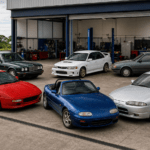
A Ferrari F355 MR2 replica combines the mid-engined Toyota MR2 SW20 with bodywork inspired by Ferrari’s celebrated 1990s V8 sports car. The result can deliver dramatic looks, familiar Toyota mechanicals and a very different ownership proposition from a genuine F355—but build quality, identity and documentation matter enormously.
Ferrari F355 MR2 replica at a glance
- Typical donor: second-generation Toyota MR2 (SW20), including UK and Japanese-import cars
- Layout: mid-engined, rear-wheel drive
- Engines: normally retained Toyota four-cylinder units, although some cars have engine conversions
- What varies most: body proportions, panel fit, chassis alterations, interior finish and paperwork
- Most important buying checks: vehicle identity, V5C details, conversion history, structure, cooling, wheels and suspension
What is an F355 MR2 replica?
An F355 MR2 replica is not a Ferrari and should never be described or sold as a genuine one. It is a Toyota-based conversion whose replacement or modified bodywork recreates some of the appearance of the Ferrari F355. Depending on the kit and builder, the work may range from a relatively straightforward panel conversion to a much more involved build with altered dimensions, bespoke glazing, redesigned lighting and a comprehensively retrimmed cabin.
The quality gap between individual cars can be enormous. A carefully documented conversion with well-aligned panels and properly engineered mechanical changes is a different proposition from an unfinished project assembled from unidentified parts. Judge the specific car rather than the badge or paintwork.
Why builders use the Toyota MR2 SW20
The second-generation Toyota MR2 is a logical donor because it already has the engine behind the seats, rear-wheel drive and low sports-car proportions. Its shape was sometimes compared with contemporary Italian machinery even before replica conversions became popular. Using an established production car also provides factory-developed suspension, brakes, steering and a parts network that a completely bespoke chassis may lack.
Not every MR2-based replica is mechanically standard. Some retain a naturally aspirated Toyota engine, others use a Japanese-market turbo donor, and a smaller number have received V6 or other engine conversions. Establish exactly what remains from the donor and whether every modification is recorded, engineered and insured correctly.
The 1993 MR2 turbo conversion originally featured here
This article originally covered a completed red F355-style replica advertised in 2023. Its donor was described as a 1993 imported Toyota MR2 GT with a twin-entry turbo engine. The seller reported a Rosso Corsa-style respray, protective underside treatment, a black leather retrim and a recent service. It was advertised at £17,500 at the time; that historical asking price is not a current valuation.


What to inspect before buying one
1. Identity and paperwork
Start with the registration number, VIN and V5C—not the bodywork. Check that the physical identity matches the documents and that the recorded make, model, engine and relevant modifications make sense. Ask for the donor V5C, conversion invoices, photographs of the build, parts receipts and any approval or DVLA correspondence. A vague story is not a substitute for evidence.
2. Structure and body conversion
Look beyond shiny paint. Check panel gaps, door operation, glazing, weather sealing, headlamp alignment and the mounting of every replacement panel. Inspect the underside and the areas around suspension, steering, braking and seat-belt mountings. If the original monocoque has been cut, widened or otherwise structurally changed, establish who designed and completed the work.
3. Wheels, suspension and steering
The wider appearance of an F355-style body may be achieved with different wheels, offsets, adapters, spacers or suspension changes. Check for tyre rubbing, damaged bearings, poor geometry, heavy steering and uneven tyre wear. Cosmetic stance should not come at the expense of safe suspension movement or predictable handling.
4. Cooling, engine and electrics
Confirm which MR2 engine and gearbox are installed and inspect them as you would in the donor car. Allow the engine to reach operating temperature, watch for overheating or leaks and check that cooling fans work. Replica lighting, pop-up or replacement lamps, electric windows, instruments and aftermarket alarms can introduce wiring faults, so test every switch.
5. Parts availability and finish
Mechanical Toyota parts may be obtainable, but replica-specific glass, lamps, grilles and moulded panels can be much harder to replace. Identify the kit manufacturer if possible and determine whether moulds, replacement panels or owner support still exist. Poor paint preparation on fibreglass may reveal itself through cracks, ripples or sink marks.
UK registration, IVA and the V5C
UK requirements depend on how a particular car was converted and which original components remain. Current DVLA guidance says a kit-converted vehicle may retain its original registration when the original unaltered chassis or monocoque bodyshell and at least two other major original components are used. Altered structures, uncertain identity or insufficient donor components can lead to different registration and approval requirements.
Do not assume that an MOT alone proves the conversion is documented correctly. Consult the current DVLA INF318 guidance and the government’s kit-converted vehicle registration guidance. If the history is unclear, obtain specialist advice before paying a deposit.
Insurance and ownership
Ask a specialist insurer to quote on the exact vehicle before purchase. Declare the body conversion, engine, wheels, suspension, brakes and every other material modification. Agreeing a value may be helpful for a highly individual car, but policy terms differ. Keep photographs, receipts and an up-to-date specification in case you later need to demonstrate what was fitted.
Running costs can be lower than those of a genuine Ferrari F355, but this is not the same as saying every replica is cheap to own. Bespoke body repairs, scarce glass, specialist paintwork and correcting an unfinished conversion can quickly exceed the cost of routine Toyota servicing.
Frequently asked questions
Is an MR2 F355 replica legal in the UK?
It can be road legal when it is correctly registered, insured, taxed, roadworthy and compliant with any approval requirements that apply to its construction. The correct route depends on the extent of the conversion, so check the individual vehicle and current DVLA guidance.
Which Toyota MR2 is normally used?
Many F355-style replicas use the second-generation SW20 Toyota MR2 produced during the 1990s. Both naturally aspirated and turbocharged donors appear, along with occasional engine-swapped cars.
Is it cheaper than a genuine Ferrari F355?
The purchase and routine mechanical costs are generally in a different league from a genuine F355, but condition and build quality determine whether a particular replica represents good value. A cheap unfinished or undocumented car can become an expensive project.
Explore more replica and kit car guides
Visit the Replica & Kit Car Guides hub for more Ferrari-inspired builds, British kit cars, buying advice and donor-vehicle features.
Ferrari F355 items on eBay
Affiliate disclosure: Unusual Cars may earn a commission from qualifying purchases made through links in this section.