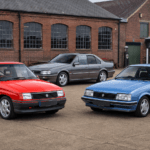
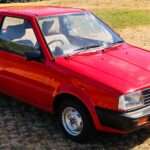
A rear- or four-wheel-drive Vauxhall Nova is not a bolt-on conversion. It is a major structural and mechanical build whose value depends on engineering quality, documentation and suitability for road or competition use.
Why convert a Nova?
The Nova arrived in Britain in 1982. Vauxhall’s official history records the 100bhp 1.6-litre GTE in 1987 at just 876kg, renamed GSi after the 1990 facelift. That light, compact shell encouraged generations of engine swaps and motorsport builds. Rear- and four-wheel-drive projects go much further by replacing the transverse front-drive layout with a bespoke driveline.
How RWD and 4WD Nova conversions work
Approaches vary: some borrow engines, gearboxes, differentials and suspension ideas from other GM performance cars; others use extensive bespoke subframes and fabricated floors. There is no universal recipe. The shell must carry new loads safely, with correct driveline angles, suspension geometry and protection for fuel, brake and electrical systems.
What to inspect
- Original VIN, registration details and declared modifications.
- Corrosion in sills, floors, arches, turrets and repaired seams.
- Quality of the transmission tunnel, bulkhead, subframes and suspension mounts.
- Cage design, welds, mounting plates and clearances.
- Prop-shaft alignment, differential mounts, driveshafts and wheel bearings.
- Fuel tank location, lines, pumps, heat shielding and ventilation.
- Cooling capacity, fan control and under-bonnet heat management.
- Brake specification, pedal feel, balance and tyre suitability.
- Engine-management calibration and independent dyno evidence.
The 600bhp Nova originally featured
This page began with a 1991 Nova advertised in 2025. The seller described a custom four-wheel-drive system and cage fabrication, approximately 920kg, a documented 550bhp dyno result with later logs said to show around 600bhp, and more than £50,000 invested across evolving specifications.
The expired listing is a remarkable case study, not current availability or independent verification. It illustrates why buyers need the complete specification, build photographs, dyno graph, mapping information and evidence of how the drivetrain, brakes and shell were engineered to work together.
Road, track or competition?
A road car must be insurable, usable in traffic and correctly documented. A track build needs predictable cooling, braking and service access. A regulated competition car must be designed around the current technical rules and safety requirements of its intended discipline. A cage and harnesses alone do not establish eligibility.
Frequently asked questions
Was the Nova factory rear-wheel drive?
No. Production Novas were front-wheel drive; RWD and 4WD examples are conversions.
Is an engine-swapped Nova automatically unsafe?
No, but safety depends on design, fabrication, brakes, tyres, calibration and maintenance. Independent inspection is essential.
Does build cost equal value?
No. Documentation, execution, condition and a buyer’s intended use determine market confidence.