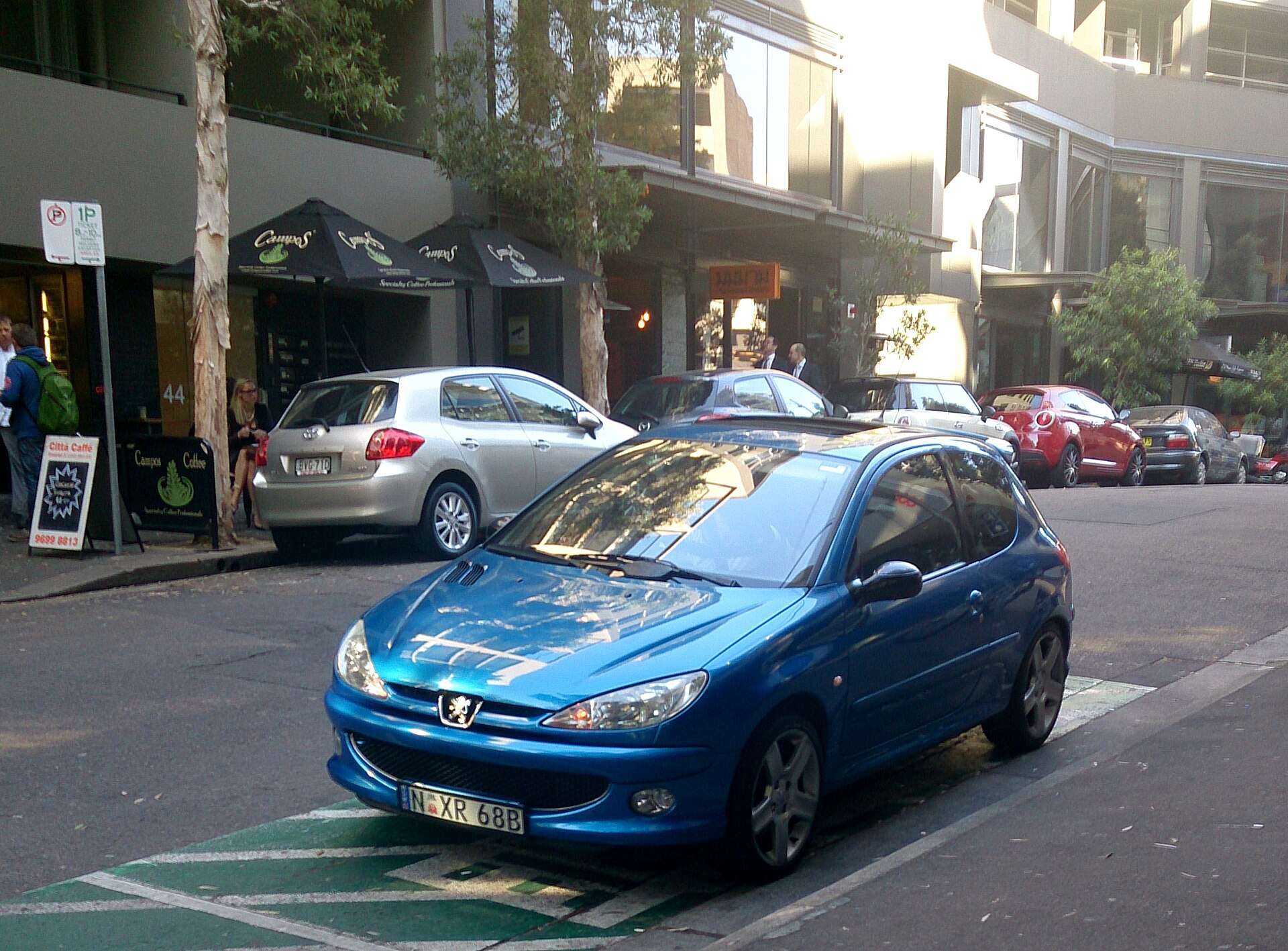
The Peugeot 206 became one of the most successful French cars ever made. Its range stretched from basic three-door hatchbacks to five-door family cars, diesels, the 206 SW estate, folding-roof 206 CC and the 180hp GTI flagship—while the WRC version built a championship-winning competition legend.
Peugeot 206 history
The 206 had the difficult job of following the 205 without copying it. Peugeot gave it a cab-forward shape, large swept headlights and a more substantial cabin. The design proved durable enough to support many body styles and long production across several continents.
Peugeot’s heritage material identifies the 206 as a 1998–2012 model family and records 8,332,416 produced. Production timing varied by country, while the 206+ extended the idea with a later 207-inspired nose.

Peugeot 206 hatchback
The three- and five-door hatchbacks formed the heart of the range. Entry petrol models prioritised affordability; larger petrol engines brought stronger performance; HDi diesels combined useful torque with excellent economy. Equipment and engine availability changed frequently, so buyers should identify a car by VIN, engine code and original-market paperwork.
Three-door
The sportier-looking body used for many GTI, special-edition and replica builds.
Five-door
The practical family version, mechanically similar but with easier rear access and a different ownership emphasis.
Peugeot 206 CC
The 206 CC used an electrically operated folding metal roof to switch between coupé and convertible. It helped take a mechanism previously associated with expensive cars into the mainstream and became a major part of the 206’s identity.
Roof alignment, seals, drainage, microswitches and hydraulic operation all need careful checking. A damp boot, warning messages or an incomplete roof cycle should not be dismissed as minor.

Peugeot 206 SW
Introduced as a compact estate, the SW lengthened the 206 and added a more useful luggage area without turning it into a conventional box. Petrol and HDi versions were offered, including sporting specifications in some markets.
Inspect the tailgate, rear lights, load-floor area and suspension carefully. Estate cars often worked harder than hatchbacks and may carry evidence of towing, heavy loads or family use.

Love cars you don’t see every day?
Get forgotten cars, surprising motoring stories and the most interesting finds from Unusual Cars by email.
Free to join. No spam. Unsubscribe whenever you like. See our privacy policy.
Peugeot 206 GTI and GTI 180
The regular 2.0-litre GTI delivered accessible performance but was often judged against the lighter 205 GTI. The later GTI 180—called RC in many continental markets—was more serious. Peugeot’s official retrospective gives 180hp and 202Nm, 0–62mph in 7.1 seconds and 137mph.
The GTI 180 added variable valve timing, revised chassis tuning, distinctive wheels, stronger brakes and a more focused cabin. Originality matters because many have been modified, crashed or stripped for parts.

Peugeot 206 WRC
The competition car transformed the 206’s image. Peugeot won three consecutive World Rally Championship manufacturers’ titles from 2000 to 2002. The genuine WRC machine was a purpose-built competition car, not a tuned road-going GTI.
Road replicas range from cosmetic tributes to extensively engineered rally cars. They deserve their own checks for donor identity, shell work, safety equipment and documentation. Read the separate Peugeot 206 WRC and recreation guide.

Common Peugeot 206 problems
Rear axle
Worn rear-beam bearings can produce leaning rear wheels, uneven tyre wear, noise and poor handling. A documented professional rebuild is preferable to a cosmetic repair.
Cooling and timing-belt history
Check coolant condition, fan operation, hoses, leaks and evidence of overheating. Demand dated proof of timing-belt and water-pump replacement where applicable.
Electrical faults
Test every switch, warning lamp, window, lock and instrument. Later multiplexed cars need methodical diagnosis; random parts replacement can become expensive.
Corrosion and accident repairs
Inspect sills, floor edges, rear arches, boot floor, inner wings and suspension mounting areas. GTIs and replica projects require especially close checks for poor repairs and hard use.
CC roof operation
Operate the roof fully more than once. Check seals, drainage, the parcel-shelf mechanism, boot divider and evidence of water ingress.
Peugeot 206 buying checklist
- Confirm body style, trim, engine code and VIN.
- Inspect the shell and previous accident repairs from above and below.
- Check rear-wheel camber and rear-beam history.
- Verify timing-belt, cooling and fluid maintenance.
- Test every electrical function and warning light.
- On a CC, complete repeated roof cycles and inspect for damp.
- On a GTI or replica, document every modification.
Frequently asked questions
How many Peugeot 206s were produced?
Peugeot’s heritage material records 8,332,416 examples across the global model family.
What is a Peugeot 206 GTI 180?
It is the 180hp sporting flagship sold as the RC in many continental markets.
Is a 206 WRC replica a genuine rally car?
Usually not. Most are road or club-rally cars converted to resemble the factory WRC machine; identity and specification must be checked individually.
Which 206 body styles were offered?
The family included three- and five-door hatchbacks, SW estate, CC coupé-cabriolet and saloon derivatives in some markets.
Research note: production figures, body-style history, WRC achievements and GTI 180 performance data were checked against official Peugeot/Stellantis heritage releases. Specifications vary by year and market.