Unusual Cars model guide
The Ford Orion was the booted saloon that turned Escort engineering into something more formal. Sold from 1983 until the Orion name disappeared in 1993, it moved from aspirational compact saloon to familiar family transport—and then quietly became much rarer than anyone expected. This guide covers its history, generations, engines, versions, common problems and the checks that matter when buying one in the UK.
Ford Orion history: why did Ford build it?
By the early 1980s, hatchbacks had become a mainstream family-car choice, but a substantial group of buyers still preferred the appearance and separate luggage compartment of a conventional saloon. Ford already had the Escort hatchback underneath; the Orion allowed it to compete for those buyers without developing an unrelated model.
Introduced in 1983, the Orion used the Escort’s front-wheel-drive platform and much of its mechanical hardware, but added a longer rear body with a separate boot. It was more than an Escort with a name badge changed. The longer profile and carefully chosen specifications gave it a more mature identity, while the cabin and running gear kept servicing familiar and affordable.
The launch range concentrated on better-equipped models rather than reproducing every basic Escort. That distinction helps explain the car’s original image: an Orion could offer the manageable dimensions and running costs of an Escort while looking closer in spirit to a traditional junior executive saloon.
The three Ford Orion generations
First generation: 1983–1986
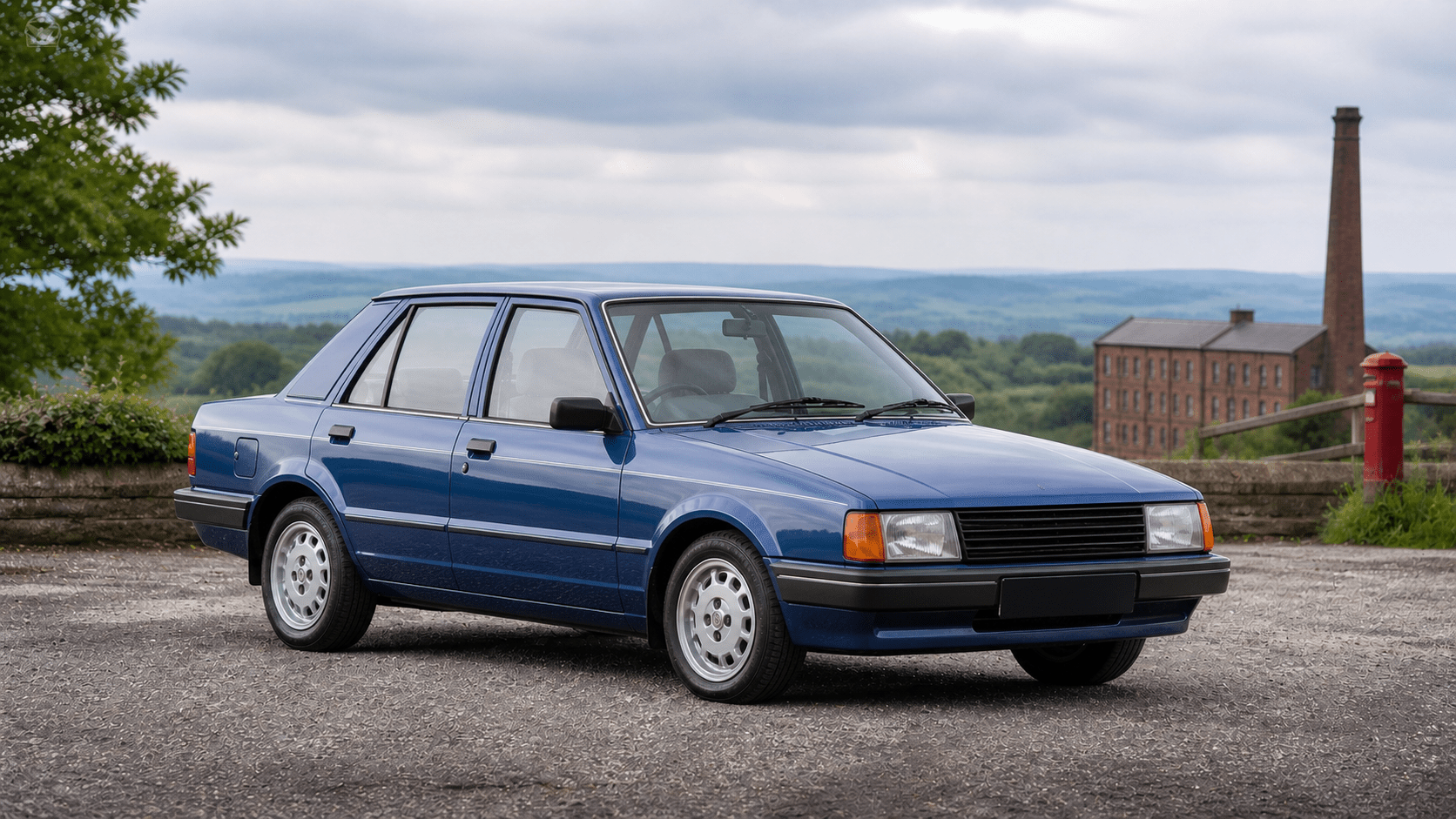
The original Orion is the purest expression of the idea: an angular, booted companion to the contemporary Escort, initially offered in relatively upmarket specifications. Its sharply defined nose, slim pillars and compact saloon proportions now make it unmistakably early-1980s.
Second generation: 1986–1990
The Escort’s major 1986 update brought smoother styling and numerous detail changes to the Orion. This is the shape many British buyers remember best. The model range expanded, and fuel-injected 1.6i versions gave the saloon a more sporting character.
Third generation: 1990–1993
A new Escort family arrived in September 1990, again including an Orion saloon. It was roomier and more rounded but early versions retained familiar eight-valve engines. Ford dropped the Orion name in 1993; the body style continued as the Escort saloon.
Enthusiasts often use Escort generation labels—such as Mk3, Mk4 and Mk5—when describing Orions because the cars share their underlying families. Advertisements are not always consistent, so a model year, photographs and chassis identity are more useful than relying on a seller’s “Mk” description alone.
Ford Orion engines and specifications
The precise range varied by year and market, but British Orions were most commonly powered by Ford’s familiar four-cylinder petrol engines. Early cars used CVH units, including 1.3- and 1.6-litre versions; diesel and later fuel-injected derivatives broadened the choice. The final generation carried over 1.4- and 1.6-litre eight-valve petrol engines and a 1.8 diesel at launch, before Ford’s newer multi-valve engines began transforming the wider Escort range.
| Period | Typical UK engines | Character |
|---|---|---|
| 1983–1986 | 1.3 and 1.6 petrol; 1.6 fuel injection on sporting versions | Light, simple and strongly representative of the original Orion concept |
| 1986–1990 | 1.3 and 1.6 petrol, 1.6 injection, plus diesel availability | Broader range, improved refinement and the best-known Orion styling |
| 1990–1993 | 1.4 and 1.6 petrol, 1.8 diesel; specification evolved during production | Larger-feeling, more modern and closer to the mainstream Escort range |
Engine outputs, transmissions and equipment changed during production and differed between markets. When assessing a particular car, use its VIN, original handbook, registration record and period sales literature rather than applying a general online specification to every example.
Notable Ford Orion versions
Orion Ghia
The Ghia is closely associated with the Orion because the car began life with an aspirational position in Ford’s range. Equipment varied with age, but Ghia trim could bring plusher upholstery, additional instrumentation, central locking, electric windows, a sunroof and exterior brightwork or colour-coded details. Surviving original trim is important: replacing damaged model-specific cabin pieces can be harder than sourcing routine mechanical parts.
Orion 1.6i and 1.6i Ghia
Fuel injection made the 1.6-litre Orion livelier and gave Ford a sporting saloon without creating a production Orion RS Turbo. These are among the versions most likely to interest enthusiasts, which also means identity and originality deserve close scrutiny. Engine swaps, later modifications and cars assembled to resemble a more valuable specification are not automatically bad—but they should be accurately described and priced.
Modified and RS Turbo-converted Orions
The shared Escort ancestry made the Orion a natural candidate for performance conversions. Turbocharged engines, running gear, wheels and styling parts have all been transplanted from sporting Escorts. Ford did not sell a regular production Orion RS Turbo in Britain, so an advertised example should be treated as a conversion unless compelling evidence shows a different and properly documented history.
What is a Ford Orion like to drive?
An Orion’s character depends heavily on generation, engine and condition. The appeal of an early car is not modern performance but light controls, good visibility, compact exterior dimensions and the directness common to everyday cars of its period. The separate boot makes it practical without turning the body into a hatchback, and the mechanical relationship with the Escort means the driving experience is immediately familiar to anyone who knows small 1980s Fords.
A well-kept 1.6 feels more relaxed than a tired or lower-powered example, while injection adds useful response. None should feel vague, excessively noisy or difficult to keep in a straight line. Wandering, clonks, wheel-bearing noise, obstructive gear selection or poor braking are faults to investigate, not simply “old-car character”.
By the final generation the Orion had become more conventional and refined, although contemporary criticism often focused on the early 1990s Escort family’s dynamics and ageing engines. For today’s enthusiast, rarity and nostalgia are more relevant than old class comparisons: an honest Orion offers a very recognisable slice of British family motoring.
Ford Orion common problems
Structural corrosion
Rust is the most important issue because a cosmetically smart car can still need extensive structural work. Check the sills from end to end, floorpan, jacking points, front suspension mounting areas, inner and outer wheelarches, chassis rails, bulkhead, boot floor and the metal around the windscreen and battery tray. Look underneath rather than judging fresh paint from above.
Uneven seams, overspray, thick underseal and plates welded over corrosion are reasons for closer inspection. Repairs are not necessarily a problem if they have been properly cut out, fabricated and documented; poor repairs can cost more to correct than visible rust.
CVH engine condition
Many Orions use Ford’s CVH engine. Listen for excessive top-end noise, check for oil and coolant leaks, watch for exhaust smoke and make sure the cooling fan operates. Evidence of cambelt replacement is valuable. If its age is unknown, budget to renew the belt and associated service items promptly rather than trusting mileage alone.
Gearbox, driveshafts and clutch
Test every gear from cold and warm. Listen for bearing whine, check synchromesh, and accelerate firmly enough to reveal clutch slip. Split driveshaft gaiters lose lubricant and admit dirt; clicking or clonking on lock can indicate joint wear. Leaks around driveshaft seals and the gearbox casing also deserve attention.
Suspension, steering and brakes
Knocks over broken surfaces can come from bushes, ball joints or tired dampers. Check wheel bearings for rumbling, steering gaiters for damage and tyres for uneven wear. Pulling under braking, a long pedal or a handbrake with little effect need diagnosis. Cars that have been lowered or fitted with non-standard wheels should be checked for clearance, geometry and the quality of the parts used.
Electrical equipment and interior trim
Try every switch, including the heater fan, rear-window demister, wipers, central locking, electric windows and sunroof where fitted. Inspect the fuse box and added wiring. Period alarms, stereos and performance conversions sometimes leave untidy circuits behind. Damp carpets may point to windscreen, sunroof or door-seal leaks and can conceal corrosion beneath.
Ford Orion buying checklist
- Confirm the identity. Compare the VIN and registration details with the body, engine and paperwork. Check the DVLA vehicle record and MOT history.
- Inspect the structure. Arrange access to a lift or take someone who understands welded monocoque Fords. Do not let glossy paint replace an underside inspection.
- Start it from cold. A pre-warmed engine can hide starting, smoke, cooling and valvetrain problems.
- Check the specification. Establish whether injection, trim, body kit, engine and wheels are original, period modifications or recent additions.
- Read the history, not only the mileage. Old invoices, MOT records, photographs and owners’ notes help establish long-term care and previous restoration.
- Examine scarce trim. Mechanical service parts are often shared with Escorts, but Orion-specific panels, lamps, badges and interiors may take patience to find.
- Allow for immediate servicing. Fluids, belts, tyres, brakes and rubber components can age even when the car has covered few miles.
- Insure modifications accurately. Declare engine conversions, suspension, wheels and other changes; verify that significant alterations are correctly recorded.
Before travelling, use the official GOV.UK MOT history service and DVLA vehicle information service. These checks do not prove condition or identity, but they can reveal useful discrepancies and recurring advisories.
Parts and ownership support
The Escort connection remains one of the Orion’s strongest ownership advantages. Routine engine, ignition, braking and suspension parts can be easier to locate than the car’s rarity suggests. The challenge is usually model-specific bodywork, exterior trim, lamps, badges and high-grade interior pieces. Used parts, owners’ groups and specialists breaking donor cars can therefore be as important as conventional motor factors.
Before dismantling an original car, photograph fasteners, labels, routing and finishes. Store removed parts even if replacements are fitted. A usable original component can later become the reference needed to correct a reproduction or reverse a modification.
Ford Orion frequently asked questions
Is a Ford Orion just an Escort with a boot?
It shares its platform, engines and much of its cabin and running gear with the Escort, but has a distinct three-box saloon body and was initially positioned as a better-equipped, more formal model. “Escort with a boot” explains the engineering relationship but not the whole product.
When was the Ford Orion made?
The Orion name was used from 1983 until 1993. The saloon body continued after that, but Ford badged it as an Escort saloon.
Did Ford make an Orion RS Turbo?
Ford did not offer a regular production Orion RS Turbo in the UK. Enthusiasts have created convincing conversions using Escort RS Turbo engines, running gear and styling parts, so documentation and accurate description are essential.
Which Ford Orion is most desirable?
Early, original and high-specification cars—particularly scarce injection and Ghia derivatives—often attract enthusiasts. The best purchase is usually the structurally sound, complete and well-documented example, because correcting rust or finding missing trim can outweigh differences between versions.
Are Ford Orion parts difficult to find?
Many service and mechanical parts are shared with Escorts and remain obtainable. Orion-specific panels, rear lamps, badges, mouldings and particular interior trims can be considerably harder to source.
Is the Ford Orion now a classic car?
Yes. Even the youngest Orion-badged cars are more than three decades old, and clean survivors represent a disappearing type of once-common British family transport. Eligibility for tax or MOT exemptions depends on the vehicle’s individual date and current UK rules, not simply the model name.
Research note: production chronology and final-generation details were checked against period and contemporary material, including an AA used-car report covering the Escort and Orion family. Specifications varied by year and market; verify an individual car from its identity and original documentation.