Peugeot 405 performance guide
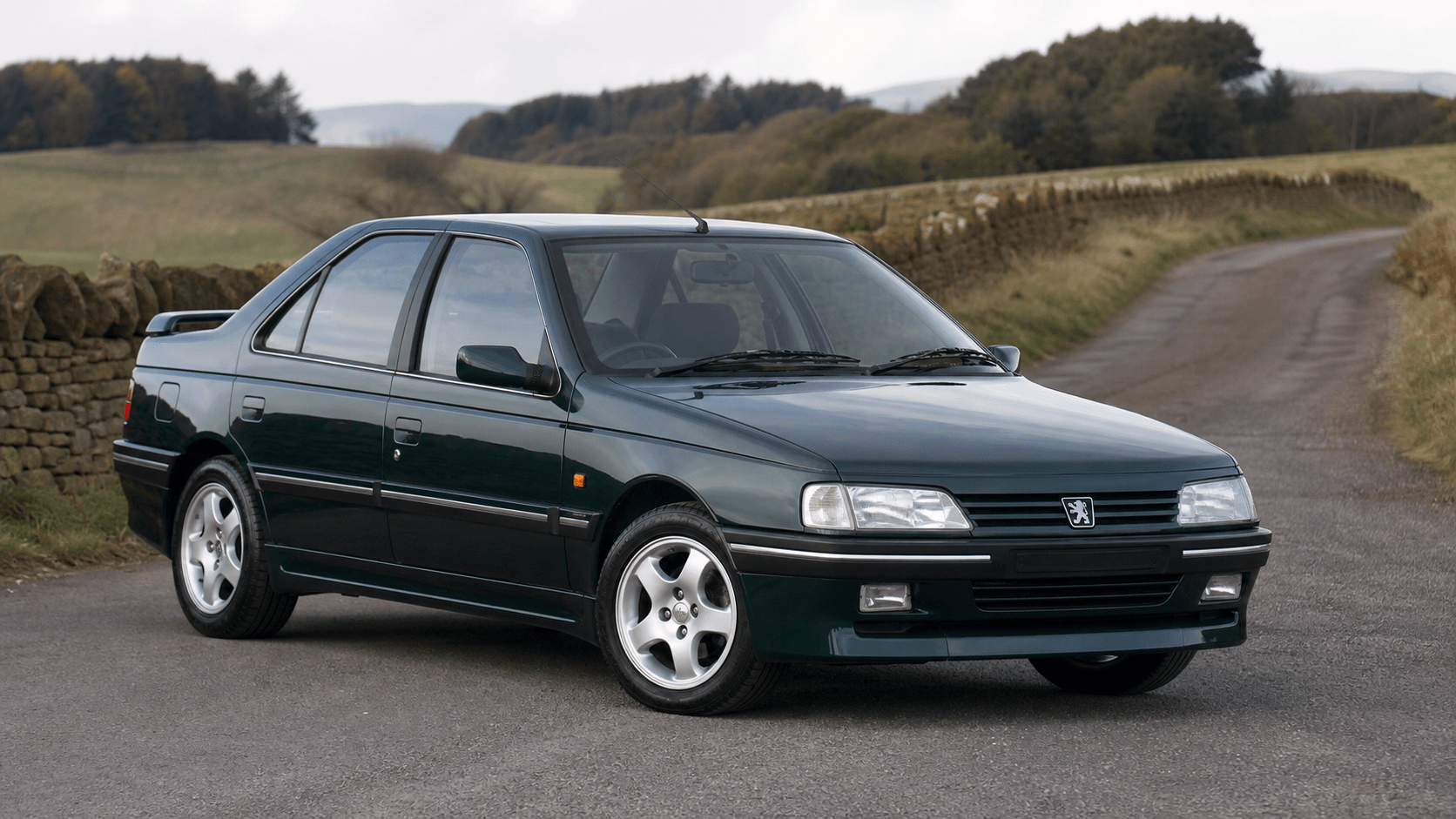
The road-going Peugeot 405 T16 was the ultimate production version of Peugeot’s understated sports saloon. Its turbocharged 2.0-litre engine delivered up to 220hp on overboost, while permanent four-wheel drive and self-levelling rear suspension turned the discreet four-door into an exceptionally sophisticated 1990s performance car.
Peugeot 405 T16 specifications
| Production introduction | 1993 |
|---|---|
| Body | Facelift Peugeot 405 four-door saloon |
| Engine | 1,998cc XU10J4TE, twin-cam 16-valve turbocharged four-cylinder |
| Normal output | 196hp according to Peugeot |
| Overboost output | 220hp for a limited period |
| Transmission | Five-speed manual, permanent four-wheel drive |
| Torque distribution | Nominally 53% front and 47% rear |
| Rear differential | Torsen limited-slip differential |
| Rear suspension | Electro-hydraulic self-levelling system |
| Official performance | 0–62mph in 7.0 seconds; 147mph maximum |
| Production | 1,046 cars according to Peugeot |
Why did Peugeot create the 405 T16?
By the early 1990s the original 405 Mi16 was no longer alone in the fast-family-saloon market. Turbocharged and four-wheel-drive rivals offered more torque and all-weather performance, while emissions equipment had softened some later naturally aspirated engines. Peugeot responded with a flagship that combined the facelifted 405’s refinement with turbocharging and the sophisticated drivetrain already associated with the Mi16x4.
The T16 also connected the road-car range with an extraordinary competition reputation. Peugeot’s 405-shaped rally-raid and Pikes Peak machines had won major events, giving the T16 name enormous resonance. The production saloon used completely different architecture, but it turned that publicity into a fast road car an owner could use with four passengers and luggage.
Engine and overboost explained
The 1,998cc XU10J4TE combined four valves per cylinder with a Garrett turbocharger and charge cooling. Peugeot quoted 196hp in normal operation. Under full load, the management system could temporarily increase boost and release 220hp, provided operating conditions were satisfied.
Overboost was not a permanently selectable 220hp mode. Its availability depended on factors such as throttle demand, engine management and temperature. A car that never produces the expected boost needs diagnosis; indiscriminately increasing boost to imitate the factory figure can endanger a rare engine and drivetrain.
Four-wheel drive and self-levelling rear suspension
Like the Mi16x4, the T16 used permanent four-wheel drive with a nominal 53:47 front-to-rear torque split. A viscous centre coupling managed differences between the axles, while a Torsen rear differential helped apportion drive across the rear wheels.
The electro-hydraulic rear suspension maintained ride height as load changed. This preserved the 405’s comfort and geometry but introduced pumps, pipework, spheres, height control and model-specific components that now demand specialist knowledge.
How does the T16 differ from the Mi16 and Mi16x4?
405 Mi16
Naturally aspirated and front-wheel drive. It is lighter, simpler and the purest expression of the original sporting 405.
405 Mi16x4
Naturally aspirated with permanent four-wheel drive and self-levelling rear suspension. Rarer and more complex than the standard Mi16.
405 T16
Turbocharged Phase 2 flagship with up to 220hp, permanent four-wheel drive and the highest road-car performance.
How to identify a genuine Peugeot 405 T16
- Confirm the VIN, factory model description and registration history with Peugeot or a recognised marque specialist.
- Verify the XU10J4TE turbocharged engine and its original management, induction and charge-cooling equipment.
- Check for the correct permanent-four-wheel-drive floorpan, transfer system, propshaft, rear differential and hydraulic suspension.
- Look for the facelift body, 16-inch five-spoke wheels, headlamp washers, Mi16-derived bumpers, side skirts and spoiler.
- Check interior specification and badges against the car’s market and build date.
- Do not treat a turbo-converted Mi16, replica badge set or modified ordinary 405 as a genuine T16.
Peugeot 405 T16 common problems
Transfer box and four-wheel-drive system
The transfer system is one of the most consequential ownership risks. Listen for whine, vibration, knocks and changes between acceleration and overrun. Check oil levels, leaks and service history. A car can remain driveable while expensive wear develops, so a specialist inspection is essential.
Turbocharger, boost and exhaust manifold
Check boost delivery progressively rather than relying on one full-throttle burst. Smoke, oil consumption, weak boost, unusual turbo noise, cracked exhaust components or improvised control hoses need investigation. Original turbo and management parts are far harder to source than ordinary 405 service components.
Timing belt, lubrication and cooling
Demand dated timing-belt, tensioner and water-pump evidence. Start from cold, check oil pressure and listen for mechanical noise. Inspect the radiator, hoses, fans, thermostat and coolant before allowing the engine to reach temperature. Turbocharged performance makes neglected oil and cooling systems especially risky.
Hydraulic rear suspension
The car should reach and maintain the correct rear ride height. Look for leaking struts or pipes, a tired sphere, electrical faults, pump problems and a sticking height controller. Do not assume every Citroën hydraulic part is interchangeable without confirming its specification.
Structure, suspension and brakes
Inspect sills, jacking points, floors, rear chassis areas, subframe and drivetrain mountings, wheelarches, boot floor and engine-bay seams. Check rear-arm bearings, bushes, dampers, steering, ABS and brakes. Accident repair needs particular scrutiny because alignment affects the entire drivetrain.
Electrics, trim and originality
Test every instrument, warning light, window, lock, heater, air-conditioning function and headlamp washer. Rare seats, wheels, lights, spoilers, hydraulic pieces and engine-management components can be much harder to replace than expected.
Peugeot 405 T16 buying checklist
- Prove identity: verify VIN, engine, drivetrain and factory specification.
- Use a T16 specialist: general classic-car inspection is not enough for this drivetrain.
- Start from cold: check oil pressure, smoke, idle and warning lamps.
- Verify boost correctly: assess normal delivery and overboost without forcing a sick car.
- Test the whole drivetrain: drive at varied speeds, temperatures and loads.
- Exercise the hydraulic rear system: confirm height control and absence of leaks.
- Inspect underneath: include every drivetrain and suspension mounting.
- Check four matching tyres: size and rolling circumference matter on permanent four-wheel drive.
- Inventory rare components: price missing trim and mechanical parts before buying.
- Value history over mileage: specialist invoices and careful use matter more than an unsupported low reading.
Road car or rally-raid car?
The production 405 T16 is a front-engined, four-door road saloon derived from the normal 405. The famous 405 Turbo 16 rally-raid and Pikes Peak cars were purpose-built competition machines related mechanically to Peugeot’s earlier mid-engined rally programme. Their dramatic coupe-like bodies, competition chassis and very high outputs do not describe the road car.
Peugeot records 1988 and 1989 Pikes Peak victories and Paris-Dakar wins in 1989 and 1990 for the competition 405s. That heritage explains the badge and publicity, but buyers should not use rally-car specifications when describing a production T16.
Frequently asked questions
How much power does a Peugeot 405 T16 have?
Peugeot quotes 196hp normally and 220hp during the temporary overboost function.
How many Peugeot 405 T16 road cars were made?
Peugeot’s own heritage press material states that 1,046 were produced.
Is the 405 T16 permanently four-wheel drive?
Yes. It uses permanent four-wheel drive with a nominal 53:47 front-to-rear distribution.
Is the road car related to the Paris-Dakar 405?
They share branding and promotional heritage, but the four-door production saloon is not the same mechanical design as the purpose-built competition car.
Was the Peugeot 405 T16 officially sold in Britain?
The model is primarily associated with left-hand-drive continental markets. Any UK example should have its import, registration and conversion history checked carefully.
Primary source: Peugeot/Stellantis heritage material published in November 2020 confirms the 1993 launch, 196hp normal output, 220hp overboost, seven-second 0–62mph time, 147mph maximum and 1,046-unit production total. Buying checks also reflect established 405 and T16 specialist experience; an individual car still requires hands-on expert assessment.