
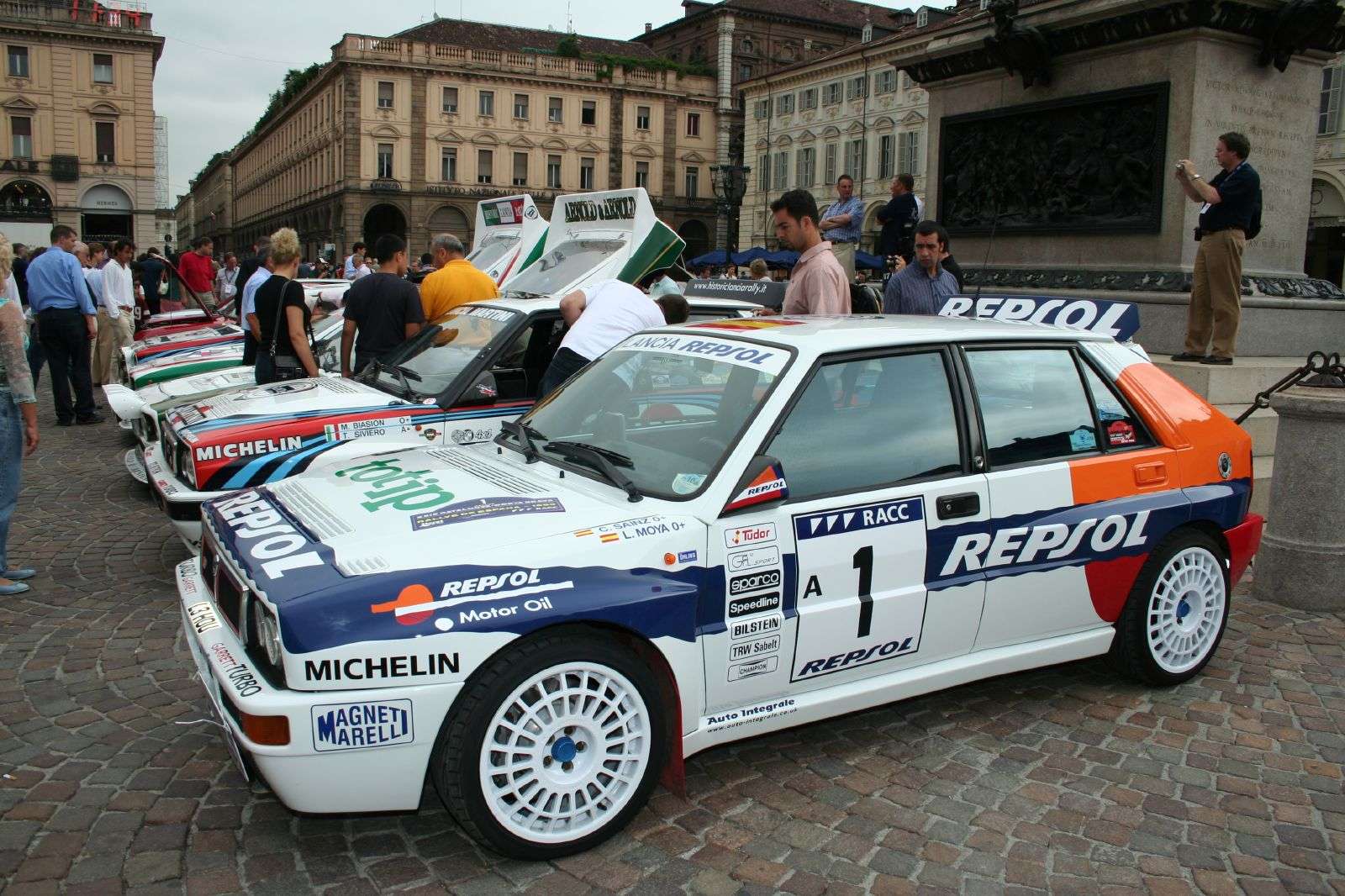
The Lancia Delta HF Integrale is one of the rare cars whose road-going evolution can be read directly through its competition history. What began as a practical Giugiaro hatchback became the basis of the most successful era any manufacturer has enjoyed in the World Rally Championship.

1. The Integrale story began before the Integrale badge
The four-wheel-drive lineage started with the Delta HF 4WD in 1986. The first HF Integrale followed in 1987 with wider arches, more power and improvements developed from competition experience.
2. Its four-wheel-drive system was remarkably sophisticated
A centre differential and Ferguson viscous coupling distributed torque between the axles, while a Torsen differential managed the rear. The layout gave traction without making the road car feel numb or entirely nose-led.
3. Lancia won six straight manufacturers’ titles
Delta-based rally cars secured the World Rally Championship manufacturers’ crown every year from 1987 through 1992. No other manufacturer has matched that sequence of six consecutive titles.
4. The road car kept evolving to serve the rally car
Eight-valve, 16-valve and Evoluzione versions brought wider tracks, larger brakes, revised suspension, more cooling and increasing power. Their muscular bodywork records a series of engineering needs rather than a styling plan created all at once.
Love cars you don’t see every day?
Get forgotten cars, surprising motoring stories and the most interesting finds from Unusual Cars by email.
Free to join. No spam. Unsubscribe whenever you like. See our Privacy Policy.
5. The 16V gained a distinctive bonnet bulge
The twin-cam 16-valve engine required packaging and cooling changes, producing the characteristic raised bonnet. It is one of the simplest visual clues separating it from the earlier eight-valve Integrale.

6. Evoluzione bodywork improved the chassis beneath it
The 1991 Evoluzione used even wider arches to cover a broader track. Stronger suspension mountings, revised geometry and bigger brakes helped turn the final Integrale into far more than a cosmetic update.
7. “Deltona” is an affectionate Italian nickname
Enthusiasts often call the wide-bodied Evoluzione the Deltona—roughly “big Delta.” The nickname distinguishes the most muscular version from the ordinary family hatchback that supplied its basic silhouette.
8. Lancia stopped rallying before production ended
The factory’s WRC programme concluded after the 1992 season, yet road-car production continued into 1994. Late special editions celebrated the model’s history after its frontline competition career was over.

9. Many special editions differed mainly in finish
Martini, Club Italia, Verde York and Final Edition cars used distinctive paint, trim and equipment. Their mechanical basis was usually familiar Evoluzione specification, but rarity has made the best examples especially collectible.
10. Rust is not the only expensive threat
Corrosion matters, but so do neglected transmission fluids, tired differentials, complex turbo plumbing and incorrect accident repairs. A cheap Integrale can require specialist work across the entire drivetrain and structure.
Love cars you don’t see every day?
Get forgotten cars, surprising motoring stories and the most interesting finds from Unusual Cars by email.
Free to join. No spam. Unsubscribe whenever you like. See our Privacy Policy.
More rally-bred road cars
Explore the Lancia archive and our growing collection of rally cars.