
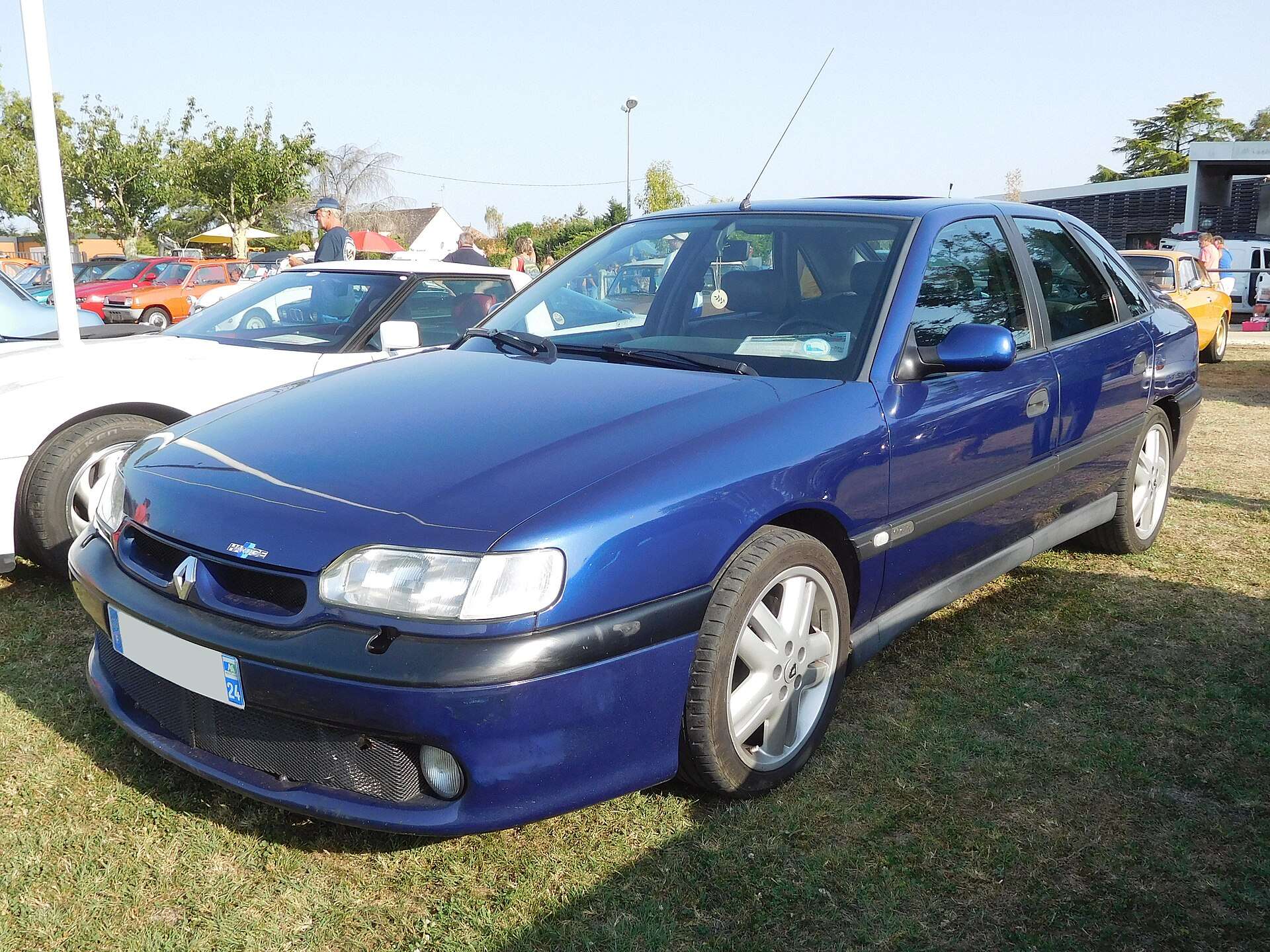
The Renault Safrane Biturbo was France’s audacious answer to the fastest German executive cars. Renault combined its luxurious Safrane V6 Quadra with twin KKK turbochargers, permanent four-wheel drive and specialist development by Hartge and Irmscher. Only 806 were produced, making it one of the rarest and most ambitious road cars ever sold by the company.
Safrane Biturbo at a glance
| Public debut | Geneva Motor Show, March 1992 |
|---|---|
| Production | 806 cars; marketed principally from 1994 to 1996 |
| Engine | 2,963cc PRV V6 with two KKK turbochargers |
| Power | 268hp |
| Torque | 365Nm at 2,500rpm |
| Drive | Permanent four-wheel drive |
| Top speed | 250km/h (155mph) |
| Specialists | Hartge engine development; Irmscher body and assembly work |
Born from Renault’s flagship ambitions
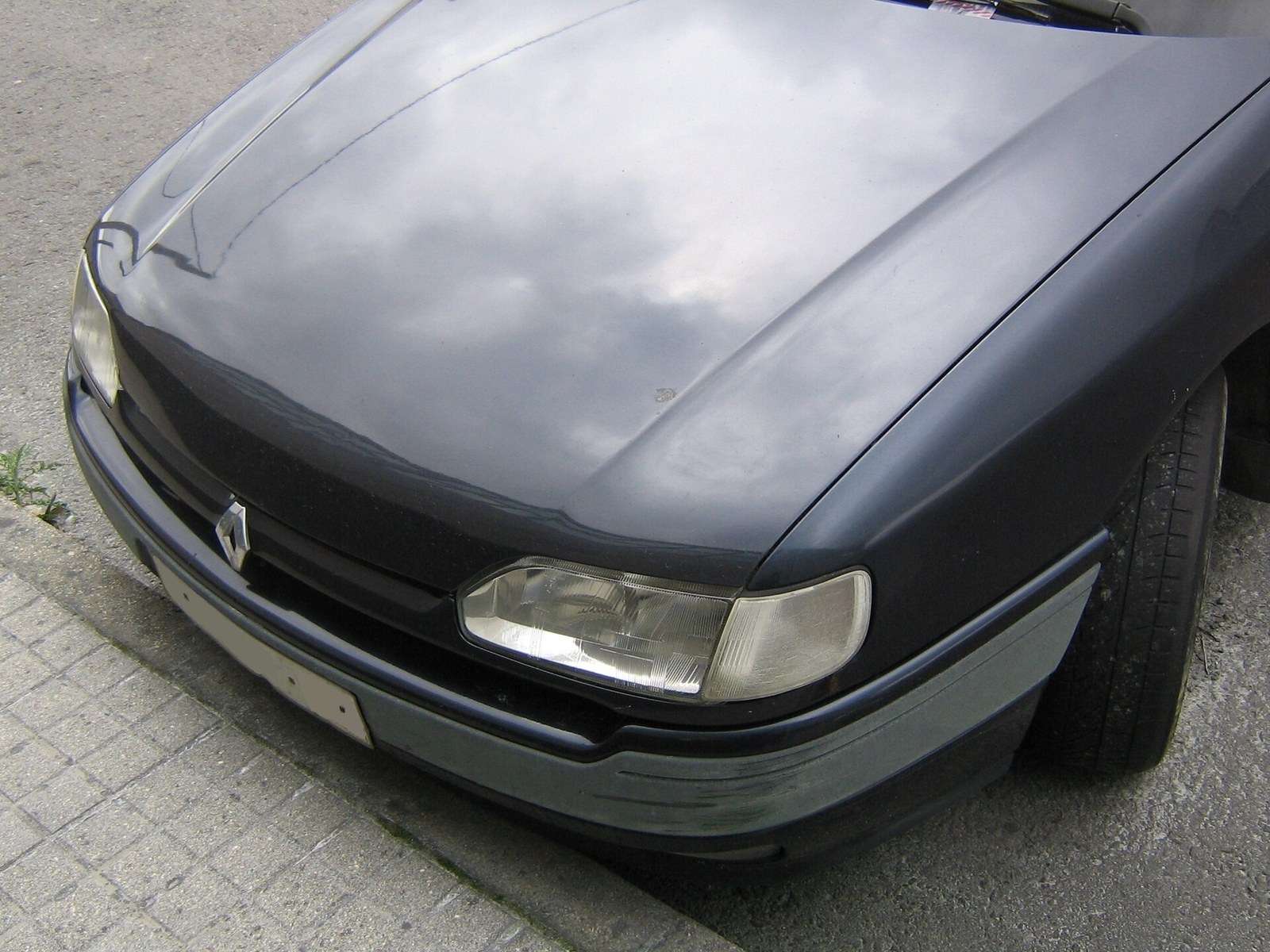
The Safrane replaced the Renault 25 in 1992 and represented the brand’s attempt to challenge prestigious European executive cars with space, comfort and distinctly French engineering. The V6 Quadra already offered the right foundation: a refined PRV engine and four driven wheels. Renault then decided that its flagship needed performance to match its equipment.
A prototype appeared at Geneva in March 1992, but developing a 250km/h production car from a comfortable hatchback required nearly two further years. The finished Biturbo was not an unofficial tuner conversion. It was a Renault catalogue model, conceived with outside specialists but sold as the marque’s definitive flagship.

Hartge, Irmscher and two KKK turbochargers
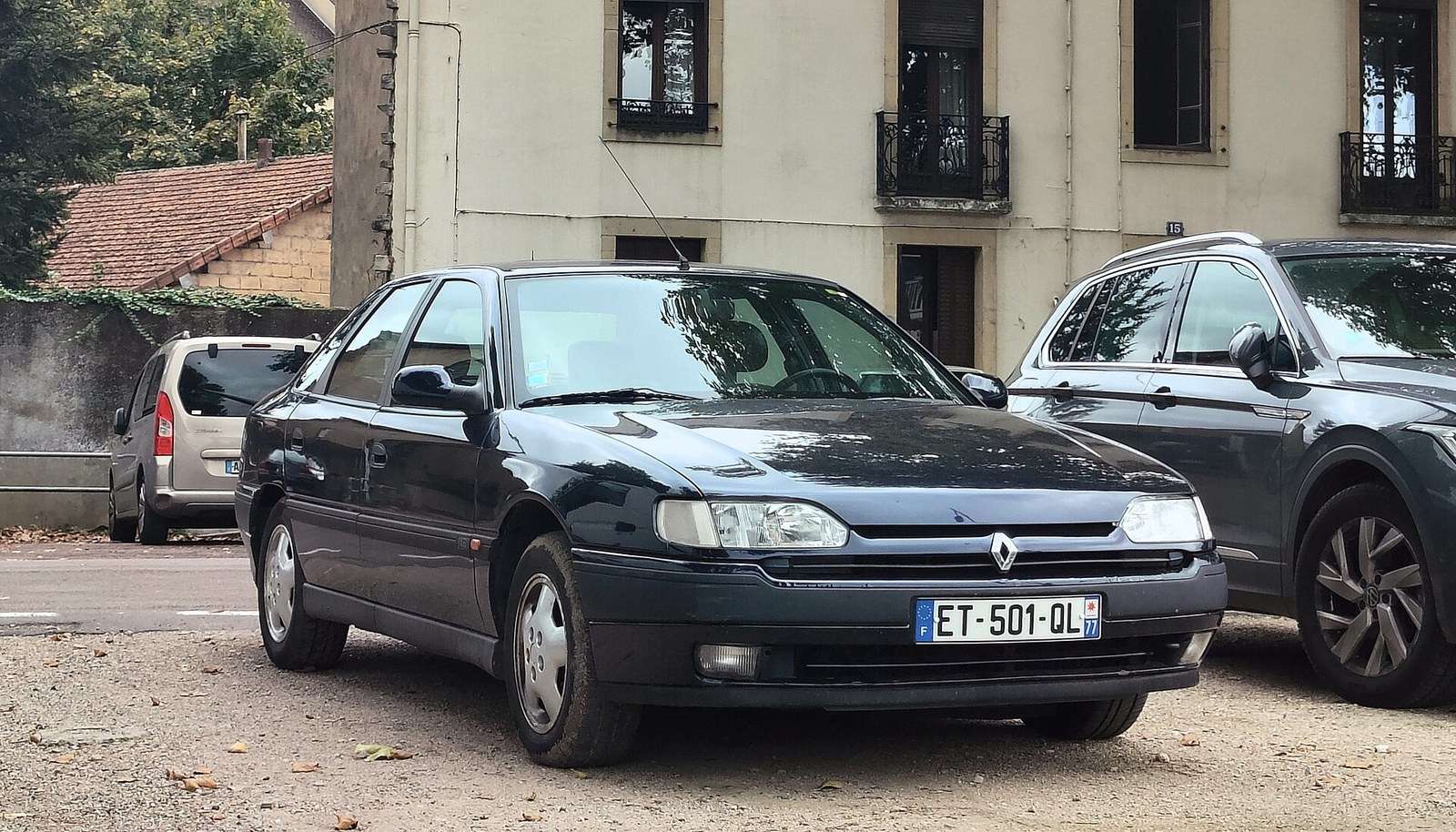
Renault turned to two German specialists. Hartge, celebrated for high-performance BMWs, developed the 2,963cc PRV V6 with a pair of KKK turbochargers. The system produced 268hp and 365Nm, with Renault stating that 97 per cent of maximum torque was available from 2,300 to 5,000rpm. The aim was broad, refined force rather than a theatrical single-turbo hit.
Irmscher handled the visual and production engineering. Its changes included deeper bumpers, distinctive round front lamps, a small rear spoiler, an oblong exhaust outlet and 17-inch double-spoke wheels. The body remained discreet enough to pass as an ordinary Safrane until its details came into focus.
Four-wheel drive and adaptive suspension
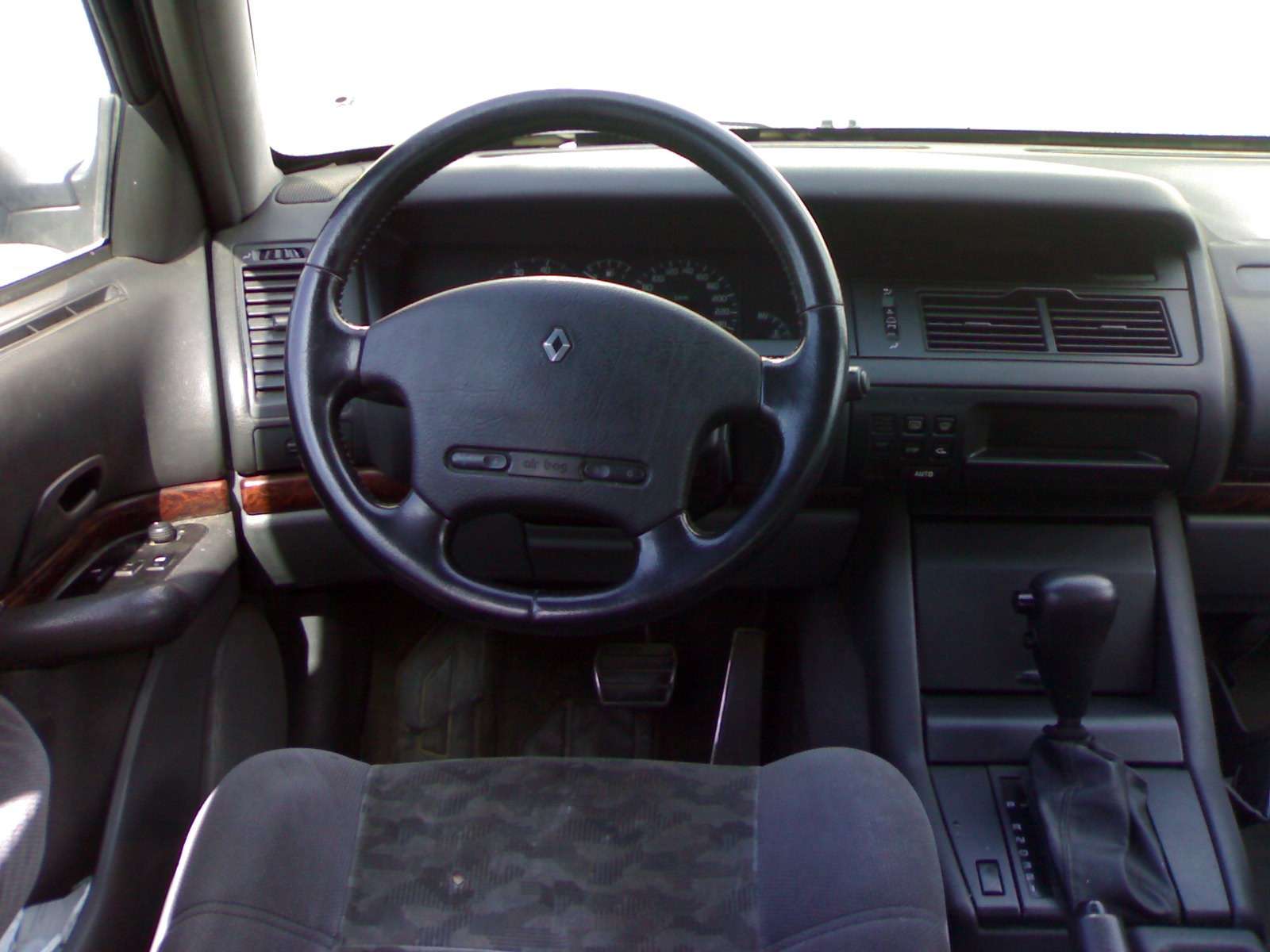
The Biturbo retained the Quadra’s permanent four-wheel-drive system with a viscous coupling, giving the large hatchback secure traction in poor weather. Electronically controlled dampers adjusted their response according to speed and driving conditions, an expensive and sophisticated solution for the early 1990s.
This was not intended to feel like a stripped-out sports saloon. The Safrane’s mission was rapid, composed long-distance travel. Its hatchback body delivered unusual practicality, while RXE and Baccara specifications provided the luxury expected of a flagship, including elaborate seating, climate control and high-grade audio equipment.
Love cars you don’t see every day?
Get forgotten cars, surprising motoring stories and the most interesting finds from Unusual Cars by email.
Free to join. No spam. Unsubscribe whenever you like. See our privacy policy.
Why only 806 were built
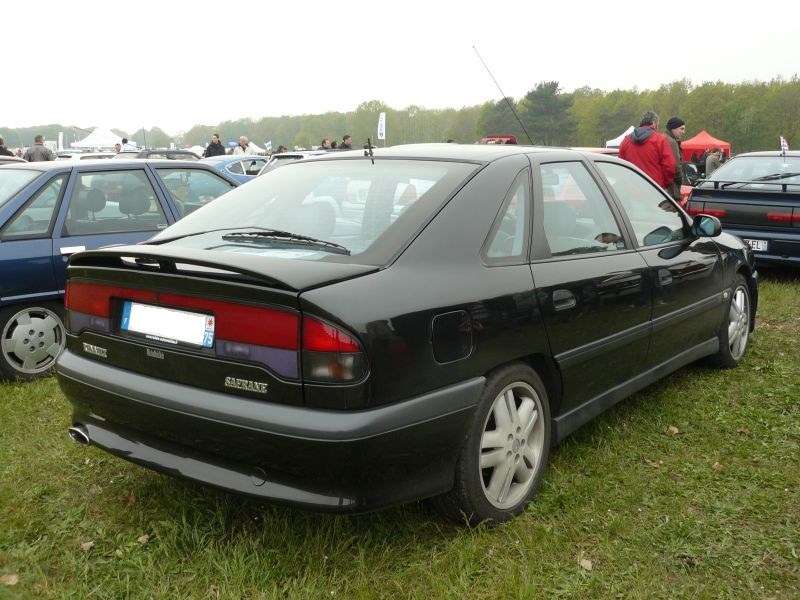
The Biturbo entered a market dominated by manufacturers with deeply established executive-car reputations. Its complex production route and specialist hardware made it expensive, yet the Renault badge did not carry the status of its German rivals. The result was admiration without volume: Renault’s heritage archive records just 806 examples.
That scarcity was not manufactured as a modern collector strategy. It was the consequence of an ambitious car meeting a difficult commercial reality. Today it gives the Safrane an importance beyond rarity: it represents a moment when Renault was willing to commission a twin-turbo, four-wheel-drive flagship simply to prove it could compete.
The Long Cours that never reached production
In 1994, Heuliez presented the Safrane Long Cours, an elegant estate interpretation associated with the Biturbo idea. Its extended roofline and carefully shaped rear body suggested an extraordinary fast French grand tourer, but it remained a show car. The same year, a Safrane Biturbo appeared as a safety car at the Monaco Grand Prix—an unusually glamorous role for Renault’s understated flagship.
Why the Safrane Biturbo matters
Modern performance cars routinely combine turbocharging, adaptive dampers and four-wheel drive. In the early 1990s, putting all three into a large Renault was exceptional. The Biturbo also linked several strands of European engineering: a Franco-Swedish-era executive-car platform, the Franco-Swedish PRV engine family, German tuning expertise and Renault’s own tradition of turbocharged road cars.
It was not the fastest saloon of its generation, nor the most commercially successful. Its excellence lies in its completeness and improbability: quiet luxury, genuine 155mph performance and rare specialist craftsmanship wearing one of the least obvious badges imaginable.
Renault Safrane Biturbo FAQ
How many Safrane Biturbos were built?
Renault records 806 examples.
Who built the Safrane Biturbo?
Renault commissioned Hartge to develop the twin-turbo engine, while Irmscher contributed body, chassis and assembly work.
How powerful was it?
The 2,963cc twin-turbo PRV V6 produced 268hp and 365Nm.
Was it four-wheel drive?
Yes. It used the Safrane Quadra’s permanent four-wheel-drive architecture.
Continue the Renault story
Read about the earlier Renault 21 Turbo, the rally-bred Renault 5 Turbo, or the lightweight Clio Williams.
Research note: Production, engine, performance and specialist-development details were checked against Renault’s official The Originals archive and Renault press material.