
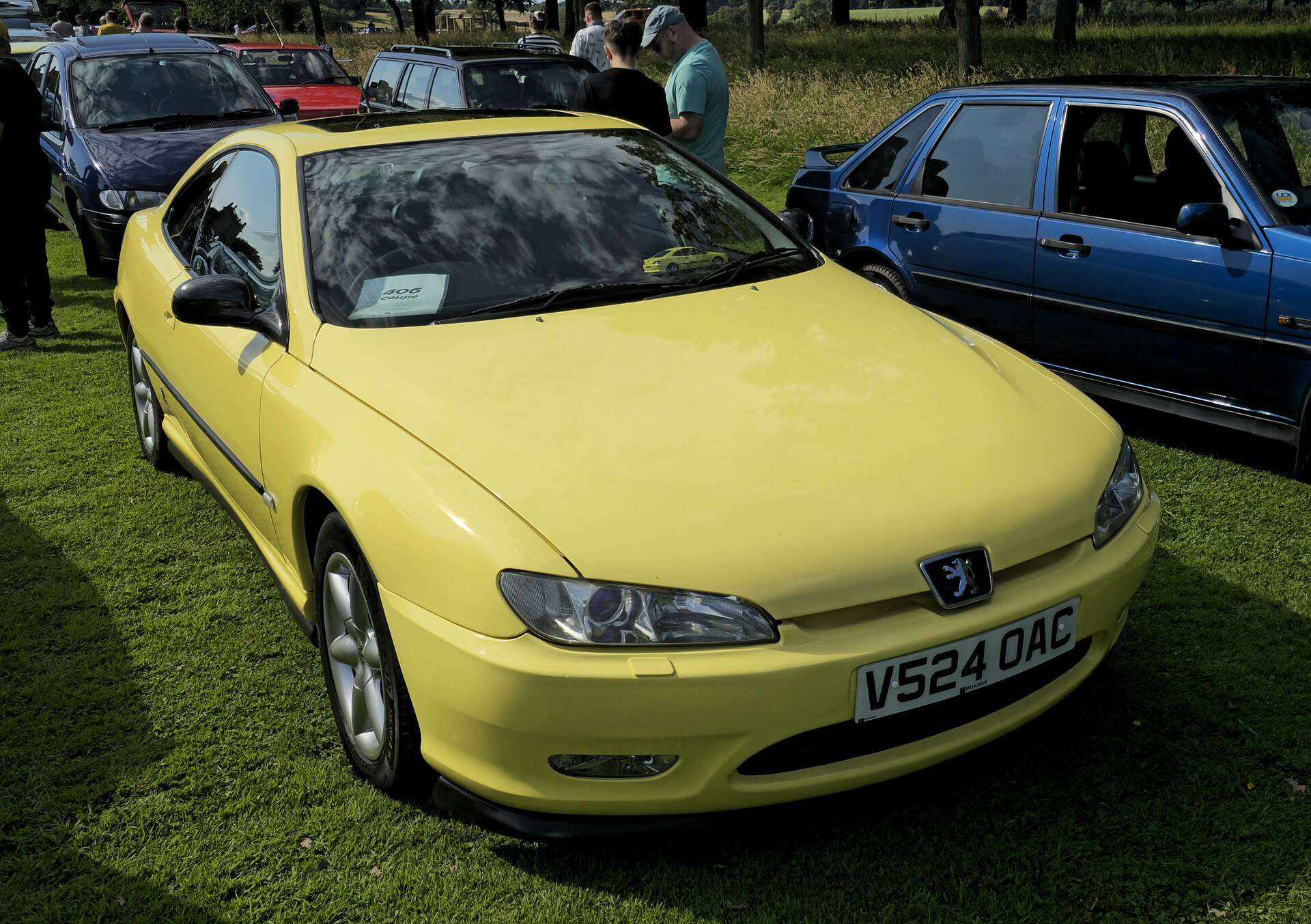
The Peugeot 406 Coupé was not merely a two-door 406: Pininfarina designed, engineered and manufactured a distinctive grand tourer with its own body and lasting presence.
History and Pininfarina connection
The 406 Coupé reunited Peugeot with a long-standing Italian partner. Official Peugeot history describes it as the first collaboration in which Pininfarina handled every stage from design and engineering through production and final approval. Its thin lamps, low nose and clean flanks avoided the add-on styling fashionable in the late 1990s.

Engines and transmissions
2.0 16V
The accessible petrol model launched with 135hp, later 137hp. Condition and maintenance now matter more than headline performance.
3.0 V6
Initially 194hp and later 207hp, with manual or automatic transmission depending on year and market.
2.2 petrol
A later four-cylinder compromise with useful torque and lower mechanical complexity than the V6.
2.2 HDi
Introduced in 2001 with 133hp and an early FAP particulate-filter system.
V6 character
The ES9 V6 suits the Coupé’s grand-touring role, but buyers must budget for timing-belt service, cooling-system condition, ignition and oil leaks. Manual cars offer greater involvement; an automatic must shift cleanly from cold and hot with evidence of appropriate maintenance.

Phases and special editions
Early cars carry the pure original nose. Later revisions changed trim, equipment and finally the front bumper treatment. Peugeot also produced a numbered Settant’anni edition celebrating Pininfarina’s 70th anniversary, restricted to V6 power and distinctive colours and trim.
Common problems
- Timing belts and cooling: verify belts, tensioners, water pump, radiator, fans and coolant history.
- Front suspension: listen for knocks and inspect bushes, links and steering components.
- Body and underside: check sills, jacking areas, floor, rear structure and accident repairs.
- Windows and doors: frameless glass must drop, rise and seal correctly.
- Air conditioning and electrics: test every function, including seats and warning lights.
- HDi: investigate FAP history, additive system, turbo condition and short-trip use.
Buying advice
Completeness is critical because Coupé-specific lamps, glass, bumpers and interior pieces are not interchangeable with the saloon. Confirm engine, gearbox and original specification from the VIN. A cosmetically tired but complete car may be a safer restoration than a dismantled example with missing trim.

Frequently asked questions
Was the Peugeot 406 Coupé built by Pininfarina?
Yes. Pininfarina designed, engineered and manufactured the Coupé in Italy rather than merely supplying styling sketches.
Which Peugeot 406 Coupé engine is best?
The V6 provides the richest grand-touring character, while the 2.0 and 2.2 petrol cars can be simpler to own. A well-maintained car is more important than engine choice.
How much power does the 406 Coupé V6 have?
Early 3.0-litre V6 cars produced 194hp. A later engine revision raised the official figure to 207hp.
Did Peugeot make a diesel 406 Coupé?
Yes. The 2.2 HDi arrived with 133hp and an early FAP particulate-filter system, giving strong cruising range but adding emissions-system maintenance.
What is the 406 Coupé Settant’anni?
It is a numbered V6 special edition created to mark Pininfarina’s 70th anniversary, with distinctive colours, trim and equipment.
What should be checked first on a 406 Coupé?
Check the timing-belt and cooling history, structural condition, frameless-window operation and completeness of Coupé-specific body and interior parts.
Love cars you don’t see every day?
Get forgotten cars, surprising motoring stories and the most interesting finds from Unusual Cars by email.
Free to join. No spam. Unsubscribe whenever you like. See our privacy policy.
Research note: launch timing, engine outputs, Pininfarina responsibility and special-edition history were checked against official Peugeot/Stellantis heritage material.