
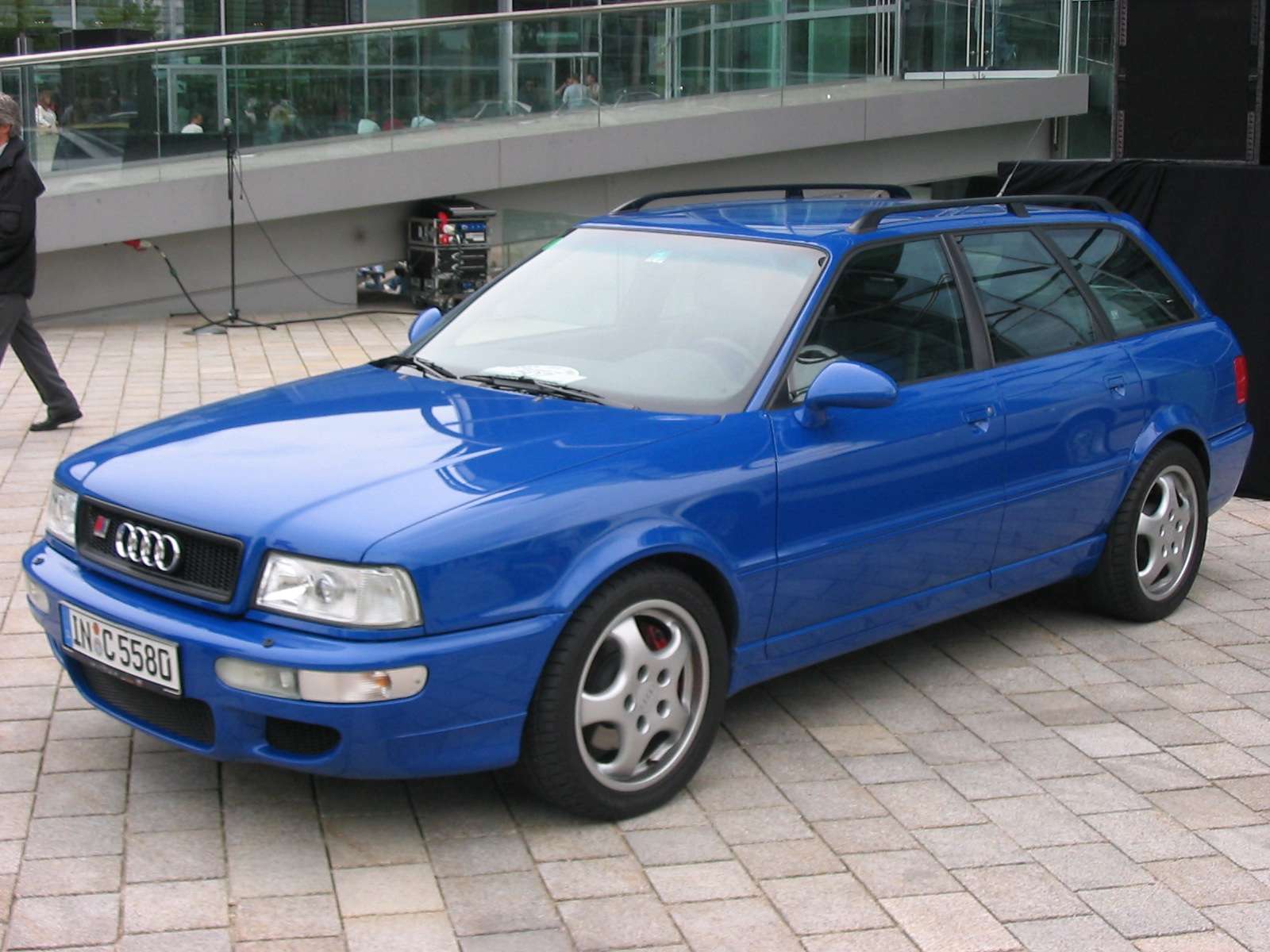
The Audi RS2 Avant was the car that made a very fast estate feel like a serious performance category rather than an eccentric one-off. Developed jointly by Audi and Porsche, assembled at Zuffenhausen and sold in 1994 and 1995, it combined the practical body of the Audi 80 Avant with a 315PS turbocharged five-cylinder engine, permanent quattro four-wheel drive and extensive Porsche involvement.

It was also the first Audi to wear the RS name. Audi had already established quattro in rallying and had created fast road cars such as the Ur-quattro and S2, but the RS2 moved the formula into a more specialised, more expensive and more focused territory. Its influence can be traced through every later RS Avant.
Where the RS2 came from
The immediate starting point was the Audi S2 Avant, itself part of the B4-generation Audi 80 family. Audi wanted a flagship that could demonstrate what its five-cylinder turbo engine and quattro system could do in a road car without simply repeating the coupé-led formula of the original quattro.
Porsche supplied development and production expertise at a useful moment between its own major programmes. The completed cars were assembled at Porsche’s Zuffenhausen facility. That detail is more than a marketing flourish: Porsche components and calibration helped shape the brakes, suspension, wheels, mirrors and engine package, while Audi retained the core architecture and all-weather identity.
The 2.2-litre five-cylinder engine
The RS2 used a heavily developed version of Audi’s 2.2-litre, 20-valve turbocharged inline-five. Output rose to 315PS, with official period figures of 410Nm. Changes included a larger turbocharger, revised intake and exhaust arrangements, different engine management and supporting hardware able to sustain the higher output.
Contemporary performance figures remain remarkable: Audi’s own heritage material records 0–100km/h in around five seconds and a maximum speed of 262km/h. The power delivery was not modern and linear; its character came from the combination of low-rev restraint, rising boost and the unmistakable five-cylinder sound.

Why the Porsche connection mattered
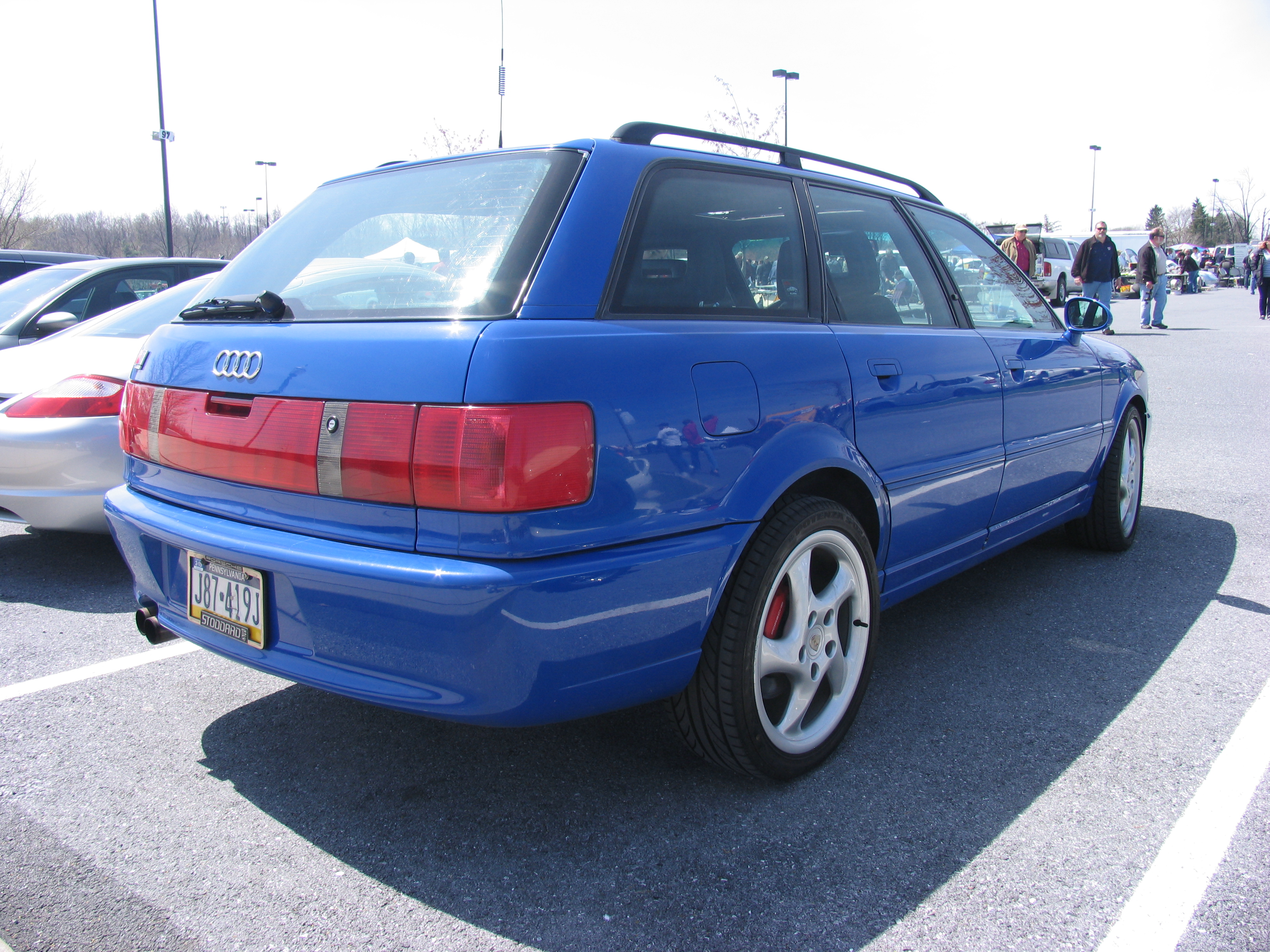
The RS2 wore 17-inch wheels closely related to those used by Porsche, plus Porsche-branded braking hardware and door mirrors familiar from the 964-generation 911. The point was not to turn an Audi estate into a disguised Porsche. It was to give the Audi the braking, grip and visual detail appropriate to its performance.
The collaboration also gave the RS2 a credibility that specifications alone could not have created. Its discreet estate shape, Porsche association and limited production made it feel like an engineering project rather than a conventional trim level.

Quattro traction and the estate-car idea
Permanent four-wheel drive was central to the car. It allowed the RS2 to deploy its torque in poor weather and reinforced the practical argument: this was a rapid car designed to remain usable throughout the year, with five doors and genuine luggage space.
That combination is the reason the RS2 matters beyond rarity. Other fast estates existed, but the Audi made the high-performance Avant a durable part of the market. Later RS4 and RS6 models became larger and more sophisticated, yet the basic promise was already present here.
Love cars you don’t see every day?
Get forgotten cars, surprising motoring stories and the most interesting finds from Unusual Cars by email.
Free to join. No spam. Unsubscribe whenever you like. See our privacy policy.
Production and rarity
Audi’s heritage records state that 2,908 RS2s were built, against an initial plan for 2,200. Production was short and the car was expensive, so it was never common even when new. Surviving numbers are complicated by imports, left-hand-drive cars and country-specific registration data, but there is no doubt that genuine, correctly specified examples are scarce.
Rarity makes identity important. A convincing RS2 should be supported by its chassis details, engine identity, original equipment and documentary history. The quantity of replica parts and modified Audi 80 Avants means that appearance alone is not enough.

What made it different from an S2 Avant?
The S2 Avant provided the foundation, but the RS2 was not simply an S2 with more boost. The engine specification, Porsche-developed details, larger brakes, wheel and tyre package, suspension calibration, body trim and production story are all distinct. The RS2 also occupied a different position in Audi’s range: it was a specialist flagship and the beginning of the RS lineage.
Cabin and everyday usability
Inside, the RS2 remained recognisably an Audi 80. That is part of its appeal. The driving position and switchgear are sober, the materials are durable, and the cabin does not shout about the performance available. Depending on specification, buyers could find leather or Alcantara trim, supportive sports seats and white-faced instruments.
The estate body makes the car genuinely useful, although age now changes the ownership equation. Correct trim, switches, lamps, wheels and RS2-specific mechanical parts can be difficult and costly to replace. A car that appears complete and original may therefore be more desirable than a modified example with a larger headline power figure.

Why the Audi RS2 still matters
The RS2 joined several ideas that had previously existed separately: rally-bred quattro credibility, a turbocharged five-cylinder engine, Porsche development and an estate body. It proved that practicality did not have to dilute a performance car’s sense of occasion.
More importantly, it gave Audi a repeatable identity. The later RS4 and RS6 were not copies, but their position as devastatingly fast, discreetly styled all-weather estates was established by the RS2. That makes this small-production 1990s Avant one of the most consequential Audis of its era.
Frequently asked questions
How many Audi RS2 Avants were made?
Audi says 2,908 examples were built, exceeding the original plan for 2,200 cars.
Was the Audi RS2 built by Porsche?
It was jointly developed by Audi and Porsche and assembled at Porsche’s Zuffenhausen facility. It remained an Audi product, but used significant Porsche engineering input and components.
What engine does the RS2 use?
It uses a 2.2-litre, 20-valve turbocharged inline-five producing 315PS and 410Nm in official Audi heritage specifications.
Is the RS2 the first Audi RS model?
Yes. The RS2 introduced the RS badge and established the specialist high-performance line that later included the RS4 and RS6.
How is an RS2 different from an S2 Avant?
The RS2 has a substantially developed engine, Porsche-influenced brakes and chassis details, unique trim and wheels, and a distinct limited-production history.
Research sources
- Audi MediaCenter: history of Audi RS models
- Audi Tradition
- Wikimedia Commons image and licence records linked beneath each photograph.
Specifications vary by market and production date. Confirm an individual car from its chassis, engine, equipment and original documentation.
Continue the Audi story
Browse the Rare & Performance Audi hub for more model histories, engineering stories and connected guides.