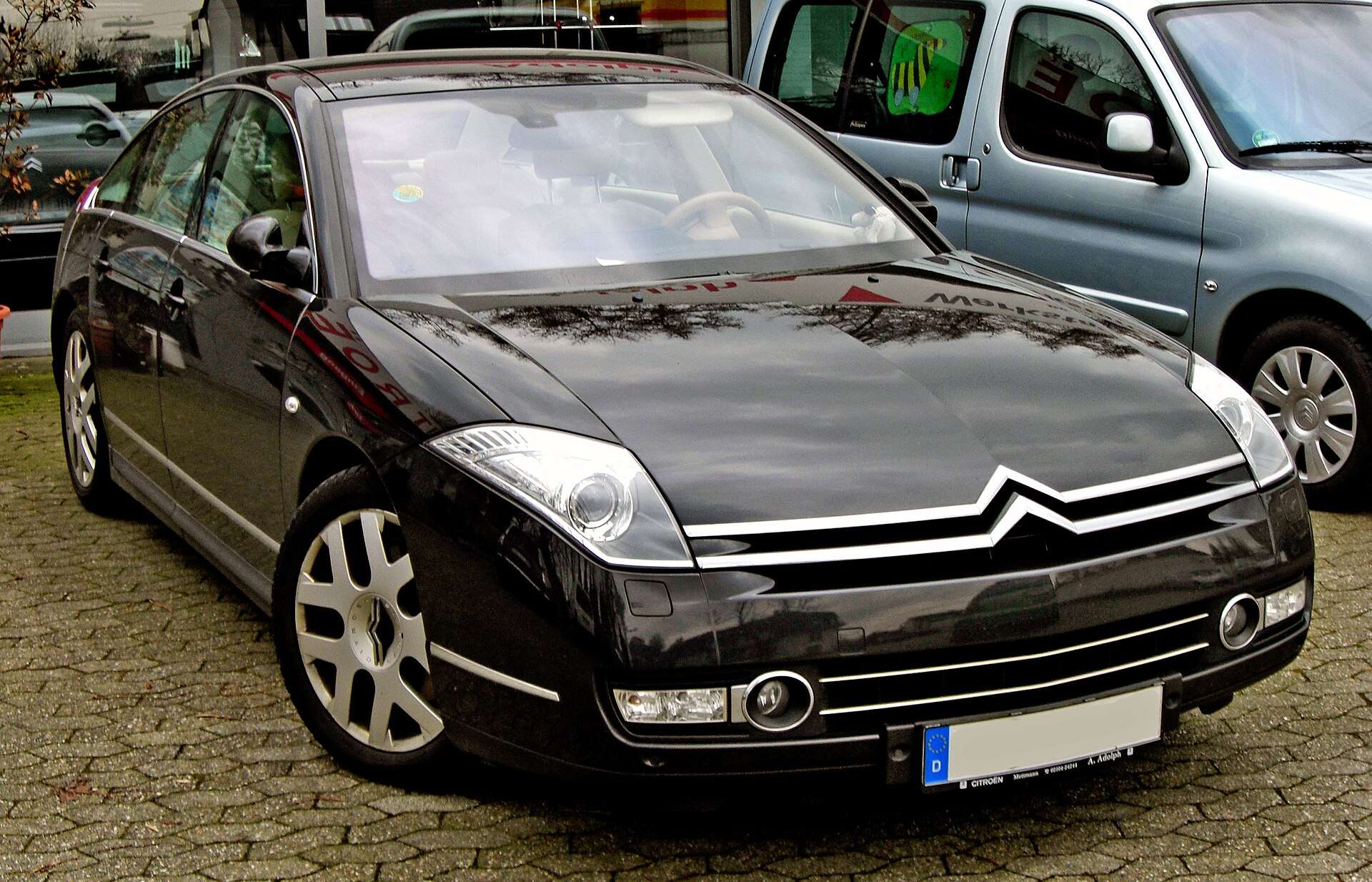
The Citroën C6 revived the marque’s tradition of distinctive executive cars with a concave rear window, active aerodynamics and sophisticated hydraulic suspension.
Previewed by the 1999 C6 Lignage concept, the production C6 arrived in 2005 and continued until 2012. Only 23,421 were built, making it far rarer than its German rivals.

History and development
Power came from V6 petrol and HDi diesel engines, later joined by the 3.0 HDi. Hydractive 3+ suspension, an active rear spoiler, head-up display and lane-departure warning supported its flagship role.
Engineering and character
The suspension adjusts height and damping while preserving the long-travel comfort expected of a large Citroën. Frameless windows and the curved rear screen give the body a distinctive visual identity.
Love cars you don’t see every day?
Get forgotten cars, surprising motoring stories and the most interesting finds from Unusual Cars by email.
Free to join. No spam. Unsubscribe whenever you like. See our privacy policy.

Models and versions explained
Early 3.0 petrol and 2.7 HDi cars were followed by the stronger 3.0 HDi. Equipment levels and suspension specification vary by market, so original build data is valuable.
What it is like to drive
The C6 is quiet, stable and relaxing over long distances. It prioritises comfort and progressive responses rather than the firm control of contemporary German saloons.
Ownership and preservation
Check suspension leaks and height operation, front wishbone bushes, cooling, electronic modules, window mechanisms and complete service history. Diesel intake and emissions systems require informed diagnosis.
Condition, history and originality matter more than headline mileage. Confirm the identity from chassis records, inspect the structure on a lift and budget for preventative work. Specialist knowledge is particularly valuable where Citroën’s hydraulics, electronics or rare model-specific components are involved.
Why it matters now
As Citroën’s last hydropneumatic production flagship, the C6 is increasingly recognised as a significant endpoint in the company’s engineering tradition.
Frequently asked questions
When was the C6 built?
Production ran from 2005 to 2012.
How many C6s were made?
Citroën heritage records 23,421 examples.
Does every C6 have hydraulic suspension?
Most European C6 models use Hydractive 3+, though market specifications should be checked.
What is unusual about its rear window?
It is concave, a visual link to historic Citroën design themes.
Which engines were offered?
The main choices were 3.0 petrol V6 and 2.7 or 3.0 HDi diesel V6 engines, with some market variation.
Continue the Citroën story
Browse the Rare & Performance Citroëns hub, read our BX 4TC guide or discover the 10 Things Saxo VTR/VTS feature.
Research note: Dates, production totals and technical specifications were checked against Citroën/Stellantis heritage sources and contemporary model documentation. Equipment and outputs varied by market and year.