
A towering rear wing, a naturally aspirated straight-six and a reason to exist that starts on a racing grid. The Opel Omega Evolution 500 is one of the most intriguing performance saloons of the early 1990s—and this 1992 example is heading to auction with a £40,000 lower estimate.
This page contains affiliate links. We may earn a commission from qualifying purchases made through them.
Say “fast Carlton” to a British car enthusiast and the conversation will usually jump straight to Lotus. Understandably so: the Lotus Carlton made the idea of a supercar-humbling executive saloon impossible to ignore. But there is another branch of the same family tree that deserves a much closer look.
The Evolution 500 takes that familiar, sensible four-door shape and gives it a completely different job. It was developed with Irmscher for Opel’s touring-car programme. Its appeal is the connection between a road-going saloon and the machinery built to fight on Germany’s circuits.
This black example, advertised by Iconic Auctioneers on eBay, is exactly the sort of car that can disappear into the background until someone notices the wing. Then the questions begin.

What is the Opel Omega Evolution 500?
The Evo 500 grew out of the Omega A 3000 24V. For UK readers, the Omega A belongs to the same generation of executive saloon sold here as the Vauxhall Carlton. That shared foundation explains the family resemblance, but it does not make the Evolution a Lotus model.
Finished Omega 3000s were taken from Opel production and sent to Irmscher at Remshalden for conversion. Engine, bodywork and interior changes turned the big saloon into a specialist low-volume derivative. Irmscher’s own recollections, published by Opel, place Volker Strycek and Franz Engstler in the racing Evolution at the 1991 DTM season’s AVUS meeting.
The racing programme placed Opel in the touring-car world of the BMW M3 and Mercedes-Benz 190E. It is that context—big saloons being adapted into serious competition machinery—that makes the Evo’s unlikely shape so engaging. The road version preserves the visual connection without pretending to offer the racing car’s performance.
Homologation is the key to understanding it. Production-based racing rules required a road-car counterpart for the competition development. “Evolution 500” refers to that special-series requirement; it is not a claim that the showroom car produced 500 horsepower.
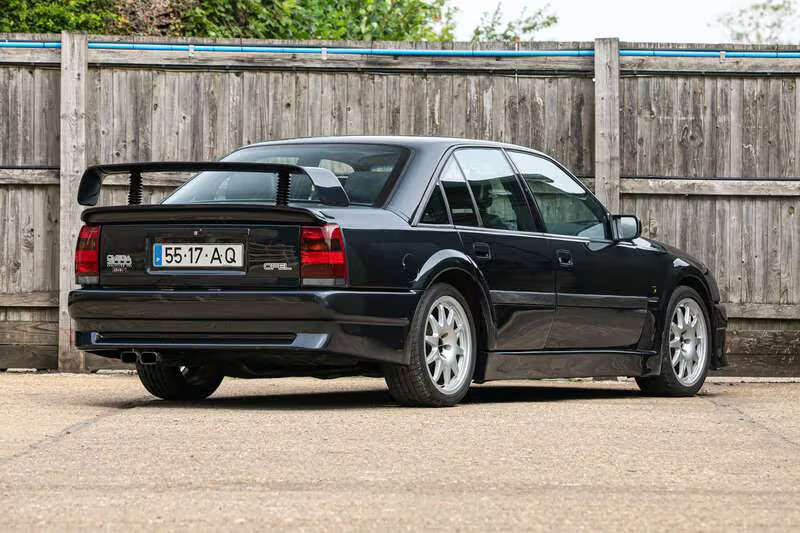
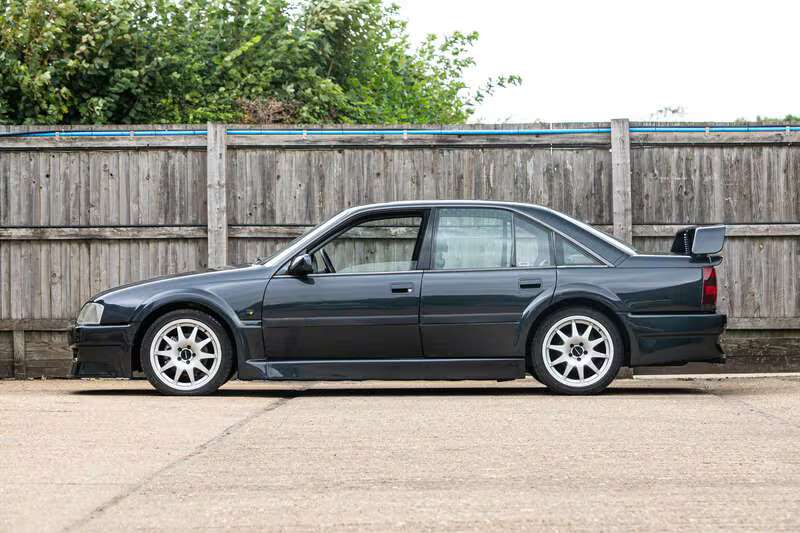
The result is a wonderful contradiction: enough doors and cabin space to look thoroughly respectable, wrapped in bodywork with a rather less respectable agenda. You can recognise the executive saloon underneath, but there is no mistaking what Irmscher wanted you to notice.
How rare is it—and were 500 actually built?
This is a model for which tidy-looking numbers deserve caution. The auction description believes about 330 cars were completed and estimates around 130 survive. The Opel EVO Club’s account puts production at roughly 320, while other published histories repeat the nominal 500 figure.
Specialist documentation at evo-500.de explicitly acknowledges that detailed production records are no longer known and suggests a little over 300 rather than the intended 500. Consequently, “a few hundred built” is more defensible than declaring a precise total beyond dispute.
The survival figure needs the same care. It is an estimate, not a current worldwide census. A small enthusiast community may know many individual cars exceptionally well without accounting for every survivor in storage or overseas.
What matters here is that this is an exceptionally uncommon factory-linked derivative with a genuine competition rationale. Its obscurity adds to the attraction: the car invites a conversation rather than relying on a badge everyone already understands.

The engine: Irmscher’s approach, without Lotus’s turbochargers
The core mechanical difference is straightforward. The standard 3.0-litre Evo 500 uses a naturally aspirated, 24-valve straight-six. The Lotus Carlton uses a larger 3.6-litre straight-six with two turbochargers.
The Evo’s C30XEI engine was more than an ordinary production unit wearing an impressive badge. Specialist technical documentation records a different block casting, modified crankshaft, connecting rods and pistons, cylinder-head work, revised camshafts and changes to the intake system.
Those details give the car substance beneath its visual drama. The extra performance was achieved by developing the engine’s breathing and internal specification, rather than simply increasing boost pressure. It is a different engineering route to a fast saloon, and an interesting one for anyone drawn to naturally aspirated engines.
The seller quotes 227bhp and 207lb ft. The period Opel sheet gives 230PS and 280Nm; those are essentially the same output expressed in different units. The approximately 227bhp figure is the appropriate conversion of 230 metric horsepower, rather than a missing three horsepower.
The auction description also discusses competition engines capable of close to 10,000rpm and outputs above 400bhp. Those statements concern the racing development. They should not be read as permission to rev this road car to 10,000rpm, or as evidence that this particular engine has racing-car output.

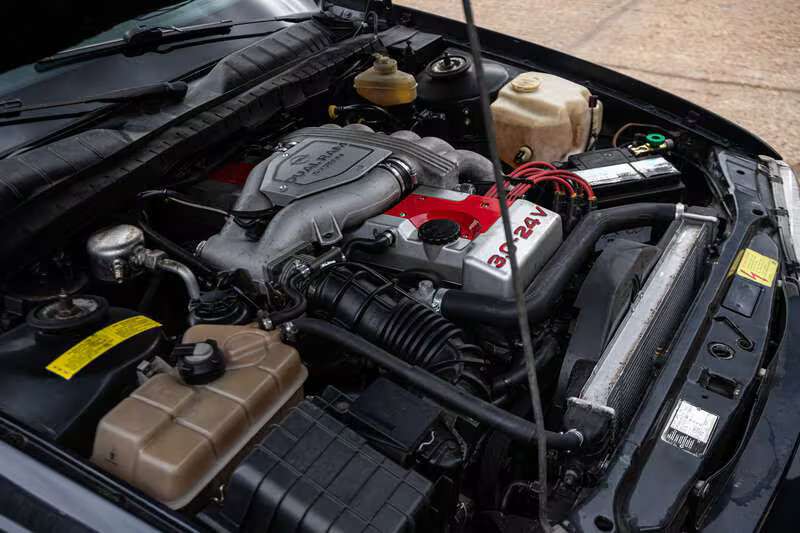
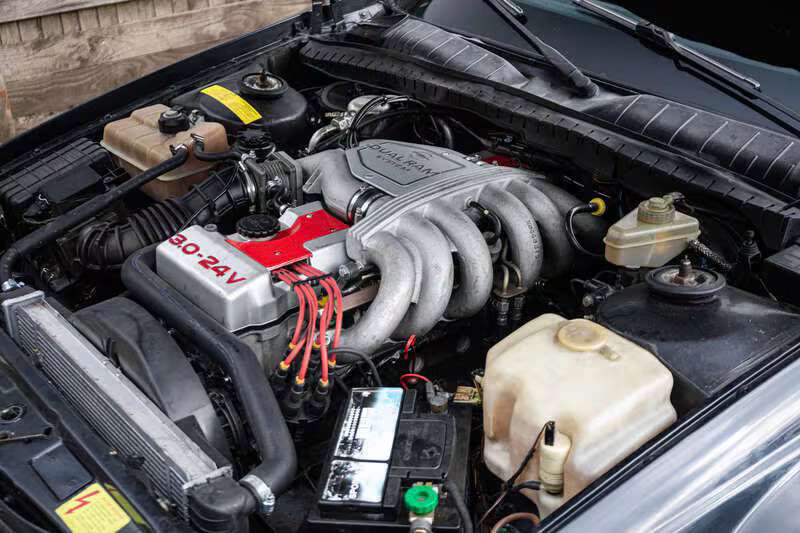
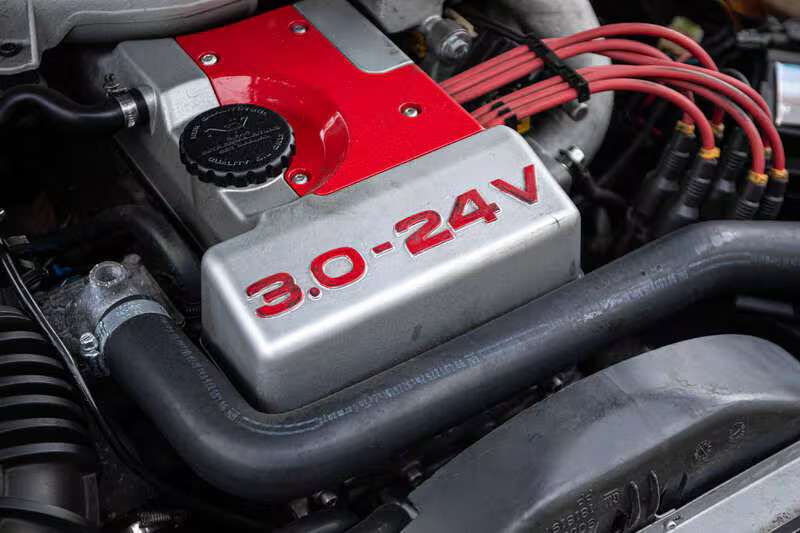
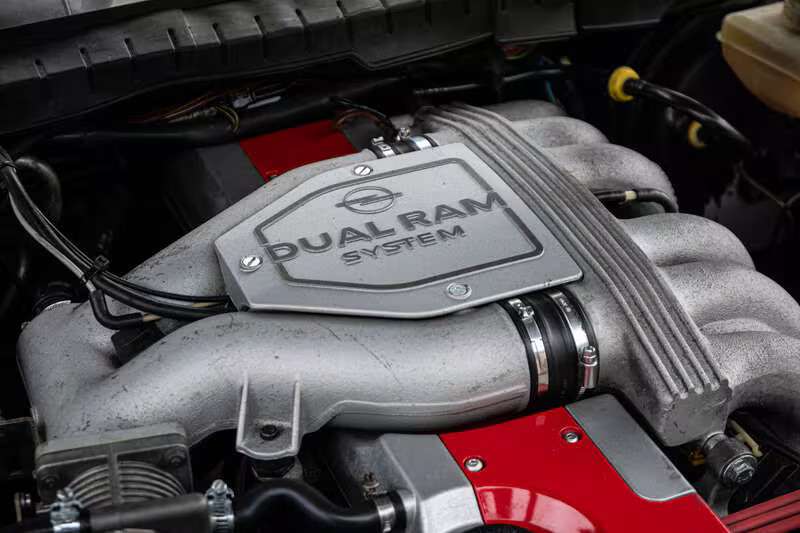
There were also 4.0-litre Evolutions: Opel’s owner feature documents a C40SE-powered example rated at 272 metric horsepower. That is a separate specification. The advertised car is presented as the 3.0-litre version, so the larger engine’s acceleration and speed figures should not be mixed into its description.
Opel Omega Evolution 500 vs Lotus Carlton
Both cars take a large rear-wheel-drive saloon into extraordinary territory. Their priorities, however, are different. The Evo’s identity is tied to homologation and Irmscher’s competition development. Lotus reworked the Carlton into a remarkably fast road-going GT.
| Specification | Omega Evolution 500 3.0 | Lotus Carlton |
|---|---|---|
| Development partner | Irmscher | Lotus Engineering |
| Engine | 3.0-litre 24-valve straight-six | 3,615cc 24-valve straight-six |
| Induction | Naturally aspirated | Twin Garrett T25 turbochargers |
| Published output | 230PS / approximately 227bhp | 377bhp, as quoted by Vauxhall |
| Published torque | 280Nm / approximately 207lb ft | 419lb ft, as quoted by Vauxhall |
| Gearbox | Five-speed manual | Six-speed manual |
| Driven wheels | Rear | Rear |
| 0–100km/h / 0–62mph | 7.5 seconds | 5.4 seconds |
| Published top speed | 244km/h / approximately 152mph* | 176mph |
| Defining feature | DTM homologation identity and extending rear wing | Exceptional road performance and Lotus chassis development |
*Evolution figures use Opel’s 13 March 1992 specification sheet. Some specialist material gives 249km/h; the period figure is used consistently here. These are model specifications, not performance measurements of the auction car. The acceleration figures compare the same approximately 62mph endpoint.
On those figures, the Lotus has about 150bhp more, roughly twice the quoted torque and a substantial straight-line advantage. Anyone buying the Evo expecting Lotus Carlton pace would be starting from the wrong premise.
Lotus also developed the suspension. Its work extended beyond fitting turbochargers: Opel’s retrospective describes revised rear suspension, substantial brakes, 17-inch wheels and a six-speed transmission. The dark metallic-green body and leather-trimmed cabin complete a very different interpretation of the shared saloon foundation.
The Evolution’s distinctive rear wing, patterned sports-seat trim and naturally aspirated engine create their own attraction. Choosing it is a question of which story and specification you want to own. For outright road performance, the Carlton has the decisive numbers; for the fascination of an obscure homologation programme, the Evo makes a persuasive case.
One naming point helps avoid confusion: the continental Lotus Omega and the British Lotus Carlton are the corresponding Lotus-developed versions. This Irmscher Evolution 500 is a separate derivative.
That rear wing is more than decoration
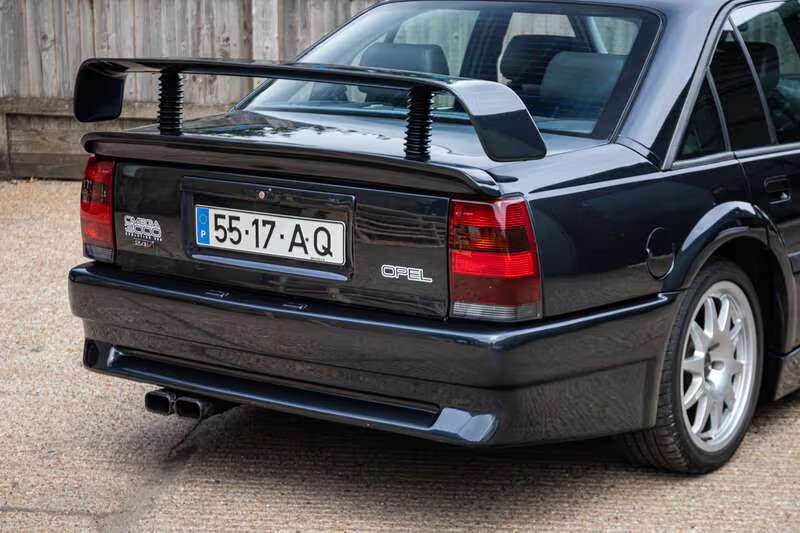
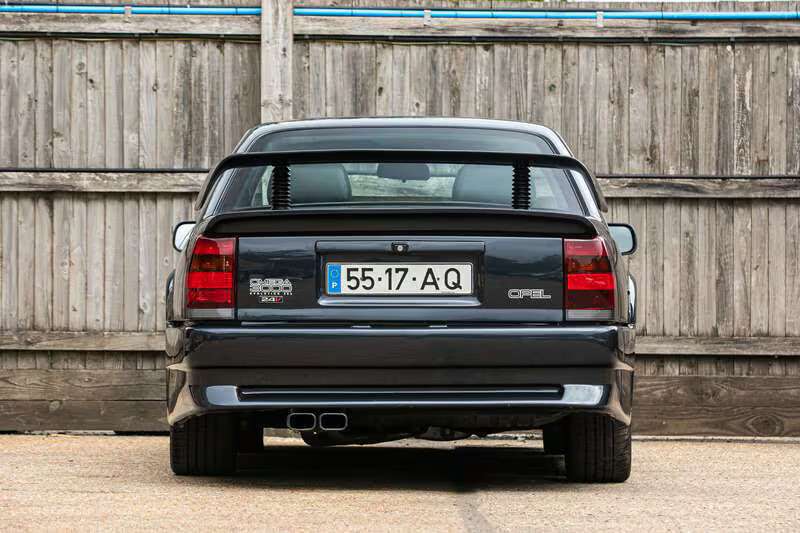
The wing is the Evo’s signature. Specialist documentation describes it extending automatically with road speed from about 80km/h—roughly 50mph. Its operation and adjustment make it a much more interesting component than a conventional fixed spoiler.
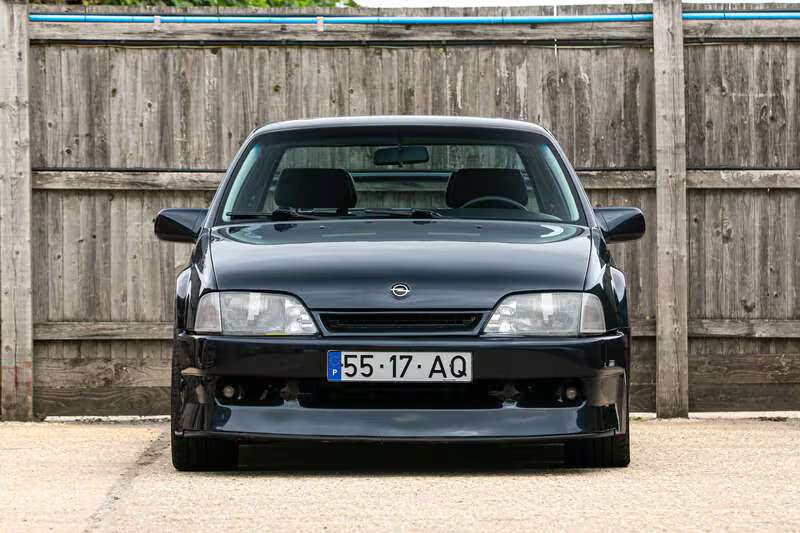
The front aerodynamic arrangement needs a distinction. Although the auction text describes an automatically extending front splitter, Opel’s published account describes a manually adjustable front flap. It would be unwise to promise automatic front-splitter operation on this car without checking the installed mechanism.
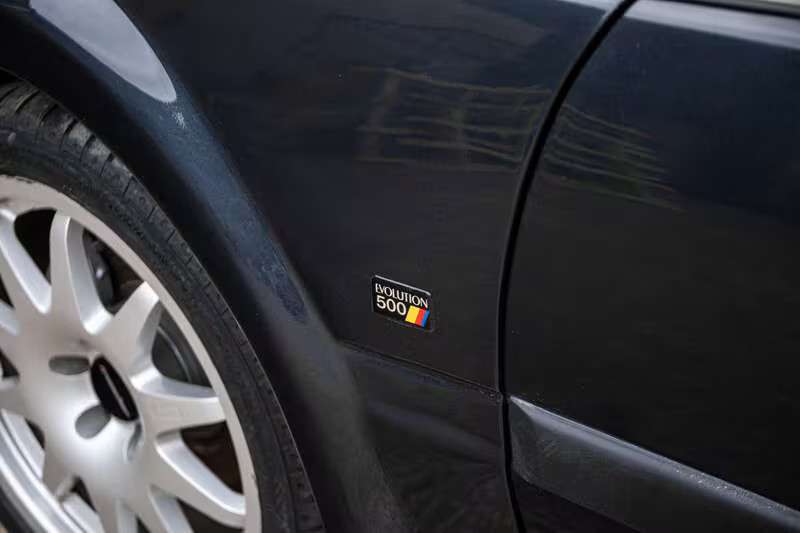
The photographs show how much the bodywork changes the car’s character. Deep bumpers, side skirts and the tall wing make the rear three-quarter view particularly striking. The badge is small; the silhouette does most of the explaining.
Two other blanket claims in the listing need qualification. Opel’s March 1992 sheet lists several paint colours, so an assertion that every official Evo was sold only in black is too absolute. That same sheet specifies 16-inch five-spoke wheels, while specialist equipment records list 18-inch ATS DTM wheels as an option. The advertised car’s wheel dimensions should therefore be checked directly rather than assumed from the model name.
Inside: an executive saloon with some wonderful period details
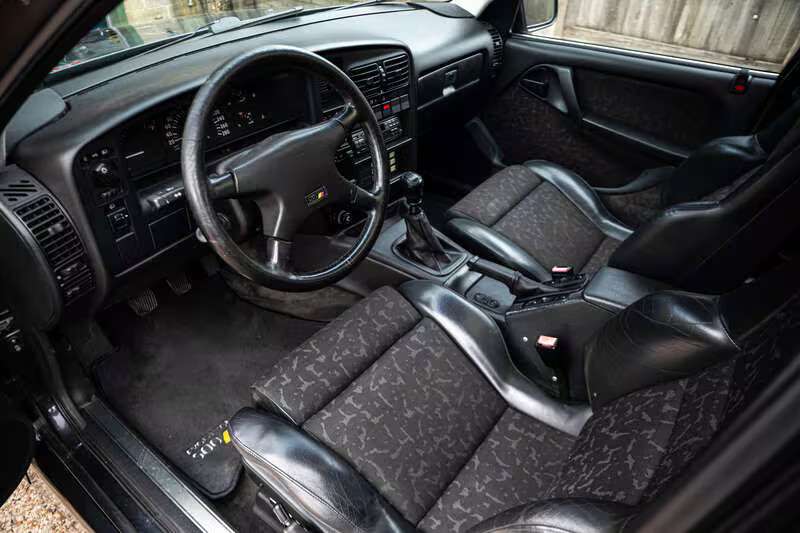
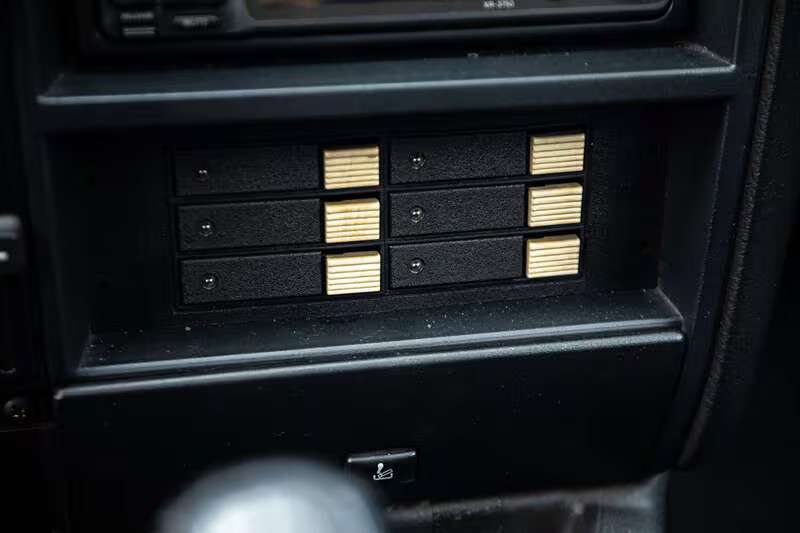
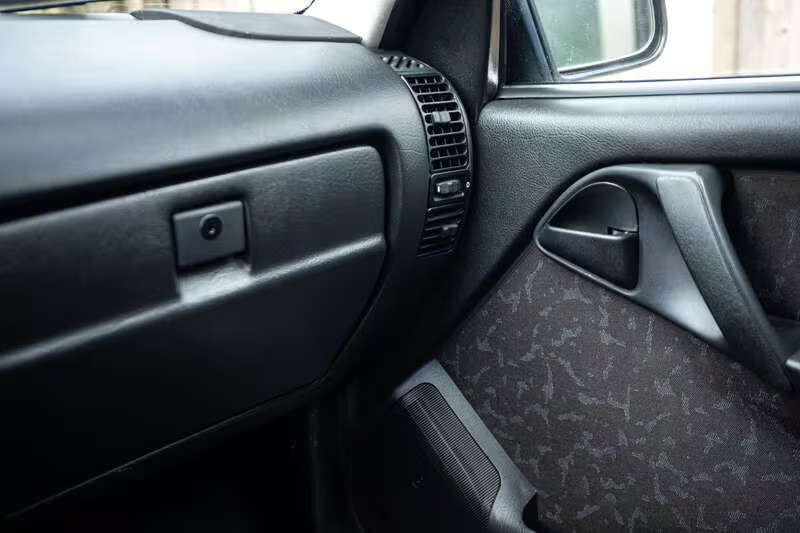
The cabin photographs are among the most revealing in the whole listing. The steering wheel is on the left, the gear lever is manual and the front seats combine dark bolsters with patterned centre panels. Matching trim on the doors helps make the interior feel like a coherent period specification.
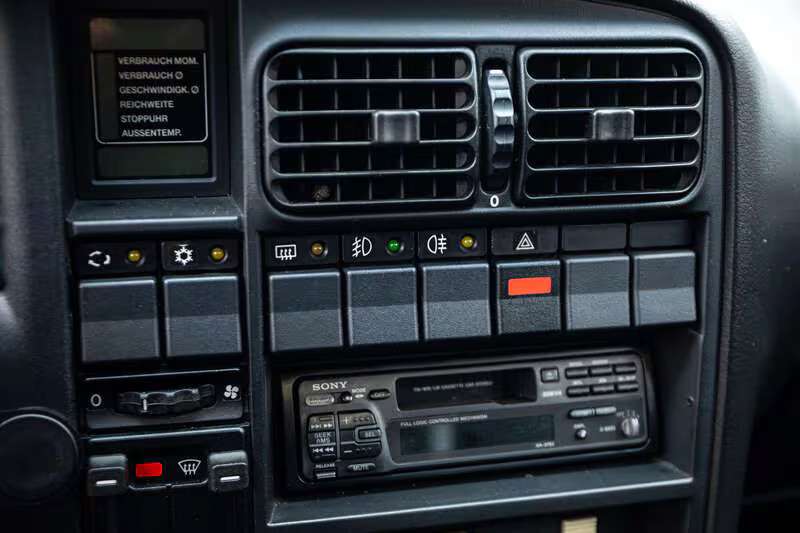
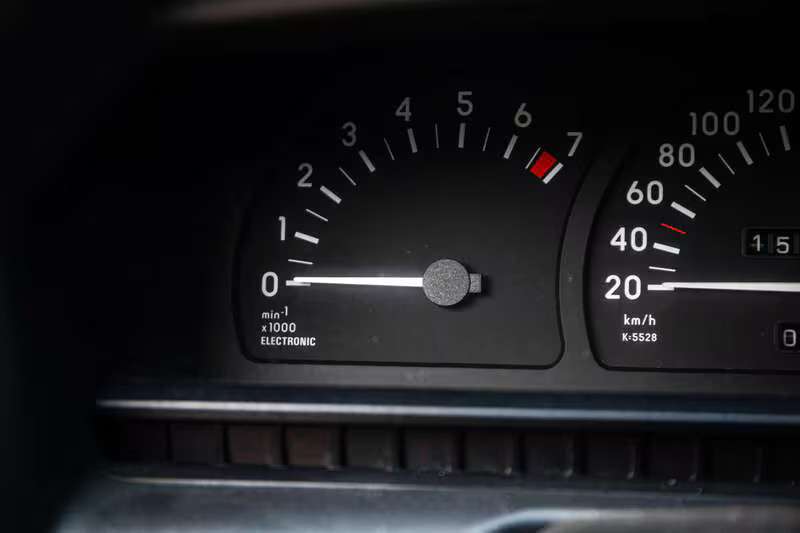
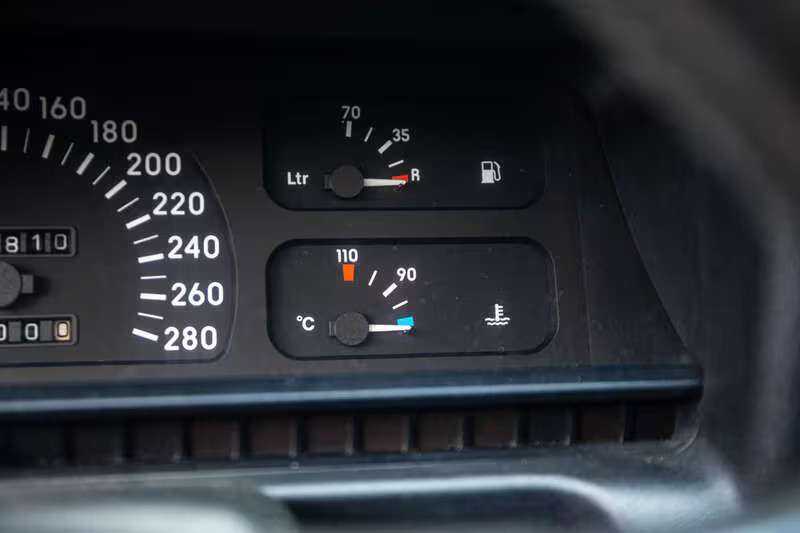
There is an old-fashioned pleasure in the details: an analogue instrument cluster, a cassette stereo and a console full of cassette storage. These are the things that often disappear when a car spends years being updated to suit successive owners.
The photographs give the cabin a convincing early-1990s atmosphere, although appearance alone cannot establish complete originality. Seat condition, switch operation, electrical equipment and any replacement trim still deserve an inspection. Equally, there is no basis here for inventing a driving impression: we have not driven this car.



This 1992 example: the details that matter
Iconic Auctioneers describes the car as a survivor that avoided competition use, appears remarkably original and spent time in a private collection in Portugal. Those are the seller’s representations; documentation should establish the ownership story, maintenance history and specification.
The eBay item specifics contain two important traps. They mark the drive side as RHD, despite the clearly left-hand-drive cabin. They also describe 155,811 miles, whereas the pictured speedometer is labelled km/h and its odometer shows approximately 155,810. If that reading is in kilometres, it equates to about 96,815 miles. The correct distance and history should be confirmed with the auction house before bidding.
A mileage-unit mistake makes a substantial difference to how a reader understands a car. Here, the sensible approach is to show the evidence and leave the definitive mileage claim to the seller’s records.


£40,000 is the lower estimate, not a buy-it-now price
The listing states that the car will be offered at The Iconic Sale at the NEC Classic Motor Show on Saturday 14 November 2026, at the NEC in Birmingham. The £40,000 advertised amount is the lower auction estimate. It is neither a guaranteed hammer price nor the total amount a successful bidder would pay.
The seller also states that 5% import duty will be payable if the vehicle remains in the UK. Buyers should ask the auction house to explain the applicable calculation, buyer’s premium, VAT on charges and any other costs for their circumstances. The listing says part exchange and finance are not offered.
Before bidding, the most useful questions concern the car itself: evidence of the Irmscher conversion; chassis and engine identification; the maintenance record; corrosion and previous body repairs; the rear-wing mechanism; and the availability of model-specific trim or mechanical parts. Rare cars are most rewarding when the details are understood before ownership begins.
View the Opel Omega Evolution 500 listing on eBay
Listing checked on 5 October 2026. Availability, auction arrangements and estimates may change. Photographs throughout are from the Iconic Auctioneers eBay listing.
Why this Evo deserves its own spotlight
The Lotus Carlton will always be the obvious comparison, and the Evo benefits from explaining the differences clearly. Yet reducing it to a slower alternative misses much of its appeal.
This is a large Opel with a competition reason for existing, specialist engineering beneath the bonnet and an extraordinary wing above the boot. The patterned seats and cassette drawers place it firmly in its era. Its rarity turns an already interesting specification into something you are unlikely to encounter casually.
For an enthusiast who enjoys the machinery behind touring-car racing, the attraction is easy to understand. The Lotus Carlton supplies the headline performance. The Omega Evolution 500 supplies a different kind of fascination—and this example offers a rare opportunity to examine it in detail.
For the wider family story, read our Vauxhall Carlton & Opel Omega performance guide and 10 things you probably didn’t know about the Lotus Carlton.
Explore more unusual classics in our Rare & Forgotten Cars hub.
Sources and specification notes
- Iconic Auctioneers’ full eBay listing and 24 photographs: this car’s description and sale particulars.
- Period Opel Evolution 500 specification sheet, 13 March 1992: road-car figures and listed equipment.
- Opel POST’s interview with Günther Irmscher Jr.: the company’s history and DTM involvement.
- Opel EVO Club’s model account and specialist conversion documentation: production uncertainty and equipment.
- C30XEI engine documentation and rear-wing technical details.
- Vauxhall’s Lotus Carlton heritage specifications and Opel’s Lotus Omega retrospective: comparison figures and engineering.
- Opel POST’s Evolution 500 owner feature: adjustable front aerodynamic flap. Its featured car is a 4.0-litre version; its performance figures are not used for the advertised 3.0-litre car.
Love cars you don’t see every day?
Get forgotten cars, surprising motoring stories and the most interesting finds from Unusual Cars by email.
Free to join. No spam. Unsubscribe whenever you like. See our Privacy Policy.