UNUSUAL CARS MODEL GUIDE
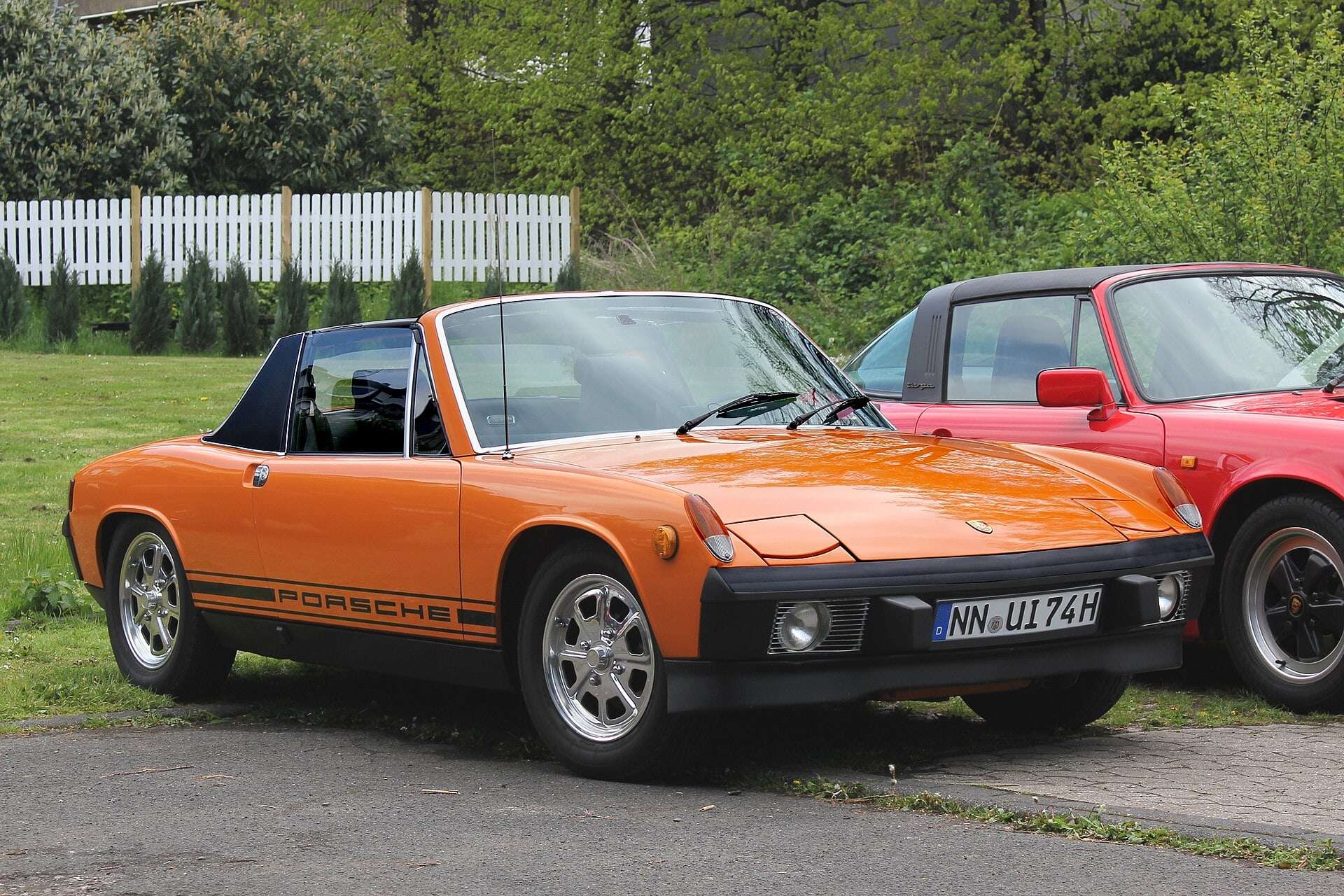
The Porsche 914 was a two-seat, mid-engined targa sports car developed jointly by Volkswagen and Porsche and launched in 1969. European four-cylinder cars were sold as VW-Porsches, while the six-cylinder 914/6 used a Porsche 911 T engine; in the United States both were sold as Porsches. Its balanced layout and huge production gap between four- and six-cylinder versions define both the driving experience and today’s market.
Quick answer: the four-cylinder 914 is the accessible version, the 914/6 is the rare factory six, the 914/6 GT is a competition derivative, and the 916 is a tiny high-performance series. Corrosion is the decisive buying risk, especially around the battery tray, suspension mounting structure, sills and floors.
A Volkswagen and Porsche joint project
In the mid-1960s Porsche wanted a model beneath the 911, while Volkswagen needed a replacement for the Type 34 Karmann Ghia. Ferry Porsche and VW director Heinrich Nordhoff agreed a shared programme. After Nordhoff died in 1968, the companies formed VW-Porsche Vertriebsgesellschaft to market the car in Europe.

The 914 used a steel targa body, removable roof and an engine mounted ahead of the rear axle. The layout placed luggage compartments at both ends and gave the car different proportions from a 911. Pop-up headlamps and simple horizontal surfaces made the design functional rather than decorative.
914/4 engines and model development
The first four-cylinder car used a fuel-injected 1.7-litre Volkswagen flat-four producing 80 PS. Porsche quoted 0–100 km/h in 13 seconds and 177 km/h. Later four-cylinder versions included 1.8- and 2.0-litre engines, with specifications varying by year and emissions market.

Later cars received changes to bumpers, trim, ventilation and engine equipment. A 2.0-litre four-cylinder car is not a 914/6, even though both carry 2.0-litre badges in some markets. Engine number, induction system and chassis identity settle the distinction.
The Porsche 914/6
The 914/6 used the 1,991 cc, six-cylinder engine from the contemporary 911 T, with overhead camshafts, triple carburettors and capacitor-discharge ignition. Porsche quoted 110 PS at 5,800 rpm and a dry weight of 940 kg. Five-lug wheels, Porsche brakes and model-specific equipment further distinguished it from the four-cylinder car.
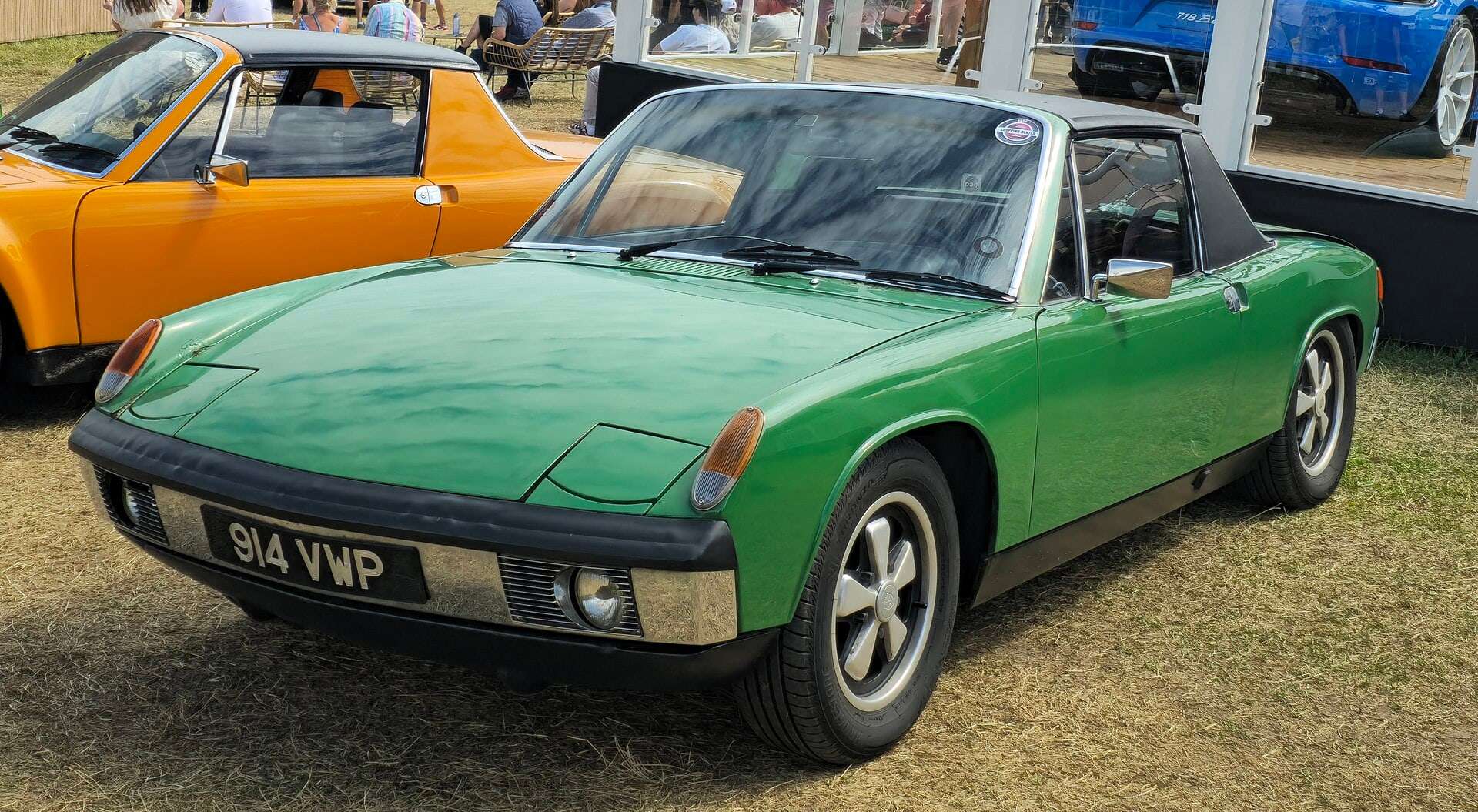
Porsche built exactly 3,338 examples between 1969 and 1972, compared with 115,631 four-cylinder cars built from 1969 to 1975. The factory six was therefore rare when new and is now frequently imitated. A converted four-cylinder shell can be an enjoyable car, but it must not be represented as an original 914/6.

Porsche 914 versions compared
| Version | Engine | Role and distinction |
|---|---|---|
| 914/4 1.7 | 1.7-litre VW flat-four, 80 PS | Original volume model with fuel injection and mid-engined layout. |
| 914/4 1.8 and 2.0 | VW flat-four | Later developments; output and emissions equipment vary by market. |
| 914/6 | 2.0-litre Porsche flat-six, 110 PS | Factory six-cylinder road car, 3,338 produced. |
| 914/6 GT | Competition-developed flat-six | Homologated racing derivative with widened body and motorsport equipment. |
| 916 | High-output Porsche flat-six | Eleven cars built with engines associated with the 911 S and Carrera RS. |
Love cars you don’t see every day?
Get forgotten cars, surprising motoring stories and the most interesting finds from Unusual Cars by email.
Free to join. No spam. Unsubscribe whenever you like. See our privacy policy.
914/6 GT racing history
The 914/6 provided a strong base for competition because its mass was low and concentrated between the axles. Factory and customer cars achieved a triple victory in the 1970 Marathon de la Route at the Nürburgring, while a Team Sonauto 914/6 GT won its class at Le Mans the same year.
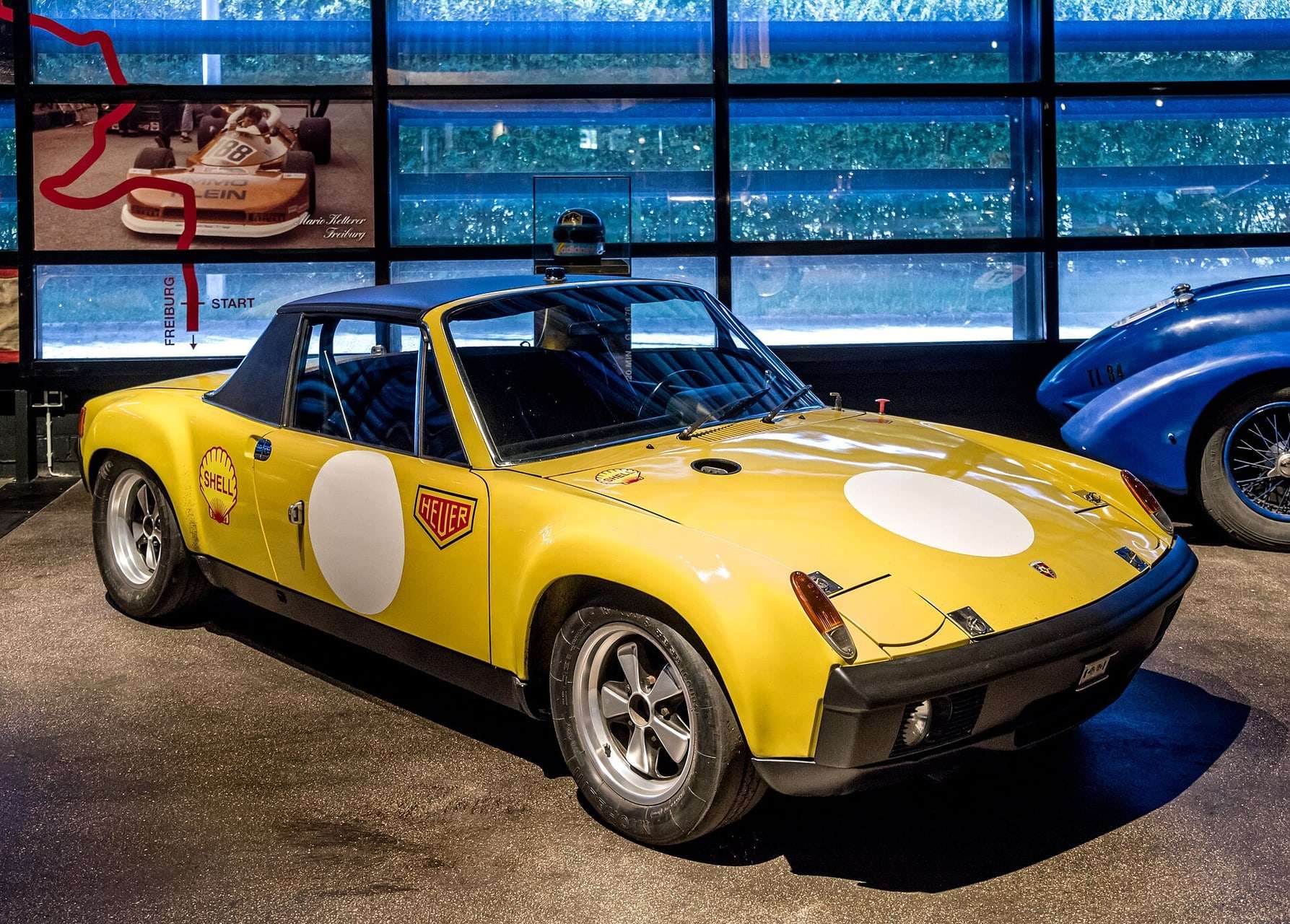
Competition cars changed during their lives, so details such as arch shape, brakes, oil system, engine type and roll cage must be tied to an individual chassis. A road car with GT-style arches is not automatically a genuine GT.
The 916 and eight-cylinder prototypes
Porsche also built two experimental eight-cylinder 914s using 908 racing engines. One made about 300 PS and served Ferdinand Piëch; the other, rated at 260 PS, was given to Ferry Porsche for his 60th birthday. They inspired the 916, an eleven-car high-performance series using six-cylinder engines from the 911 S and Carrera RS.
These exceptional cars sit outside the ordinary 914 buying market, but they demonstrate how seriously Porsche explored the mid-engined platform. They also explain why replicas and conversions need precise, honest descriptions.
Porsche 914 buying guide
Corrosion is the first priority. Battery acid and moisture attack the battery tray and the structural area beneath it, often called the hell hole, close to the right rear suspension console. Inspect both suspension consoles, the longitudinals, jacking points, inner and outer sills, floors, firewall, front suspension mounts, boot floors and seams around the targa roof.

Doors that close poorly, changing gaps or a body that flexes when lifted can indicate serious structural weakness. Remove trim and covers rather than accepting fresh underseal as proof of health. A proper repair requires correct bracing and measurement before corroded sections are cut away.
On fuel-injected four-cylinder cars, check cold and hot starting, idle stability, fuel hoses and evidence that the original injection has been replaced or poorly modified. On a 914/6, verify the engine number, carburettors, ignition, oil system, heat exchangers and conversion details. All versions need smooth gearbox selection, sound linkage bushes, healthy brakes and correct suspension geometry.
The removable roof should fit securely without excessive wind noise or leaks, and both luggage compartments should be dry. Check pop-up lamps, ventilation, instruments and wiring. Parts interchange can keep a car usable, but originality and accurate model identification make a large difference to value.
Why the Porsche 914 matters
The 914 proved that a relatively affordable production sports car could combine a mid-engine layout, removable roof and practical luggage space. Its commercial success was concentrated in the four-cylinder model, while the six-cylinder and competition cars gave the platform lasting Porsche credibility.
Sources and further reading
- Porsche Newsroom: 50 years of the Porsche 914
- Porsche Newsroom: the 914 and Porsche’s mid-engine tradition
Continue the Porsche story
The 914 brought Porsche’s mid-engine thinking to a large new audience and created a successful competition platform. Explore the Rare & Performance Porsche hub, then read the Porsche 924 Carrera GT guide and the Porsche 968 Club Sport guide.
Frequently asked questions
Is the Porsche 914 a Volkswagen or a Porsche?
It was a joint Volkswagen-Porsche project. European four-cylinder cars were marketed as VW-Porsches, while the 914/6 was a Porsche; in the United States both variants were sold as Porsches.
What is the difference between a 914 and a 914/6?
The ordinary 914 uses a Volkswagen flat-four. The 914/6 uses a Porsche 911 T-derived 2.0-litre flat-six, together with model-specific brakes, hubs and equipment.
How many Porsche 914/6 cars were built?
Porsche records exactly 3,338 914/6 cars built between 1969 and 1972.
What is the main rust problem on a Porsche 914?
The battery tray and structure below it near the right rear suspension console are especially vulnerable, but the sills, longitudinals, floors and both suspension mounting areas also require inspection.
Did the Porsche 914 race at Le Mans?
Yes. A Team Sonauto 914/6 GT won its class at Le Mans in 1970, and 914/6 competition cars achieved other endurance and customer-racing successes.