UNUSUAL CARS MODEL GUIDE
The second-generation Škoda Octavia vRS brought 200 PS petrol and 170 PS diesel performance to one of Britain’s most useful family cars. Sold here from the mid-2000s as both a five-door hatch and estate, it combined discreet styling, a huge load area and Volkswagen Group running gear at a price that helped make vRS a major part of the UK Octavia range.
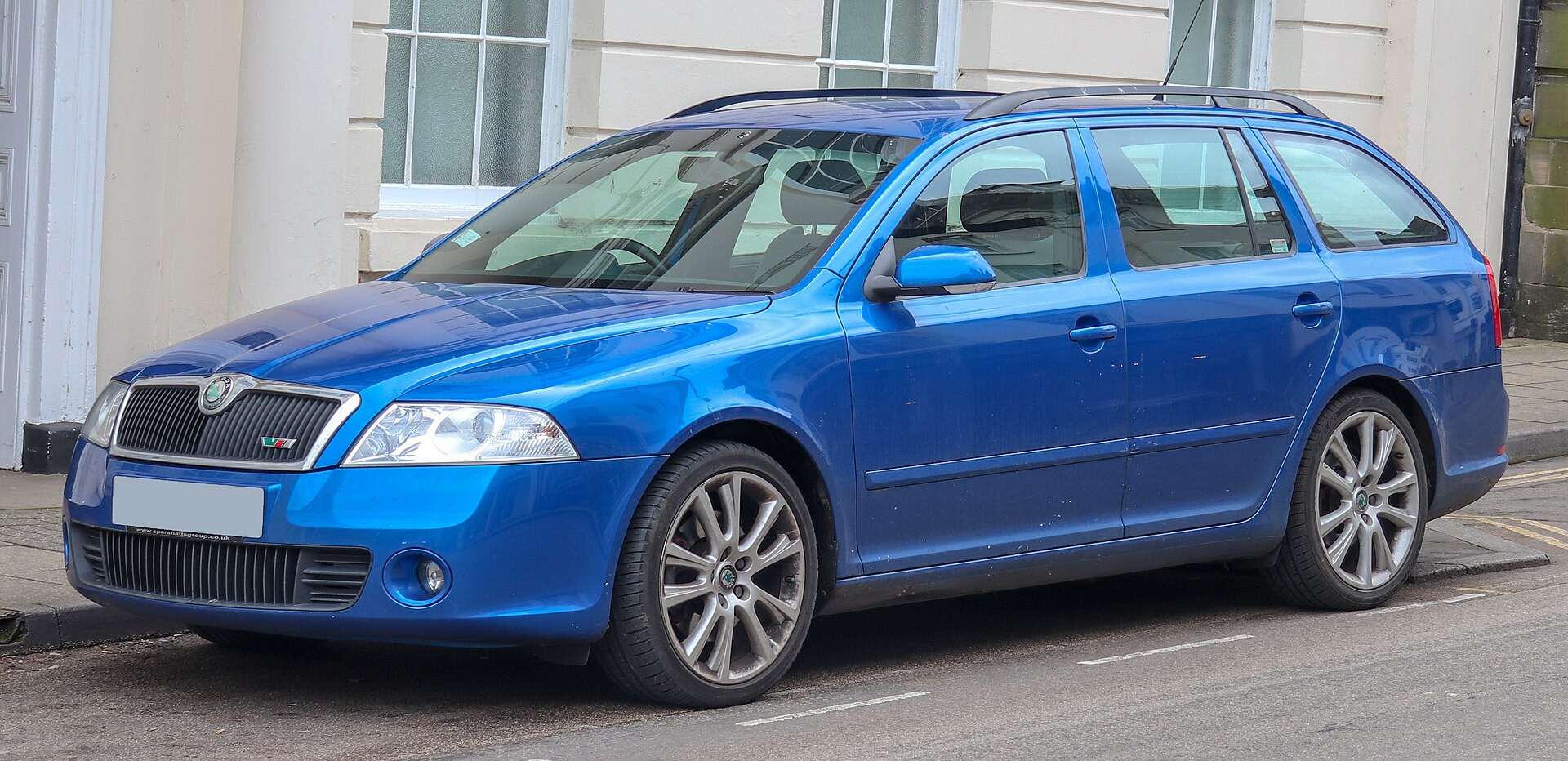
Featured image: 2011 Škoda Octavia vRS Mk2. Photograph by HLW, CC BY-SA 3.0, via Wikimedia Commons; locally hosted.
A bigger second act for vRS
The first Octavia vRS proved that Škoda could sell a credible modern performance car. The second generation, introduced in 2004 with the vRS following in 2005, grew in size and refinement without abandoning the original formula. Its long wheelbase, broad cabin and liftback tailgate made it unusually practical for a car with 200 PS.
Škoda’s own model history records more than 87,800 second-generation vRS models. In Britain, Germany and Switzerland, vRS accounted for more than one fifth of Octavia sales—clear evidence that the version was not a token halo model.

Petrol and diesel choices
| Version | Factory output | Character |
|---|---|---|
| 2.0 TFSI petrol | 200 PS | Responsive, broad performance and the closest successor to the Mk1 vRS formula. |
| 2.0 TDI diesel | 170 PS | Strong mid-range torque and long-distance economy, with emissions equipment becoming increasingly important as cars age. |
| Hatch | Five-door liftback | Saloon profile with a large, practical tailgate. |
| Estate | Five-door estate | More vertical load space with the same vRS powertrains. |
Why the estate matters
The estate is not merely a slower utility derivative. It gives nearly all the performance and road manners of the hatch while adding the shape that made the Octavia especially useful to families, company-car drivers and owners carrying bulky equipment. UK-market estates are common enough to offer choice, but straight, standard cars are becoming harder to find.

Love cars you don’t see every day?
Get forgotten cars, surprising motoring stories and the most interesting finds from Unusual Cars by email.
Free to join. No spam. Unsubscribe whenever you like. See our privacy policy.
Facelift and model-year detail
A facelift arrived around 2009 with reshaped front lamps, a revised grille and detail changes inside and out. Later diesel cars generally moved toward common-rail injection. Do not assume every facelift car has the same engine, gearbox or emissions system: verify the build sticker, engine code and original UK specification.

Buying guide
Petrol engine
Check cold and hot starting, boost delivery, oil level and consumption, crankcase ventilation, ignition coils, diverter-valve operation and evidence of correct timing-drive maintenance. Misfires or uneven boost should be diagnosed rather than dismissed as tuning. Modified software needs supporting invoices and conservative maintenance.
Diesel and emissions equipment
Confirm the precise diesel type and service schedule. Check for difficult starting, injector imbalance, turbo noise, EGR faults and diesel particulate-filter warnings where fitted. Repeated short journeys are hard on later emissions systems.
Manual and DSG transmissions
Manual cars need a clean clutch take-up and no dual-mass flywheel rattle. DSG cars should engage promptly and shift smoothly cold and hot, with documented oil and filter changes at the required intervals. Hesitation, warning lights or harsh engagement require specialist assessment.

Body and chassis
Inspect the front wings, sills, tailgate edges, underbody, subframes and jacking points. Check for accident repair, mismatched tyres and damaged large wheels. Worn front bushes, rear springs, dampers and wheel bearings can make the car noisy or vague; brakes should operate evenly without seized rear components.
Why it still matters
The Mk2 occupies a useful middle ground. It feels modern enough for regular use but still has hydraulic-era feedback, simple instruments and relatively restrained styling. It also broadened vRS beyond petrol enthusiasts by making the diesel a credible performance-distance option.
UK-market evidence and sources
Continue the Škoda story
The Mk2 turned vRS into a substantial British-market sub-brand. Explore the complete Škoda hub, then compare the original Octavia vRS Mk1, then read about the smaller twincharged Fabia vRS Mk2.
Frequently asked questions
Was the Škoda Octavia vRS Mk2 sold in the UK?
Yes. British buyers could order the second-generation Octavia vRS as a hatch or estate with petrol or diesel power; Škoda UK says vRS represented more than 20 per cent of Octavia sales in Britain.
What engines did the Octavia vRS Mk2 use?
The main UK choices were a 2.0-litre turbo petrol rated at 200 PS and a 2.0-litre TDI rated at 170 PS. Gearbox availability varied by year.
Is the Octavia vRS Mk2 a hatchback or saloon?
The five-door model has saloon-like proportions but a full hatchback tailgate. An estate was also offered.
What changed in the facelift?
The 2009-era update brought revised front styling, lighting and detail changes. Exact equipment and engines depend on model year.
What should be checked before buying?
Verify timing-drive requirements for the exact engine, oil and coolant history, turbo and emissions hardware, DSG maintenance where fitted, suspension, brakes, corrosion and accident repairs.