UNUSUAL CARS MODEL GUIDE
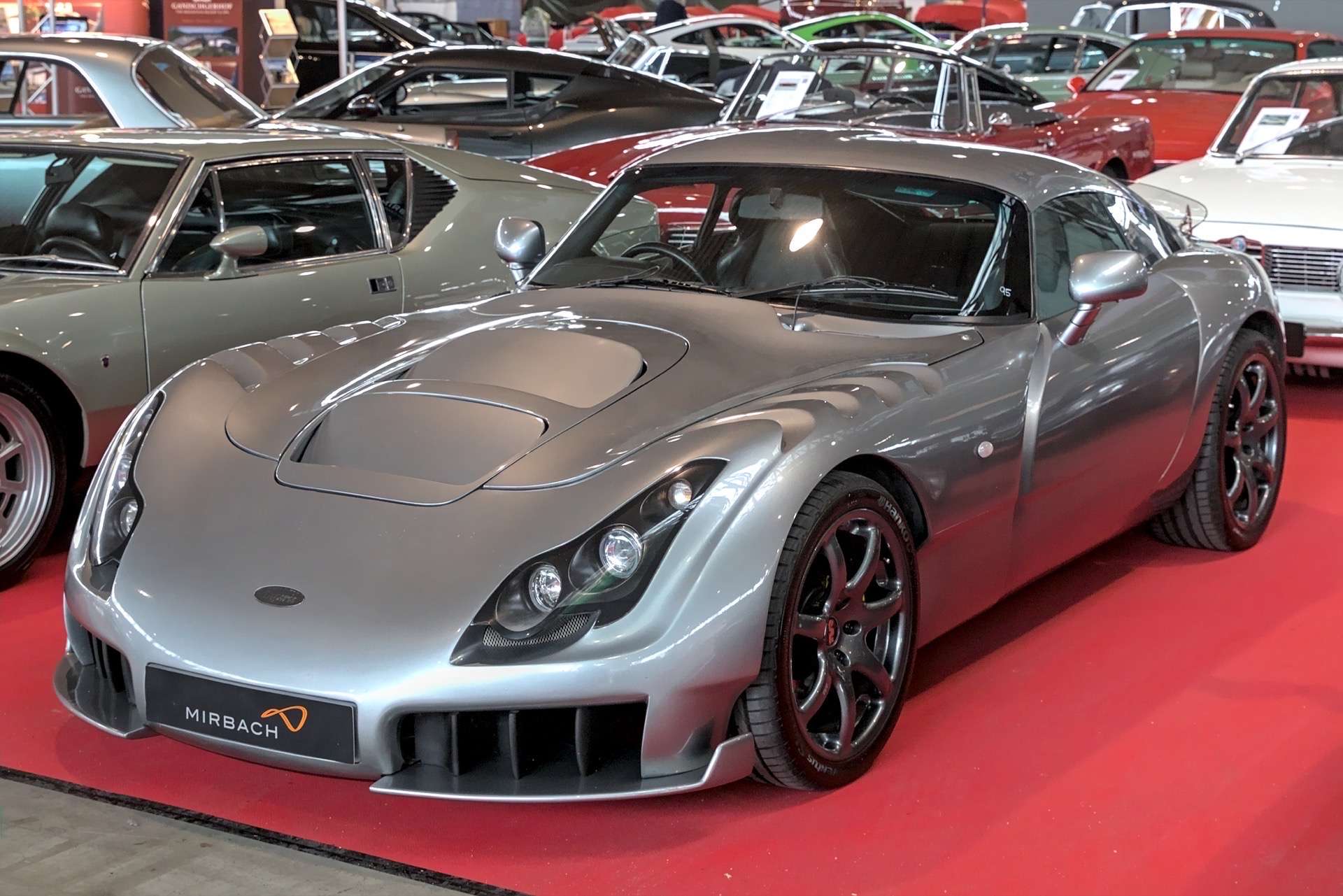
The TVR Sagaris was the most extreme production development of the T350 platform and the final new model created by the original Blackpool company. Its slashed bodywork, side-exit exhausts and 400bhp Speed Six made it one of the defining British performance cars of the mid-2000s.
Featured image: TVR Sagaris. Photograph by Alexander-93, CC BY-SA 4.0, via Wikimedia Commons; locally hosted.
From T350 to Sagaris
The Sagaris grew from TVR’s T350-based racing and road-car programme. Peter Wheeler wanted a car that could manage airflow, cooling and high-speed stability more effectively than the company’s smoother earlier designs. Development cars appeared before the production version settled into a less aerodynamically hazardous form, but the final design retained the drilled and slashed visual language.
Official TVR heritage material identifies the T350C as the foundation for the Sagaris. Under the surface it retained the familiar tubular steel chassis and glassfibre construction, but wider tracks, revised suspension, more aggressive aerodynamics and the four-litre Speed Six gave it a distinct purpose.

Speed Six engine and performance
The dry-sump 3,996cc Speed Six used double overhead camshafts, four valves per cylinder and individual throttle bodies. TVR quoted 400bhp and 349lb ft. With a kerb weight a little over 1,070kg, the factory claimed 0–60mph in 3.7 seconds and a top speed above 185mph.
Those figures explain the car’s reputation, but they should not distract from condition. The engine’s exact rebuild specification, valve-train work, oil system, mapping and subsequent mileage matter more than a claimed headline output.

Body, aerodynamics and cabin
The front wings, bonnet vents, roof treatment and rear bodywork were designed to release pressure and manage heat. The production car did not retain every opening seen on early show cars, and surviving cars may have acquired later modifications. A prospective buyer should compare panel details with period photographs and factory records.
The cabin mixed conventional instruments with TVR-specific switchgear and trim. Visibility, seating position and control effort make the car feel more like a competition-derived machine than a grand tourer, although luggage space remains more useful than the exterior suggests.

Love cars you don’t see every day?
Get forgotten cars, surprising motoring stories and the most interesting finds from Unusual Cars by email.
Free to join. No spam. Unsubscribe whenever you like. See our privacy policy.
Driving character and ownership context
The Sagaris is not simply a faster T350. Its wider stance, altered suspension geometry and aerodynamic work give it a more planted character, but the absence of electronic safety systems leaves the driver responsible for managing every change in grip. Steering condition, tyre age and alignment therefore influence the experience far more than they would in a modern performance car.
Values also make originality increasingly important. Factory paint, correct wheels, original trim and an unbroken maintenance record can matter as much as mileage. Cars used in competition, converted to other engines or rebuilt after accidents may still be excellent, but their history and specification should be presented transparently and priced accordingly.
TVR Sagaris buying guide
Engine and cooling
Insist on invoices that identify the specialist, work completed and mileage since any rebuild. Start the car from cold and check oil pressure, valvetrain noise, smoke, coolant stability, fan operation and hot restarting. Evidence of careful warm-up and frequent oil servicing is valuable.
Chassis, suspension and brakes
Inspect the tubular frame, outriggers, suspension pickups and areas exposed to exhaust heat. Check dampers, springs, bushes, ball joints, wheel bearings and geometry. The car should not tramline excessively or feel nervous because of mismatched tyres or poor setup.
Body and provenance
Examine the glassfibre around vents, wheelarches and mounting points for cracks or distortion. Sagaris-specific panels and trim are scarce, so accident repairs demand close inspection. Confirm chassis and engine identity, original specification, factory colour and any conversion work.
Clutch, gearbox and differential
Check clutch engagement, fifth-gear selection, driveline vibration and differential noise from cold and hot. A short drive can hide problems that appear only once the transmission reaches operating temperature.


Sources and further reading
- TVR heritage history
- TVR Sagaris factory press information
- TVR Car Club Sagaris history and specifications
Continue the TVR story
The Sagaris was the final and most aggressive development of TVR’s Speed Six road cars. Explore the complete TVR hub, then compare the closely related T350C and T350T and trace the platform back to the Tamora.
Frequently asked questions
When was the TVR Sagaris built?
Customer production ran during the final years of the Blackpool factory, principally from 2005 to 2006, after the design had evolved from the T350-based Typhon programme.
What engine does the TVR Sagaris use?
It uses TVR’s dry-sump 3,996cc Speed Six straight-six, normally quoted at 400bhp in production form.
Does the TVR Sagaris have ABS or traction control?
No. Like contemporary TVRs, it was sold without ABS, traction control or electronic stability control.
How many TVR Sagaris were built?
Published totals vary because prototypes, pre-production cars and late registrations are counted differently. Buyers should treat any exact total with its definition and verify an individual car through its records.
What is the main Sagaris buying check?
The Speed Six engine’s documented history is essential, followed by chassis condition, cooling, clutch and gearbox operation, suspension, accident repairs and the originality of Sagaris-specific parts.