Affiliate notice: This guide contains affiliate links. As an Amazon Associate I earn from qualifying purchases.
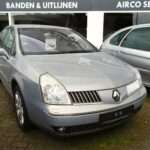
Photograph: Laguna II Phase 2 generation illustration. The pictured overseas 2.0 is not verified as a GT 205.
A Renault-aware reader is the useful step up when a Laguna II GT warning comes from ABS/ESP, airbags, body electronics or the electronic parking brake. A compatible basic OBD2/EOBD reader can help with engine-emissions information, but its “no codes” result does not answer a warning from a controller it never contacted.
For repeat home use, the iCarsoft FR V2.0 is a candidate worth checking against the exact car and reading task. For an occasional warning or an unresolved communication problem, a Renault specialist with confirmed legacy coverage may be the better purchase. The starting point is the system you need to read.
Which Laguna GT does this guide cover?
UK-market Renault Laguna II Phase 2 GT 2.0 Turbo 205 petrol, hatchback and Sport Tourer, from the 2005–2007 model family. Confirm the original build, six-speed manual transmission and fitted equipment rather than relying on registration year. Excludes GT diesels, other petrol outputs, Laguna II Phase 1, Laguna III GT/4Control and Coupé, imports with different specifications, and materially modified powertrains or control systems.
Renault’s 2005 facelift launch information identifies both the GT and GT Grandtour, while its Geneva announcement describes the turbo engine’s relationship to the Mégane Renaultsport. The NGK UK catalogue also separates the 2005–2007 Laguna II Phase 2 family and includes GT 205. International brochures and parts catalogues do not establish every UK equipment combination.
The archived Renault Geneva 2005 press dossier specifies the GT 205 petrol with a six-speed manual gearbox and both Hatchback and Sport Tourer body styles. These distinctions matter when choosing the correct vehicle entry on a diagnostic tool.
The GT badge alone is insufficient when checking a scanner. A search can return diesel GTs and later Laguna III cars. Give the supplier the generation, phase, petrol engine and actual gearbox, then name the controller and information you want.
Match the reader to the warning
| Your question | Useful route | What to confirm |
|---|---|---|
| Engine warning or emissions readiness | Compatible generic EOBD | Supported codes, freeze-frame and engine data. |
| ABS, ESP or ASR warning | Renault-aware ABS/ESP reading | Correct Phase 2 controller and relevant available data. |
| Airbag or pretensioner warning | Confirmed restraint-controller reading | Identification, complete faults and status where supported. |
| Electronic parking-brake message | Confirmed parking-brake controller access | Reading access on the fitted system; service functions separately. |
| Body or equipment complaint | Relevant UCH or equipment-controller report | Actual fitted equipment and exact data required. |
What generic OBD2 can tell you
A generic reader can be a sensible first tool for a petrol-engine emissions question. The Autel AL519 manual describes the familiar OBD functions: emissions-related trouble codes, freeze-frame, readiness monitors and supported live data. Available information depends on what the vehicle supplies. A generic engine scan is useful within that scope.
Record whether a report came from generic EOBD mode or a Renault-specific menu. Those are different diagnostic routes, even when both appear on the same handheld. “No engine faults” and “all relevant systems checked” should never be treated as the same result.
An ESP/ASR warning needs evidence from the right controller
In a Laguna II Phase 2 GT owner discussion, the opening poster described an ESP/ASR warning on a 2005 GT. After obtaining a diagnostic reading, the owner reported a brake-pressure-sensor diagnosis within the ABS unit. The opening post does not specify the engine, and the thread contains replies about other Laguna variants. It supplies an owner question, not proof of a fault rate or the cause on a GT 205.
The useful distinction is between the dashboard message and the information obtained from the ABS/ESP controller. A warning label alone cannot tell you whether another car has the same problem. Keep the full code, its description, the controller identity and any current/stored status supplied by the tool before drawing conclusions.
If you want to inspect a particular live-data item, ask about it explicitly before buying. A general “ABS live data” entry does not establish every pressure, wheel-speed or switch parameter. Diagnostic reading also does not establish support for bleeding routines, calibration or component replacement. This guide provides no brake repair procedure.
Parking-brake and body warnings: separate coverage checks
A Laguna II parking-brake discussion includes owners describing a warning whose explanation was not clear from the report they had received. Several vehicles and specifications appear in that conversation. Its practical value is the question it raises: which controller was actually read, and what did the report contain? It does not establish a universal reset or repair.
For the GT, ask specifically about the fitted parking-brake controller. Reading a fault, clearing it, operating the brake and performing a service function are distinct capabilities. An EPB logo on a product page does not prove that every one of those tasks is available on this car.
The same principle applies to body electronics. UCH is Renault’s body-control unit terminology. Access to it may add useful information for a relevant complaint, but it is not a promise to diagnose every window, lamp or hands-free feature. List the actual equipment and symptom when seeking coverage confirmation. Airbag concerns require their own restraint-controller reading and qualified assessment.
What the iCarsoft Laguna II Phase 2 listing supports
The FR V2 Renault compatibility reference lists LAGUNA II PH2 separately from LAGUNA II and LAGUNA III. Its diagnostic columns include controller information, fault reading, clearing and live data. Listed Phase 2 systems include injection, ABS, airbags/pretensioners, instrument panel, UCH, parking brake, air conditioning, lighting and parking assistance.
This is a reference-only list carrying a Renault V01.10 diagnostic version label. It provides a useful basis for a coverage enquiry, rather than a certificate for every GT 205 build or current scanner package. In particular, the family’s transmission-controller entry is not evidence that the manual GT has an automatic gearbox controller to read.
Before ordering an iCarsoft FR V2.0, request confirmation against the current database for your car and intended task through the manufacturer’s coverage route or an authorised supplier. Confirm genuine hardware, the supplied revision, update terms and returns arrangements. The manufacturer describes standalone use and free updates; follow the update instructions matched to the scanner and check the required PC operating system and connection or card-reader method. Do not assume phone or Wi-Fi updating.
Compare the realistic diagnostic routes
| Route | Setup and limitations | Suitable use |
|---|---|---|
| Generic EOBD handheld | Compatible petrol reader; standalone | Engine-emissions information without enhanced-system expectations. |
| Renault-aware handheld such as FR V2.0 | Exact car/controller/database confirmation; suitable PC for updates | Repeated reading of the systems confirmed for this GT. |
| Enhanced multibrand handheld | Exact model, software and Renault coverage check | Several cars, where useful Laguna coverage is confirmed. |
| Renault specialist with legacy CLIP capability | Specialist verifies legitimate software, interface and vehicle access | One-off diagnosis, uncertain coverage or a communication problem. |
For the multibrand route, the Autel MD808/MD808 Pro manual is an example of documentation to examine. Check the exact version and GT controller support before treating it as an alternative. Paying for more brands or a longer service menu is worthwhile only if it supplies information you will use.
Laguna II CLIP coverage and the Euro5 distinction
Renault’s January 2026 applicability list places X74 Laguna II and Laguna II Phase 2 under CLIP BORNEO2 and marks the family NO in the EURO5 column. This does not mean that legacy diagnosis is impossible. It does mean that a current Euro5 subscription should not be presented as guaranteed access to this older car.
Ask a specialist to confirm their legitimate legacy arrangement for the actual vehicle and controller. Renault’s current CLIP/ADT prerequisites describe contemporary Windows and interface requirements, but do not establish a home-installation route for every older model. Check the official diagnostic offer with the provider before spending money. A generic interface label or copied software bundle does not settle entitlement or legacy compatibility.
Love cool cars? Join Unusual Cars Club FREE!
Get forgotten motoring finds, stories, helpful car content and more.
Free to join. No spam. Unsubscribe whenever you like. See our privacy policy.
Before clearing anything, keep a useful report
Give the supplier or specialist the VIN privately, original build, Phase 2 identity, GT 205 petrol engine, six-speed manual gearbox and fitted equipment. State the warning exactly, whether it is intermittent, and any recent work. For a reader purchase, name the required controller and specific reading task rather than asking only whether it “works on Renault”.
Keep controller identification, complete codes and descriptions, available fault status, relevant data and the scan mode. Distinguish a responding controller with no recorded faults from a controller that will not communicate or equipment the car does not have. Clearing can remove useful evidence, and a warning disappearing after a clear or restart does not demonstrate a repair.
Laguna II GT scanner questions
Will a basic Bluetooth adapter read the parking brake?
The adapter and app together determine access. A generic EOBD connection does not establish parking-brake or UCH support. Check the exact adapter, app version and controller before relying on an enhanced Renault menu.
Does the GT badge mean I should select Laguna III GT?
Use the actual generation and phase. This guide covers the Laguna II Phase 2 GT 205. The later Laguna III GT and its 4Control applications require a separate coverage answer.
Can a scanner diagnose a clutch or turbo mechanically?
Supported codes and data can inform an investigation, but they do not establish mechanical condition by themselves. A component name in a fault description is not an instruction to replace that component.
More Renault diagnostic guides
For the later generation, read our Laguna III Coupé scanner guide. The Mégane II 225/R26 guide covers another turbocharged Renault application, with its own scope and coverage checks. Browse the Renault diagnostic hub or main scanner-guide directory for other cars.
Sources and limitations
Research reviewed: 15 October 2026. This is documentary research. Unusual Cars has not independently tested this car, scanner or functions. Owner reports identify questions and reported experiences, not verified repairs or fault frequencies. Exact functions vary by vehicle build, module, software, interface and tool version. Coding, programming, calibration, active tests and security functions are not promised.
Photo: order_242 / Wikimedia Commons — CC BY-SA 2.0. Original scene retained; resized for display. The pictured overseas Laguna II Phase 2 2.0 illustrates the generation; GT 205 specification is not verified.