UNUSUAL CARS MODEL GUIDE
The Talbot-Matra Murena was the last and most developed of Matra’s three-abreast sports cars. Built in France from 1980 to 1983, it combined a mid-mounted Talbot engine, five-speed transaxle, glassfibre body panels and a fully galvanised steel structure. The rare 1.6, stronger 2.2 and final 2.2 S give the same striking shape three distinct characters.
Quick answer: the Murena is a rear-wheel-drive, mid-engined three-seat coupé that succeeded the Bagheera. About 10,680 were built. It was not officially sold in Britain in normal series production, although a handful were converted to right-hand drive, so UK buyers must check import history, conversion quality, chassis condition and model authenticity carefully.
Featured image: Red 1982 Talbot-Matra Murena. Photograph by Spanish Coches, CC BY 2.0, via Wikimedia Commons; locally hosted.
Replacing the Bagheera properly
Matra retained the Bagheera’s clever seating idea but addressed its most damaging weakness. The Murena’s welded steel structure was hot-dip galvanised before non-structural glassfibre panels were attached. That made it far more resistant to corrosion than the ungalvanised Bagheera, though age, repairs and blocked cavities mean it is not immune.
Antonis Volanis shaped a low, clean wedge with pop-up headlamps and a wide rear hatch. The engine and transaxle sit transversely behind the cabin, while luggage space is divided between the front compartment and a shelf behind the engine. The result is compact outside but unusually sociable inside.

1.6, 2.2 and 2.2 S compared
| Version | Engine | Period output | Character |
|---|---|---|---|
| Murena 1.6 | 1,592 cc OHV four-cylinder | About 92 PS | Lighter, revvier and closest to the Alpine/Solara family |
| Murena 2.2 | 2,155 cc OHC four-cylinder | About 118 PS | More torque and easier high-speed performance |
| Preparation 142 | Uprated 2.2 | About 142 PS | Dealer-installed factory kit; authenticity needs evidence |
| Murena 2.2 S | Factory-developed 2.2 | About 142 PS | Final production version, with roughly 480 built |
The 1.6 uses the familiar Poissy-family overhead-valve engine, while the 2.2 uses the Chrysler-derived Type 180 unit associated with the Tagora. Both drive through a five-speed transaxle. The S is not simply a stripe package: its engine, induction, exhaust and camshaft specification make it the most desirable regular-production Murena.

Love cars you don’t see every day?
Get forgotten cars, surprising motoring stories and the most interesting finds from Unusual Cars by email.
Free to join. No spam. Unsubscribe whenever you like. See our privacy policy.
The three-seat cabin
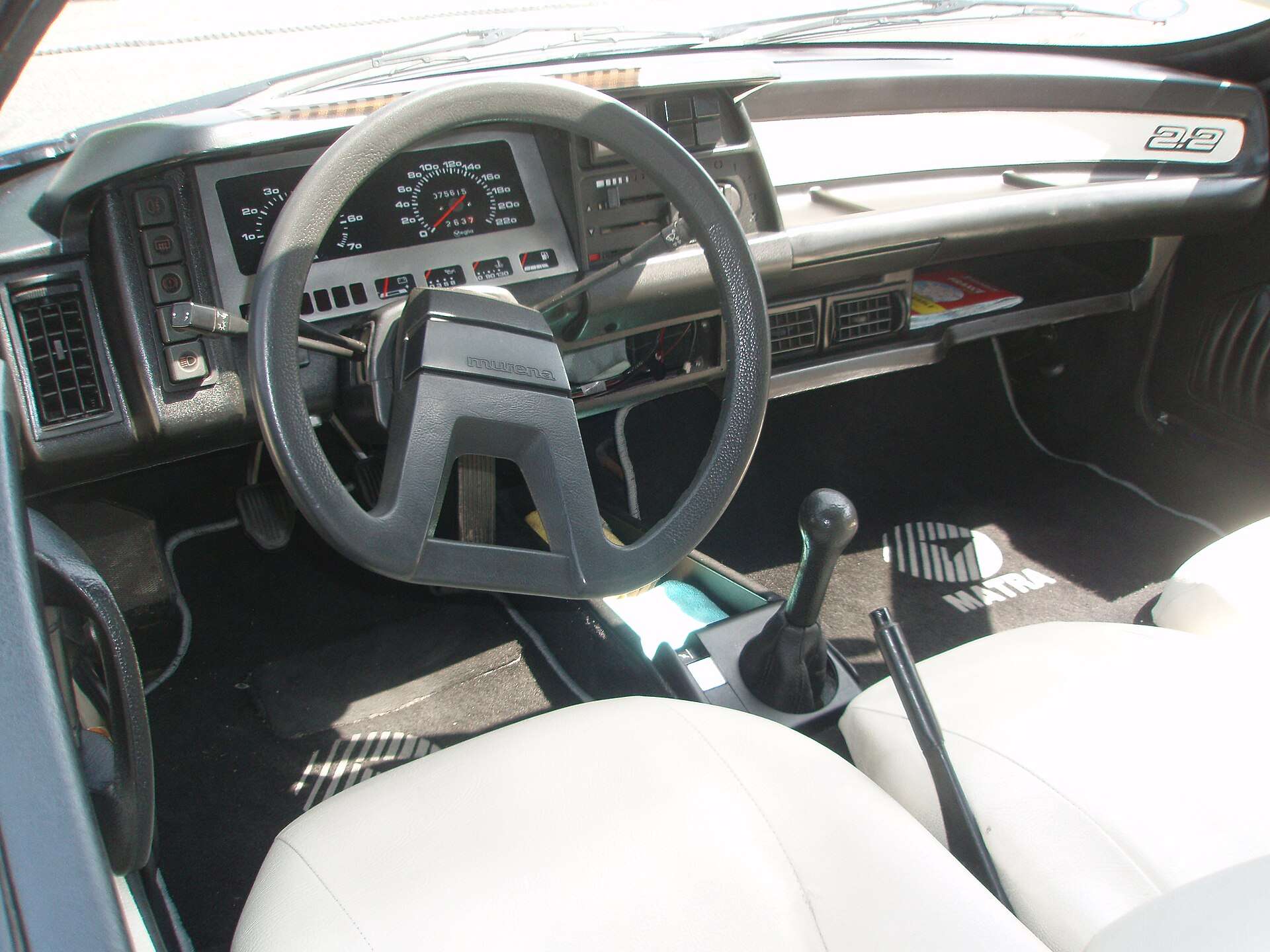
The driver sits conventionally on the left, beside two sculpted passenger positions. The centre seat can fold to form an armrest, and the layout avoids the long wheelbase or rear headroom compromises of a 2+2. It also makes original trim unusually important because seats, cloth, dashboard plastics and switchgear are difficult to replace.
Check the dashboard for cracking, verify that the pop-up headlamps rise together and test every gauge, fan and switch. Damp carpets can indicate leaks around the windscreen, door seals or hatch. Any right-hand-drive car needs a careful inspection of steering joints, pedal mounting, braking balance, wiper sweep and dashboard work.
Engine, cooling and transmission checks
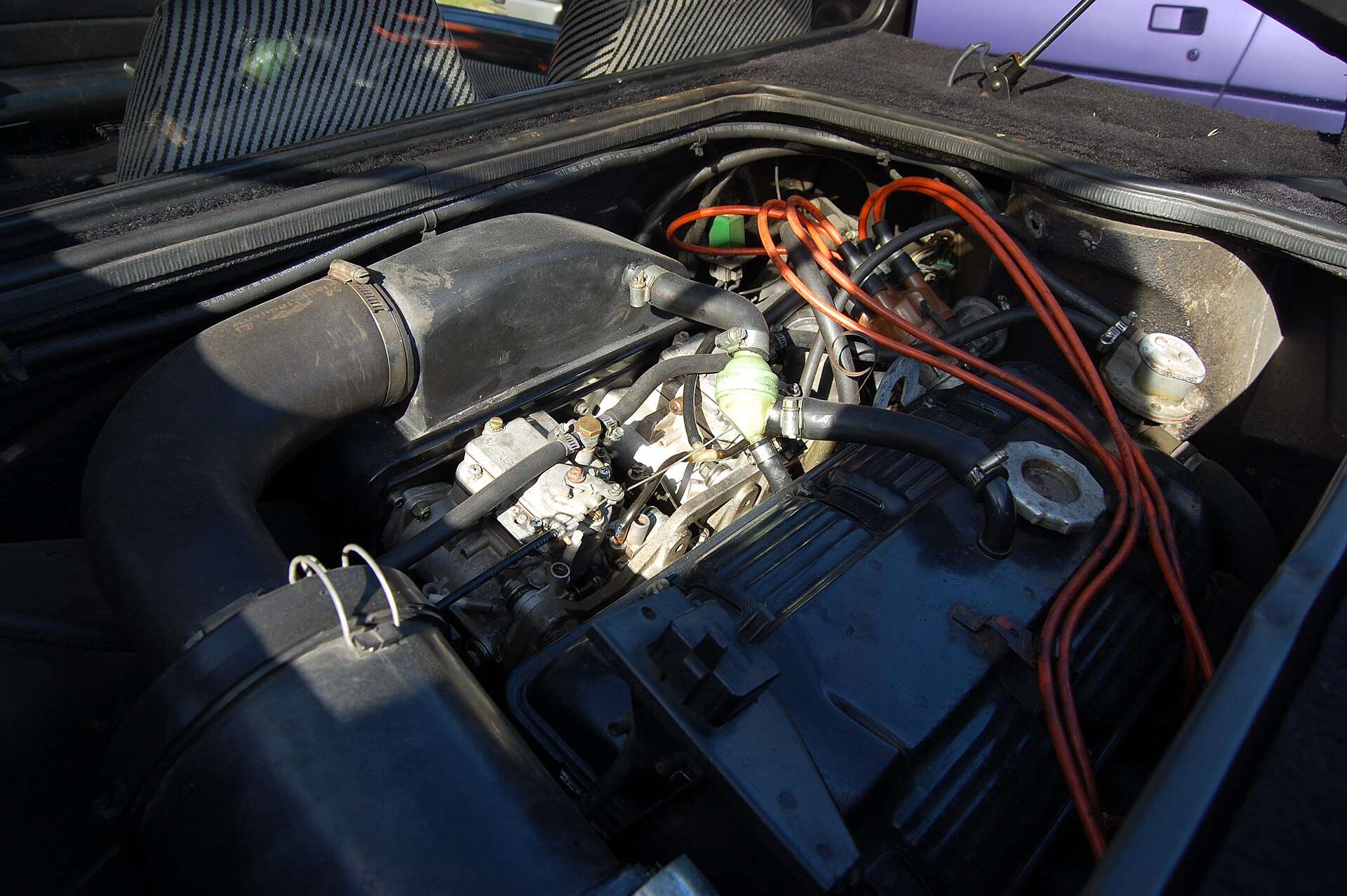
Cold starting, oil pressure, coolant temperature and hot restarting reveal far more than a brief idle. Carburettor wear or poor adjustment can cause hesitation and fuel smell; 2.2 cars need the correct induction parts, while genuine S or Preparation 142 specification should be documented rather than assumed from twin carburettors alone.
The cooling circuit runs between the front radiator and rear engine. Inspect pipes, hoses, fan, expansion tank and radiator, then allow the car to reach full temperature. The five-speed gearbox should select cleanly without jumping out, and the clutch should not drag. Engine mounts, driveshaft joints and rear wheel bearings all deserve attention.
Structure, body and ownership
Galvanising was a major advance, but accident repairs can burn away protection and moisture can enter seams. Inspect suspension pick-up points, sills, floors, bulkheads, windscreen frame and the structure around the engine bay. Misaligned glassfibre panels may reflect old damage rather than harmless cosmetic variation.
Look for bubbling, star cracks and poor repairs in the outer panels, and make sure the large rear glass is sound. Steering should be precise and the car should track straight under braking. Matra clubs are essential for model knowledge and specialist parts. Buy the most complete, structurally documented example available; restoring a dismantled import can quickly exceed the cost of a sorted car.

Why it matters
The Murena brought together Matra’s aerospace-influenced construction, an exceptionally efficient cabin and everyday Talbot mechanicals. It was praised for balance and ride rather than brute acceleration, and the 2.2 S finally gave the chassis the performance it deserved.
Its short life ended as Matra’s relationship with PSA changed and the company moved towards the Renault Espace. That makes the Murena both the end of a remarkable sports-car line and a technically convincing answer to the Bagheera’s flaws.
Research sources
- Matra Enthusiasts' Club UK: Murena history
- Matra Club UK: Murena versions and buying FAQ
- Hagerty UK: Matra Murena history and UK context
- Lane Motor Museum: 1983 Matra Murena
Continue the Talbot story
The Murena is the refined successor to Matra’s equally unconventional Bagheera. Explore the complete Talbot hub. Compare the Talbot-Matra Bagheera. Read the Talbot Tagora SX guide.
Frequently asked questions
Was the Talbot-Matra Murena sold in the UK?
It was not officially sold in Britain in normal series production. A very small number were imported and converted to right-hand drive, while later cars arrived privately.
What is the difference between a Murena 1.6 and 2.2?
The 1.6 uses a 1,592 cc overhead-valve engine, while the 2.2 uses a torquier 2,155 cc overhead-cam engine. Both have a five-speed transaxle.
How many Murena 2.2 S cars were built?
Matra club sources record roughly 480 factory-built 2.2 S cars at the end of production.
Does a Murena rust?
Yes. Its galvanised steel structure is far better protected than a Bagheera's, but accident repairs, damaged coatings and trapped moisture can still cause structural corrosion.
What should be checked on a right-hand-drive Murena?
Inspect the steering conversion, pedals, brakes, dashboard, wiper sweep and documentation because right-hand-drive conversions were not normal factory production.