
UNUSUAL CARS MODEL GUIDE
The ordinary Talbot Sunbeam deserves more attention than its Ti and Lotus relations. Launched as a Chrysler in 1977 and rebadged Talbot from 1979, this compact three-door hatch used shortened Avenger underpinnings, rear-wheel drive and a choice of 928 cc, 1.3-litre or 1.6-litre engines. LS, GL, GLS, LE and LX versions were practical UK-market cars rather than homologation specials.
Quick answer: the standard Sunbeam was built at Linwood from 1977 to 1981, first as a Chrysler and then as a Talbot. The 0.9 uses an enlarged Imp-derived engine, while 1.3 and 1.6 cars use Avenger units. Rust, incomplete trim, worn steering and suspension, and neglected cooling systems are the principal buying risks.
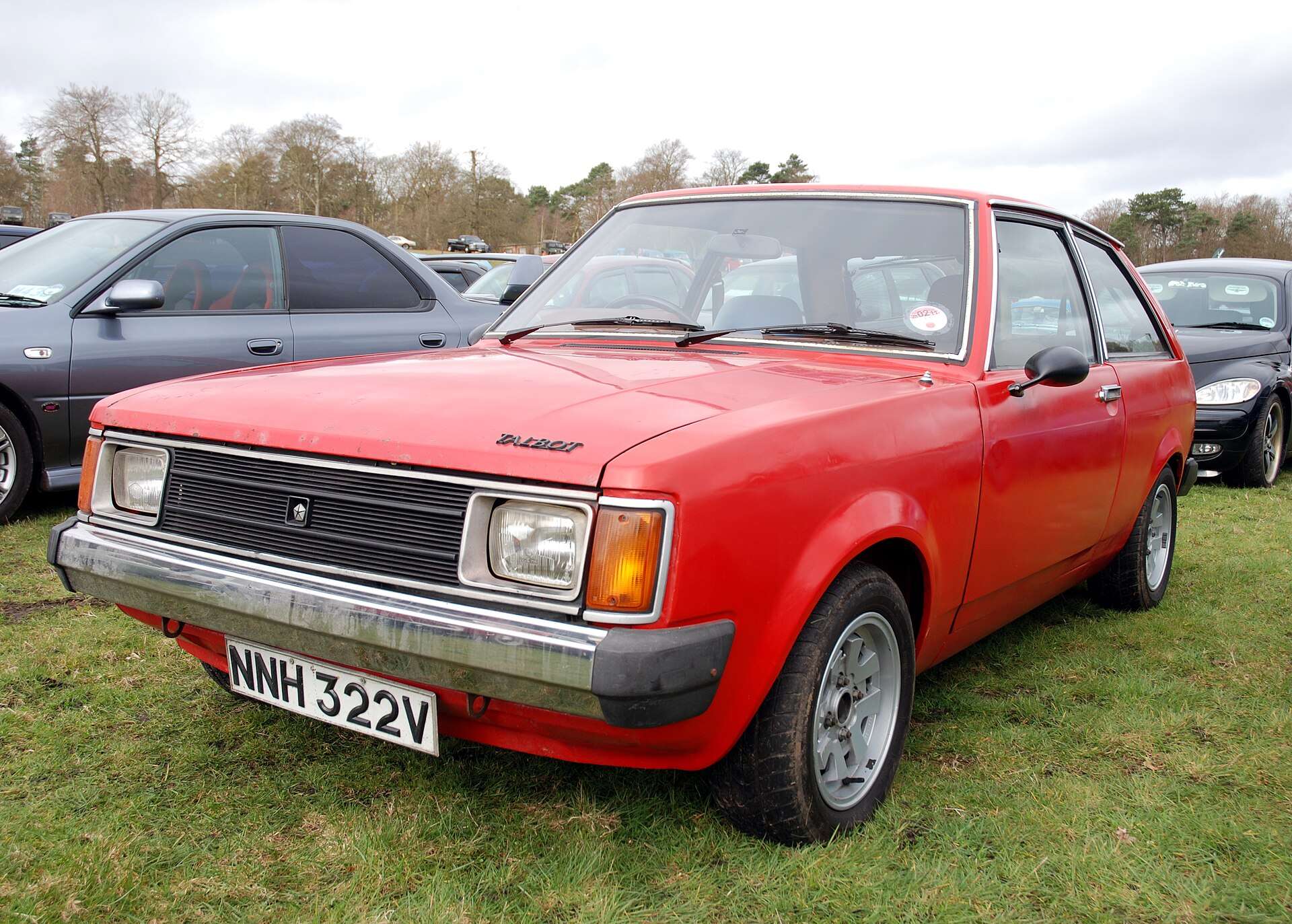
Featured image: Red Talbot Sunbeam road car. Photograph by allen watkin from London, UK, CC BY-SA 2.0, via Wikimedia Commons; locally hosted.
A small car created quickly
Chrysler UK needed a modern small hatchback and work for its under-used Scottish factory. Project R424 reached production in about nineteen months by shortening the Avenger floorpan and reusing its front-engine, rear-wheel-drive layout. The new body had two doors and a glass-only hatch, with a high loading sill but useful folding rear seat.
The familiar engineering kept costs and development time under control. It also made the Sunbeam unusual among late-1970s superminis, most of which used front-wheel drive. The car was launched on 23 July 1977 and sold only as a three-door hatchback.
Engines and trim levels
| Version | Engine | Typical role |
|---|---|---|
| 0.9 LS/GL | 928 cc overhead-cam four | Economy model using an Imp-derived alloy engine |
| 1.3 LS/GL | 1,295 cc overhead-valve four | Mainstream choice with Avenger mechanicals |
| 1.6 S/GLS | 1,598 cc overhead-valve four | Better-equipped and more flexible road car |
| LE/LX and special editions | Market- and year-dependent | Late trim and equipment packages |
Early cars used LS, GL and S designations, with S becoming GLS. Exact combinations changed during the Chrysler-to-Talbot transition, and special editions such as the Trio added distinctive colours and trim. A buyer should identify a car from its chassis plate, engine number, brochure evidence and surviving original equipment rather than relying only on badges.

Love cars you don’t see every day?
Get forgotten cars, surprising motoring stories and the most interesting finds from Unusual Cars by email.
Free to join. No spam. Unsubscribe whenever you like. See our privacy policy.
From Chrysler to Talbot
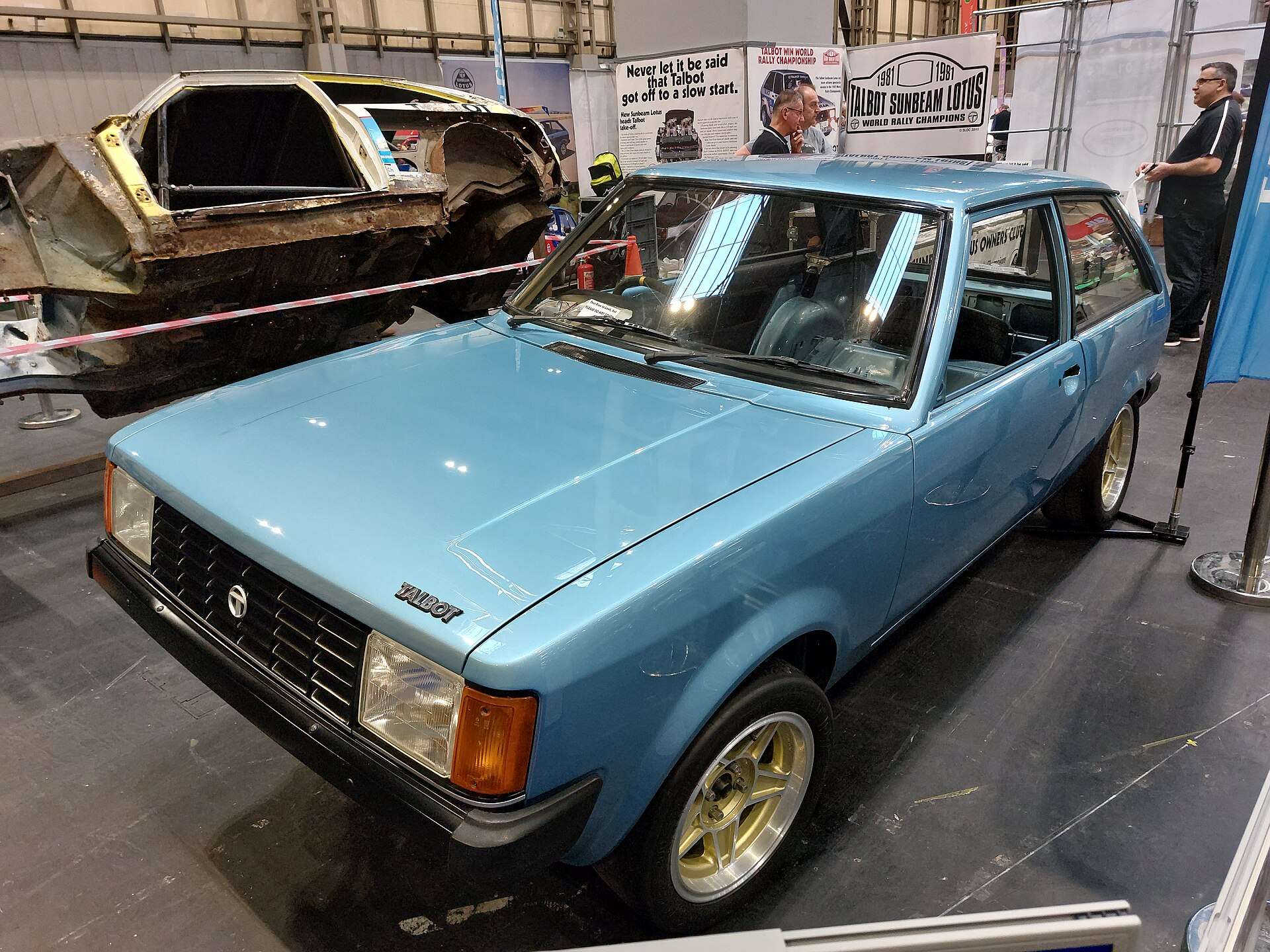
PSA bought Chrysler’s European operations in 1978 and revived the Talbot name in 1979. Sunbeams gained Talbot badges while some retained Chrysler’s Pentastar in the grille. The final Series 2 front used larger, flush-mounted headlamps and a smaller grille carrying the Talbot T.
Linwood’s planned closure placed a short limit on the model’s future. Production ended in 1981 after roughly 200,000 Sunbeams of all versions had been built. The Peugeot 104-based Talbot Samba took over the small-car role, but it abandoned the Sunbeam’s rear-wheel-drive layout.

Driving and mechanical checks
The 928 cc engine has its own Imp-family requirements and should not be treated as a small Avenger unit. Check cooling-system condition, oil pressure, timing-chain noise and evidence of overheating. On 1.3 and 1.6 cars, look for oil leaks, crankcase fumes, carburettor wear and a neglected cooling system.
The four-speed gearbox should select without baulking or jumping out. Listen for differential whine and propshaft vibration, and check that the clutch engages cleanly. Steering play, worn front struts, tired rear-axle bushes and seized brakes often reflect long storage. The modest tyres and unassisted controls should make a sound standard car feel light rather than vague.
Rust, originality and parts
Inspect the front valance, inner wings, strut tops, bulkhead, windscreen surround, sills, floor, rear arches, boot floor and suspension mounts. Pay close attention to the hatch aperture and seams around the glass tailgate. Patch repairs can hide structural corrosion, so view the underside on a lift.
Standard-model trim is now rarer than its simplicity suggests. Grilles, lamps, dashboards, seats, wheel trims, badges and parcel shelves matter. Modified cars may borrow Ti or Lotus styling without their mechanical specification. The Avenger and Sunbeam club network helps with mechanical parts and identification, but buying a complete car remains the safest route.
Why the ordinary Sunbeam matters
The celebrated Ti and Lotus depended on the same compact shell, short Avenger platform and Linwood workforce. The ordinary LS, GL and GLS models explain why the performance versions could exist at all, and they preserve the everyday face of a car once common on British roads.
A standard 1.3 or 1.6 is not a substitute for a Lotus. It is a lighter, simpler classic with direct controls, useful hatchback packaging and a particularly British industrial story.
Research sources
- Avenger and Sunbeam Owners Club: Sunbeam history and model range
- Classic & Sports Car: Chrysler Sunbeam specifications
- Sunbeam history: Chrysler and Talbot Sunbeam
- Imps4ever: Sunbeam 0.9 engine history
- Contemporary March 1981 UK Talbot range advertisement
Continue the Talbot story
The everyday Sunbeam supplied the platform and production base for Talbot’s better-known performance versions. Explore the complete Talbot hub. Continue with the Sunbeam Ti. Explore the Sunbeam Lotus.
Frequently asked questions
Was the standard Sunbeam sold as both Chrysler and Talbot?
Yes. It launched as the Chrysler Sunbeam in 1977 and adopted Talbot badging from 1979 after PSA bought Chrysler Europe.
Is every Talbot Sunbeam a Lotus?
No. Most were ordinary 0.9, 1.3 or 1.6-litre LS, GL, GLS and related models. The Ti and Lotus were separate performance versions.
Is the Talbot Sunbeam front-wheel drive?
No. It has a front engine, rear-wheel drive and shortened Avenger underpinnings.
Which engine is in the Sunbeam 0.9?
It uses a 928 cc development of the lightweight Hillman Imp engine, rather than an Avenger engine.
Where does a Talbot Sunbeam rust?
Important areas include the valance, inner wings, strut tops, bulkhead, sills, floors, rear arches, boot floor and suspension mountings.


