UNUSUAL CARS MODEL GUIDE
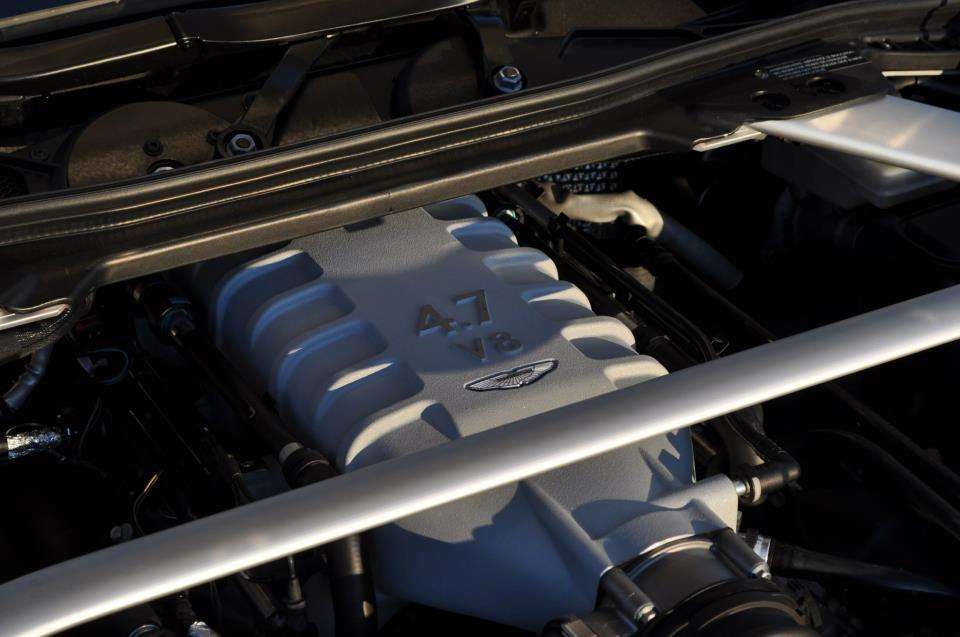
The 2005 Aston Martin V8 Vantage was the car that expanded Gaydon-era Aston Martin beyond V12 grand tourers. Compact, muscular and built around the bonded-aluminium VH architecture, it placed a Jaguar-derived but extensively Aston-developed V8 behind the front axle and a transaxle at the rear. Production ran for more than a decade, through 4.3- and 4.7-litre engines, coupé and Roadster bodies, manual and Sportshift transmissions and an unusually rich sequence of special editions.
Quick answer: early cars use a 4,282 cc V8 quoted at 380 bhp, while the 2008 model-year update enlarged capacity to 4,735 cc and raised output to 420 bhp. A six-speed manual was standard and automated-manual Sportshift versions were optional. Condition, service history, clutch wear, cooling, corrosion around steel fasteners and the integrity of the bonded structure matter more than mileage alone.
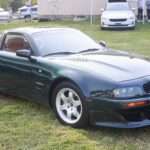
Featured image: 2005 Aston Martin V8 Vantage coupé. Photograph by Calreyn88, CC BY-SA 4.0, via Wikimedia Commons; locally hosted.
From concept car to Gaydon production
The AMV8 Vantage concept appeared in 2003 and translated into production with remarkably little visual dilution. Henrik Fisker’s shape wrapped tightly around a front-mid-mounted engine, while a rear transaxle helped distribute mass between the axles. The dry-sump lubrication system allowed the V8 to sit low, and the aluminium structure combined castings, extrusions and bonded panels rather than a conventional steel monocoque.
Customer deliveries began in 2005. The car was shorter and more overtly sporting than the DB9, but it retained the leather, metal detailing and long-distance character expected of an Aston Martin. A Roadster followed for the 2007 model year with structural reinforcement and a power-operated fabric roof.

4.3, 4.7 and the important derivatives
| Version | Main distinction |
|---|---|
| 4.3 V8 Vantage | 380 bhp launch specification, six-speed manual or Sportshift |
| 4.7 V8 Vantage | 420 bhp from the 2008 update, with revised suspension and transmission calibration |
| N400 and N420 | Limited editions with power and chassis changes inspired by Nürburgring endurance racing |
| V8 Vantage S | 430 bhp, quicker Sportshift II and more focused chassis settings |
| GT8 and AMR | Late-run lightweight and commemorative derivatives |
Specifications evolved continuously, so establish the exact model year and factory options from the build record. Badges, wheels and body kits are easily changed; a genuine limited edition should have coherent documentation.

Love cars you don’t see every day?
Get forgotten cars, surprising motoring stories and the most interesting finds from Unusual Cars by email.
Free to join. No spam. Unsubscribe whenever you like. See our privacy policy.
Chassis balance and everyday character
The transaxle layout, wide track and compact wheelbase give the V8 Vantage a different character from the larger DB9. Steering is hydraulic and communicative, while the ride is firm without turning every standard car into a track special. Later suspension revisions improved body control, and the S brought sharper steering and braking responses.
On a test drive, the car should track straight, brake without vibration and absorb poor surfaces without knocks. Uneven tyre wear can point to alignment, worn bushes or accident damage. Correct high-quality tyres are important because mismatched or aged rubber obscures the chassis and can trigger misleading handling complaints.

V8, cooling and electrical checks
The Aston-built V8 is generally robust when serviced correctly, but neglect is costly. Start from cold and listen for persistent timing noise, check for smoke, oil leaks, misfires and stable oil pressure, then allow the cooling system to prove itself in traffic. Radiators and condensers sit in vulnerable airflow, while aged hoses, thermostats and fans can turn a small fault into overheating.
Battery condition matters because low voltage can create multiple warnings. Test the windows, seat modules, mirrors, air conditioning, instruments, central locking, alarm and infotainment. Water ingress and blocked drains deserve attention on both body styles, especially around the Roadster roof and luggage compartment.
Manual, Sportshift and clutch costs
The Graziano six-speed manual has a heavy but positive action when healthy. Check for clutch slip, judder, a high biting point, gearbox noise and difficult selection when warm. The clutch is a significant job because of the rear transaxle arrangement, and some owners fit later twin-plate conversions to reduce pedal effort and improve durability.
Sportshift is an automated manual, not a torque-converter automatic. It needs a deliberate driving technique and should shift cleanly once warm. Judder, slow engagement or a worn clutch adaptation figure requires specialist diagnosis. Evidence of correct fluid changes and clutch-learning procedures is valuable.

Body, cabin and buying priorities
The aluminium skin does not eliminate corrosion. Inspect paint bubbling around door handles, wing vents, mirror bases and panel edges, and look for galvanic reaction where steel fixings meet aluminium. Accident repairs need particular care because the bonded structure requires approved techniques and accurate jig work.
Inside, examine seat bolsters, headlining, leather-covered dashboard panels and the early pop-up navigation system. A complete Aston Martin or respected independent-specialist history, annual use and invoices for cooling, clutch, brakes and suspension are stronger evidence than an unusually low odometer reading. Commission a diagnostic scan and underbody inspection before purchase.
Sources and further reading
- Aston Martin: Vantage history and 2005 model development
- Car & Classic: V8 Vantage buying guide
- Car Collector International: V8 Vantage buyer guidance
- Aston Club: V8 Vantage ownership and inspection guide
Continue the Aston Martin story
The 2005 V8 Vantage made the modern Aston Martin a compact sports car again and established the architecture that supported a remarkable family of derivatives. Explore the complete Aston Martin hub. Compare the contemporary DB9. Read about the original 1977 V8 Vantage.
Frequently asked questions
When was the 2005 Aston Martin V8 Vantage produced?
The VH-platform V8 Vantage entered production in 2005 and continued through 2017 in coupé and Roadster forms.
What is the difference between the 4.3 and 4.7 V8 Vantage?
Early cars have a 4.3-litre 380 bhp V8; the 2008 update brought a 4.7-litre engine rated at 420 bhp plus chassis and transmission revisions.
Is Sportshift an automatic gearbox?
Sportshift is an automated manual transmission with a conventional clutch operated electro-hydraulically, so it behaves differently from a torque-converter automatic.
What are the main V8 Vantage buying risks?
Check clutch wear, cooling, electrical condition, aluminium corrosion, accident repairs, suspension, brakes and complete specialist service history.
Did Aston Martin make a V8 Vantage Roadster?
Yes. The V8 Vantage Roadster joined the range for the 2007 model year and used a power-operated fabric roof.