UNUSUAL CARS MODEL GUIDE
The Rolls-Royce Silver Seraph was built from 1998 to 2002 and became the final new saloon developed at Crewe before modern Rolls-Royce production moved to Goodwood. Its BMW-sourced 5.4-litre V12, CAD-developed body and traditional cabin make it a genuine bridge between two eras.
Quick answer: The Seraph is scarce, refined and more usable than many older Crewe cars, but parts shared with neither the preceding SZ family nor the later Goodwood range can be costly. Buy on history, body condition and functioning electronics rather than low mileage alone.
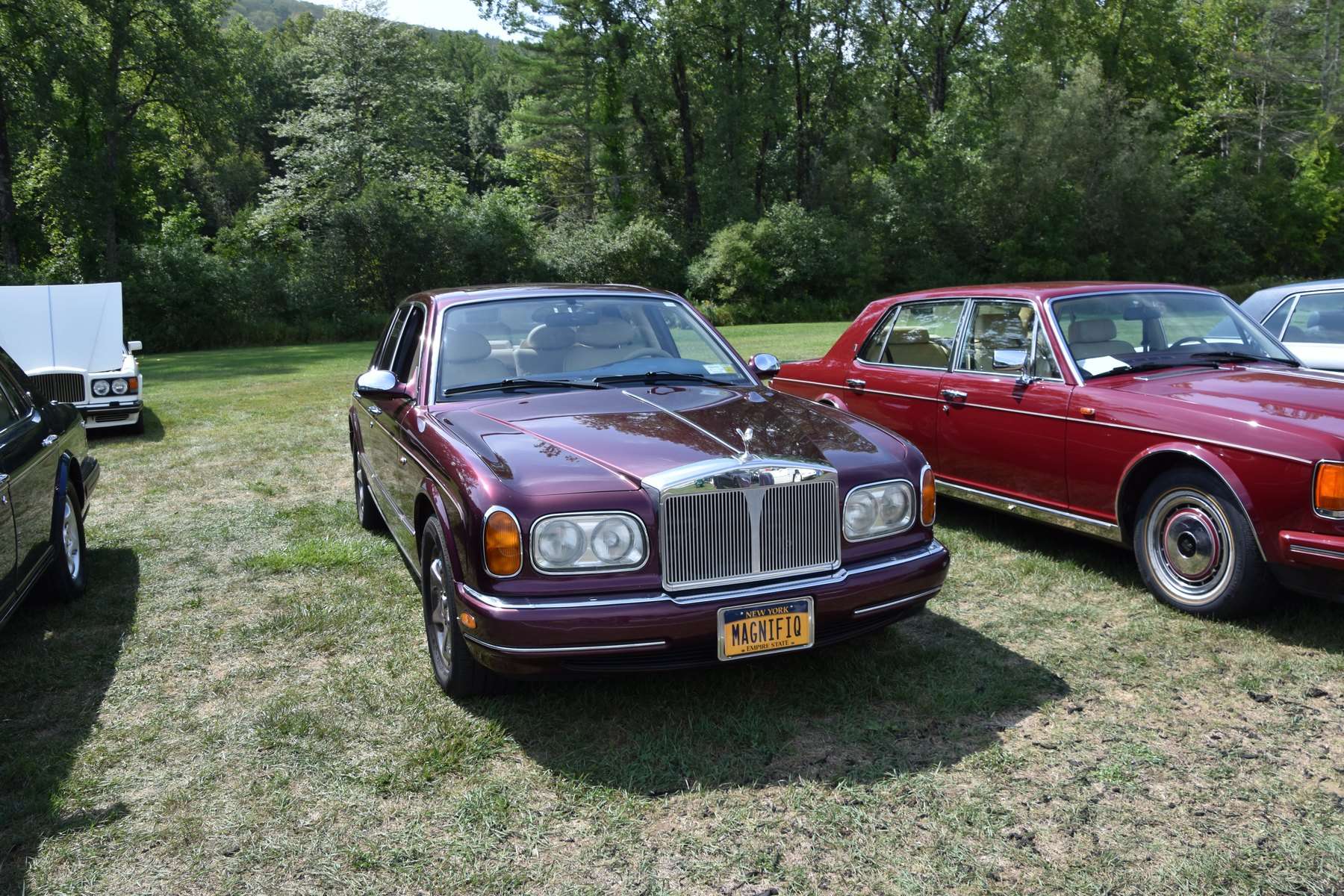
Featured image: Rolls-Royce Silver Seraph. Photograph by Charles from Port Chester, New York, CC BY 2.0, via Wikimedia Commons; locally hosted.
Fourteen years in development
Project P300 began in the mid-1980s and survived changing ownership, budgets and market expectations before the Silver Seraph appeared in 1998. Graham Hull’s rounded design deliberately restored visual presence after the angular Silver Spirit, while retaining a formal upright grille and generous glass area.
It was the first Rolls-Royce designed using computer-aided design. The related Bentley Arnage shared its body structure, but the Rolls-Royce received different styling, suspension tuning, interior character and naturally aspirated V12 power.

V12 drivetrain and specification
| Item | Specification |
|---|---|
| Engine | 5.4-litre BMW-derived naturally aspirated V12 |
| Transmission | Five-speed automatic, rear-wheel drive |
| Production | 1998–2002 |
| Long-wheelbase | Park Ward introduced in 2000 |
The V12 prioritises smooth response rather than sporting drama. The gearbox should be unobtrusive, and the car should accelerate without hesitation, warning lamps or driveline vibration.

Love cars you don’t see every day?
Get forgotten cars, surprising motoring stories and the most interesting finds from Unusual Cars by email.
Free to join. No spam. Unsubscribe whenever you like. See our privacy policy.
Engine, cooling and electronics
Cold starting should be immediate and the idle almost imperceptible. Check both cylinder banks for misfires, air leaks and ignition faults, then inspect cooling hoses, radiator, expansion tank, water pump and service history. Overheating can turn a manageable car into a major project.
Use proper diagnostics to scan all modules. Test charging voltage, batteries, engine management, gearbox, anti-lock brakes, climate control and every dashboard warning. Low-use cars often suffer from weak batteries and corroded connections, but warning lights must still be diagnosed rather than dismissed.

Body structure and suspension
Inspect sills, jacking points, wheelarches, door bottoms, floor edges, screen surrounds and boot floor. Examine aluminium closures where they meet steel frames, and look for mismatched paint or irregular panel gaps after accident repair. Heavy doors must close without dropping.
The suspension uses electronically controlled dampers and hydraulic rear self-levelling. A healthy car rides with control, not wallow or harshness. Check dampers, spheres, pumps, bushes, ball joints, steering, brakes and correct high-load tyres.

Cabin, climate and Park Ward
The cabin combines deep leather and timber with discreet modern controls. Operate seats, memory functions, windows, locks, mirrors, instruments, audio and climate control from every position. Water ingress can damage expensive trim and electrical modules.
The long-wheelbase Park Ward arrived in 2000 with an extended rear compartment and model-specific fittings. Its rarity raises the importance of complete picnic tables, division equipment, rear controls and documented factory specification.

Buying and ownership priorities
A specialist inspection should include diagnostic scanning, a hot road test, lift inspection and verification of every electrical function. Confirm V12 and gearbox servicing, cooling-system renewal, suspension work, brake condition and tyre age. A detailed invoice file is far more meaningful than stamped service books alone.
The best Seraphs deliver modern motorway ability with a cabin and driving character rooted in Crewe tradition. The cheapest examples can be false economies because low production numbers make some trim and model-specific components difficult to source.

Sources and further reading
Continue the Rolls-Royce story
Explore the complete Rolls-Royce hub. Continue with Silver Cloud, Silver Spirit and Silver Spur.
Frequently asked questions
When was the Silver Seraph built?
The Silver Seraph was produced from 1998 until 2002.
What engine does it use?
A naturally aspirated 5.4-litre BMW-derived V12 with a five-speed automatic gearbox.
What is a Rolls-Royce Park Ward?
It is the long-wheelbase Silver Seraph derivative introduced in 2000.
Is it related to the Bentley Arnage?
Yes, the body structure is related, but styling, powertrain, tuning and cabin character differ.
What should buyers check first?
Cooling, diagnostics, electronic dampers and self-levelling, corrosion, complete trim and a detailed specialist history.