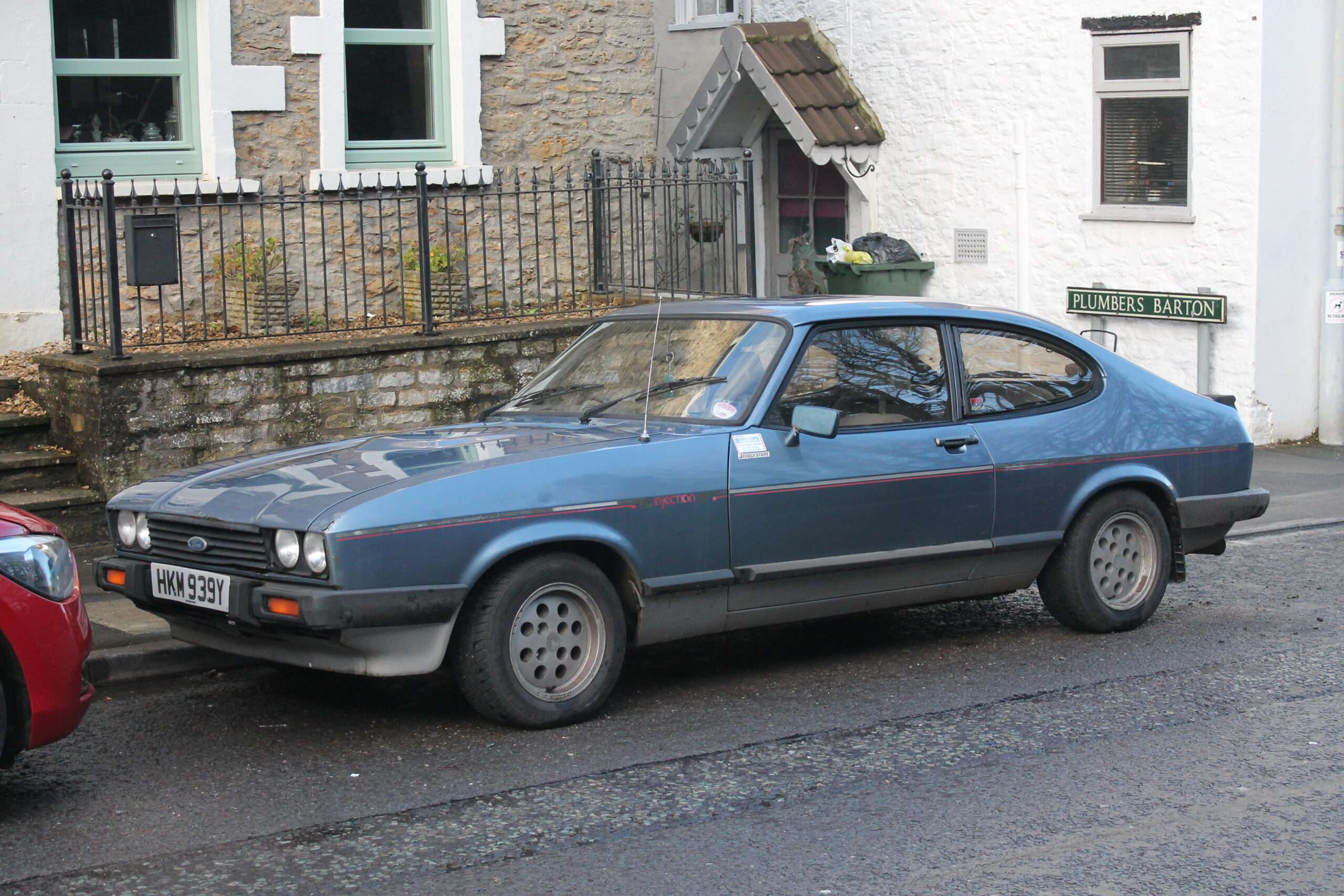
The Ford Capri 2.8 Injection arrived when the original European pony car was already more than a decade old, yet it created one of the sharpest and most desirable Capris of all. Behind the familiar long bonnet sat fuel injection, 160PS and a chassis developed to make proper use of it. Here are ten details that explain why the 2.8i became the definitive late Capri.
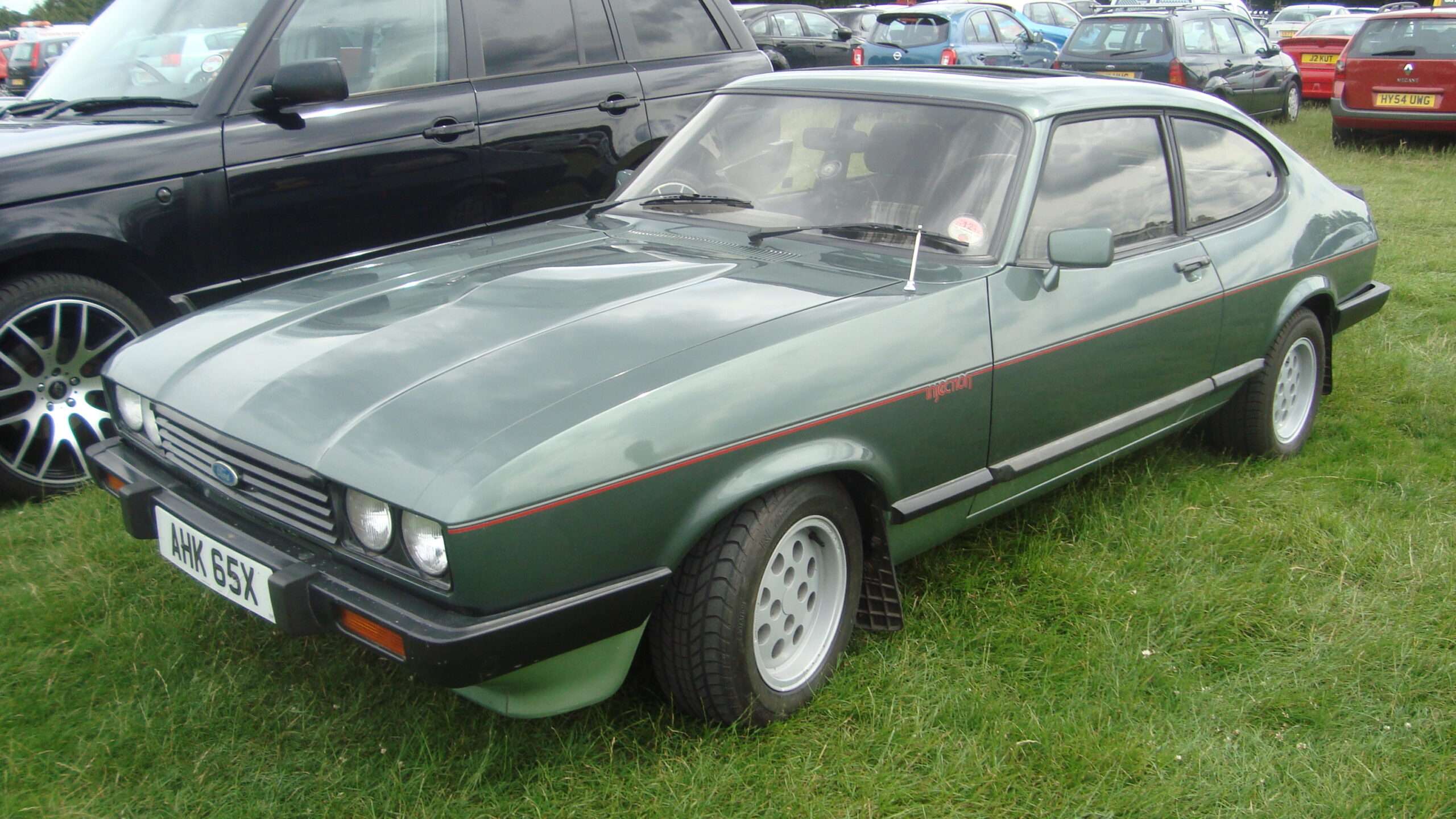
1. It began as a Special Vehicle Engineering project
The 2.8 Injection was not simply another trim level devised to fill a price-list gap. Ford’s Special Vehicle Engineering operation developed it as a sporting flagship, and the first cars appeared in January 1981 as a special model. Demand was strong enough for Ford to make it a regular production Capri that August.
2. Its V6 was different from the famous three-litre engine
Earlier fast British Capris are associated with the Essex 3.0 V6, but the 2.8i used the German-built 2,792cc Cologne V6. Bosch K-Jetronic mechanical fuel injection helped it produce 160PS, giving cleaner starting and sharper response than a large carburettor could offer. The engine’s character is revvier and more urgent than the lazy Essex unit it replaced.
3. Ford changed much more than the engine
The chassis received firmer suspension settings, reinforced anti-roll bars and 7-inch alloy wheels wearing unusually wide 205/60 VR13 tyres. Ford also revised the braking system. The result was not a modern independent-rear-suspension sports car, but the changes made the live-axle Capri feel far more tied down and purposeful.
4. It replaced two V6 Capris at once
When the 2.8 Injection joined the permanent range in August 1981, Ford withdrew both the 2.0-litre and 3.0-litre V6 Capris. One fuel-injected model now covered the territory previously occupied by two engines, while also giving the Capri a performance story strong enough to carry it through the 1980s.
Love cars you don’t see every day?
Get forgotten cars, surprising motoring stories and the most interesting finds from Unusual Cars by email.
Free to join. No spam. Unsubscribe whenever you like. See our Privacy Policy.
5. The Injection Special added one of the most useful upgrades
The later Capri 2.8 Injection Special is often confused with an ordinary 2.8i wearing different wheels. Its important mechanical addition was a limited-slip differential, which made the car more effective when deploying its torque out of bends. Half-leather Recaro seats and distinctive seven-spoke alloys made the Special easy to recognise.
6. “Brooklands” was never its official model name
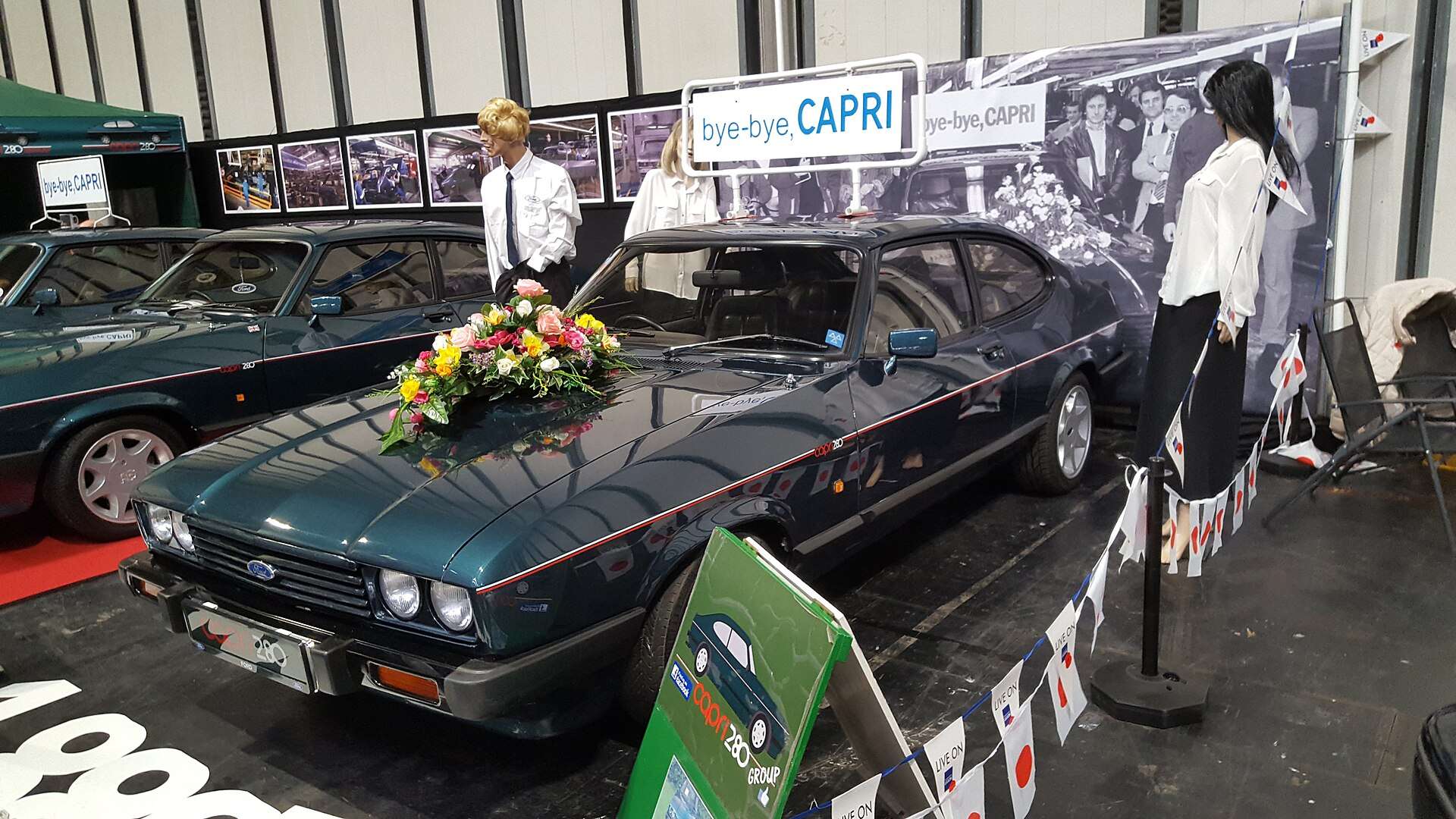
The final road-going Capri was officially the Ford Capri 280. Enthusiasts quickly adopted the Brooklands nickname because every example was painted Brooklands Green, but Ford’s badges and sales material said 280. The nickname is so natural that it has largely eclipsed the real name.
7. The 280 was luxurious, not more powerful
Despite its position as the grand finale, the 280 retained the familiar 160PS 2.8-litre engine. Its appeal came from presentation: full Raven leather Recaro seats, colour-coded exterior details, 15-inch seven-spoke wheels and the limited-slip differential. It was a fully dressed farewell rather than a last-minute performance special.
8. The famous production total is 1,038
Ford describes the final edition as a run of just over one thousand cars, while the accepted enthusiast total is 1,038. That is enough to make the 280 collectible without being mythical. Genuine cars should still be checked carefully, because Brooklands Green paint and replica wheels have allowed many ordinary 2.8is to imitate the look.
9. Tickford created an even more exotic 2.8i
Aston Martin Tickford converted the Capri into a hand-finished turbocharged flagship with around 205bhp, revised suspension, luxury trim and dramatic bodywork. Production was tiny and the conversion was expensive, so it never represented the ordinary 2.8 Injection experience—but it showed how much performance remained hidden in the platform.

10. It kept the Capri alive long after mainland sales ended
The Capri disappeared from most European markets before Britain finally said goodbye. UK enthusiasm helped production continue until December 1986, when the last car left Ford’s Cologne factory. By then the wider Capri family had reached roughly 1.9 million examples, but the 2.8 Injection supplied the memorable final chapter.
The 2.8i’s importance is not just its speed. It successfully modernised a 1960s concept—front engine, rear drive and affordable coupé styling—without removing the character that made the Capri popular in the first place.
Love cars you don’t see every day?
Get forgotten cars, surprising motoring stories and the most interesting finds from Unusual Cars by email.
Free to join. No spam. Unsubscribe whenever you like. See our Privacy Policy.
Research sources: Ford of Europe Capri timeline and heritage material; Unusual Cars UK Capri 2.8 Injection/280 and Tickford Capri guides.