
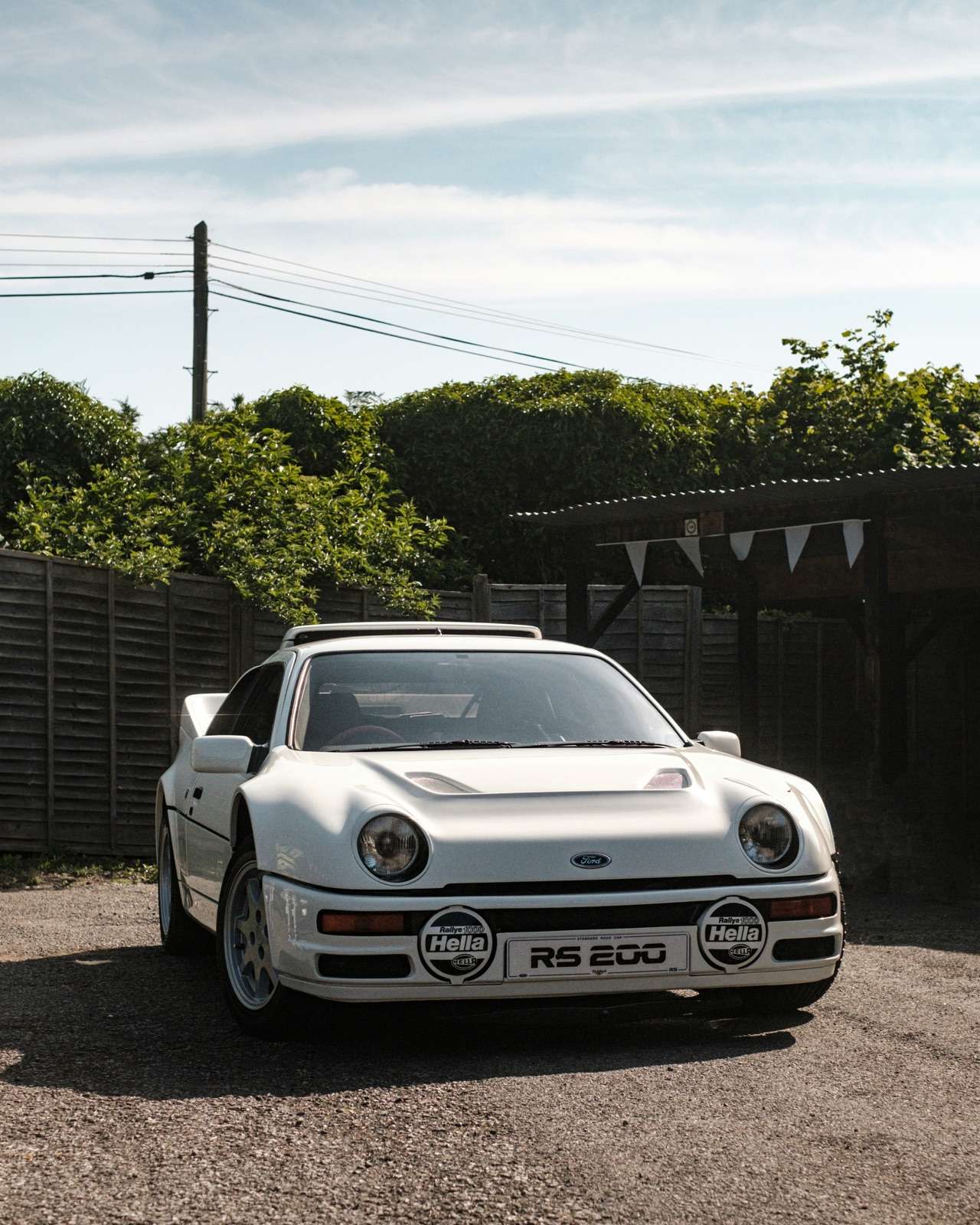
The Ford RS200 may wear a familiar blue oval, but almost nothing beneath its composite body came from an ordinary showroom Ford. Conceived after the cancellation of the Escort RS1700T, it was a clean-sheet attempt to create a four-wheel-drive Group B contender—and its unusual engineering still surprises people four decades later.

1. It existed because Ford abandoned a very different Escort
Ford first pursued the rear-wheel-drive Escort RS1700T for Group B. Development difficulties and the rapid rise of four-wheel drive made that project strategically obsolete. Instead of forcing the Escort programme onwards, Ford cancelled it and began the RS200 with a clean sheet.
2. The name referred to a homologation target
“RS200” referred to the 200 road-legal cars theoretically required for Group B homologation. That does not mean every surviving car can automatically be described as one of a simple, consecutive 200. Incomplete cars, spare structures, later assembly, competition rebuilds and replacements make identity a matter of records and chassis history.
3. Its gearbox was mounted at the front
The Cosworth engine sat behind the cockpit, but Ford placed the gearbox towards the front to improve weight distribution. Power therefore travelled forwards before being distributed through the four-wheel-drive system. FF Developments helped create the resulting complex transmission layout.
4. Formula One expertise shaped the chassis
Formula One designer Tony Southgate and engineer John Wheeler contributed to the concept. An aluminium-honeycomb lower structure, strong front and rear subframes and twin-wishbone suspension supported the specialised drivetrain. Twin dampers at each wheel provided the travel and control demanded by rough rally stages.
Love cars you don’t see every day?
Get forgotten cars, surprising motoring stories and the most interesting finds from Unusual Cars by email.
Free to join. No spam. Unsubscribe whenever you like. See our Privacy Policy.
5. Reliant assembled it
The company remembered mainly for small fibreglass road cars played a genuine role in one of Ford’s most exotic projects. Ghia designed the composite/carbonglass body and Reliant assembled the cars. The connection makes the RS200’s British industrial story almost as unexpected as its drivetrain.
6. It borrowed a windscreen and rear lights from the Sierra
The RS200 was purpose-built, yet Ford sensibly used selected production pieces. The FIA’s historical account notes Sierra components including the front windscreen and rear lamps. These familiar parts sit within a body and structure that otherwise share little with a family Ford.
7. The road engine was already serious
The mid-mounted, all-aluminium Cosworth BDT was a turbocharged four-cylinder with dry-sump lubrication. The FIA quotes 250hp at 6,500rpm for the 1.8-litre road car and more than 420hp for 1986 competition form. Rally, road and later rallycross specifications must not be treated as one universal figure.
8. It reached the World Rally Championship too late
The road car appeared publicly at the 1984 Belfast Motor Show, but FIA homologation B-280 did not take effect until 2 February 1986. Its first official WRC appearance came on that year’s Monte Carlo Rally, leaving less than a full season before Group B was ended.
9. Its best-known WRC result was not a victory
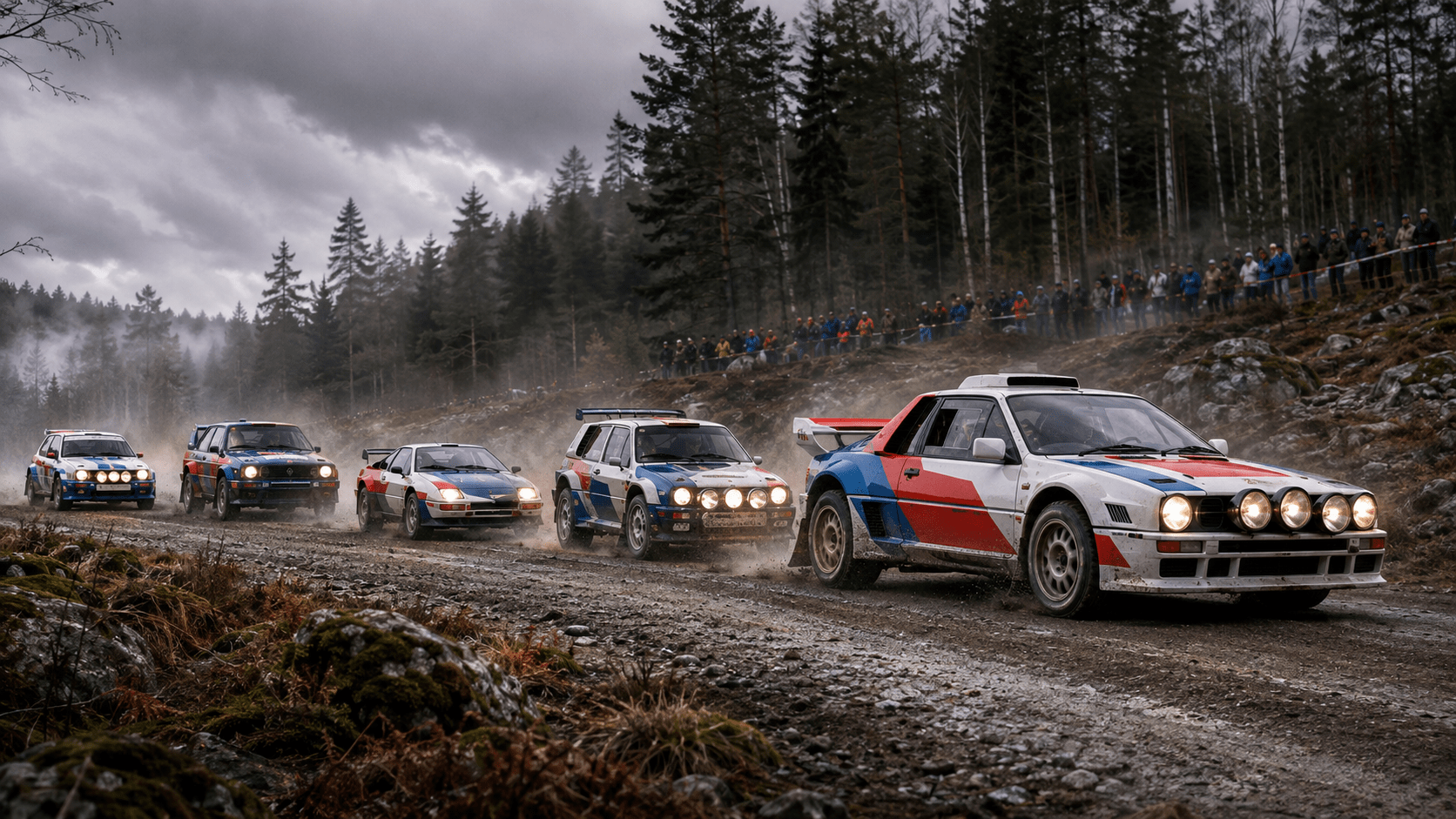
Kalle Grundel’s third place on the 1986 Swedish Rally demonstrated the car’s potential, but the RS200 never won a World Rally Championship round. Its shortened career is part of the fascination: Ford created an advanced machine just as the regulations that inspired it disappeared.
10. The Evolution arrived after the WRC door had closed
The RS200 Evolution, or RS200E, centred on an engine enlarged to about 2.1 litres. The FIA records its evolution as validated on 1 December 1986—after the final Group B WRC season. The model found a formidable second career in rallycross, where Group B machinery remained eligible for several more years.
The RS200 is also inseparable from the spectator deaths at the 1986 Rally Portugal and the wider human cost of Group B. That history should be discussed accurately and respectfully, not used merely as spectacle.
Read the engineering, specifications and identification details in our complete Ford RS200 guide, or explore every feature in the 10 Things hub.
Research basis: FIA Historic Database, Ford RS200 homologation B-280 and the Unusual Cars model guide.