UNUSUAL CARS MODEL GUIDE
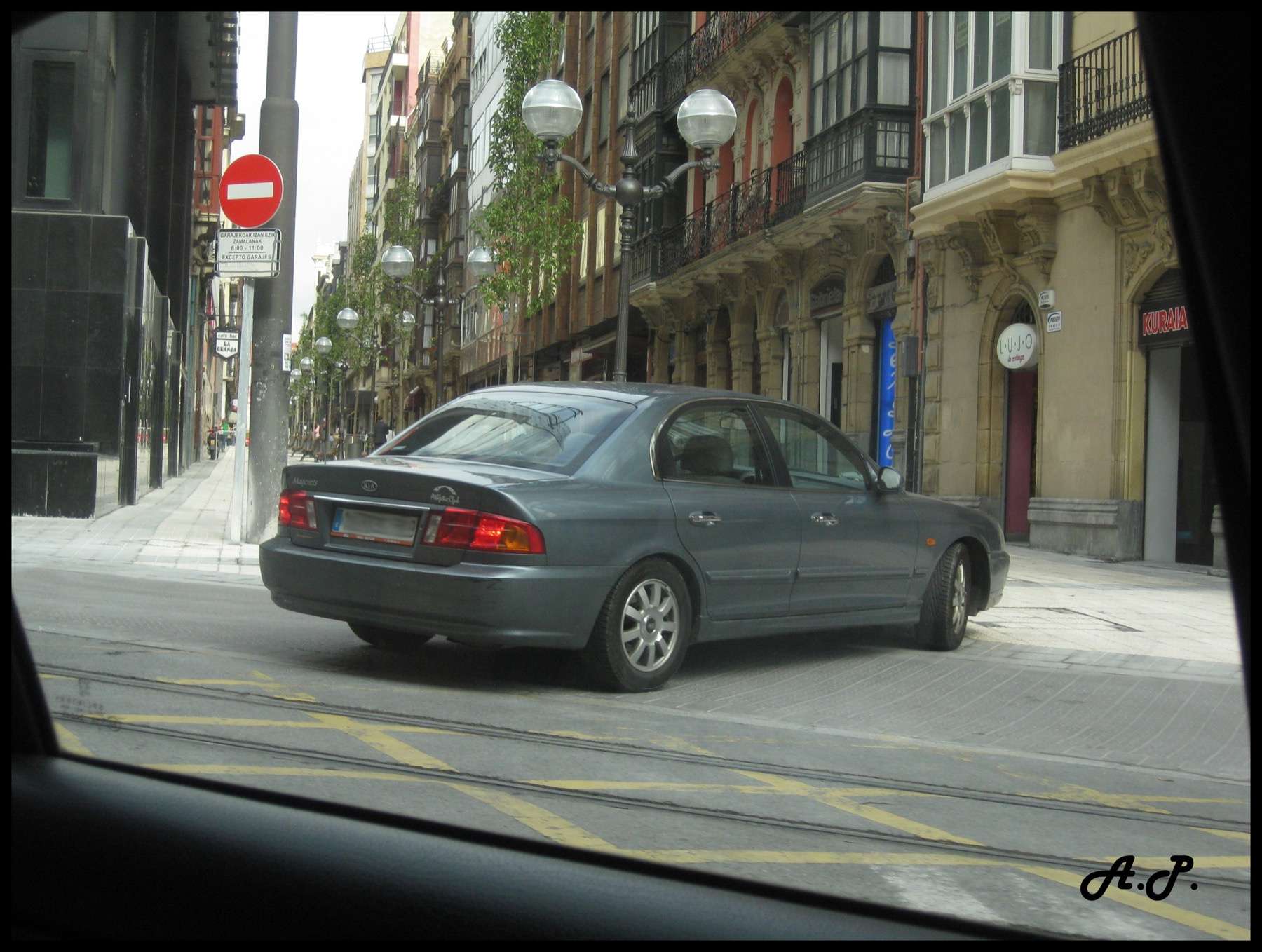
The first Kia Magentis was an improbably inexpensive V6 executive saloon. Closely related to the Hyundai Sonata, it replaced the short-lived Clarus in 2001 and showed that Kia could produce a large car that contemporary reviewers regarded as genuinely competent—not merely cheap. Its chrome-heavy styling and value-led image have since made it a distinctive early-2000s survivor.
Featured image: first-generation Kia Magentis. Photograph by Spanish Coches, CC BY 2.0, via Wikimedia Commons; resized and locally hosted.
A flagship shared with Hyundai
After Hyundai acquired a controlling interest in Kia, the companies began sharing platforms and powertrains more closely. The Magentis used the same fundamental architecture as the Hyundai Sonata and was sold as the Optima in several overseas markets. In Britain, the new name distinguished Kia’s flagship from the Clarus it replaced.
The launch proposition was extraordinary: a Mondeo-sized saloon with a smooth 2.5-litre V6 for less than many small hatchbacks. Contemporary reviews were surprised by its comfort, equipment and general competence. It was not a sports saloon, but the quiet engine, soft ride and large seats suited long-distance use.
V6 value and the later 2.0
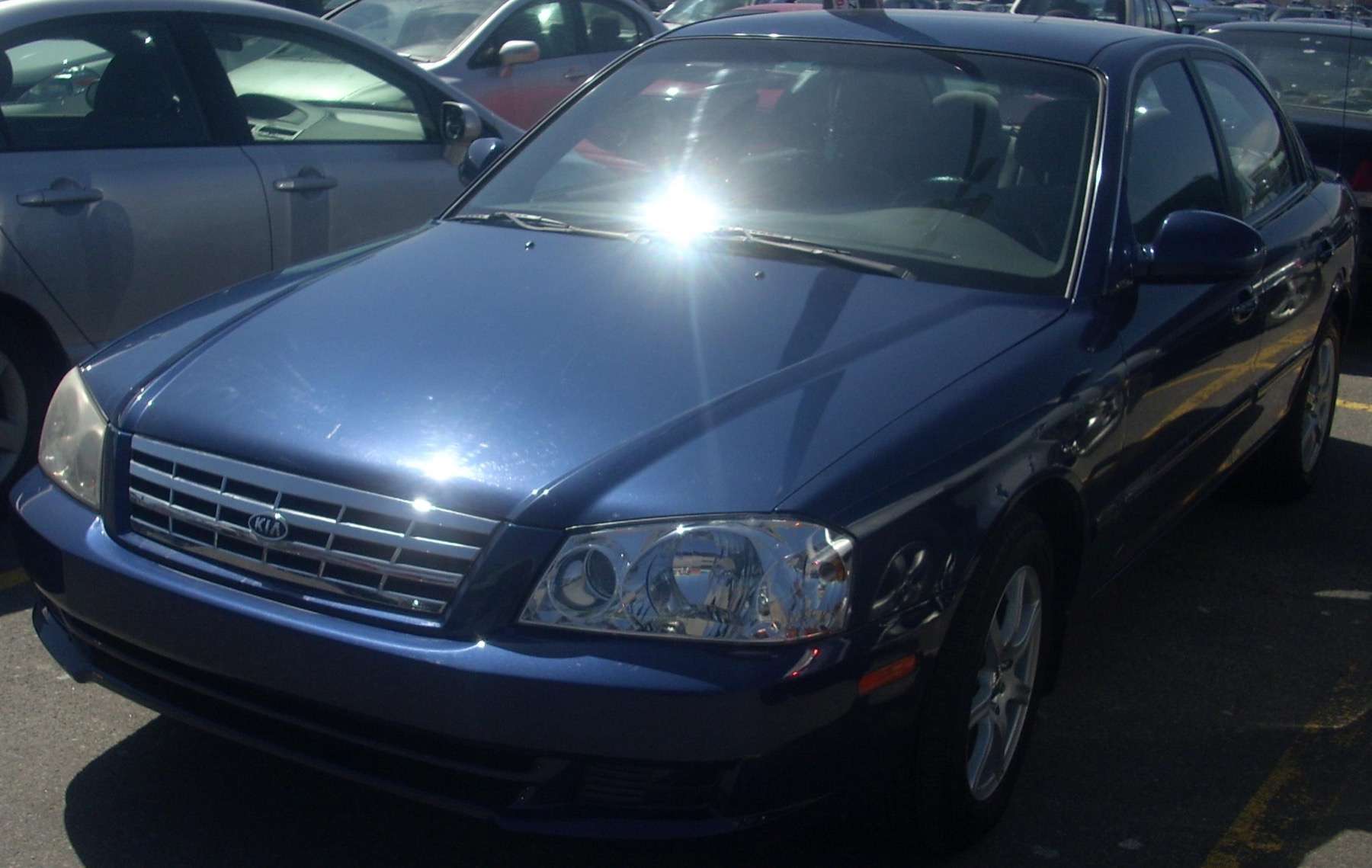
Early LX and SE cars used a 2.5-litre V6 producing about 166–168 bhp. The SE added leather, climate control, cruise control, side airbags and traction control, and was paired with an H-matic automatic gearbox. Late in 2002 the LX changed to a 2.0-litre four-cylinder, reducing price and running costs. Styling revisions arrived in 2003, and from 2004 the range was reduced to the 2.0 with manual or automatic transmission.
| Specification | UK-market Magentis Mk1 |
|---|---|
| UK launch | 2001 |
| Body | Four-door saloon |
| Engines | 2.0 four-cylinder; 2.5 V6 |
| Power | Approximately 136 bhp (2.0); 166–168 bhp (V6) |
| Transmission | Five-speed manual or four-speed automatic/H-matic |
| Trim | LX and SE |
| Replacement | Second-generation Magentis, 2006 |
Why it belongs here
The Magentis marks a transitional Kia: still sold primarily on value, but no longer easily dismissed as crude. It offered six-cylinder power at four-cylinder money, yet most examples were treated as disposable transport once depreciation took hold. Early V6s are especially interesting because no later UK Kia saloon repeated quite the same bargain-executive formula.
Love cars you don’t see every day?
Get forgotten cars, surprising motoring stories and the most interesting finds from Unusual Cars by email.
Free to join. No spam. Unsubscribe whenever you like. See our privacy policy.
Kia Magentis Mk1 buying guide
Service history and timing belts
Both engines need evidence of regular servicing and correct timing-belt replacement. Check for oil leaks, cooling-system neglect, misfires and exhaust smoke. A V6 should idle smoothly and pull cleanly; access can make neglected jobs more expensive than the car’s low purchase price suggests.
Automatic and manual gearboxes
On an automatic, check engagement from cold, smooth changes at light and heavy throttle and clean kickdown. Any flare, thump or delay needs investigation. Manuals should select every gear cleanly without clutch slip or driveshaft vibration.
Body, suspension and equipment
Inspect sills, arches, subframes, brake pipes, floor edges and suspension mounts. Worn bushes and dampers can make the already soft chassis feel vague. Test the air conditioning, windows, mirrors, central locking, cruise control and dashboard warnings. Headlamps, exterior brightwork and interior trim are more difficult to source than routine consumables.

Which version?
The 2.0 is simpler and slightly cheaper to run, but the 2.5 V6 best expresses the original Magentis idea. Condition is more important than trim: a complete, maintained car with working equipment is preferable to a neglected SE whose leather and badges disguise expensive deferred work.
Research sources
- RAC Drive: Kia Magentis used review
- What Car?: used Kia Magentis review
- PetrolBlog: Kia Magentis retrospective
- Car Keys: Kia Magentis 2.0 LX review
Continue the Kia story
Explore the Rare & Performance Kias hub, from the early Kia Pride to the modern Stinger GT S.