
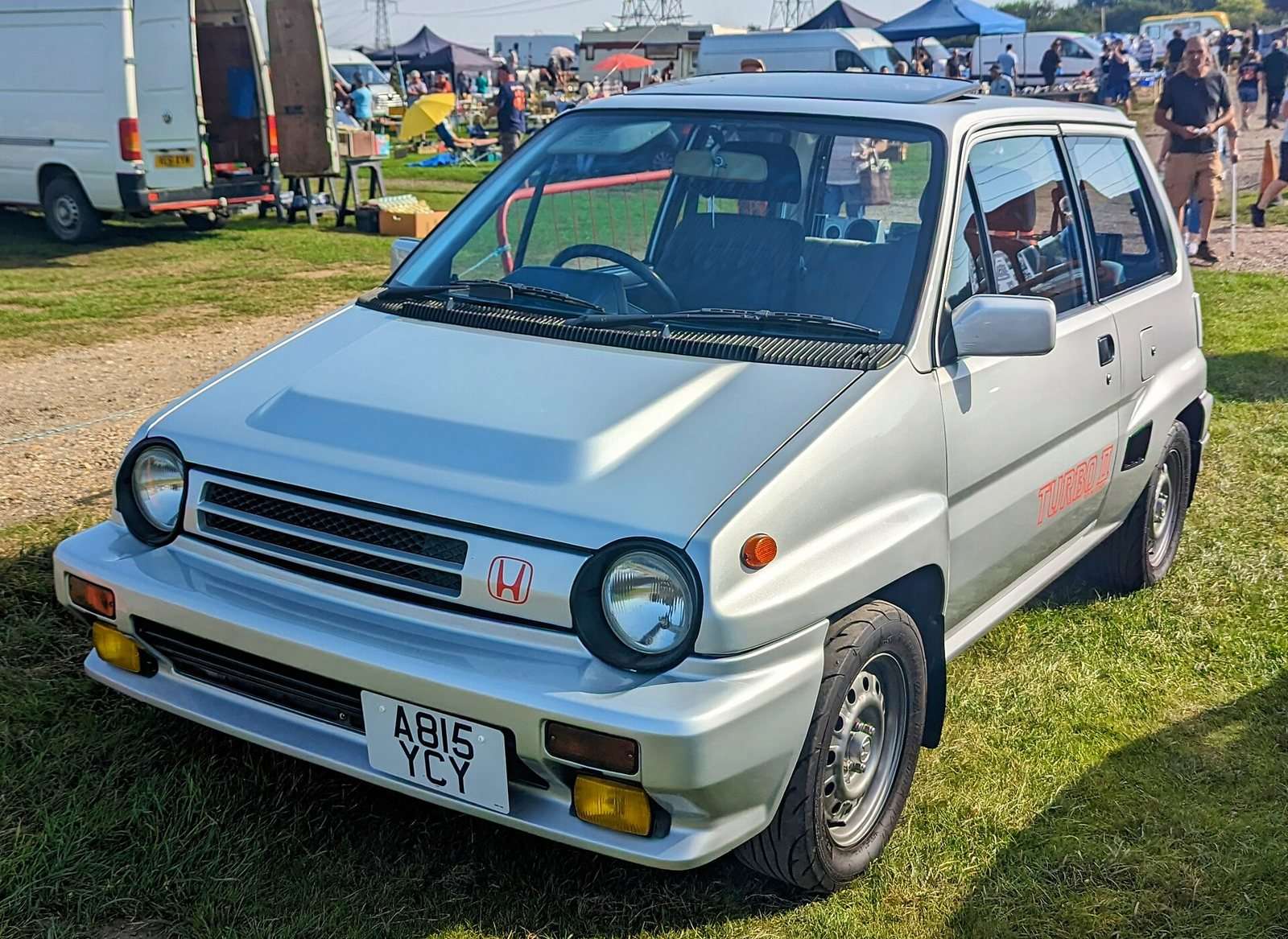
The Honda City Turbo II looked like a tiny shopping car that had inhaled deeply and refused to breathe out. Its swollen arches, intercooled turbo engine and remarkable Motocompo connection made it one of the most imaginative Japanese performance cars of the 1980s.
Known affectionately as the Bulldog, it was far more than an ordinary City with extra boost. Here are ten facts that explain its cult status.
1. Mugen’s founder helped create the first City Turbo
The original City Turbo project was led by Hirotoshi Honda, the son of company founder Soichiro Honda and the man behind Mugen. The first turbocharged City arrived in 1982, before Honda developed the more extreme Turbo II.
2. The Turbo II was an integrated performance model
Honda did not simply turn up the boost. Engineers widened the body and tracks, fitted larger tyres, revised the chassis and added intercooling. The result was a more stable and more purposeful car than the narrow-bodied Turbo I.

3. Honda called it an intercooler pioneer
At the October 1983 announcement, Honda described the Turbo II as the first car in the 1.2-litre class fitted with an intercooler. Cooling the compressed intake charge allowed the engine to sustain higher boost and output more reliably.
4. Its 1.2-litre engine produced 110PS
The 1,231cc ER four-cylinder used Honda’s COMBAX combustion concept, electronic fuel injection and turbocharging. Official figures were 110PS at 5,500rpm and 16.3kg-m of torque at 3,000rpm—strong numbers in a car weighing little more than 700kg.
Love cars you don’t see every day?
Get forgotten cars, surprising motoring stories and the most interesting finds from Unusual Cars by email.
Free to join. No spam. Unsubscribe whenever you like. See our Privacy Policy.
5. The Bulldog nickname was never difficult to understand
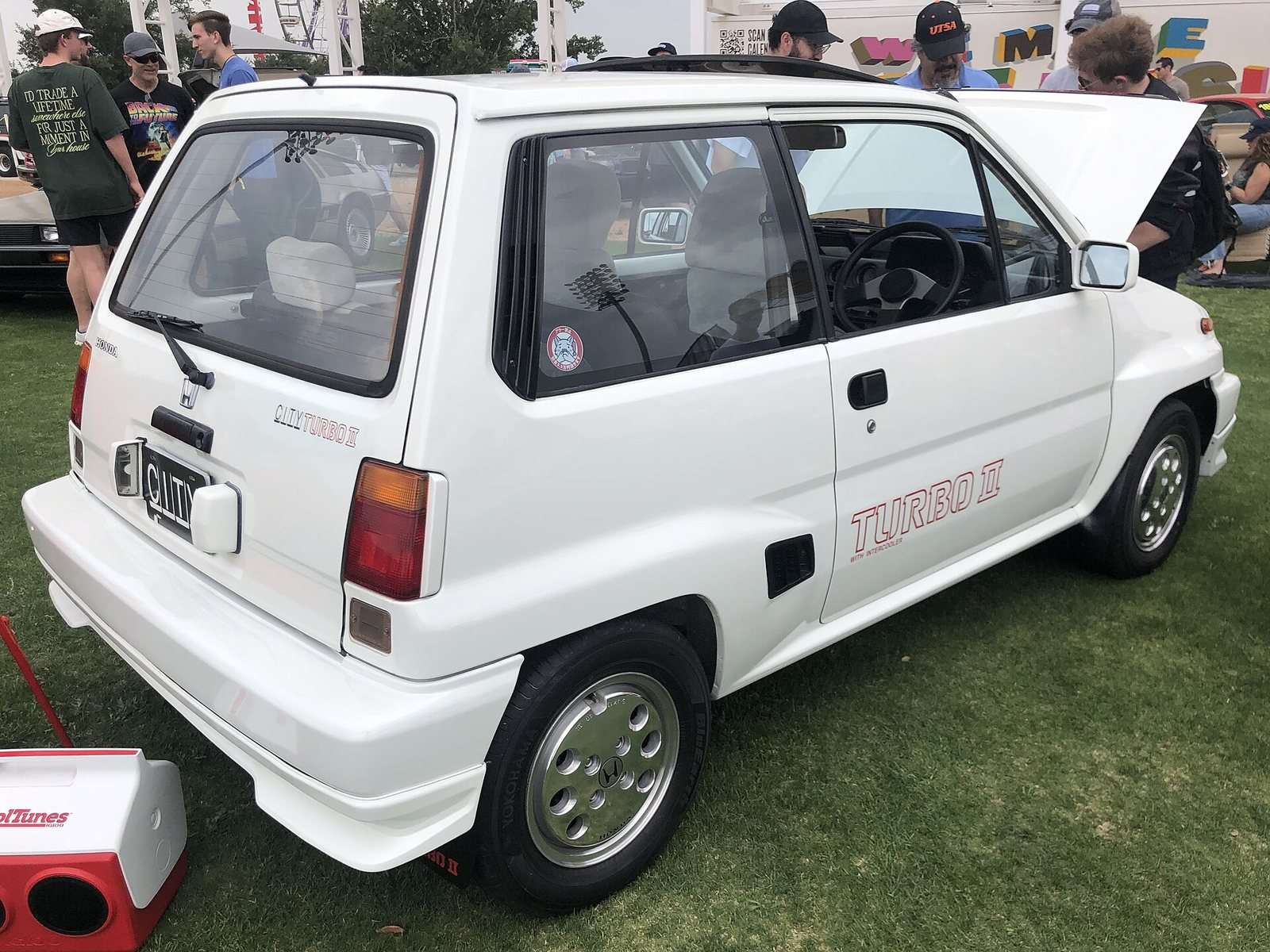
Its short, tall body and exaggerated wheelarches created a squat stance that inspired the Bulldog nickname. Honda added 185/60 R13 tyres, reshaped bumpers, a bonnet bulge, asymmetrical grille treatment and enormous Turbo II graphics.
6. The famous scooter was not standard equipment
Honda’s 49cc Motocompo folding scooter was designed to lie across the City’s luggage floor. Although the car-and-bike pairing became an icon of Japanese design, the scooter was a separate purchase rather than equipment supplied with every Turbo II.

7. It was not a kei car
The City’s tiny proportions tempt people to describe it as a kei car, but its 1,231cc engine and dimensions placed it outside Japan’s kei regulations. Honda was creating a compact urban car, not working within the smaller tax class.
8. Its interior was just as unmistakably 1980s
The upright dashboard, digital displays, boost-related instrumentation and tightly packaged cabin made the driver’s seat feel more like an arcade machine than an economy hatchback. Correct instruments and trim are now among the hardest parts to replace.
9. Honda turned it into a one-make racing spectacle
Purpose-built City Turbo II racers wore even wider bodywork and demonstrated how seriously Honda treated its unlikely little performance car. The racing connection reinforced the Bulldog image and helped turn what could have been a novelty into an enthusiast legend.
10. Britain never officially received it
The Turbo II was a Japanese-market model. UK examples are private imports, so buyers must check Japanese documentation, chassis identity and whether the scarce wide-body panels, engine hardware and cabin pieces remain complete.
Why the Honda City Turbo II matters
The Bulldog captures Honda at its most adventurous: clever packaging, serious engine development, bold styling and a folding scooter all joined in one product story. Few cars make engineering seem this playful.
Read the full Honda City Turbo II history and buying guide, explore the Honda hub, visit Rare & Forgotten Cars, or browse the 10 Things hub.
Research notes
Launch dates, engine figures, tyre size and the Motocompo relationship were checked against Honda’s official heritage and October 1983 launch material.
Love cars you don’t see every day?
Get forgotten cars, surprising motoring stories and the most interesting finds from Unusual Cars by email.
Free to join. No spam. Unsubscribe whenever you like. See our Privacy Policy.