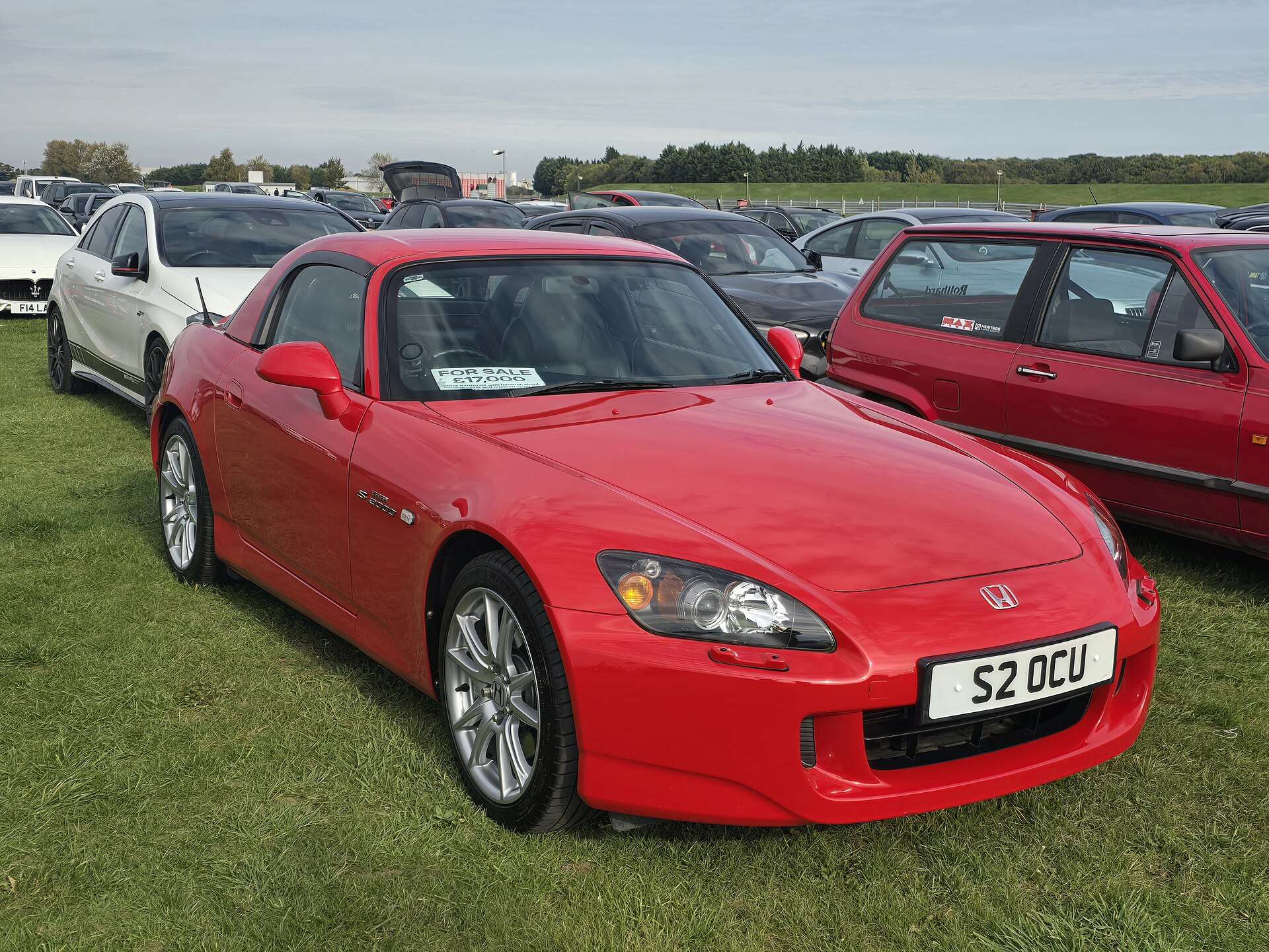
The Honda S2000 was conceived as a 50th-birthday present to the company itself—and engineered with the obsessive ambition that implies. Its engine, chassis and driving position made it one of the purest sports cars of its era.
Thinking of buying one? Read our Honda S2000 buying guide for practical checks before buying and ownership advice.
1. It grew from the 1995 SSM concept
Honda’s Sports Study Model previewed the idea at the 1995 Tokyo Motor Show. A production prototype appeared at Honda’s 50th-anniversary ceremony in 1998, followed by the road car in Japan in April 1999.
2. The Japanese engine produced 250PS from two litres
The F20C delivered 250PS at 8,300rpm in Japan—125PS per litre without turbocharging. European cars were rated lower, but retained the same extraordinary 9,000rpm limit and razor-sharp response.

3. Honda’s president originally asked for 10,000rpm
During development, president Nobuhiko Kawamoto challenged the engineers to build a 10,000rpm engine. They convinced him that 9,000rpm and 250PS from two litres was the better balance of performance, durability and emissions.
4. Piston speed entered unknown territory
At 9,000rpm the F20C’s average piston speed reached about 25.2 metres per second—beyond contemporary Formula 1 figures cited by Honda. Forged pistons, forged connecting rods and specialised materials were required to make it survive.
Love cars you don’t see every day?
Join the Unusual Cars Club for new “10 Things” articles, forgotten cars and surprising motoring stories by email.
5. The engine sat behind the front axle
Honda mounted the compact four-cylinder behind the front axle line, creating a front-mid-engine layout. This helped achieve the car’s celebrated 50:50 weight distribution and kept mass close to the centre.
6. Its open body was designed for closed-car rigidity
The “high X-bone” frame used deep structural members through the centre of the car. Honda aimed to give the roadster crash protection and torsional stiffness comparable with a closed body without making it excessively heavy.
7. The Type V introduced world-first steering technology
Japan’s 2000 S2000 Type V used Variable Gear Ratio Steering. The mechanical/electronic system altered steering ratio according to road speed and steering angle, reducing hand movement in tight corners while remaining stable at speed.
8. AP1 and AP2 are more than internet shorthand
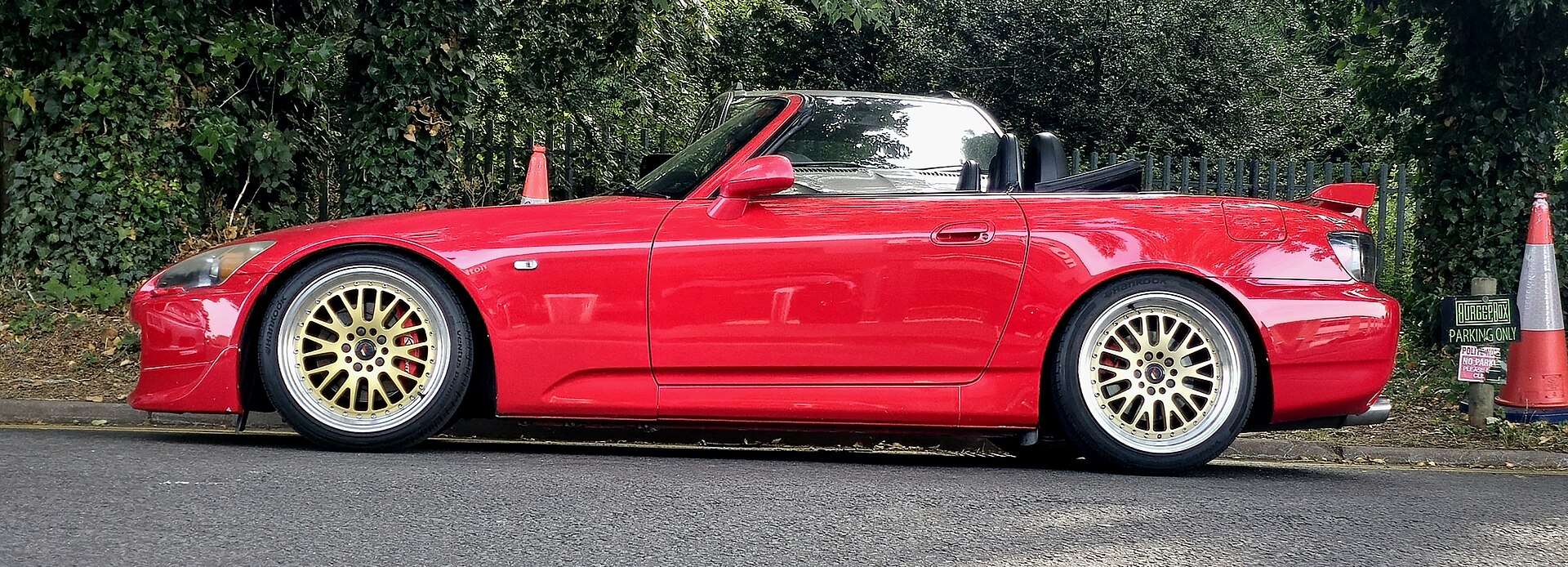
Early 2.0-litre cars are widely known as AP1s. North America later received the AP2 with a 2.2-litre engine for more mid-range torque and a lower rev limit; many other markets retained a two-litre version while adopting revised suspension and styling.
9. Production moved factories
Honda initially built the S2000 at Takanezawa alongside low-volume specialist models. In 2004 production moved to Suzuka, another sign that the car evolved during its unusually long life.
10. More than 110,000 were sold worldwide
Honda ended production in 2009 after more than 110,000 global sales. Despite that respectable total, unmodified examples are increasingly prized because few later sports cars combine a naturally aspirated 9,000rpm engine, manual gearbox and rear-wheel drive.
Research basis: Honda corporate history, engineering features and official production announcements.
Continue exploring: Visit the complete 10 Things hub.