

The first Subaru Legacy Turbo established the formula that would make Subaru famous: a turbocharged flat-four, permanent four-wheel drive and enormous cross-country ability wrapped in an almost anonymous body.
Before the Impreza became a rally icon, the Legacy did the hard development work—and set several remarkable records along the way.
1. It was created to replace the Leone
Subaru began Legacy production in late 1988 and launched the model in Japan in February 1989, followed by Europe that September. It was larger, more refined and far more ambitious than the Leone range it replaced.
2. It set a 100,000-kilometre world speed record before launch
In January 1989, specially prepared but production-based Legacys ran continuously in Arizona. The FIA-certified average over 100,000 kilometres was 223.345km/h—an extraordinary demonstration of durability before most customers had seen the car.
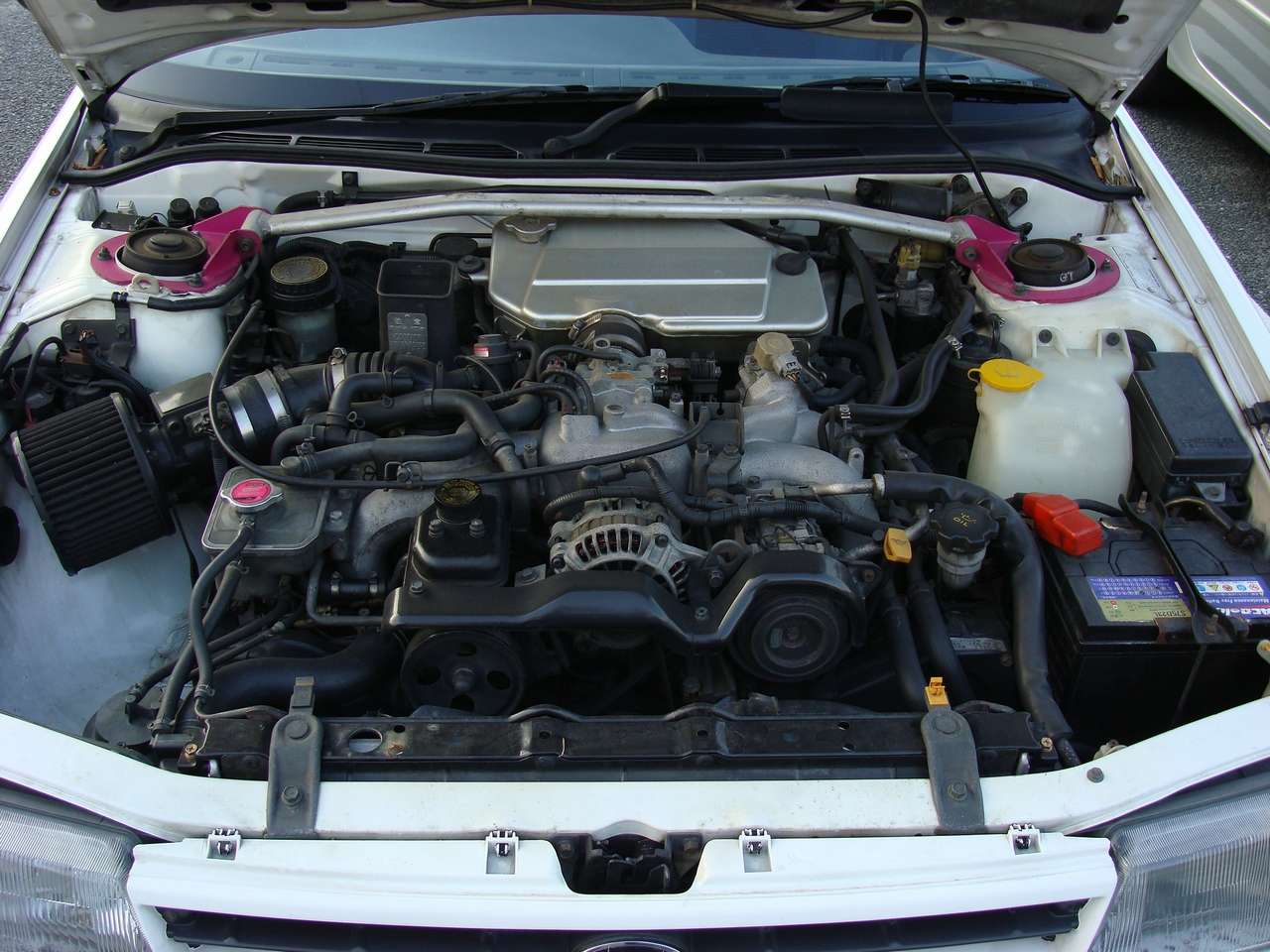
3. The turbo used Subaru’s new EJ20 flat-four
The 1,994cc DOHC turbo engine was part of the new EJ family. Japanese-market GT versions were rated at 200PS, while specifications varied elsewhere. The horizontally opposed layout kept the engine low and suited Subaru’s symmetrical drivetrain.
4. Four-wheel drive was central to the design
The Legacy was engineered around all-wheel drive rather than adapted as an afterthought. Depending on transmission and market, Subaru used centre differentials or electronically managed systems to distribute power between the axles.
Love cars you don’t see every day?
Join the Unusual Cars Club for new “10 Things” articles, forgotten cars and surprising motoring stories by email.
5. The RS was the rally-minded saloon
The Legacy RS combined the turbo engine with a manual gearbox and a more focused specification. Japan also received the stripped, closely geared RS Type RA—“Record Attempt”—developed for competition preparation and produced in small monthly batches.
6. Prodrive’s Subaru partnership began with the Legacy
British motorsport specialist Prodrive developed Subaru’s Group A Legacy for the World Rally Championship. The car debuted in 1990, beginning a relationship that would later produce championships with the Impreza.
7. Colin McRae delivered its only WRC victory
At the 1993 Rally New Zealand, Colin McRae and Derek Ringer gave the Legacy its first—and only—World Rally Championship win. Subaru replaced it with the smaller Impreza immediately afterwards, making the victory a perfect farewell.

8. The estate was a performance car in practical clothing
Turbocharged Legacy estates combined serious pace with a large load area and all-weather security. That blend helped establish Subaru’s enduring reputation for fast, unconventional wagons long before the later GT-B and WRX-based models.
9. A second Legacy set another speed record
In 1993 a second-generation Legacy Touring Wagon averaged 249.981km/h over one kilometre at Bonneville, an FIA-certified record for an unmodified production estate. Record-setting was clearly part of the model’s DNA.
10. It is the missing link in Subaru’s performance story
The Impreza is more famous, but its turbo engine, four-wheel-drive layout, Prodrive connection and rally identity were all proven by the Legacy. Survivors are now rare because many were used hard, modified or consumed by rust.
Research basis: Subaru corporate chronology, Subaru heritage data and FIA/WRC records.
Continue exploring: Visit the complete 10 Things hub.