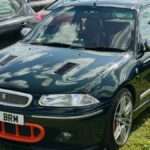
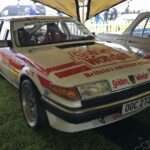
The Rover 200 BRM is one of the boldest special editions of the 1990s: British Racing Green paint, a bright orange grille, red leather and a rev-hungry VVC engine. The eccentric colour scheme was not random—it was designed to connect a modern hot hatch with a remarkable racing past.
1. The orange nose copied a 1960s Formula One car
BRM’s championship-winning P578 “Old Faithful” wore an orange nose so teammates could distinguish cars at speed. Rover revived that cue on the 200 BRM’s grille, using a deliberately provocative detail to connect the road car with British Racing Motors history.
2. The first concept was even more dramatic
Rover previewed the idea as a concept before toning it down for production. The showroom car retained the Brooklands Green body, orange grille and red leather but lost some of the show car’s more extreme detailing, making the finished BRM unusual yet usable.
3. Its engine came from the 200 vi
Under the bonnet sat Rover’s 1.8-litre K-series with Variable Valve Control, producing about 145PS. The VVC mechanism altered inlet-cam timing to broaden the power delivery, giving the light 200 a strong top end without resorting to turbocharging.
4. A close-ratio gearbox made it feel sharper
The BRM used a close-ratio five-speed transmission with a lower final drive than the regular 200 vi. That sacrificed some relaxed cruising for stronger acceleration through the gears, one reason the car feels more urgent than its modest headline power suggests.
Love cars you don’t see every day?
Get forgotten cars, surprising motoring stories and the most interesting finds from Unusual Cars by email.
Free to join. No spam. Unsubscribe whenever you like. See our Privacy Policy.
5. The suspension was lower and firmer
Rover lowered the BRM and revised its springs and dampers, while larger alloy wheels and lower-profile tyres sharpened response. It was not only a trim exercise; the chassis changes were intended to make it the most focused R3-generation 200.
6. The interior is as distinctive as the exterior
Quilted red leather covered the seats and door inserts, with red carpet, aluminium detailing and a turned-metal-style fascia. Condition matters because replacing missing BRM-specific trim can be far harder than servicing the shared mechanical components.
7. Production numbers are often quoted differently
Roughly 1,100 cars were built, with around 800 intended for the UK and the remainder exported. Exact totals vary between sources and registrations, so rarity claims should distinguish production, market allocation and surviving roadworthy cars.
8. The badge links Rover to a company it once helped create
British Racing Motors was founded after the Second World War with support from British industry, including companies within the wider Rover orbit. The special edition celebrated that national engineering story rather than claiming the hatchback was a homologation model.
9. The K-series reputation needs context
Head-gasket failures damaged the engine’s image, but cooling-system condition, correct repair technique, liner heights and maintenance history matter greatly. A properly sorted VVC can be durable; an unknown car with coolant loss or overheating evidence requires caution.
10. It was briefly sold at a surprisingly low price
Slow initial sales led to heavy discounting, and some BRMs were offered new for far less than their original list price. That bargain phase helped the car disappear into ordinary used-car life—making complete, original survivors much more interesting today.
The Rover 200 BRM succeeds because it is more than a badge package. Its visual theatre, mechanical revisions and genuine historical references turn an overlooked hatchback into one of Rover’s most memorable modern classics.
Love cars you don’t see every day?
Get forgotten cars, surprising motoring stories and the most interesting finds from Unusual Cars by email.
Free to join. No spam. Unsubscribe whenever you like. See our Privacy Policy.