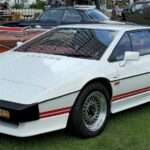
The Renault 19 16V was the car that proved Renault could build a serious naturally aspirated hot hatch as well as a turbocharged one. Its F7P twin-cam engine, sharp chassis and discreet styling made it a genuine rival to the Golf GTI 16V and Peugeot 309 GTI. These ten facts explain why it deserves to be remembered.
1. It sat at the top of the Renault 19 range
Renault launched the 19 in 1988 as its new European family car, replacing both the 9 and 11. The 16V arrived soon afterwards as the performance flagship, giving an otherwise sensible hatchback a high-revving engine, firmer chassis and a purposeful but relatively restrained appearance.
2. Its engine was the famous F7P
The 1,764cc F7P used a cast-iron block, aluminium 16-valve cylinder head and electronic fuel injection. In European specification it produced about 135PS, with UK-market figures commonly quoted around 137bhp. It rewarded revs rather than relying on a wall of low-down turbo torque.

3. It could exceed 130mph
Renault quoted a top speed of roughly 212km/h—about 132mph. Period tests typically placed 0–60mph in the high-seven-second region. Those figures put the 19 16V firmly among the quickest hot hatches of its day, especially once the engine was kept in its stronger upper rev range.
4. It was built with competition in mind
The 1,764cc model received FIA Group A homologation in October 1990. Renault used the 19 in rallying and circuit racing, while national teams developed the car far beyond showroom specification. The homologated foundation helps explain why its engine and chassis felt more purposeful than the styling suggested.
Love cars you don’t see every day?
Get forgotten cars, surprising motoring stories and the most interesting finds from Unusual Cars by email.
Free to join. No spam. Unsubscribe whenever you like. See our Privacy Policy.
5. The bonnet scoop was functional
The asymmetric bonnet vent is one of the quickest ways to identify a genuine 16V. It helped manage under-bonnet airflow and distinguished the flagship from lesser 19s. Deeper bumpers, side skirts, a rear spoiler and model-specific wheels completed the look without turning it into a caricature.
6. The chassis was extensively upgraded
Renault fitted firmer suspension, a lower ride height, stronger brakes and quicker responses. The rear used Renault’s compact torsion-bar layout, allowing good luggage space while contributing to the car’s agility. Like many great French hot hatches, the 19 could adjust its line delicately when the driver lifted the throttle.
7. It came in more than one body style
The best-known version is the three-door hatchback, but Renault also sold a four-door Chamade 16V and a handsome 16V Cabriolet. The open car was built by Karmann and traded some structural sharpness for style. The range gave buyers a broader choice than most contemporary hot-hatch rivals.

8. The facelift changed its character
Phase 1 cars have the sharper early nose and are often considered the purist’s choice. The 1992 Phase 2 facelift brought a smoother grille, revised lamps and a more mature cabin. Mechanical revisions improved everyday usability, though enthusiasts still debate which version feels more immediate.
9. Its engine lived on in the first Clio Williams
The Clio Williams used the related F7R engine, created by enlarging the 19 16V’s F7P design to 1,998cc and revising it for stronger torque. The Williams became the legend, but much of that story began with the earlier 19 and its willingness to rev.
10. Good survivors have become genuinely scarce
Many 19 16Vs were modified, crashed, broken for parts or simply consumed by corrosion and age. Their modest values offered little incentive for expensive restoration. A correct, unmodified car is now far rarer than its period rivals, making each surviving example a valuable piece of Renaultsport history.
The Renault 19 16V was fast without a turbo, practical without feeling ordinary and talented without shouting about it. Its low-key image is exactly why rediscovering one today is such a surprise.
Explore every 10 Things article in the Unusual Cars hub →
Join the Unusual Cars Club
Get more forgotten performance cars, surprising motoring stories and new 10 Things articles by email.
Free to join. No spam. Unsubscribe whenever you like. See our Privacy Policy.