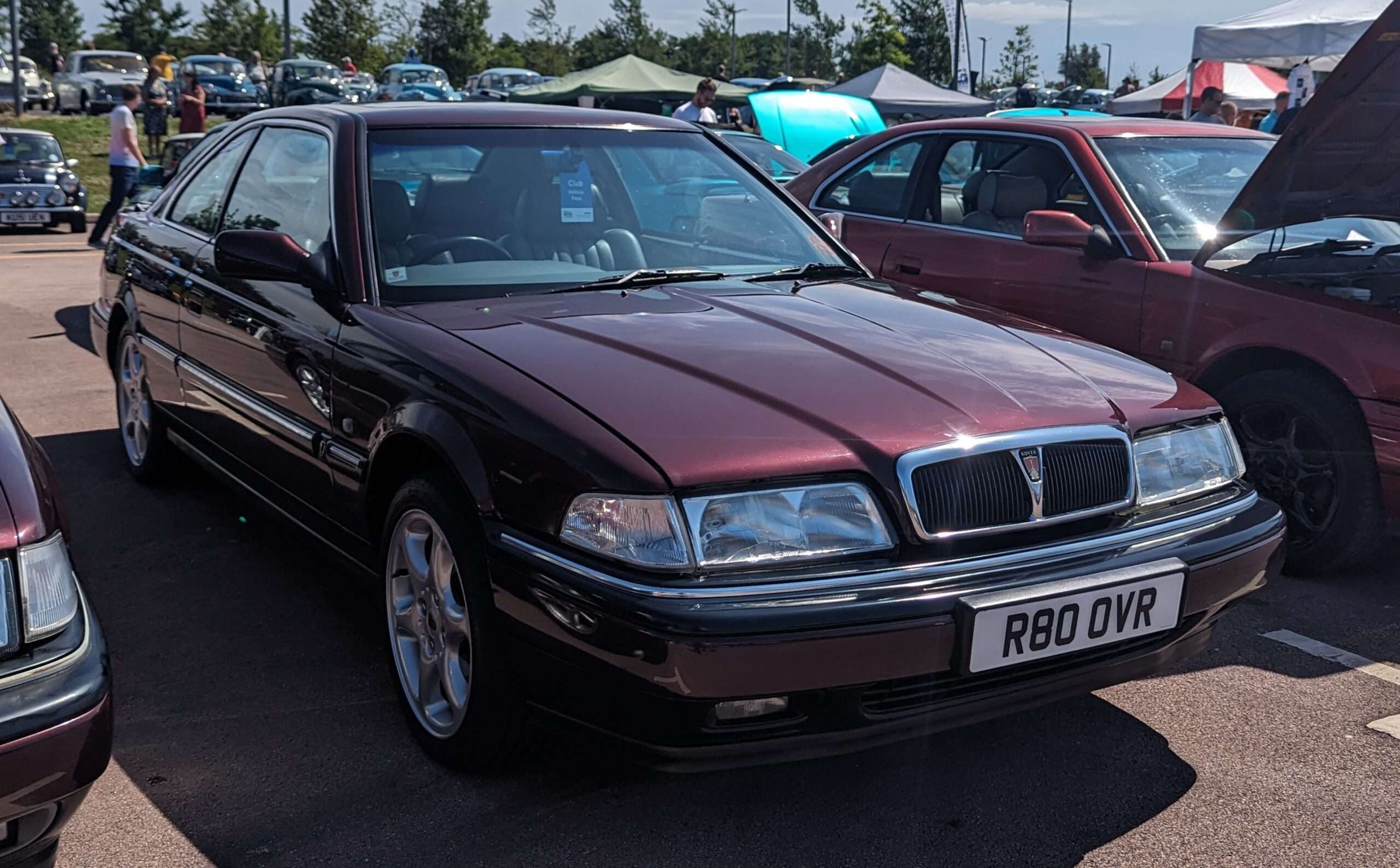
The Rover 800 Vitesse Sport was the unlikely final flourish of Rover’s big executive hatchback. It looked formal enough for the office car park, yet its turbocharged T-Series engine produced almost 200bhp and drove the front wheels through a manual gearbox. Here are ten details that explain why the late Vitesse Sport deserves far more attention.
1. The 800 began as a joint Rover and Honda project
Rover developed the 800 alongside Honda’s first-generation Legend under the XX programme. The two cars shared broad architecture and some components, but each company gave its version distinctive engines, bodywork and character. The collaboration gave Rover a modern executive platform without the cost of developing one alone.
2. Vitesse became the sporting badge
Rover revived the Vitesse name for the fastest 800s, echoing the fuel-injected SD1 Vitesse. Early 800 Vitesses used Honda’s 2.7-litre V6, but Rover later switched to its own turbocharged four-cylinder. That changed the car from a smooth high-speed cruiser into something considerably more urgent.
3. The Sport arrived in 1994
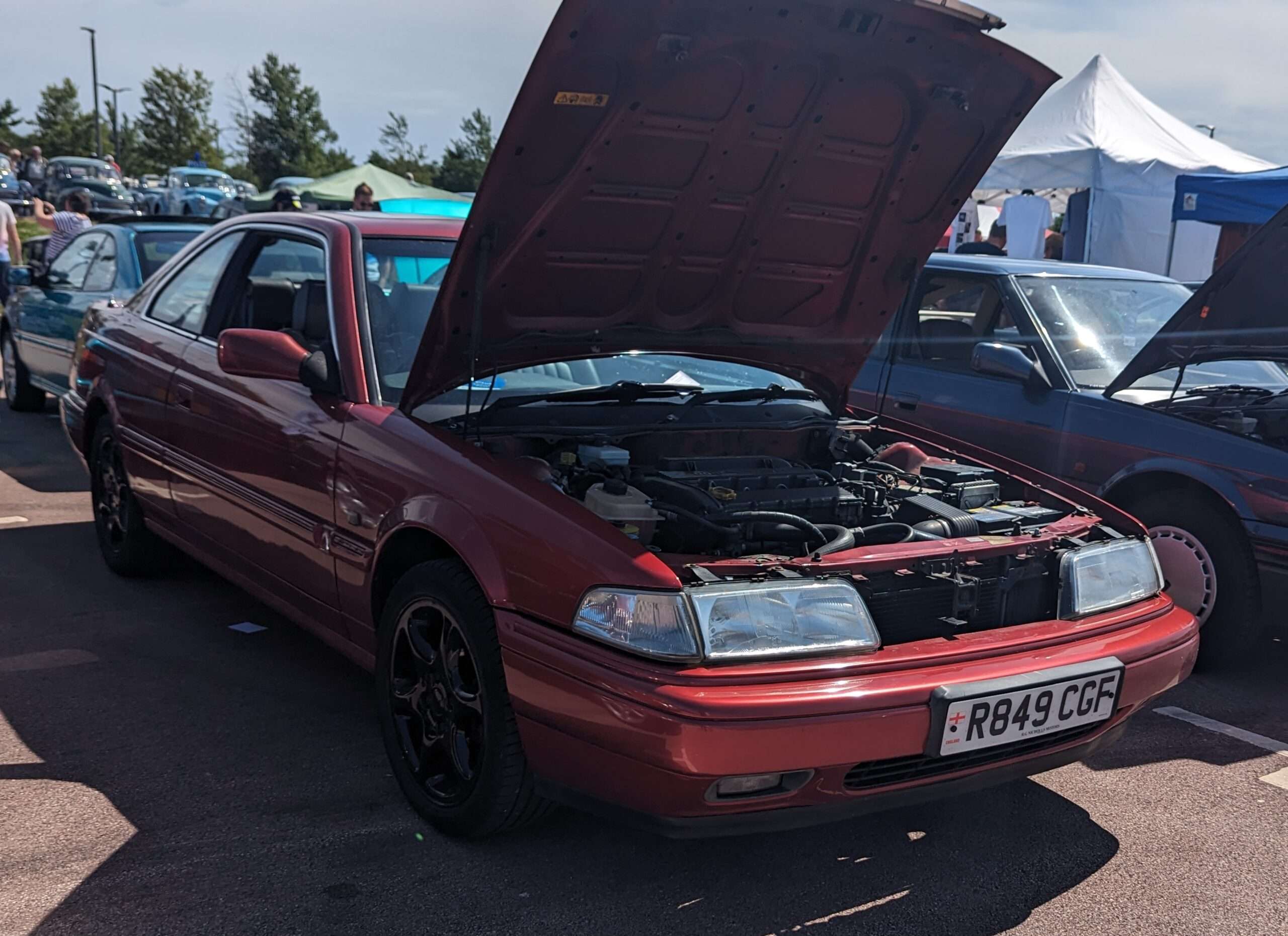
The definitive 800 Vitesse Sport appeared in 1994, after the R17 facelift had softened the original car’s sharp-edged styling. Its discreet spoilers, larger alloy wheels and restrained badging concealed a serious performance upgrade. It was available as the practical five-door fastback rather than a conventional saloon.
4. Its 2.0-litre engine produced 197bhp
The intercooled 2.0-litre T-Series turbo delivered 197bhp, up from 180bhp in the preceding Vitesse. For a mid-1990s British executive car that was a substantial figure. The engine’s broad surge of torque made overtaking effortless, although asking the front tyres to handle nearly 200bhp gave the car a famously lively edge.
Love cars you don’t see every day?
Get forgotten cars, surprising motoring stories and the most interesting finds from Unusual Cars by email.
Free to join. No spam. Unsubscribe whenever you like. See our Privacy Policy.
5. Rover substantially reworked the chassis
“Sport” was not merely a trim package. Rover’s engineers revised the springs, dampers, anti-roll bars and steering responses to make the car more controlled and communicative. The result was flatter, more accurate and more entertaining than the softer 800s, while retaining useful long-distance comfort.
6. A limited-slip differential helped tame the power
Late Vitesse Sports used a Torsen-type limited-slip differential. It helped distribute torque between the front wheels and reduced wasteful inside-wheel spin, particularly when accelerating out of a bend. It did not eliminate steering tug or torque steer, but those sensations are now part of the car’s analogue appeal.
7. It was a genuine 140mph executive express
Contemporary performance figures placed the Vitesse Sport in the seven-second region from 0–60mph, with a top speed around 143mph. That put it into serious company-car express territory at a price well below many German rivals. Its performance was all the more surprising because the styling remained so restrained.
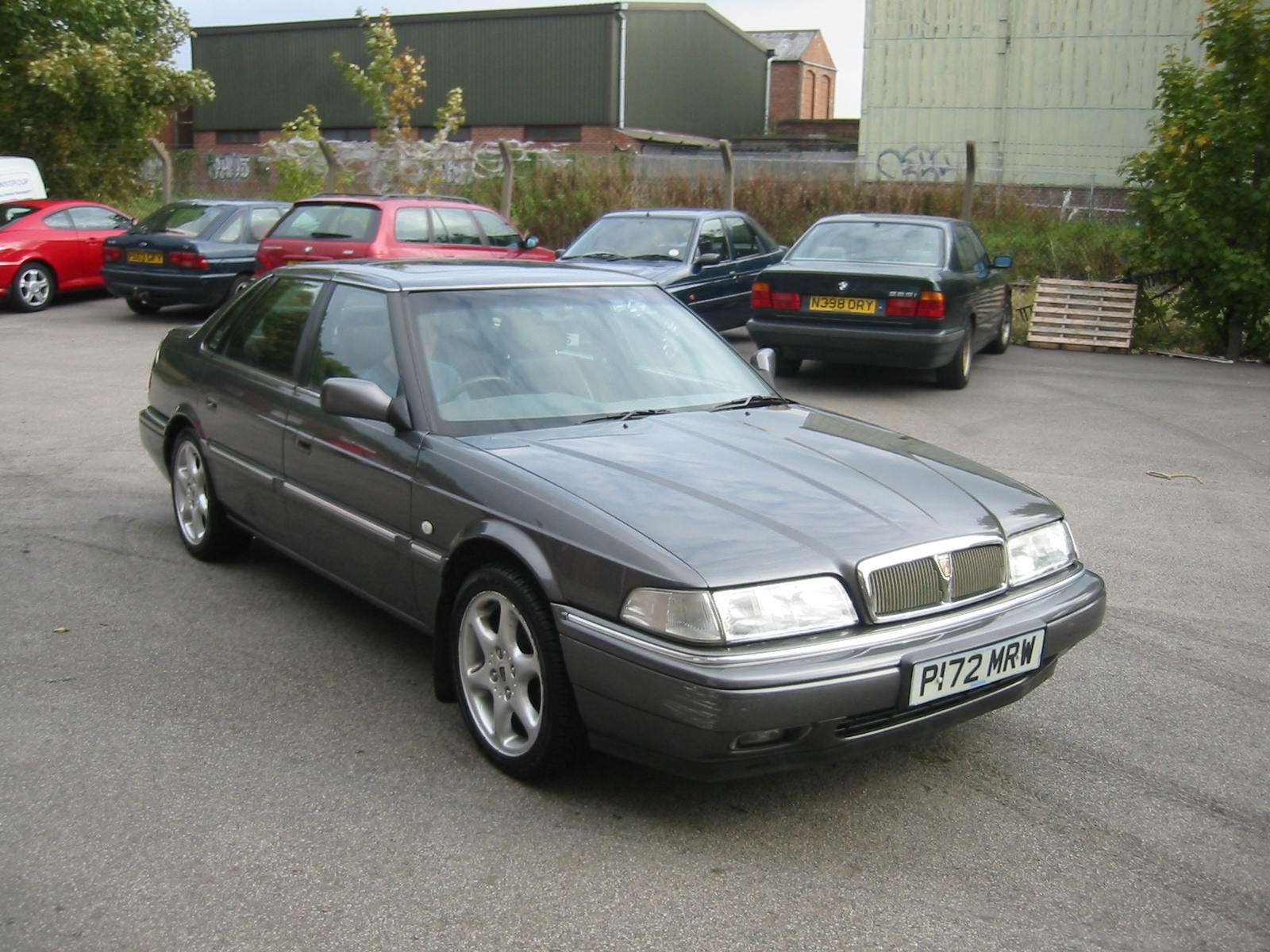
8. The cabin was unmistakably Rover
Leather, polished wood and generous equipment created an atmosphere very different from the austere German norm. The driving position and switchgear divided opinion, but the Vitesse felt special in a distinctly British way. Its large hatch and folding rear seats also made it far more useful than most rapid saloons.
9. It outlived Rover’s partnership-era styling
The 800 remained in production until 1999, by which time its replacement, the Rover 75, represented a very different philosophy. The Vitesse Sport therefore became the last rapid version of Rover’s long-running flagship and one of the final cars to combine old-school Rover luxury with turbocharged front-wheel-drive performance.
10. Survival numbers are now extremely small
Big performance Rovers were cheap for years, and many Vitesse Sports suffered from corrosion, neglect, modifications or mechanical failure. Good original examples are now rare enough to attract attention wherever they appear. That scarcity, combined with strong performance and unmistakable 1990s character, is finally changing how enthusiasts view them.
The Rover 800 Vitesse Sport was never perfectly polished—and that is precisely why it is memorable. It offered wood, leather, hatchback practicality and a turbocharged punch that could surprise far more fashionable machinery.
Explore every 10 Things article in the Unusual Cars hub →
Join the Unusual Cars Club
Get more forgotten performance cars, surprising motoring stories and new 10 Things articles by email.
Free to join. No spam. Unsubscribe whenever you like. See our Privacy Policy.