The Lancia Stratos was not a road car adapted for rallying; it was a purpose-built competition weapon reluctantly civilised for homologation. Its Bertone shape, Ferrari V6 and three world titles made it an instant legend.
1. It was designed as a rally car before becoming a road car
Unlike most competition cars derived from family models, the Stratos was conceived around winning rallies. A small number of road cars existed chiefly because international rules required homologation.
2. The extraordinary shape came from Bertone
Marcello Gandini at Bertone created the wedge profile, wraparound windscreen and tiny wheelbase. The design was first previewed by the radical Stratos Zero concept before evolving into the production HF.

3. Its engine came from the Ferrari Dino
Lancia secured Ferrari’s 2.4-litre V6 after uncertainty over supply. Mounted transversely behind the cabin, it gave the compact car the power and balance required for international rallying.
4. The windscreen was shaped for visibility, not convention
The deeply curved screen gave the crew an exceptional panoramic view while the side windows tapered dramatically. Rearward visibility was poor, but rally stages were the priority.
Love cars you don’t see every day?
Get forgotten cars, surprising motoring stories and the most interesting finds from Unusual Cars by email.
Free to join. No spam. Unsubscribe whenever you like. See our Privacy Policy.
5. It was officially homologated in October 1974
Once the required production threshold had been accepted, the Stratos entered Group 4 competition in full force. Debate continues over exactly how many road cars were completed, with estimates commonly around 500 or fewer.
6. It won three consecutive world rally titles
Lancia secured the manufacturers’ championship in 1974, 1975 and 1976. The car remained competitive after the factory campaign was reduced, continuing to win in private hands.
7. Different body panels were designed for rapid access
The entire front and rear sections hinged open as large clamshells. Mechanics could reach suspension, cooling and drivetrain components quickly during service halts.
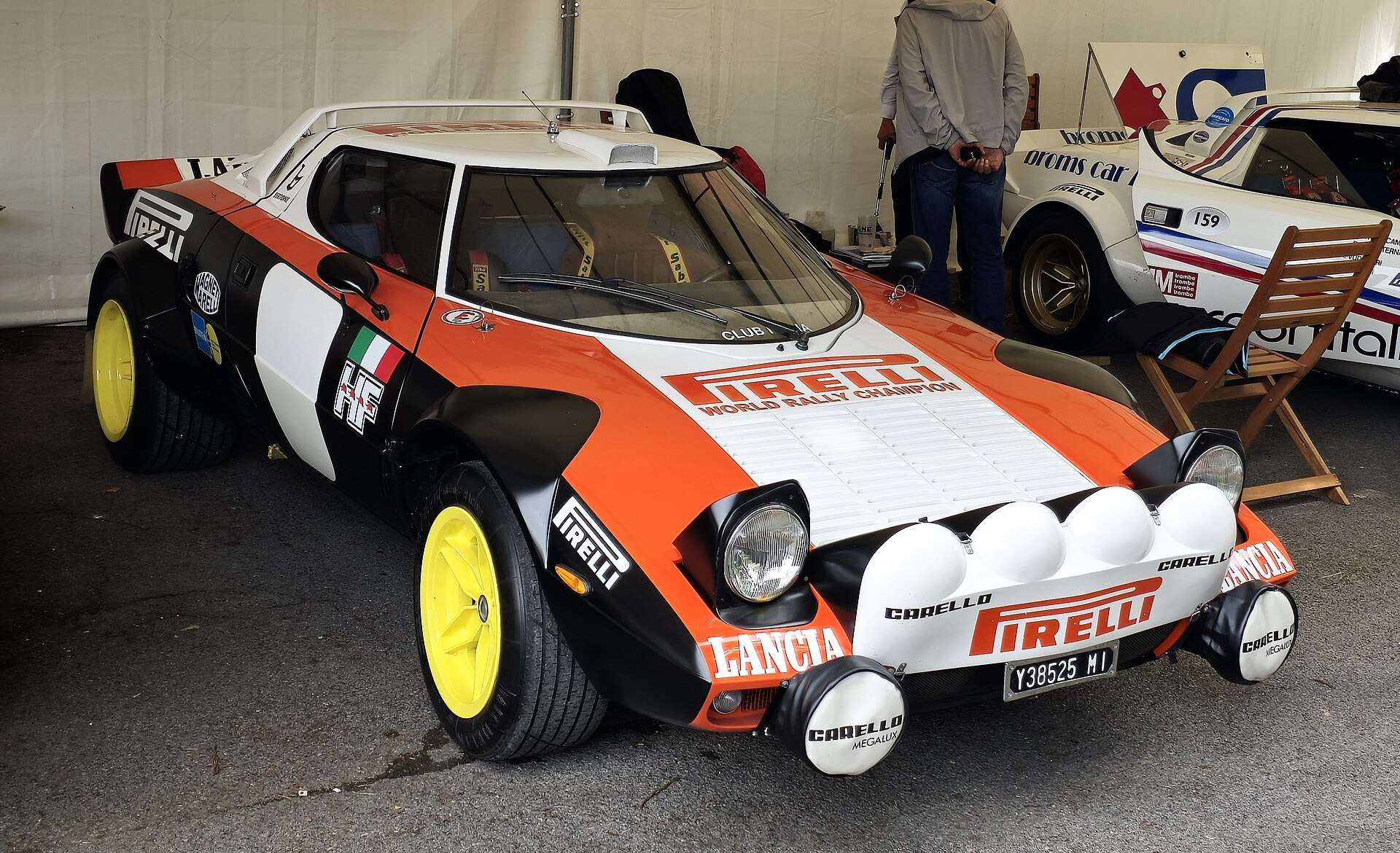
8. It was extremely short
At roughly 3.7 metres long with a wheelbase around 2.18 metres, the Stratos was smaller than photographs suggest. That compactness made it agile but also demanding at the limit.
9. Alitalia colours became part of its legend
The green, red and white sponsorship scheme is among motorsport’s most recognisable liveries. It helped turn a relatively brief factory career into a permanent cultural image.
10. Replicas vastly outnumber originals
Scarcity and seven-figure values encouraged a large replica industry. Some recreations are beautifully engineered, but provenance, chassis details and specialist authentication are essential when an original is claimed.
Why it matters
The Stratos changed the direction of rallying. It proved a manufacturer could design a specialised machine around the sport itself, paving the way for later homologation specials and the extreme Group B era.
Join the Unusual Cars Club
Get more forgotten performance cars, surprising motoring stories and new 10 Things articles by email.
Free to join. No spam. Unsubscribe whenever you like. See our Privacy Policy.