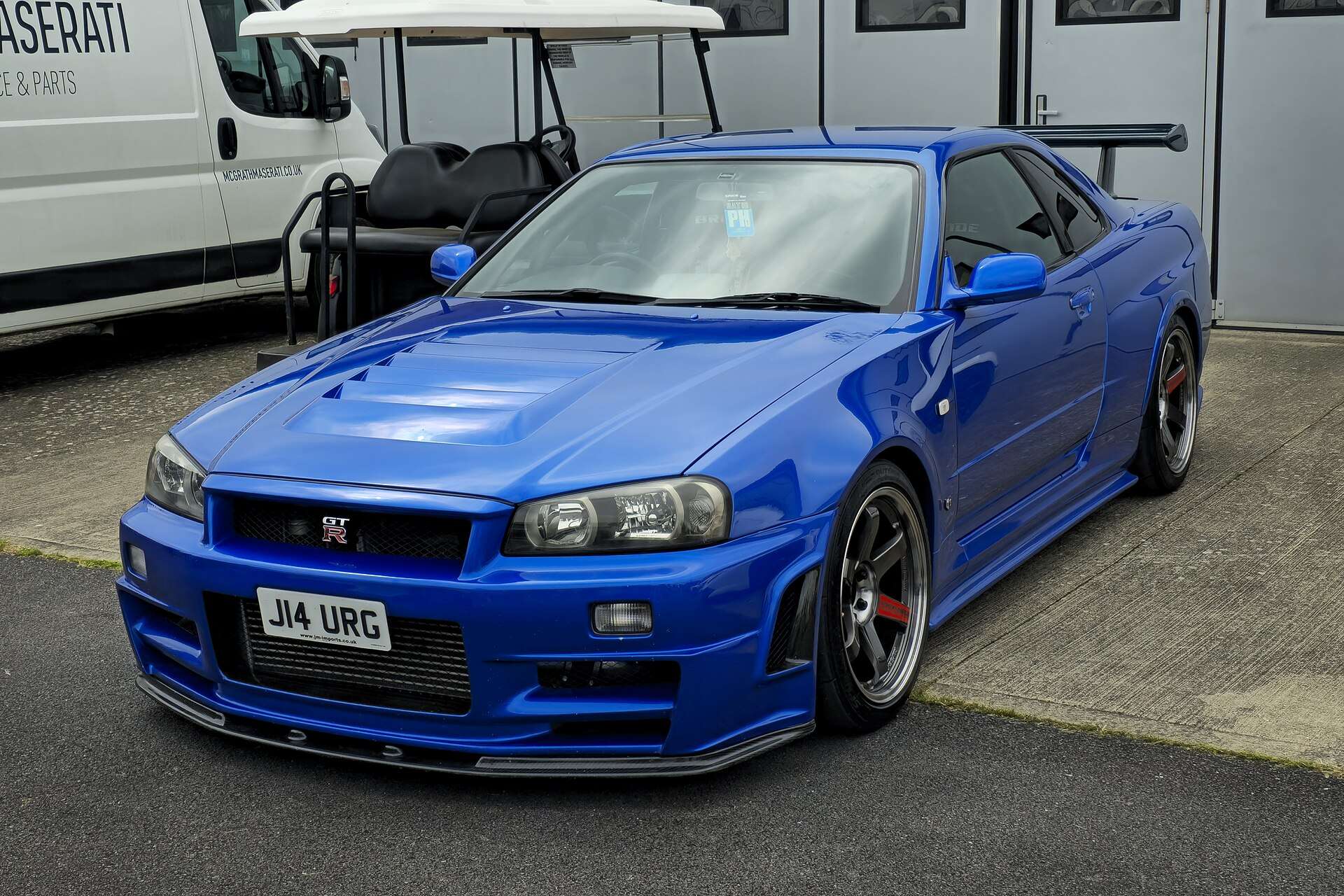
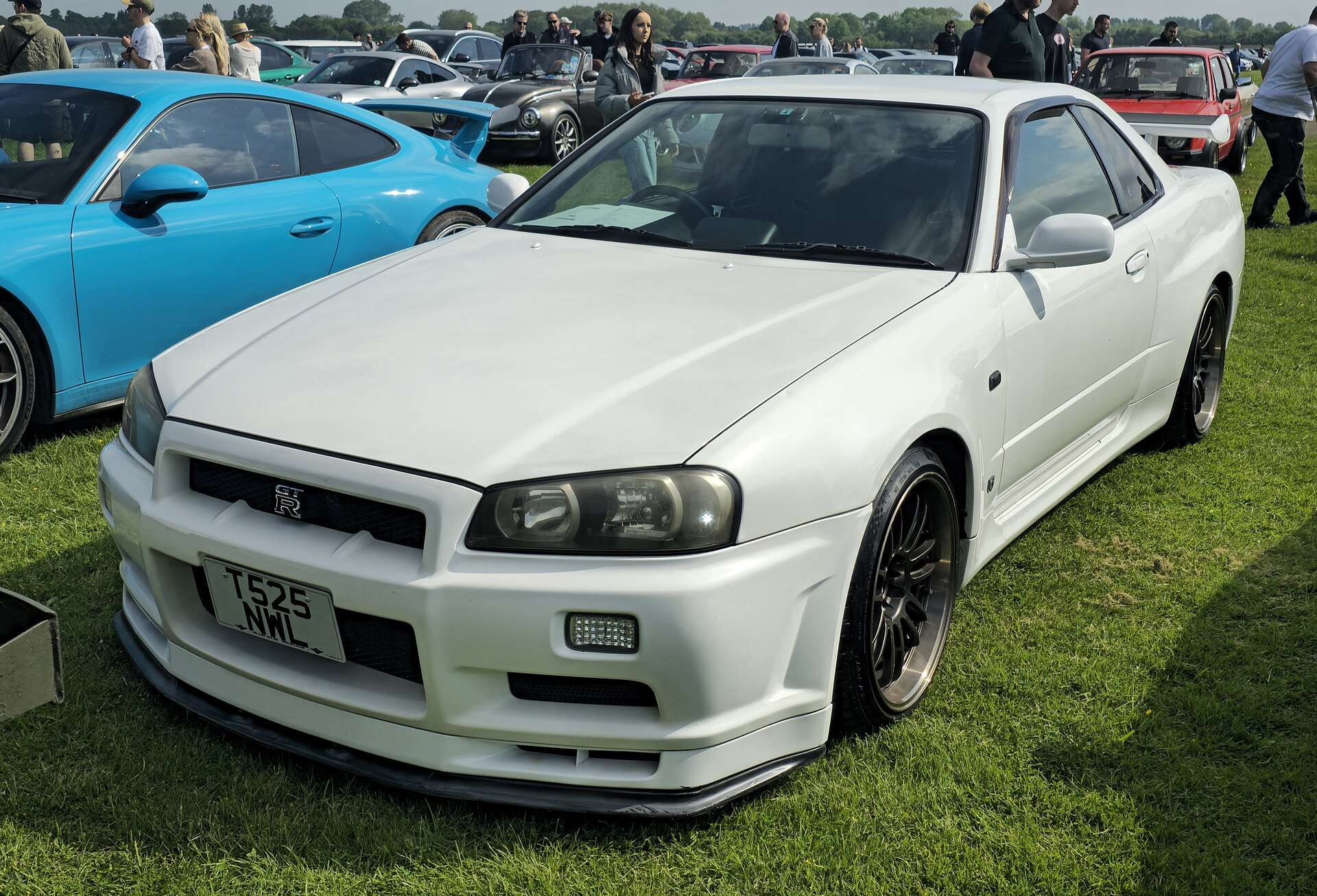
The R34 Nissan Skyline GT-R has become a global performance icon through films, games and tuning culture, yet the production car is more sophisticated—and much rarer—than the mythology suggests. Nissan compressed the R33 formula into a tauter body and added technology that made its performance visible to the driver.
1. It was shorter than the R33
Although unmistakably a Skyline, the R34 GT-R used a more compact body than its R33 predecessor. The reduced length and squared-off proportions gave it the muscular stance enthusiasts remember while making the car feel more tightly packaged.
2. The RB26 officially remained at 280PS
Its 2,568cc RB26DETT twin-turbo straight-six was officially rated at 280PS under the Japanese industry agreement of the period. The engine’s strength and tuning potential later overshadowed the standard figure, but modified outputs should never be confused with factory specification.
3. It gained a Getrag six-speed gearbox
The R32 and R33 GT-Rs used five-speed manuals, while the R34 adopted a six-speed Getrag transmission. The extra ratio helped keep the RB26 in its working range and became one of the generation’s important mechanical distinctions.
4. V-Spec cars added an active rear differential
ATTESA E-TS already varied torque sent to the front wheels. V-Spec versions used the Pro system with an active limited-slip rear differential, adding another layer of electronic control to the fundamentally rear-biased four-wheel-drive layout.
Love cars you don’t see every day?
Get forgotten cars, surprising motoring stories and the most interesting finds from Unusual Cars by email.
Free to join. No spam. Unsubscribe whenever you like. See our Privacy Policy.
5. The dashboard could display live performance data
A central multifunction screen showed information such as boost pressure and other vehicle data. Later versions expanded its capabilities. Long before performance displays became common, the R34 made its mechanical behaviour part of the cabin theatre.
6. Aerodynamics continued beneath the car
V-Spec development included underbody aerodynamic panels and a rear diffuser. Nissan was working not only on the famous wing and aggressive front bumper, but also on managing airflow where few owners would ever see it.
7. Production lasted only from 1999 to 2002
The R34 GT-R’s production life was brief. Tightening emissions requirements and changing market conditions ended the RB26-powered Skyline era, helping make genuine cars far scarcer than their enormous cultural visibility suggests.
8. The range became increasingly specialised
V-Spec, V-Spec II, M-Spec and Nür derivatives introduced changes in suspension, comfort, body materials and engine specification. Badges and paint are easily copied, so valuable versions demand chassis-level authentication.

9. Nür models used N1-related engine hardware
The final Nür editions referenced the Nürburgring and used engines based around stronger N1-specification components. These end-of-line cars are particularly sought after and especially vulnerable to replicas or mixed-component rebuilds.
10. Popular culture transformed its reputation
Gran Turismo, the Fast & Furious films and worldwide tuning coverage introduced the R34 to millions who never saw one in a showroom. That fame now influences values, theft risk, modifications and the survival of standard cars.
The R34 GT-R deserves its fame, but the real achievement lies in its integrated engine, drivetrain, aerodynamics and driver information—not simply its tuning potential.
Explore every 10 Things article in the Unusual Cars hub →
Join the Unusual Cars Club
Get more forgotten performance cars, surprising motoring stories and new 10 Things articles by email.
Free to join. No spam. Unsubscribe whenever you like. See our Privacy Policy.