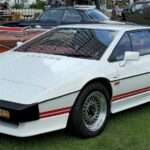
The Renault 11 Turbo combined an unassuming family hatchback with the explosive personality of an old-school carburettor-fed turbo engine. It was quick, light and much rarer in Britain than the celebrated Renault 5 GT Turbo that shared its mechanical philosophy.
1. It was the sporting flagship of Renault’s family hatchback range
The 11 was the hatchback partner to the Renault 9 saloon. Adding the Turbo created a practical performance car with a larger cabin and luggage area than the Renault 5, without abandoning the company’s lightweight approach.
2. The engine was the long-lived Cléon-Fonte unit
Renault turbocharged its 1,397cc pushrod four-cylinder rather than designing a new engine. A Garrett T2 turbo and carburettor installation produced 105PS initially, demonstrating how much potential remained in a design whose roots stretched back decades.

3. Its torque arrived early and dramatically
Official figures quoted 157Nm at only 2,500rpm. In a car weighing around a tonne, that gave the 11 Turbo a distinctive surge when boost arrived and made it feel faster than its 105PS headline output suggested.
4. The original could reach 100km/h in about nine seconds
Renault quoted a top speed of 186km/h, or roughly 116mph. Those numbers placed the 11 Turbo firmly among the serious 1980s hot hatches, despite its relatively discreet five-door-family-car origins.
Love cars you don’t see every day?
Get forgotten cars, surprising motoring stories and the most interesting finds from Unusual Cars by email.
Free to join. No spam. Unsubscribe whenever you like. See our Privacy Policy.
5. The Phase 2 became more powerful
A 1987 facelift brought smoother styling and an increase to 115PS. Detail changes also improved drivability, but the essential mixture of light weight, front-wheel drive and boost remained unchanged.
6. There were three-door and five-door versions
The sporting image suited the three-door, yet Renault also sold a five-door Turbo in some markets. That made it one of the era’s more practical performance hatchbacks and underlined the 11’s family-car roots.
7. It earned proper rally credibility
Group A Renault 11 Turbos achieved notable class and category results, including success on the Monte Carlo Rally and Tour de Corse. FIA homologation arrived in April 1984, giving the production car a direct competition connection.

8. Its suspension was more sophisticated than the engine
The 11 used independent suspension and Renault’s compact torsion-bar arrangement at the rear. Turbo models received firmer settings and stronger brakes, producing a supple but capable chassis on difficult roads.
9. Survival numbers are tiny
Rust, electrical problems, turbo wear and years of inexpensive motoring removed most examples. Many engine and trim parts are now harder to locate than equivalent Renault 5 components because far fewer enthusiasts saved 11s.
10. Originality is unusually valuable
Correct wheels, decals, seats, steering wheel and turbo plumbing distinguish a sound survivor from a recreation. Modifications were once common, so a complete standard car can be more desirable than a nominally faster one.
Why it matters
The Renault 11 Turbo matters because it shows how broad the first hot-hatch boom became. Renault gave an ordinary family hatch genuine pace and rally credibility, creating a car that is rarer—and arguably more surprising—than its famous Renault 5 relative.
Join the Unusual Cars Club
Get more forgotten performance cars, surprising motoring stories and new 10 Things articles by email.
Free to join. No spam. Unsubscribe whenever you like. See our Privacy Policy.