The Toyota Starlet GT Turbo and Glanza V packed turbocharged performance into a body scarcely larger than a shopping car. Never officially sold here, they became cult UK grey imports and proved how much excitement could come from just 1.3 litres.
1. The story covers two different Starlet generations
The angular EP82 Starlet GT Turbo arrived first, followed by the rounder EP91 Glanza V in 1996. They shared a basic performance formula but are distinct cars with different styling, cabins and chassis development.
2. Both were built for Japan
Toyota did not officially sell these turbocharged Starlets in Britain. The examples familiar to UK enthusiasts arrived mainly as grey imports, often several years after they had left Japanese showrooms.
3. A tiny 1.3-litre engine produced serious power
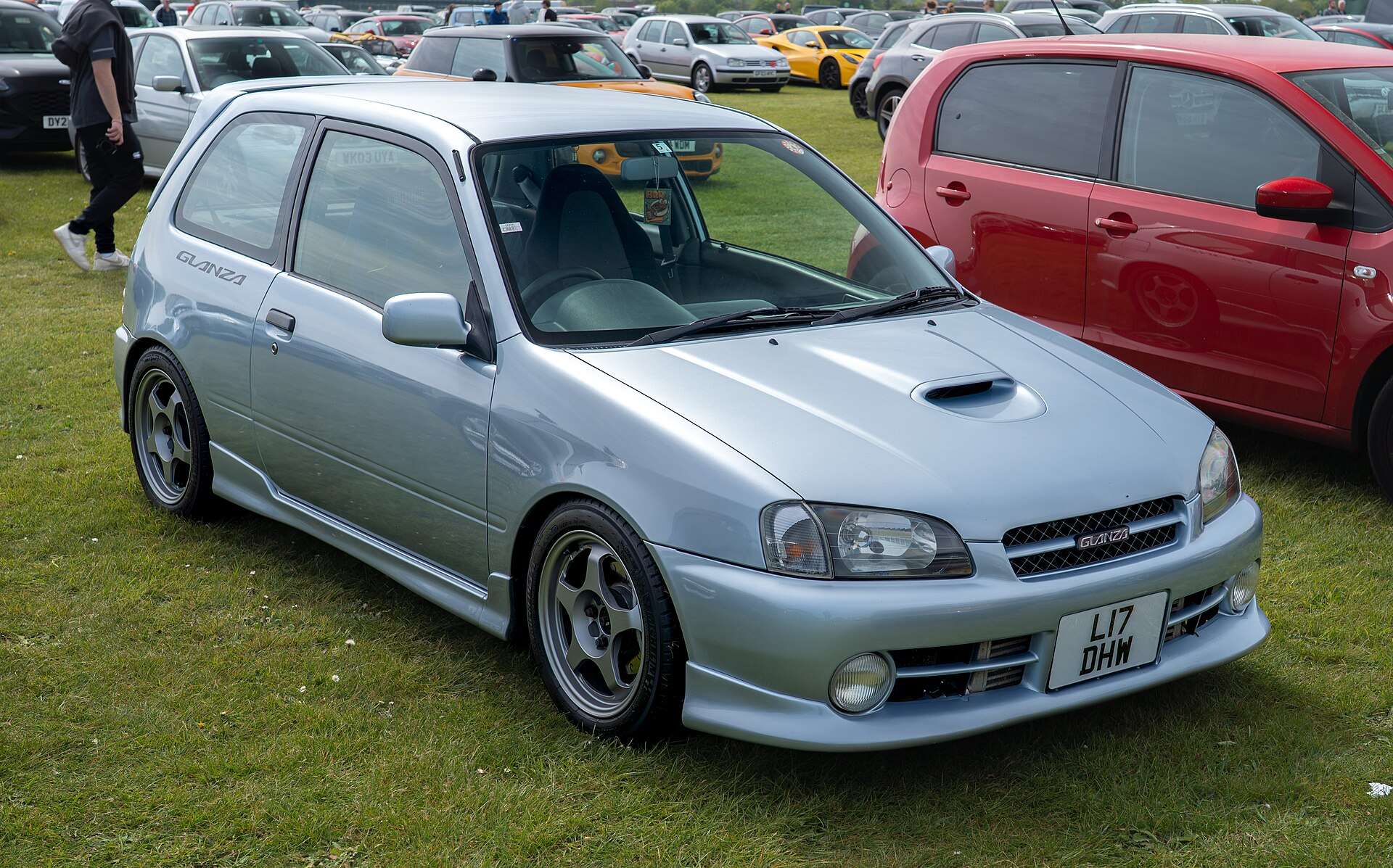
The 1,331cc 4E-FTE used four valves per cylinder, electronic fuel injection and a turbocharger. In Glanza V form Toyota quoted 135PS—remarkable output for a small 1990s supermini.
4. The Glanza V weighed only about 920kg
Low mass transformed the performance. A modest-looking power figure delivered rapid acceleration, while the compact dimensions made the car feel alert on narrow British roads.
Love cars you don’t see every day?
Get forgotten cars, surprising motoring stories and the most interesting finds from Unusual Cars by email.
Free to join. No spam. Unsubscribe whenever you like. See our Privacy Policy.
5. The EP82 offered selectable boost modes
The earlier GT Turbo used a dashboard switch that allowed low and high boost settings. It was a memorable piece of period technology and useful for making the front-wheel-drive car calmer in poor conditions.
6. The Glanza name was more than a badge change
EP91 cars received smoother styling, improved refinement and a more modern interior. The turbo model was Glanza V, while the naturally aspirated sporting version was called Glanza S.
7. Toyota offered desirable factory options
Depending on year and market, buyers could specify equipment such as a limited-slip differential, Recaro seats, ABS and climate features. Original optioned cars are especially prized now.
8. The 4E-FTE became a tuning favourite
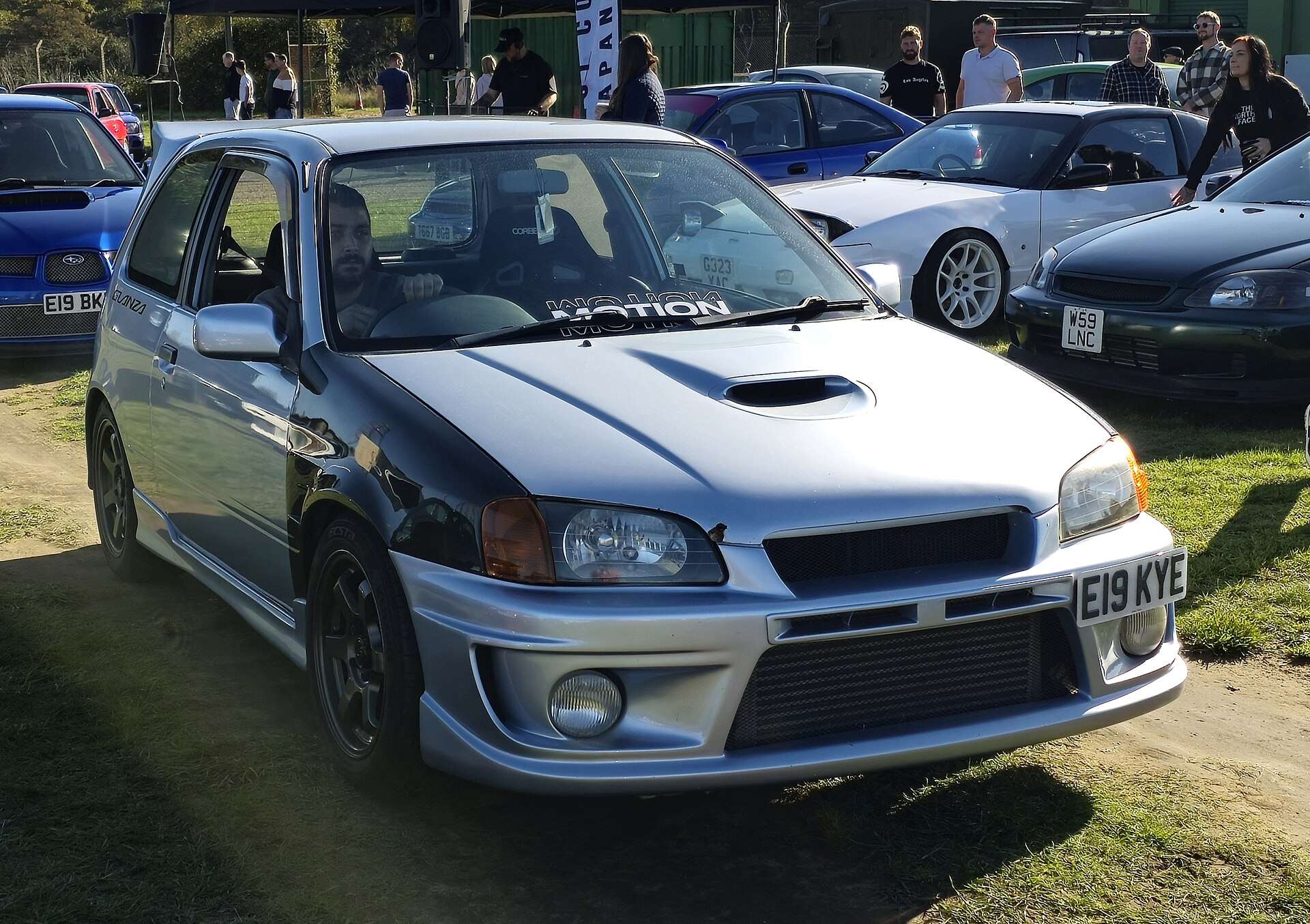
Simple modifications could release far more power, and engine swaps placed the turbo unit in lighter Starlets. That popularity also means many surviving cars have been modified repeatedly or run beyond safe limits.
9. Small brakes and tyres demand perspective
A tuned Starlet can easily have several times the power its chassis was designed to manage. Suspension condition, tyre quality and brake upgrades matter at least as much as boost pressure.
10. Standard cars are now the rarest
Imports were cheap and modification was part of the culture. Finding an original airbox, factory wheels, intact interior and uncut bodywork is far harder than locating a highly tuned example.
Why it matters
These Starlets matter because they made performance accessible. Light weight, dependable Toyota engineering and huge tuning potential created a following that still spans drag racing, track use and painstaking factory-standard restorations.
Join the Unusual Cars Club
Get more forgotten performance cars, surprising motoring stories and new 10 Things articles by email.
Free to join. No spam. Unsubscribe whenever you like. See our Privacy Policy.