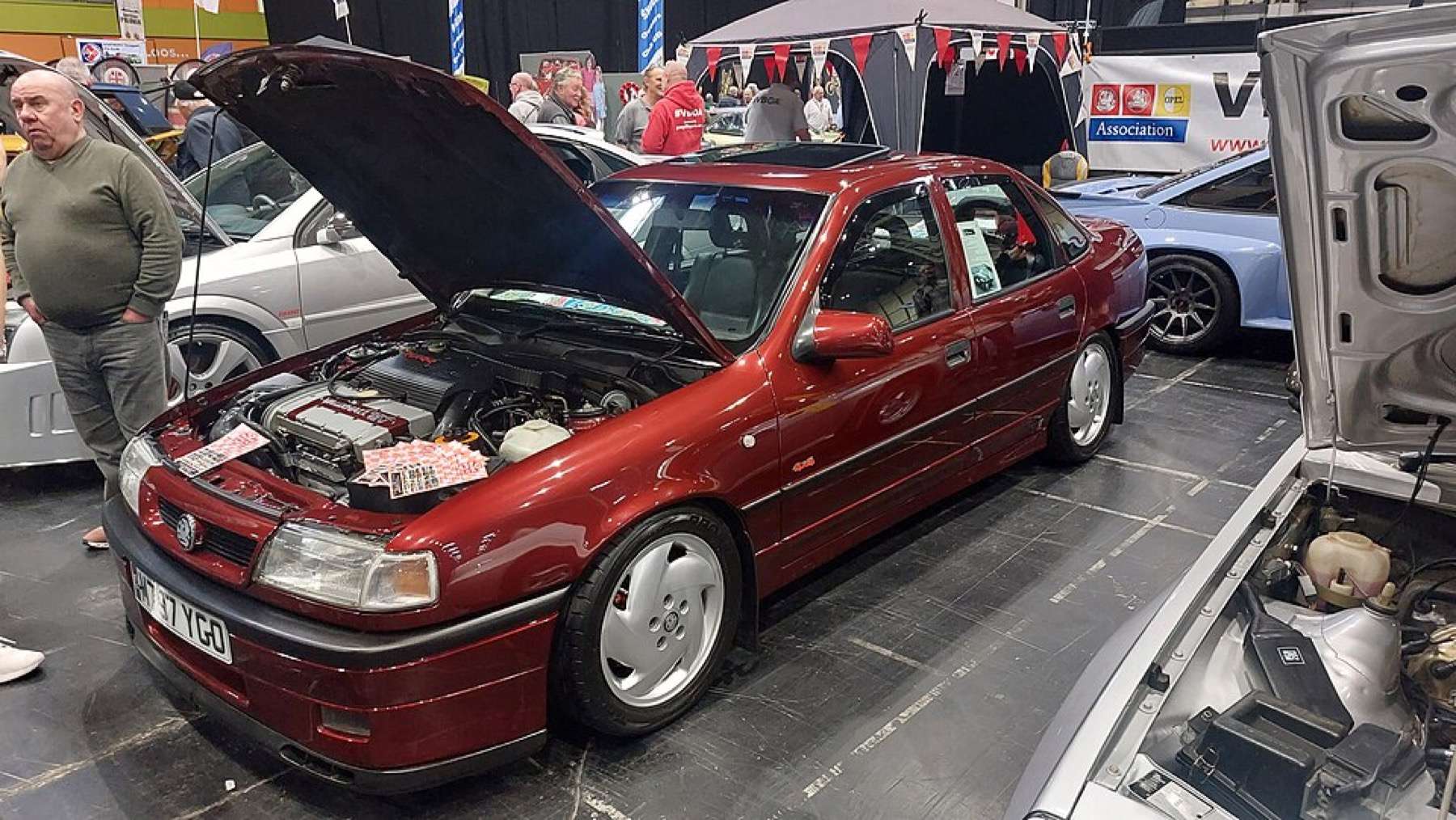
The Vauxhall Cavalier Turbo 4×4 was the ultimate sleeper of the early 1990s: more than 200bhp, six gears and permanent four-wheel drive hidden beneath the body of one of Britain’s most familiar company cars.
1. It was the most powerful factory Cavalier
Launched in 1992, the Turbo 4×4 used Vauxhall’s 2.0-litre C20LET engine to produce 204bhp and 206lb ft. That put an ordinary-looking family saloon into genuine performance-car territory.
2. The engine was a turbocharged red-top relative
The C20LET shared its iron block and 16-valve architecture with the celebrated C20XE. A KKK turbocharger, intercooler, lower compression and revised management created huge mid-range torque without losing the basic engine’s durability.

3. It had a six-speed gearbox
A Getrag six-speed manual was highly unusual in an early-1990s family saloon. The extra ratio helped the Cavalier combine rapid acceleration with relaxed high-speed cruising and gave the flagship a clear mechanical distinction from the GSi.
4. Four-wheel drive was essential, not decorative
The permanent four-wheel-drive system used a transfer box and viscous coupling to divide power between the axles. It gave the discreet saloon all-weather traction that a 200bhp front-drive Cavalier could never have matched.
Love cars you don’t see every day?
Get forgotten cars, surprising motoring stories and the most interesting finds from Unusual Cars by email.
Free to join. No spam. Unsubscribe whenever you like. See our Privacy Policy.
5. The performance was startlingly discreet
Contemporary figures put 0–60mph at roughly six and a half seconds and top speed near 150mph. Yet without studying the wheels, discreet badges and rear spoiler, most traffic saw only another company-car Cavalier.
6. Its wheels were specially designed
The distinctive 16-inch “turbo” alloys used covered spokes and small openings, creating a smooth technical appearance unlike the cross-spoke wheels on lesser sporting Cavaliers. Original undamaged sets are now an important part of a correct car.
7. It arrived alongside the facelift
The Turbo adopted the later Cavalier’s revised grille, lights, bumpers and improved cabin. That made it look newer and more restrained than the earlier GSi 2000 4×4, even though its mechanical specification was far more serious.
8. The transfer box became its defining weakness
Tyre circumference differences can force the viscous coupling to work continuously, overheating and damaging the transfer box. Correct matching tyres, equal tread depths and careful pressure maintenance are therefore mechanical necessities, not obsessive trivia.
9. The police noticed its abilities
Fast, anonymous and secure in poor weather, the Cavalier Turbo suited motorway and traffic-police work. Unmarked examples could cover ground at serious speed without attracting the attention generated by an Escort Cosworth or brightly coloured Impreza.
10. Survival numbers are tiny
Complex four-wheel-drive repairs, cheap used values, tuning and rust removed many cars. The engine was also attractive for swaps into lighter Vauxhalls, so complete, standard Turbo 4x4s are much scarcer than ordinary Cavaliers.
Why it matters
The Cavalier Turbo matters because it delivered super-saloon pace without theatre. Its technical complexity made it expensive to keep once values fell, but a healthy original car remains a devastatingly fast reminder of how adventurous Vauxhall engineering became at the end of the Cavalier era.
Join the Unusual Cars Club
Get more forgotten performance cars, surprising motoring stories and new 10 Things articles by email.
Free to join. No spam. Unsubscribe whenever you like. See our Privacy Policy.