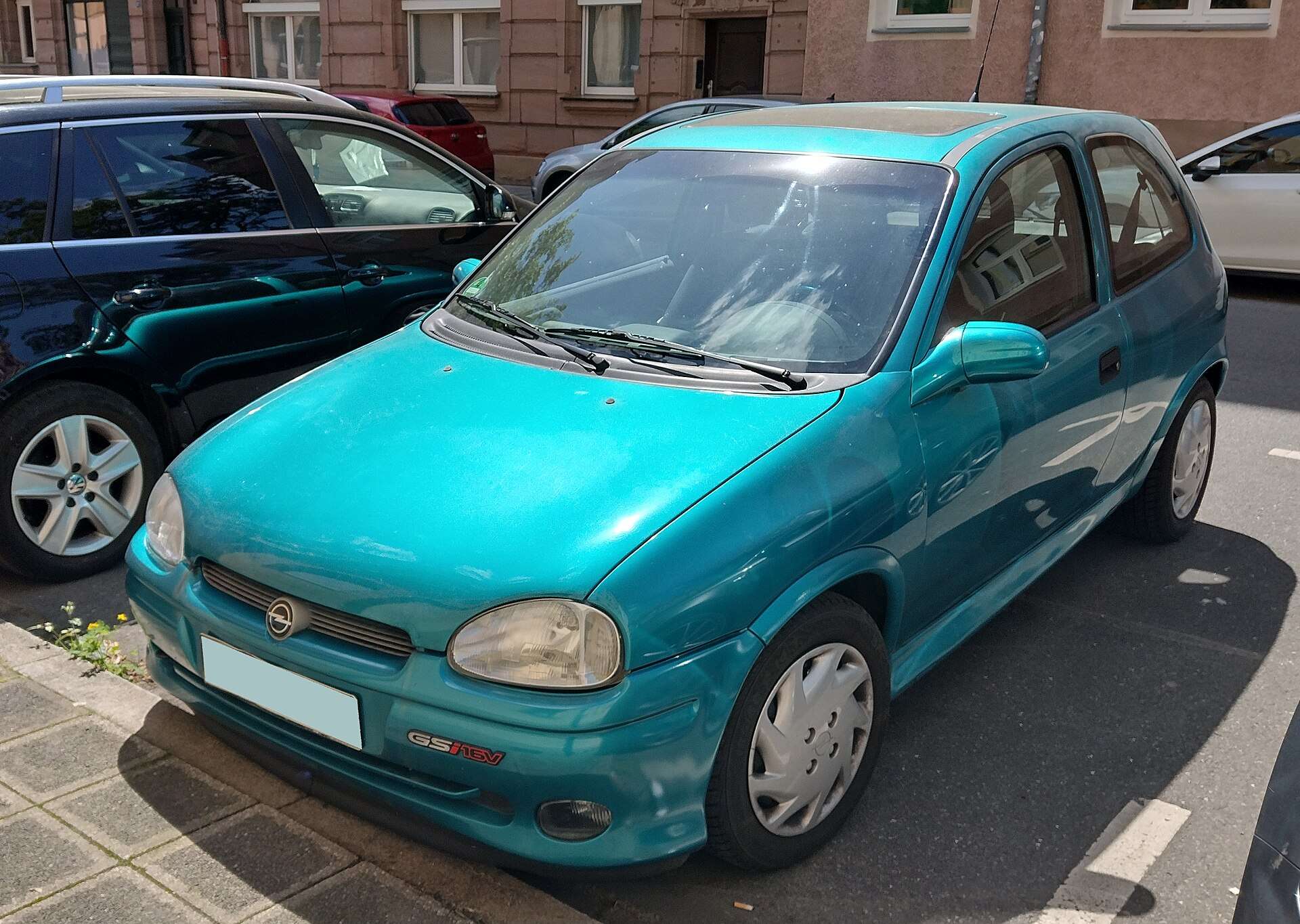
The original Corsa GSi arrived at the same moment Vauxhall replaced the much-loved Nova. Its rounded styling looked thoroughly modern in 1993, but underneath was a traditional lightweight hot-hatch recipe: a rev-hungry 1.6-litre engine, manual gearbox and chassis upgrades that made it far more serious than an ordinary Corsa.
1. It arrived with the first British Corsa in 1993
Vauxhall launched the Corsa name in Britain in 1993 and offered a GSi derivative from the beginning. It gave former Nova GTE and GSi buyers a direct performance flagship rather than asking them to wait for the new range to mature.
2. The engine was a genuine twin-cam sixteen-valve unit
The British GSi used a 1.6-litre double-overhead-camshaft engine with four valves per cylinder. Vauxhall quoted 105bhp at 6,000rpm, a substantial output for a small naturally aspirated hatchback of the early 1990s.
3. European figures can appear slightly higher
Opel literature for European-market Corsa B GSi models often quotes 80kW or 109PS. UK Vauxhall material gives 105bhp. The difference is a useful reminder that market, measurement convention and emissions equipment matter when comparing specifications.
4. It could reach 121mph
Vauxhall quoted 0–60mph in 9.2 seconds and a 121mph maximum speed. Those figures may look modest beside modern turbocharged superminis, but the Corsa’s low weight and short gearing made it feel energetic and responsive.
Love cars you don’t see every day?
Get forgotten cars, surprising motoring stories and the most interesting finds from Unusual Cars by email.
Free to join. No spam. Unsubscribe whenever you like. See our Privacy Policy.
5. GSi meant chassis changes as well as badges
Firmer suspension, larger brakes and wider tyres accompanied the stronger engine. Vauxhall intended the GSi to be a complete sporting derivative, not an appearance package applied to a standard 1.4-litre Corsa.
6. The body kit became one of its defining features
Deep bumpers, colour-keyed sill extensions, spoilers and distinctive wheels gave the GSi a much more purposeful stance. Original exterior pieces are now difficult to find because many cars were damaged, modified or stripped for parts.
7. It followed a badge already used on larger Vauxhalls
GSi first appeared on the Mk3 Cavalier GSi 2000 and then on the facelifted Nova GSi. The Corsa carried that performance identity into a new generation before the later VXR badge changed Vauxhall’s hot-hatch language again.
8. Its production life was surprisingly short
The early Corsa GSi did not remain a permanent fixture throughout the long Corsa B generation. Its relatively brief showroom life helps explain why genuine, complete examples are much less common than ordinary Corsas.
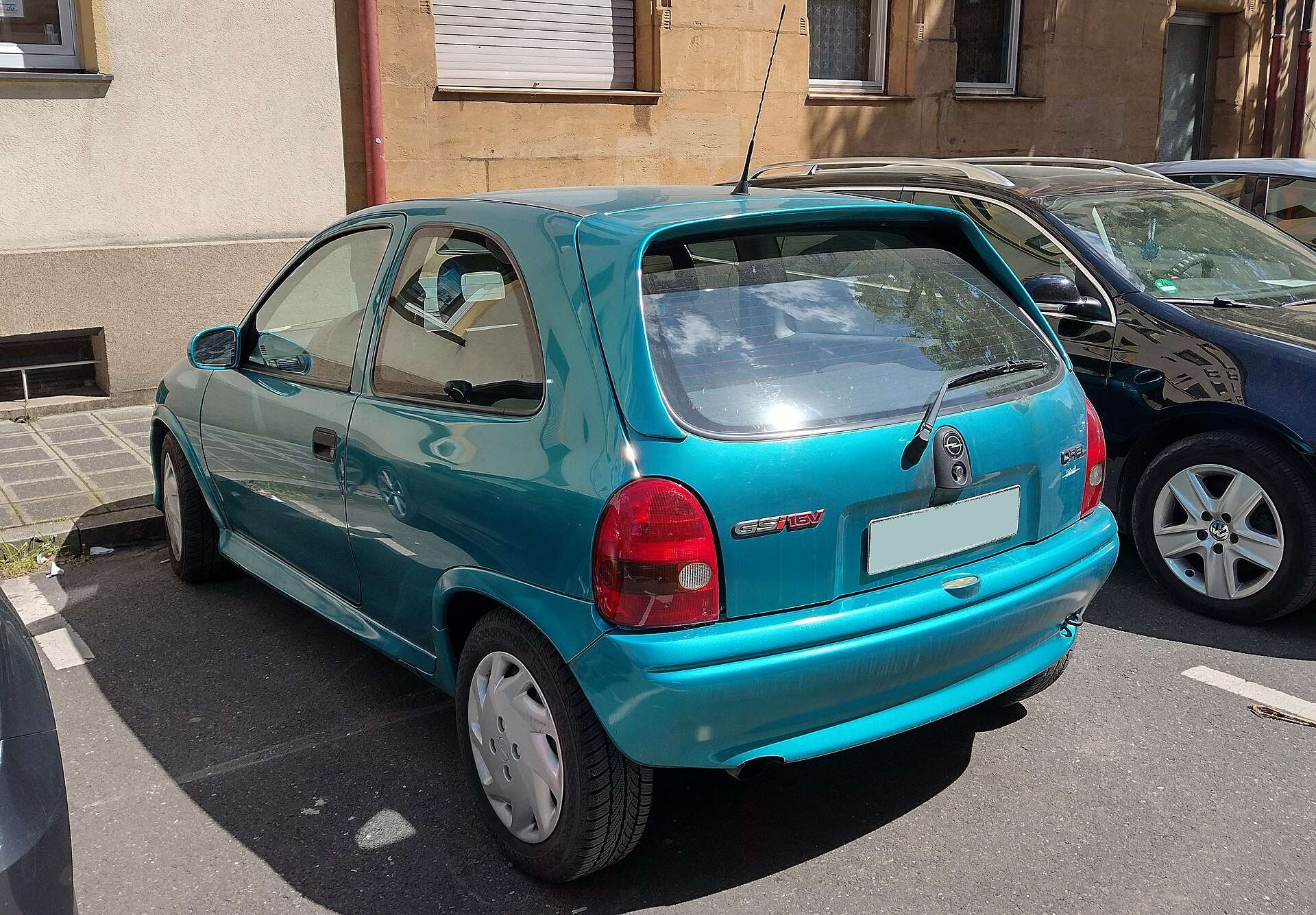
9. Engine conversions blurred the surviving population
Corsa shells became popular homes for larger Vauxhall engines, including the celebrated C20XE and turbocharged C20LET. Well-engineered conversions can be exciting, but they should not be confused with an original 1.6-litre GSi.
10. Originality now matters more than headline power
Correct seats, wheels, trim, bumpers and drivetrain pieces have become important because so many cars were modified when values were low. A sound, documented standard car is now far harder to replace than a faster converted example.
The Corsa GSi deserves to be remembered as the bridge between the lightweight Nova era and Vauxhall’s later turbocharged pocket rockets.
Explore every 10 Things article in the Unusual Cars hub →
Join the Unusual Cars Club
Get more forgotten performance cars, surprising motoring stories and new 10 Things articles by email.
Free to join. No spam. Unsubscribe whenever you like. See our Privacy Policy.