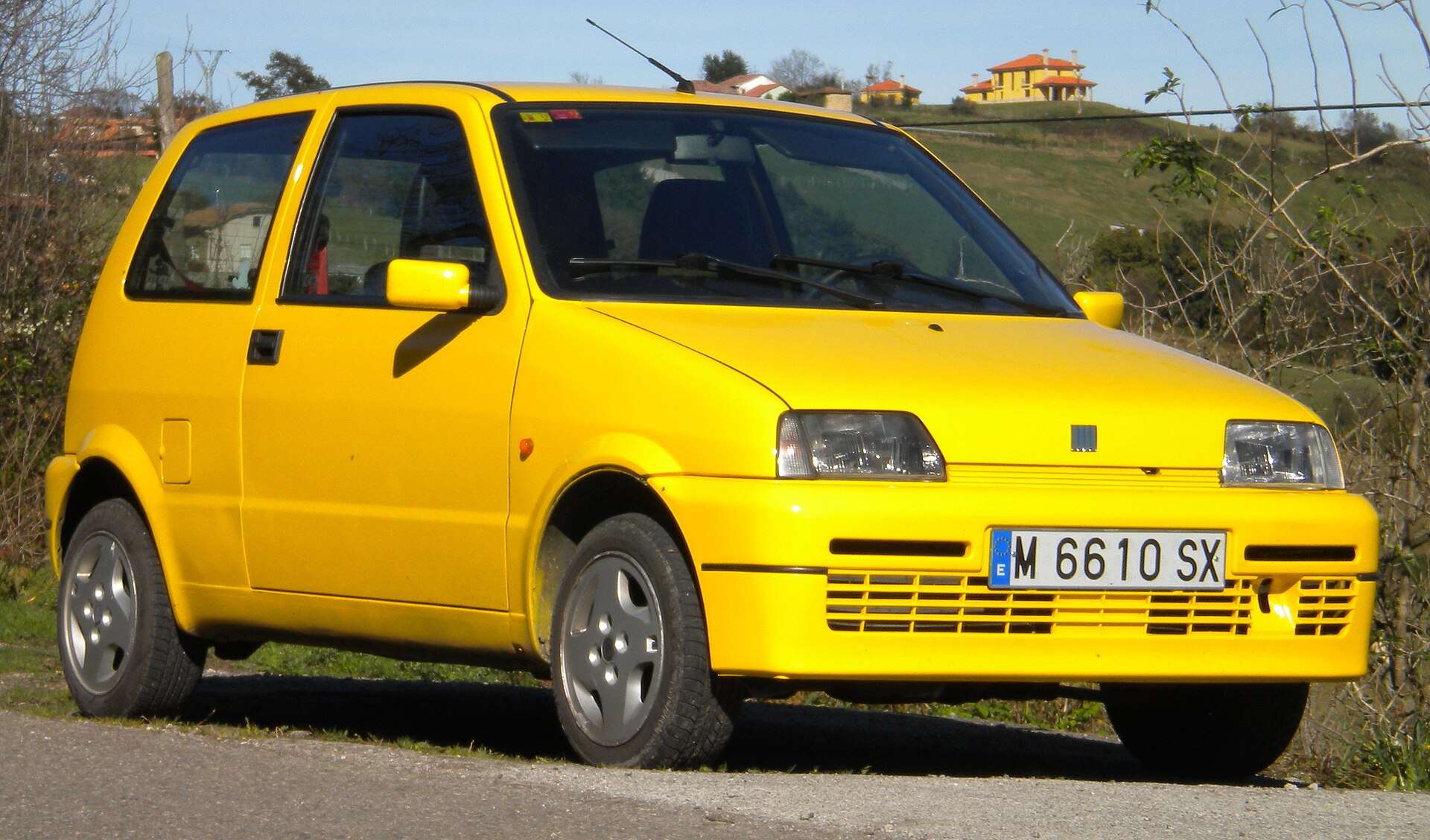
The Fiat Cinquecento Sporting proved that a genuinely entertaining car did not need much power. Its boxy body, tiny dimensions, close-ratio gearbox and eager FIRE engine made ordinary speeds amusing—and turned a humble Polish-built city car into a 1990s cult favourite.
1. Cinquecento means “five hundred”
Fiat revived the historic 500 reference for a modern, angular front-wheel-drive hatchback. It was not retro, but it continued Fiat’s tradition of making the smallest possible car surprisingly useful.
2. It was built in Poland
Production took place at Tychy, where Fiat had extensive small-car experience. The factory later became central to several generations of Fiat city cars, but in the early 1990s the Cinquecento was its conspicuous Western European success.
3. The Sporting arrived in 1994
Colour-coded bumpers, a deeper front spoiler, alloy wheels, sports seats and a rev counter transformed the basic Cinquecento. Bright yellow became the signature colour, although red and black cars were also familiar sights.
4. Its engine produced only about 54bhp
The 1,108cc FIRE four-cylinder came from Fiat’s proven engine family. A figure in the low-fifties sounds modest, but the car weighed only around three quarters of a tonne and used short gearing, so it felt eager where a heavier car would feel flat.
Love cars you don’t see every day?
Get forgotten cars, surprising motoring stories and the most interesting finds from Unusual Cars by email.
Free to join. No spam. Unsubscribe whenever you like. See our Privacy Policy.
5. The close-ratio gearbox was essential
Fiat shortened the ratios to keep the little engine working. Motorway journeys could be busy, but on a twisting road the driver could use nearly all the performance without reaching antisocial speeds.
6. It was slow by stopwatch and quick by sensation
Sixty-two mph took roughly 14 seconds and top speed was around 93mph. Yet the upright driving position, compact wheelbase, minimal sound insulation and willingness to rev made those numbers feel much more entertaining from behind the wheel.
7. Fiat took it rallying
The Sporting received FIA Group A homologation in 1995. Fiat Auto Corse also ran one-make Trofeo competition cars, creating an affordable training ground for aspiring rally drivers.
8. “Abarth” often meant accessories
Fiat offered Abarth-branded styling and performance accessories, and many cars have since gained Abarth badges. That does not make every modified Sporting a separate factory Abarth model, so documentation matters.
9. Cheap-car lives were hard on survivors
Rust, worn suspension, tired gear linkages and years of inexpensive modifications can turn an apparently affordable example into a project. A straight, unmolested shell is usually the smartest starting point.
10. The Seicento inherited the formula
The rounded Seicento Sporting retained the 1.1-litre FIRE engine and cheerful small-car character. Many enthusiasts still prefer the Cinquecento’s square styling and more unfiltered personality.
Did you own a yellow Sporting—or always want one? Explore every 10 Things article in the Unusual Cars hub →