
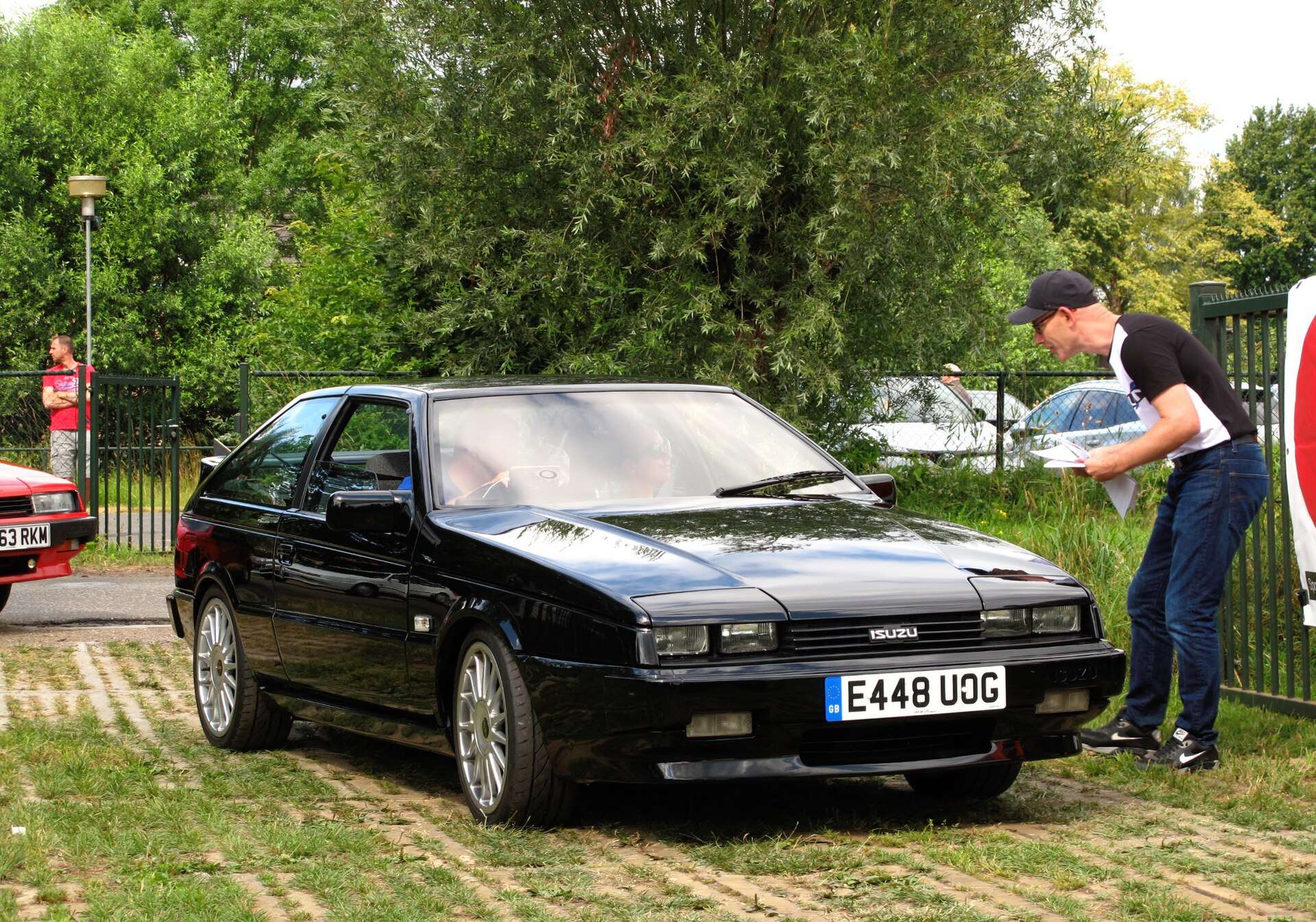
The Isuzu Piazza Turbo looked as though it had driven straight out of a motor-show sketch. Giorgetto Giugiaro styling, rear-wheel drive, turbo power and later “Handling by Lotus” badges promised something exotic—yet its British story became unexpectedly complicated.
1. It began as a Giugiaro show car
The shape developed from Italdesign’s Asso di Fiori concept. Isuzu moved it into production with remarkable faithfulness, preserving the low wedge nose, large glass hatch and sharply defined surfaces.
2. Piazza was not its only name
North American buyers knew it as the Isuzu Impulse, while Australia received the Holden Piazza. Engines and specifications varied, so information about an Impulse cannot automatically be applied to a British Piazza Turbo.
3. Britain received only the turbo version
The UK car arrived in 1985 with a 2.0-litre turbocharged four-cylinder producing about 147bhp. Other countries had naturally aspirated versions, but British buyers encountered it as an expensive performance coupé.
4. It was rear-wheel drive
A live rear axle located by links and a Panhard rod sat behind the turbo engine and five-speed gearbox. The traditional layout could be entertaining, but early cars gained a reputation for nervous behaviour on poor or wet roads.
Love cars you don’t see every day?
Get forgotten cars, surprising motoring stories and the most interesting finds from Unusual Cars by email.
Free to join. No spam. Unsubscribe whenever you like. See our Privacy Policy.
5. The dashboard was as unconventional as the body
Large control pods flanked the instrument binnacle, placing many switches close to the steering wheel. The arrangement looked dramatic and allowed the driver to reach functions without stretching toward a conventional centre stack.
6. Early handling reviews were not kind
British testers admired its performance and styling but criticised its wet-road behaviour. Those complaints became central to the Piazza’s reputation and created an opportunity for another famous British name.
7. Lotus reworked the chassis
Lotus engineers revised geometry, springs, anti-roll control, dampers and tyres. The ride height was lowered and rear-axle behaviour improved, producing the prominently badged “Handling by Lotus” version from the 1988 model year.
8. The original UK importer collapsed
Isuzu GB failed in 1986, leaving cars, warranties and dealers in uncertainty. International Motors later rebuilt the operation and supported owners, but the disruption did little to help a niche coupé establish itself.
9. British sales were tiny
Owners’ club research places UK sales at roughly 1,662 cars, divided between early and Lotus-handling versions. Fewer than 40 were reportedly registered in the final year, explaining why many enthusiasts have never seen one.
10. Rust and donor demand removed many survivors
When Piazzas became cheap, driveline parts attracted builders of modified Vauxhalls and Opels, even though the conversions were not always simple. Corrosion and poor parts availability removed many more.
Did Lotus rescue the Piazza—or did the changes arrive too late? Explore every 10 Things article in the Unusual Cars hub →