
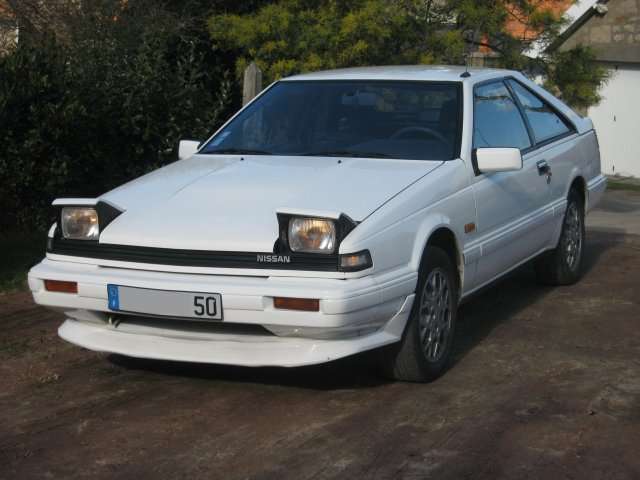
Before the S13 and S14 became drift-culture royalty, Nissan built the angular S12 Silvia. Sold under several names around the world—including 200SX—it combined rear-wheel drive, pop-up headlamps and turbocharged engines in one of the most unmistakably 1980s shapes Nissan ever produced.
1. The S12 was the fourth-generation Silvia
Nissan launched it in Japan in August 1983, following the S110. The company’s own heritage collection describes the S12 as a specialty car with a wedge-shaped silhouette and retractable headlamps.
2. Its name changed with the market
Depending on country and body style, buyers encountered Silvia, Gazelle and 200SX badges. This explains why apparently similar cars are described differently in adverts—and why “200SX S12” can mean a different specification in Europe, Japan or North America.
3. Buyers could choose coupé or hatchback bodywork
Nissan offered a conventional notchback coupé and a three-door hatchback with a large rear gate. The hatchback became the familiar export-market shape, while the coupé is now particularly unusual outside Japan.
4. Not every turbo S12 had the same engine
Japanese RS-X models could use the formidable FJ20ET and later the twin-cam CA18DET. European and British cars commonly used the simpler single-cam CA18ET. Quoting the most powerful Japanese specification for every S12 is therefore misleading.
Love cars you don’t see every day?
Get forgotten cars, surprising motoring stories and the most interesting finds from Unusual Cars by email.
Free to join. No spam. Unsubscribe whenever you like. See our Privacy Policy.
5. The later Japanese RS-X made 145PS
Nissan’s preserved 1986 RS-X uses the 1,809cc twin-cam CA18DET, producing 145PS and 201Nm. That engine would become closely associated with later performance Nissans, but the S12 represents one of its earliest applications.
6. It remained resolutely rear-wheel drive
The engine sat at the front and drove the rear wheels, with strut front suspension and a semi-trailing-arm rear arrangement on higher-specification cars. The layout placed the S12 in a very different world from the front-wheel-drive coupés that later filled showrooms.
7. The facelift changed more than small trim details
A substantial 1986 update brought revised front and rear styling and, in Japan, a switch from the FJ engine family to CA18 units. Enthusiasts often describe early cars as Mark I and facelift cars as Mark II, although specification still varies by country.
8. A wide-bodied Grand Prix version existed
Some markets received an extravagantly flared Grand Prix model whose wide arches made the already angular S12 look like a touring car. Numbers were limited and surviving genuine cars are considerably rarer than standard hatchbacks.
9. It was overshadowed almost immediately by the S13
The smoother S13 generation arrived with more modern multi-link rear suspension and later became a tuning and drifting phenomenon. That success pushed the S12 into the background, despite the earlier car establishing much of the affordable turbocharged, rear-drive formula.
10. Rust and modification make originality valuable
Sills, arches, floors and suspension areas need careful inspection, while engines and drivetrains were often modified or removed for other projects. A complete car with its market-correct engine, trim and documentation is now a genuinely scarce survivor.
Do you prefer the sharp-edged S12 or the better-known S13? Explore every 10 Things article in the Unusual Cars hub →