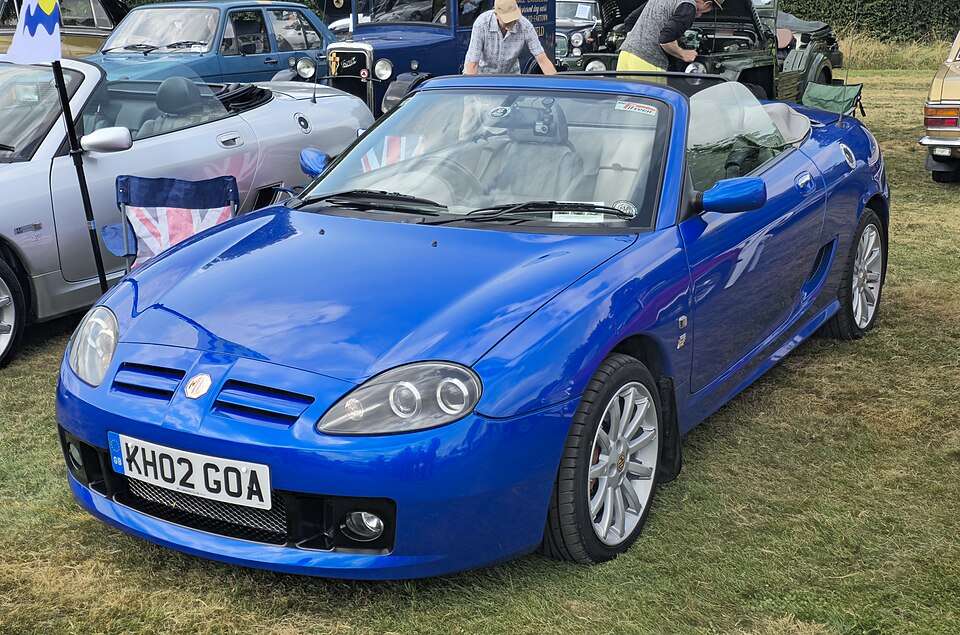
The modern MG TF offers mid-engined balance, open-air driving and an approachable purchase price. The expensive mistake is to treat that purchase price as the whole budget. Cooling-system condition, structural corrosion, overdue belts and a tired roof can outweigh the difference between a cheap car and a properly prepared one. This guide covers the modern TF, not the 1950s T-series roadster.
Our buying verdict
Our default choice is a sound manual TF135 with documented belt servicing and a healthy cooling system. Choose a TF160 for its VVC engine when the extra maintenance and specification suit you. Buy a Stepspeed only after a specialist has assessed the CVT. Across the range, prioritise structure and documented repairs over a special-edition badge.

Which MG TF should you buy?
The TF replaced the MGF in 2002. The major distinction underneath is coil-spring suspension in place of the F’s Hydragas system, alongside revised styling and engineering. Do not apply an MGF suspension repair estimate directly to a TF. Parts commonality is useful, but interchangeability still needs checking.
| Model | Buying considerations |
|---|---|
| TF115 | 1.6-litre entry model. A good shell can make it a sensible purchase; lower power does not remove cooling and belt obligations. |
| TF135 | 1.8-litre manual and our first shortlist for general road use. Compare condition before paying for trim packages. |
| TF160 | 1.8 VVC engine and stronger performance. Verify both belt requirements and the correct brake/wheel specification. |
| TF120 Stepspeed | 1.8 with CVT automatic transmission. Correct fluid and transmission behaviour need specific expertise. |
| 2008–2011 revival cars | Later Longbridge-built cars under new ownership, including LE500 and anniversary versions. Confirm identity and specification rather than assuming registration date proves production details. |
Earlier and later cars can differ in suspension tuning, roof glazing, brakes and equipment. Upgrades and replacement hoods further blur the picture. A glass rear screen is desirable for visibility and durability but can have been retrofitted; it is not proof of a particular model year. Treat a special edition as an equipment and provenance question, not a sticker check.
Ask whether the larger four-piston front brakes, commonly associated with the 160, are factory equipment or an upgrade. Wheel clearance matters with these calipers. Test the hood yourself and sit in the driving position before committing: the TF’s compact cabin and access will suit some owners better than others.
MG TF prices and market evidence
Price research checked 3 November 2026. Trophy Cars’ stock page advertised a 2003 TF115 Sunstorm at £5,995, a 2004 TF135 Spark at £7,495 and a 2009 TF135 at £7,995, among other cars. These are specialist retail asking prices, not sold results or a minimum entry price for the model. Preparation, mileage, warranty and included work need checking against each individual listing.
The same stock page includes sold cars and some inconsistent listing links, so confirm the exact vehicle, current price and availability before using an advert as a comparator. A displayed price beside “sold” does not establish the final transaction amount. Older magazine guides contain much lower figures; their publication date and different level of preparation make them unsuitable as today’s blanket valuation.
Build separate comparisons for private-sale cars, prepared specialist stock, low-mileage late cars and projects. Ask what the selling price actually buys: belt work, water pump, cooling-system inspection, tyre replacement, rust repairs, MOT and warranty are different things. Read warranty limits rather than treating the word as protection from every age-related fault.
Our budget rule is to price the work on the car you are considering. If the belt age is unknown, obtain an immediate-service quote. If a subframe is corroded, obtain an inspection and replacement estimate. Do not subtract a cheap internet part price and assume that covers labour, fasteners and alignment.
MG TF rust and bodywork inspection
Begin with the sills, jacking points, wheelarches, floor and areas behind the side intakes. Inspect the edges of stone chips and previous repairs rather than judging only paint shine. Look inside accessible cavities with permission. Fresh underseal or a newly painted sill requires photographs and an explanation of what was repaired underneath.
The front and rear subframes deserve a proper lift inspection. Check their seams, mounting areas and the rear engine carrier for corrosion. Surface rust and structural metal loss are different findings; a general MOT pass cannot quantify the remaining life of every concealed section. Ask an MG specialist to assess whether repair or replacement is needed and what else must be disturbed during the job.
Inspect brake pipes, coolant pipes, mounting brackets and exhaust supports underneath. A car stored outdoors may look smart above while these components deteriorate below. Replacement stainless coolant pipes can be useful, but inspect the joints and installation: upgraded material does not make the rest of the system new.
Check bonnet and boot areas for evidence of accident repairs, distorted panels or water ingress. Compare identification with the documents and investigate unusual gaps or paint transitions. For a claimed LE500 or other limited edition, seek supporting build/history information. A badge can be replaced far more easily than a history can be reconstructed.

Head gasket, cooling and K-series engine checks
What does “head gasket replaced” actually establish?
It establishes little without the invoice. Ask why the gasket failed, whether the engine overheated, how the head and liners were assessed, which gasket was appropriate and what cooling fault was corrected. A gasket choice should follow measured engine condition; there is no magic gasket that makes every engine permanently immune from trouble.
A good repair record identifies the diagnosis, machining or replacement decisions, parts, belts, water pump and subsequent coolant behaviour. A recent repair with no explanation of the original cause deserves further inspection. Repeated failures, ongoing coolant loss or an engine sold immediately after unexplained overheating need particular caution.
Inspect the complete cooling system
Arrange a cold start and inspect the header tank only when it is safe and cold. Never remove a hot pressure cap. Look at the coolant condition, visible hoses, connections and staining. Ask how often the level needs topping up. The front radiator, long underfloor pipes and rear engine create more potential leak points than a quick look in the boot reveals.
Watch temperature behaviour through warm-up and a normal drive. Check heater output and fan operation as appropriate; do not deliberately let an overheating engine continue running to complete a test. Unexplained pressure, coolant discharge, contamination or temperature changes require a professional assessment. A clean filler cap alone neither proves nor disproves head-gasket health.
Have a specialist trace leaks and assess the system rather than relying on one chemical test. Correct filling and bleeding matter after repairs. Ask whether any thermostat or cooling modifications have been carried out and whether the installation is documented. An aftermarket gauge or low-coolant alarm can be useful, but it does not substitute for a healthy system or attentive owner.
Cambelts, VVC and servicing
Check belt replacement by both age and mileage against the exact engine’s maintenance schedule. A low-mileage summer car can still be overdue by time. If proof is absent, treat the work as due before normal use. A service-book stamp does not necessarily include belt replacement.
The VVC engine requires the appropriate additional belt work; a generic non-VVC kit is not a complete TF160 service. Ask whether the tensioner, water pump and related components were included and whether leaks were addressed. Correct timing and tensioning need model knowledge and appropriate tools. Do not choose a workshop solely on the cheapest advertised cambelt price.
Check cold and hot starting, idle quality, smoke, oil level and visible leaks. A rough-running engine can have ignition, intake, sensor or mechanical causes. Obtain diagnosis before accepting a seller’s proposed cheap fix. For modified cars, identify the fitted engine, induction, exhaust and management changes, and check insurer declarations and emissions requirements.
Gearbox, clutch, steering and suspension
On manuals, check smooth selection in every gear, clutch take-up and any noise under load or on overrun. A stiff clutch pedal may involve the operating mechanism and can become a labour-intensive repair. Do not assume lubrication accessible from outside will resolve every case. Cable or linkage issues should be distinguished from internal gearbox wear.
A Stepspeed needs a separate CVT assessment. Ask for the precise fluid used and servicing evidence, then test take-up, response and behaviour hot as well as cold. A car that flares, shudders, shows warnings or has an unexplained loss of drive requires specialist diagnosis. Generic automatic-transmission fluid is not an acceptable assumption.
Check the electric power steering for consistent assistance and correct warning-lamp operation. Inspect springs, dampers, bushes and ball joints. Earlier TFs can feel firm, but harshness should not excuse worn components, incorrect tyre pressures or poor geometry. Ask for a four-wheel alignment report after suspension work.
Confirm the specified front and rear tyre sizes for the fitted wheels. The staggered arrangement is not an invitation to swap tyres indiscriminately. Age, compound and matching axle pairs matter to a mid-engined car. Test braking progressively, inspect caliper freedom and verify handbrake operation; do not diagnose it solely by counting lever clicks.

Hood, leaks, interior and electrics
Raise and lower the hood carefully, following the appropriate procedure for its rear screen. Inspect fabric, stitching, window, frame joints, catches and seals. Do not force a reluctant frame. A cracked plastic screen or worn fabric may be repairable, but ask a trimmer whether the whole assembly is sound before pricing only a replacement window.
Inspect under the carpets for dampness, especially in the footwells. Look for staining around doors, mirror seals and the heater air intake area. Water can enter at one point and travel to another; a damp carpet should lead to a leak investigation rather than a new mat. Check the boot too, and distinguish rainwater ingress from any engine-bay fluid leak.
Operate both windows, locks and every supplied key/fob. Immobiliser problems are more inconvenient when only one working fob exists. Test the heater blower at all speeds, wipers, washers, lights and instruments. Check all applicable warning lamps at ignition and after starting. Aftermarket wiring should be fused, routed and documented appropriately.
Inspect seats, runners, belts and door trim. If a hardtop is included, fit it and check catches, seals and heated-screen connections. “Included” should mean the actual complete roof and required fittings, not an agreement to find them later. Budget for somewhere safe to store it in summer.

MG TF maintenance costs and parts
Affiliate disclosure: eBay parts links below are affiliate links using our campaign. We may earn a commission if you buy, at no extra cost to you. Links open search results rather than a verified individual product. Check engine, year, part number, seller, condition and returns; search results can contain incompatible items.
Primary price check, 3 November 2026: Rough Luck Racing listed a short cambelt service at £295 for non-VVC and £315 for VVC cars, including belts, pump, tensioner and coolant top-up. Its fuller service was £375/£415 respectively. Travel charges apply; confirm current scope, VAT and any additional work. These are one specialist’s published base prices, not a nationwide fitted-cost guarantee.
| Maintenance item | What the quotation needs to cover | Relevant search |
|---|---|---|
| Cambelt and water pump | Correct engine, tensioner and VVC belt requirements; dated invoice. | MG TF timing-belt and pump kits |
| TF160 VVC belts | Confirm the complete VVC-specific set rather than assuming a standard kit. | TF160 VVC belt kits |
| Alternator | Match engine, connections, output and exchange terms. | MG TF alternators |
| Coolant pipes | Inspect long pipes, hoses and clamps; include filling/bleeding. | MG TF coolant pipes |
| Radiator | Diagnose leak/fan issues and confirm fitment before purchase. | MG TF radiators |
| Brake discs and pads | Standard and four-pot systems require different parts. | MG TF brake parts |
| Service filters | Correct oil, plugs and filter specification for the engine. | MG TF service kits |
| Hood and rear window | Check frame, seals and fitting cost before buying fabric alone. | MG TF hoods and windows |
Begin ownership with a written baseline: belt dates, cooling-system assessment, fluid condition, brakes, tyres, underside and charging system. Get written quotations for any faults and rank them by safety and risk of consequential damage. Keep structural and overheating work ahead of cosmetic upgrades.
For each parts search, compare quality, completeness, warranty, postage and labour consequences. A cheaper pump or belt is poor value if its provenance is doubtful or it forces the same access work twice. Obtain workshop agreement before supplying your own parts, including who handles a failed component or incorrect fitment.
Hidden ownership costs
Set a first-year budget before making an offer. Add the purchase price, fees and collection, independent inspection, immediate servicing, diagnosed repairs, insurance, storage and a reserve for unresolved work. Use quotations for the car in front of you; a percentage of the purchase price is a poor substitute for knowing what needs doing.
- Cooling diagnosis after a gasket job: radiator, pipes, thermostat, cap, hoses and bleeding may be separate work. Budget for fixing the cause as well as the failed seal.
- Subframe replacement: seized fixings, pipes, mounts and geometry can expand the job. Ask for an estimate after inspection.
- Roof and dampness: fabric replacement, window work, frame repair, seals and drying the interior are different tasks.
- Specialist access: compare local and mobile expertise, including travel charges. Mid-engine access and proper refilling procedures affect labour.
- Parts are only part of the bill. Access, diagnosis, fluids, alignment, seized fasteners and VAT can change the total. Ask the workshop what its quotation includes and how additional work will be agreed.
- Exchange units and delivery. Alternators, starters and other rebuilt components can require a returnable old unit. Compare the surcharge, return postage, deadline and warranty before choosing a supplier.
- Insurance and downtime. Obtain a quote for the actual specification and declared modifications. Allow for recovery and alternative transport if this will be your only car.
Viewing and test-drive checklist
Before travelling
- Confirm registration, exact version, seller identity and ownership history. Ask about accidents, insurance write-offs, engine changes and modifications.
- Read the MOT chronology and request invoices, not just a stamped service book. Agree a cold start, inspection access and a properly insured test drive.
- Get a written list of included keys, original parts and any outstanding faults. For a distant car, request current underside and engine-bay photographs.
At the car
- □ Cold coolant inspection, complete warm-up and no unexplained loss, discharge or overheating.
- □ Head-gasket invoice explains diagnosis and repair; belt/pump dates and VVC requirements checked.
- □ Subframes, sills, floor, coolant/brake pipes and mounts inspected on a lift.
- □ Manual clutch/selection assessed, or Stepspeed checked by a CVT-aware specialist.
- □ Hood cycled, damp carpets investigated, both fobs tried and tyre sizes/specifications verified.
- □ Compare identification with documents, check panel alignment and inspect accessible structure on a lift. Never go beneath a car supported only by a jack.
- □ Try lights, wipers, washers, heater, locks and warning lamps. Inspect tyres for age and damage as well as tread.
- □ Drive from cold to fully warm, using gears and brakes progressively. Note smoke, overheating, vibration, warning lights or hesitant acceleration; stop if a serious fault develops.
- □ Recheck hot starting and visible leaks afterwards. Record unresolved faults and obtain specialist estimates before paying a deposit.
Proceed when identity, structure and maintenance evidence fit the description. Investigate when a fault has a plausible cause but no diagnosis. Walk away when crucial inspection is refused, identity remains uncertain or the budget depends on a serious fault being cheap. Put any inspection condition and deposit terms in writing.
Buying questions answered
Is an MG TF safe to buy after a head-gasket repair?
A properly diagnosed and executed repair can be a positive. Establish the original cause, measured engine condition, repair scope and subsequent coolant stability. The invoice matters more than a reassuring phrase in an advert.
Is the TF suspension Hydragas?
The modern TF uses coil springs. The earlier MGF uses Hydragas; do not mix their suspension advice or parts without checking.
Which is better, TF135 or TF160?
The 135 is our general road-use starting point; the VVC 160 offers extra performance. Prefer the better structure and history when comparing real cars.
Does low mileage mean the cambelt is still good?
No. Age matters as well as mileage. Verify the applicable schedule and documented replacement date; uncertain history calls for a baseline service.
Should I buy a Stepspeed automatic?
Only with the right inspection and servicing evidence. CVT condition and correct fluid are important, and transmission work can outweigh a cheap purchase price.
Sources and research method
Independently written desk research by Unusual Cars UK, checked on 3 November 2026. We have not road-tested or inspected the illustrated cars or independently authenticated sellers’ claims. Buying recommendations and inspection priorities are our editorial assessment. Historical guides inform technical context; their old price bands are not current valuations. Confirm service requirements against the actual vehicle and suitable workshop information.
- MG Car Club buying guidance — Owner-club reference for inspection themes. Its 2013/2015 prices are historical and are not used as current costs.
- Classics World MG TF guide — Cross-check of model differences and age-related concerns. Its inconsistent timeline is not reproduced.
- Rough Luck Racing service prices — Primary specialist base-price and work-scope evidence.
- Trophy Cars stock — Primary dealer asking-price snapshot; sold labels are not treated as disclosed transaction values.
- GOV.UK used-car checks and MOT history — document and test-history checks.
Images are illustrative surviving vehicles, not the advertised cars discussed in the market section. Individual credits and licence links accompany each photograph. No endorsement by a photographer, club, supplier or seller is implied. Prices and availability can change.