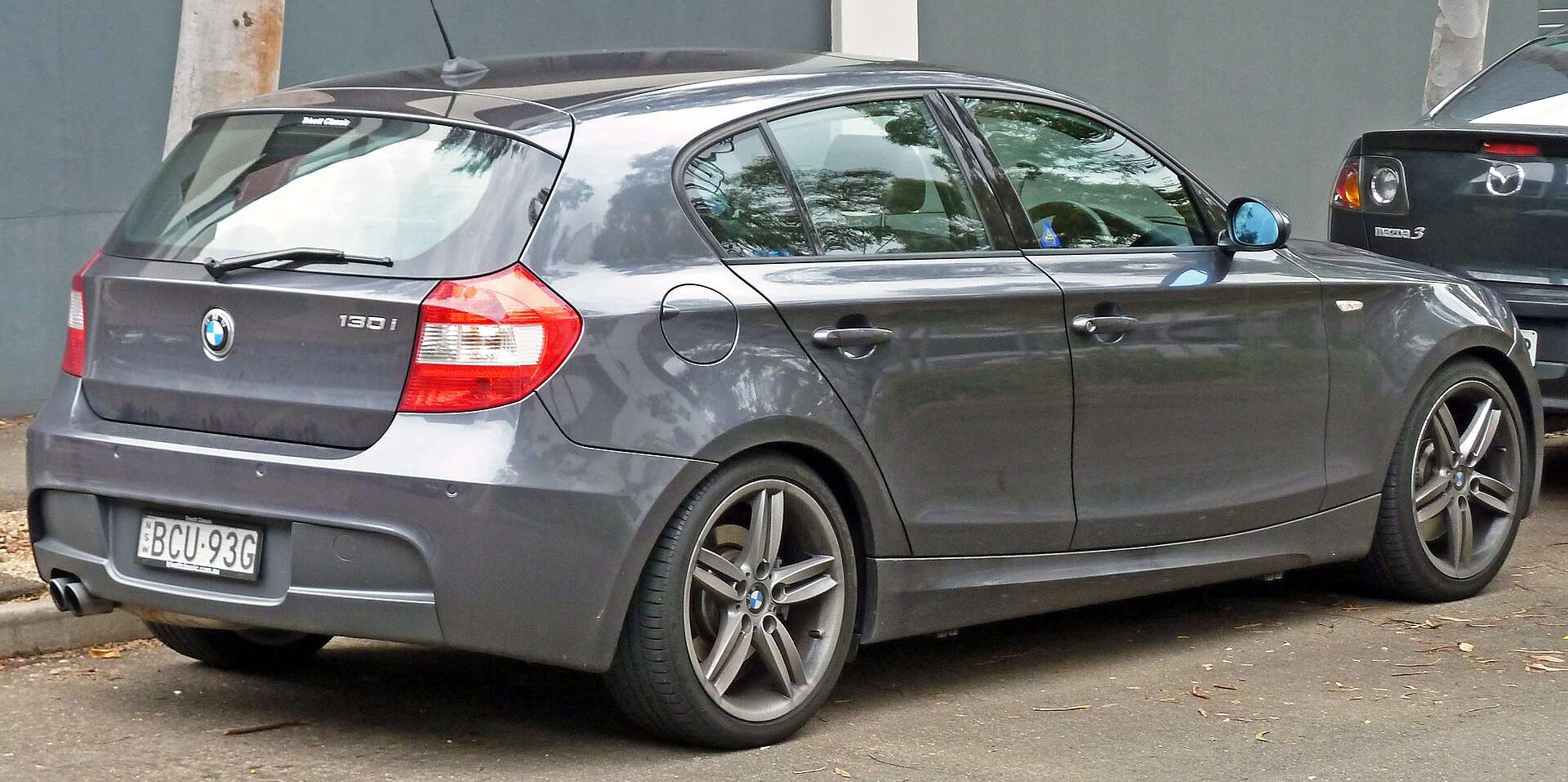
The BMW 130i puts a naturally aspirated 3.0-litre straight-six and rear-wheel drive into an otherwise discreet hatchback. It is an appealing alternative to a turbocharged hot hatch, but a low asking price does not turn an ageing six-cylinder BMW into a budget runabout. This guide covers the five-door E87 and three-door E81 130i, concentrating on identity, N52 engine condition, cooling, leaks, transmissions and the costs that a short test drive can miss.
Our buying verdict
Buy condition and documented work before trim, wheels or a low odometer reading. A standard manual with clear cooling-system and oil-service evidence is our starting point for an enthusiast buyer; a well-maintained automatic can be a sensible everyday choice. Pay for an independent BMW inspection and keep a repair reserve. The car to avoid is the one with overheating history, unexplained warning lights or several faults dismissed as cheap fixes.

E87, E81, manual or automatic: choosing a 130i
The five-door hatchback is the E87; the three-door is the E81. The 130i’s appeal centres on the naturally aspirated N52 six-cylinder petrol engine and rear-wheel-drive layout. Do not confuse it with a four-cylinder 120i, a 125i coupé, a turbocharged 135i or a later M135i. Similar body trim and interchangeable-looking badges are not a substitute for confirming the VIN and engine specification.
This distinction matters when researching faults. Advice about the N47 diesel timing chain, N54 turbochargers or direct-injection petrol systems should not be transferred wholesale to the 130i. It also matters when ordering parts: a broad “BMW 1 Series” result may be a completely different engine, cooling component or brake system.
| Choice | Reason to consider it | Buying checks |
|---|---|---|
| E87 five-door | Easier rear-seat access and discreet appearance | Body condition, rear-door operation, boot practicality and exact build specification |
| E81 three-door | A different body style with the same core appeal | Long-door access in your parking space, door seals and seat access mechanisms |
| Manual | Direct involvement and a clear enthusiast proposition | Clutch, flywheel symptoms, gear engagement and drivetrain play |
| Automatic | Relaxed everyday use | Exact gearbox identity, fluid-service evidence, cold/hot shifts and leak diagnosis |
| M Sport / special edition | Seats, trim and chassis equipment may appeal | Factory build record, installed suspension, wheel condition and premium supported by evidence |
BMW’s 2009 release for the 2010 model year confirms Sport and Lifestyle editions across the three- and five-door range, and describes equipment that varies by edition and engine. It is useful evidence that model-year equipment needs checking, rather than treating every car with an M badge as identical. Do not infer a mechanical limited-slip differential from an M Sport body kit or steering wheel.
Choose the body and seating that suit your use. Try rear access, boot loading and the driving position, and inspect the actual tyre specification. Larger wheels, run-flat choices and aftermarket suspension can alter comfort substantially. Test the car on a representative road at legal speeds before deciding whether it works as your daily transport.
UK car or import?
An imported car is not automatically inferior, but its history needs a different paper trail. Establish original market, mileage evidence, registration and compliance work, equipment differences and insurance acceptance. A low displayed mileage without supporting records is not equivalent to a documented low-mileage UK car. Check that specialist diagnostic equipment reads the car correctly and that replacement parts will be ordered by VIN.
BMW 130i prices: use the right comparators
The Car & Classic 130i page checked on 4 November 2026 showed a small and imperfect sample. A 2006 M Sport automatic advertised by an import dealer at 33,000 miles was asking £8,995. A manual described at 85,000 miles was displayed at £5,995 but explicitly marked sale now agreed; that is an advertised figure, not evidence of the final transaction or an available alternative.
The same results included an E46 M3 and a French left-hand-drive kilometre car. Neither is a clean comparator for a UK 130i hatchback. With so little matching stock in this sample, we would not turn those two figures into a reliable market-wide price band or claim that manual and automatic premiums have been measured.
Compare several cars with the same body, gearbox, provenance and condition. Deduct the cost of imminent tyres, brakes, cooling repairs and leaks from the apparent bargain. Conversely, an expensive advert needs invoices that demonstrate work, not just a long list of enthusiast terminology. A seller’s expenditure is useful evidence but does not automatically add pound-for-pound value.
For a car you intend to keep, estimate the first year before negotiating: purchase price, inspection, insurance, tax, servicing and work identified on the lift. Keep the purchase budget and contingency separate. If buying the car consumes the contingency, a more modest example or a different model may be the better decision.
Rust, identity and accident damage
Match the VIN and documents, check MOT mileage and advisories, establish ownership and use a provenance check for finance, theft and insurance history. Ask about repairs and replacement panels. A valid MOT provides useful evidence about the car at the test date, but cannot certify the absence of corrosion inside a sill or the quality of a historic accident repair.
Inspect sills, lifting pads and the metal around jacking areas, floor seams, brake pipes, suspension mounting areas and the rear underbody on a lift. Look for corrosion, impact damage, broken covers and fresh coating that conceals the substrate. Lift access is particularly valuable where low suspension or cosmetic skirts make a ground-level inspection misleading.
Compare panel gaps, paint texture and colour under natural light. Inspect bonnet, wing and door fasteners, overspray around seals and the front structure for signs of repair. Check the boot floor and spare-storage areas for damp or distorted metal, and inspect the interior for water staining. A dry-looking carpet on the day is not a diagnosis of the source of an intermittent leak.
Check long-door hinges on the three-door, window operation, seals, locks and tailgate wiring. Inspect wheels on their inner faces as well as the polished outside. Uneven tyre wear, a crooked steering wheel or instability needs an alignment and suspension assessment; it should not be assumed to be a cheap tracking adjustment after purchase.

N52 engine problems and the checks that matter
Cooling: electric water pump, thermostat and leaks
The N52’s electric water pump is a major inspection priority. Rootes Motors describes cooling-system work, including the pump, thermostat and expansion tank, among the jobs it sees on these engines. That workshop experience supports an inspection focus; it does not establish that every pump fails at one mileage or that a car with a replaced pump cannot overheat for another reason.
Ask for invoices identifying the pump, thermostat, coolant and date of work. Start cold, inspect for coolant traces and leaks, observe temperature behaviour and have a BMW specialist check stored cooling faults and operation. If the car has overheated, establish the cause and the subsequent checks. A new pump invoice alone does not prove that an engine survived an overheating episode without damage.
Do not drive through an overheating warning to see whether it clears. Have the fault assessed and the car recovered where necessary. Avoid opening a hot cooling system. A seller who cannot explain recurrent coolant loss is offering an unresolved problem, whatever component has most recently been replaced.
Oil leaks: identify the source and access cost
Inspect the cam/valve-cover area, oil-filter housing and lower engine for leaks, and examine the belt area for contamination. Rootes Motors specifically identifies valve-cover and oil-filter-housing gasket work in its N52 workload. Use that as a reason to inspect, not a reason to assume every oily engine needs the same repair.
An inexpensive gasket can involve appreciable labour, cleaning and associated parts. Ask the inspector to trace the source rather than quote solely from oil visible at the bottom of the engine. Confirm whether a housing or cover is sound, what seals and fasteners are included, and whether contamination has affected other components. A freshly washed engine should be checked again after a drive.
Cold start, idle and power delivery
Arrange a genuine cold start. Watch the warning lights, listen for persistent abnormal noises, observe exhaust smoke and check idle quality. Review oil-service invoices for the approval used, not only the viscosity. Confirm the applicable oil specification against the handbook and VIN rather than applying one generic BMW recommendation to every year and market.
DISA intake control, VANOS variable timing, ignition and air leaks can all be relevant to an N52 running complaint. The appropriate response is a scan and diagnostic work, including live data or physical inspection where justified. Do not buy a set of solenoids or intake actuators merely because an internet list names them. Symptoms and codes need interpretation together.
Where there is smoke, oil consumption, rough running or questionable history, ask whether compression, leak-down or further investigation is appropriate. There is no single universal test result that clears every used engine. A smooth warm idle also cannot substitute for a cold start or prove that oil use is acceptable over a longer journey.
Timing chain: keep advice engine-specific
The N52 uses a timing chain, so a routine cambelt replacement is not part of the same maintenance plan as on a belt-driven hot hatch. This is not a promise that chain components never need attention. Investigate abnormal noise and service-history concerns with an N52 specialist. Do not budget for a diesel timing-chain job merely because the car is an early 1 Series.

Manual, automatic and rear drivetrain
On a manual, assess clutch take-up, slipping under normal load, engagement cold and hot, and noises that change with clutch position. A diagnosis must separate clutch, flywheel, gearbox and mounting faults. Ask what is included in a clutch quotation before comparing a parts-only kit with an installed repair.
On an automatic, establish the gearbox identity and service history. Test engagement into drive and reverse from cold, shifts under gentle and moderate load, and operation when fully warm. Delayed engagement, flaring, harsh changes or leaks need a specialist assessment. A fluid service is maintenance, not a guaranteed cure for a damaged transmission.
Listen for differential whine, vibration and clunks on take-up. Inspect propshaft-related components, mounts and rear suspension as part of a lift inspection. Modified differentials or suspension should have invoices and a clear intended road-use specification. An undocumented track setup can make an otherwise attractive road car expensive to return to your preferred condition.
Interior, electronics and equipment
Test every fitted function: climate control, fan speeds, windows, locks, mirrors, parking sensors, audio, navigation, seat heating and electric adjustments. Check both keys. Establish the cost of a failed screen or module before treating it as a trivial bargaining point. Older navigation and phone integration may work as designed but still fail to meet your daily needs.
Inspect seat bolsters, carpets, steering wheel and pedals against the recorded mileage, allowing for legitimate replacement parts. Check seat and belt mountings where aftermarket equipment has been installed. A retrim can improve appearance without proving that the original structure or airbags are correct.
Have battery condition, charging output and connections checked where there are electrical symptoms. Confirm whether a replacement battery requires registration or coding for the installed configuration. A dashboard warning does not identify an alternator by itself. Keep a record of fault codes and repair evidence instead of accepting that a recently cleared display means the issue has been resolved.

Maintenance costs and useful parts
Affiliate disclosure: The eBay links below use our campaign 5339238906. We may earn a commission on qualifying purchases. They open vehicle-specific searches, not vetted products or guaranteed-fitment recommendations. Check VIN, engine, build date, component numbers, seller terms and the workshop’s requirements before ordering.
A dated parts example shows why installed costs need separate treatment. Trade Vehicle Parts listed its BM9021B electric water pump at £52.77 including VAT, with pump and bolts, on 4 November 2026. It is an aftermarket listing covering several N51/N52/N53 applications, not evidence that it fits every 130i, is equivalent to every branded alternative, or includes a thermostat, coolant and labour. The page’s price presentation varies elsewhere, so confirm the actual checkout quote and part identity.
Compare 130i electric water pumps and thermostat kits by manufacturer, part number, warranty and contents. A workshop quote should identify those components and bleeding/testing. Rootes Motors advertised servicing from £169 and diagnostics from £79, but its page does not establish a 130i-specific service scope or clear VAT treatment for those headline amounts; obtain a written quote.
| Item | What to establish | Compare availability |
|---|---|---|
| Oil service and filters | Manufacturer approval, engine quantity and itemised scope; review calendar gaps | Oil service and filters on eBay |
| Electric water pump | Exact part number, brand, new bolts and installation/testing scope | Electric water pump on eBay |
| Thermostat and cooling | Diagnose leaks; include coolant, seals and bleed procedure | Thermostat and cooling on eBay |
| Oil-filter housing / cover seals | Identify the leak and related damage before ordering | Oil-filter housing / cover seals on eBay |
| Spark plugs and coils | Diagnose the misfire and match the correct engine specification | Spark plugs and coils on eBay |
| Alternator and auxiliary drive | Charging test, pulley and connection compatibility; inspect contamination | Alternator and auxiliary drive on eBay |
| Manual clutch and flywheel | Confirm installed gearbox and an all-in labour quote | Manual clutch and flywheel on eBay |
| Automatic service items | Identify gearbox, correct fluid, filter/pan and level procedure | Automatic service items on eBay |
| Brakes and suspension | Match chassis specification and include alignment where needed | Brakes and suspension on eBay |
| Timing components | Chain engine: investigate symptoms rather than buying a routine cambelt kit | Timing components on eBay |
Obtain written estimates which separate diagnosis, parts, labour, fluids, tax and delivery. A parts price is not a fitted repair bill. Agree how additional work discovered during dismantling will be authorised, and retain invoices showing date, mileage and the actual specification used.
At purchase, prioritise structure, tyres, brakes, leaks and overdue maintenance before cosmetic or performance upgrades. Where servicing is unproven, budget for a baseline inspection and the work it identifies. Confirm manufacturer requirements for the exact vehicle rather than relying on a timetable borrowed from a related model.
Hidden ownership costs
The asking price is only the beginning. Include these less obvious expenses when deciding which example offers value.
- Cooling failure and recovery,The repair bill can include transport, testing and investigation of overheating consequences, not just the pump.
- Oil-leak access,Several seals, cleaning, contaminated belts and repeat inspection can matter more than the advertised gasket price.
- Tyres and geometry,Wheel size, matched tyres, wheel repairs and an alignment can add up before the first enjoyable trip.
- Automatic or clutch work,A fluid change and a transmission repair are different budgets. Diagnose poor operation before buying.
- Imported-car evidence,Allow time and money to reconcile history, equipment, insurance and parts compatibility.
- Electronics and modifications,Keys, screens, battery registration and returning a modified car to your preferred specification can erode a purchase-price saving.
Get an insurance quote for the actual specification before committing, including modifications. Check current vehicle tax against the exact registration, and allow for inspection, recovery or collection, secure storage and the first year’s due work. Long periods of storage do not stop tyres, fluids, seals or corrosion ageing.
Viewing checklist: from first enquiry to decision
Before travelling, request the registration and VIN, service invoices, MOT chronology, modification list and confirmation that a cold start and independent inspection are welcome.
- Obtain the VIN, original-market details, service invoices and modification list before travelling; agree a cold start and lift inspection.
- Match identity, MOT mileage, provenance and ownership documents. Resolve import-history gaps separately.
- Inspect the floor, jacking areas, suspension mounts, brake pipes and evidence of accident repairs.
- Check cold start, oil leaks, coolant traces and service evidence; have a BMW-capable scan and cooling assessment.
- Assess normal power delivery and temperature behaviour; stop if warnings or overheating occur.
- Test the manual clutch and gears or the automatic cold and hot, including reverse engagement and leaks.
- Inspect tyres, inner wheels, brakes, suspension and rear drivetrain; investigate uneven wear or vibration.
- Test all cabin equipment and both keys, then obtain itemised quotes for immediate and upcoming work.
Proceed when identity, condition and records agree. Investigate unexplained noises, warning lamps, leaks and gaps before paying. Walk away from concealed identity, serious unresolved structural concerns or refusal of an appropriate inspection. A discount does not define the upper limit of an unknown repair.
Buying questions answered
Is the BMW 130i turbocharged?
The E87/E81 130i covered here uses the naturally aspirated N52 3.0-litre six-cylinder petrol engine. Do not confuse it with a 135i or later M135i.
Does a BMW 130i need a cambelt change?
The N52 uses a timing chain. Maintain it according to the correct engine schedule and investigate abnormal noises; do not apply N47 diesel chain advice wholesale.
What is the biggest inspection priority?
Cooling-system health and overheating history deserve particular attention, alongside oil leaks, servicing and drivetrain condition. No single replacement invoice proves the whole car is sound.
Is the automatic worth considering?
Yes, if its identity, service history and cold/hot operation check out. A healthy automatic can suit everyday use; an unresolved shift fault should be diagnosed before purchase.
Are cheap 130i parts listings a realistic repair budget?
Only for the specific parts described. Verify fitment, quality, contents, VAT and delivery, then add labour, fluids and diagnostic work. A low pump price is not an all-in cooling-system repair.
Sources and research method
Researched on 4 November 2026 using the manufacturer, workshop, supplier and market pages listed below. Manufacturer material establishes specification; workshop accounts inform inspection priorities; supplier listings show dated costs and availability. Advertised prices are asking prices, not sold values or independent condition reports.
- BMW Group: 1 Series in the 2010 model year — Primary evidence for body-range positioning and edition-specific equipment; not a full technical table for every 130i.
- Rootes Motors: BMW and MINI specialist — Workshop observations on N52 leak, intake and cooling inspection points; headline prices are not model-specific quotations.
- Trade Vehicle Parts: BM9021B electric water pump — Dated parts-only price, contents and seller fitment description; no endorsement of quality or universal fitment.
- Car & Classic: BMW 130i listings — Small asking-price sample, explicitly distinguishing a sale-agreed advert.
Also use the GOV.UK used-car checks and MOT history service. Verify current recall completion with the manufacturer against the VIN. These checks cannot certify the condition of an individual vehicle.
This is a research-based buying guide, not a report of a first-hand test of the cars advertised. Prices, parts and availability change; confirm quotes and fitment. An independent inspection should resolve vehicle-specific concerns before purchase.