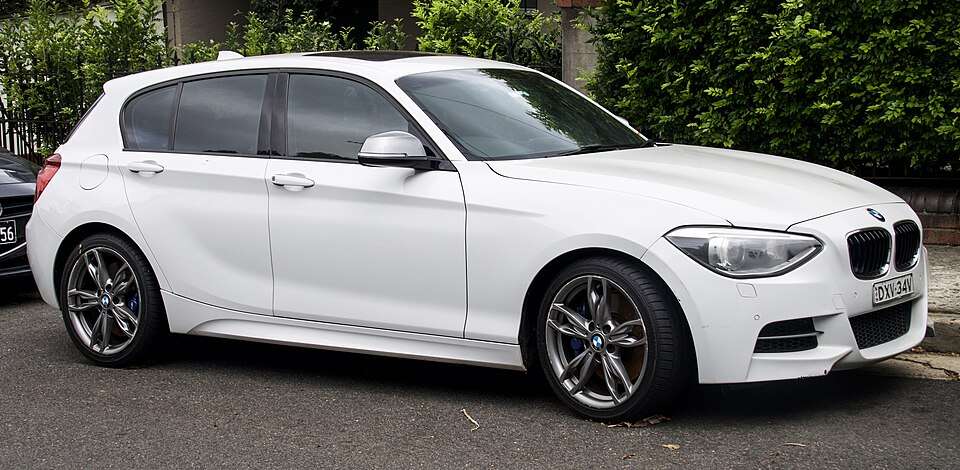
A turbocharged straight-six, rear-wheel drive and hatchback practicality make the original BMW M135i an unusually tempting used performance car. The buying risk is that an affordable asking price can conceal cooling faults, oil leaks, poor modifications and overdue chassis work. This guide concentrates on the 2012–2016 F20 five-door and F21 three-door with the N55 engine, explaining what to verify and what to keep in the maintenance budget.
Our buying verdict
We would choose a substantially standard UK rear-wheel-drive car with credible invoices, a clean cold and hot diagnostic assessment, a dry engine and healthy cooling system. The eight-speed automatic is an appealing daily choice; a good manual has its own attraction. A facelift can be worth seeking, but complete history and a specialist inspection matter more than registration year or a claimed remap figure.

Identify the six-cylinder M135i correctly
The F20/F21 M135i is a different proposition from the later four-cylinder M135i xDrive that reused the name. It also differs from the M140i, which followed with the B58 engine. Confirm the VIN, engine, body style, build date and transmission before comparing adverts or buying parts. An M Sport badge on an ordinary 1 Series does not make it an M135i.
BMW’s original July 2012 announcement describes a straight-six petrol engine producing 235kW/320hp and confirms both three- and five-door body styles, with an optional eight-speed automatic. BMW’s international material also discusses xDrive versions; do not assume every global specification applies to the UK rear-wheel-drive car on your shortlist. For an import, identify the market and driveline from its actual build record.
| Choice | What changes | Buying priority |
|---|---|---|
| F20 five-door | Convenient rear access and a discreet appearance. | Check rear-seat, door and boot wear against the mileage. |
| F21 three-door | Longer doors and different rear access. | Try parking-space access, seat release and window/seal operation. |
| Earlier styling | Often a lower entry price. | Do not trade maintenance evidence for cosmetic facelift conversions. |
| Facelift M135i | Revised appearance; still distinguish it from the later M140i. | Confirm build date and N55 identity rather than relying on the advert title. |
| Six-speed manual | More driver involvement; condition and availability vary. | Test clutch, flywheel and all gears cold and hot. |
| Eight-speed automatic | A strong match for daily use when healthy. | Check engagement, shift quality, leaks and credible service evidence. |
Do not assume every car has a mechanical limited-slip differential. Ask for proof of any retrofit and identify the unit and installer. Equally, adaptive dampers, upgraded brakes, navigation and heated seats need confirmation from the build list and a working demonstration. Their presence affects future repairs as well as desirability.
The N55 uses one twin-scroll turbocharger; the TwinPower Turbo branding does not mean two turbochargers. Hardware revisions and aftermarket changes affect parts selection, so use the VIN and actual component identity rather than a guessed changeover year. A well-maintained earlier car can be preferable to a later one with unresolved cooling and oil-leak problems.
M135i prices: read beyond the headline
A CarGurus search restricted to 2015 M135i listings was inspected on 4 November 2026. Examples included a three-door automatic with 105,300 miles advertised at £11,475; a five-door manual description with 70,000 miles at £12,475; a three-door manual description with 51,978 miles at £14,888; and a five-door automatic with 55,000 miles at £17,489. The same sponsored car appeared more than once, so duplicate display entries were not treated as additional market evidence.
These are dealer asking-price observations, not confirmed transactions or a national valuation. The page was location-influenced and some other results included delivery in the price. Recheck the live advertisements and verify each car’s actual transmission, condition, facelift status and history. A listing’s automated “deal” rating does not replace an inspection.
Compare like with like: body style, build specification, transmission, mileage, ownership, accident history and modifications. A heavily tuned car is not equivalent to a standard example because both carry an M135i badge. Nor does a low-mileage car automatically avoid age-related pump, seal, tyre and suspension work.
Make a first-year total rather than negotiating from the asking price alone. Price leaks, cooling work, transmission service, tyres and brakes, then allow a separate contingency. A seller’s recent service may mean only oil and filter: ask exactly which operations were carried out. A higher asking price can be justified by substantial recent work only when the invoices and inspection support it.

Body, underside and accident history
Match the VIN to the V5C and service paperwork, establish the seller’s right to sell, and check finance, theft and recorded damage. Cross-reference MOT mileages and repeated advisories. A clean history report cannot exclude unrecorded repairs or poor modifications. Ask about replacement panels and request invoices and photographs.
Inspect the car dry in daylight. Look for inconsistent panel gaps, overspray on seals, disturbed fasteners and different paint texture on wings, bumpers and rear quarters. Examine headlamp brackets, front-panel alignment and undertrays. The nose, sill extensions and jacking pads can suffer on lowered cars, while a cosmetically smart underside cover can conceal fluid leaks.
Have a lift inspection of sill seams, jacking areas, floor edges, subframes, suspension mounts, brake pipes and exhaust supports. Surface corrosion and structurally significant damage are different findings. Inspect the quality of any repairs and coatings. Look for crushed lifting points, impact marks and damaged fixings rather than assuming a relatively recent body is sound.
Check the boot floor and carpets for dampness, damaged seals and evidence of water entry. On a three-door, test the long doors, frameless-window movement, seat release and rear access. On a five-door, inspect rear door locks, window functions and seat-belt operation. Repaired collision damage needs an assessment of alignment and safety systems, not just paint quality.
N55 engine, cooling and transmission checks
Request a cold engine. Check oil and coolant condition before starting, inspect for leaks and verify warning-lamp self-tests. Listen for persistent abnormal metallic noise and watch for smoke or unstable idle. A recently washed engine can make leakage harder to trace; inspect again after a normal warm drive. Record fault codes before anyone clears them.
Oil leaks deserve priority around the filter housing, valve cover and lower engine. Establish their source rather than assuming every wet surface is a sump leak. Oil reaching the auxiliary belt or pulleys is a reason for immediate specialist attention: a contaminated belt and unresolved leak should not be left for the next service. Ask for the repair scope, associated belt inspection and any further investigation justified by damage.
The plastic charge pipe and its connections are useful inspection points on an N55. Cracks or failed connections can create a boost leak and loss of performance. Look for repaired flanges, loose clips and badly installed aftermarket pipes. A quality replacement may be sensible, but it does not prove that the turbo, engine or calibration is healthy. Investigate sudden power loss or a drivetrain warning with a scan and appropriate pressure testing.
The electric water pump, thermostat and associated cooling components need a proper assessment if warnings, fan behaviour or temperature symptoms are abnormal. Workshop guidance identifies pump failure as an N55 inspection concern, but no universal failure mileage should be assumed. Check invoices, pressure-test where warranted and diagnose stored cooling faults. Do not continue driving an overheating car; an apparently inexpensive pump fault can become serious engine damage.
Examine the valve-cover area and crankcase ventilation system where oil leaks, whistling, rough idle or abnormal consumption appear. Misfires can involve plugs, coils, fuel delivery, air leaks or other causes; fitting coils at random is not a diagnosis. Hot starting, idle stability and acceleration should be consistent. A specialist may recommend compression or leak-down tests if symptoms or modification history justify them.
The N55 is chain-driven. Do not apply a blanket diesel timing-chain replacement rule or buy a generic 1 Series belt kit for this engine. Persistent timing-related noise or faults still require investigation. Service evidence should identify the correct BMW oil approval, filter and dates, not just a reset in the dashboard. An absence of warning lights is not proof of mechanical health.
For the automatic, test engagement from park into reverse and drive, low-speed manoeuvring, ordinary upshifts and downshifts, and behaviour when fully warm. Delay, flaring revs, shudder or harsh shifts need diagnosis. Ask what fluid, sump/filter and procedure were used if serviced. Transmission maintenance and fault repair are different jobs: a fluid change is not a promised cure for a worn gearbox. Obtain advice for the exact unit and use.
On a manual, check clutch take-up, pedal return, slip and every gear cold and hot. Listen for flywheel-related noise and drivetrain vibration without assuming their cause. Inspect prop-shaft couplings, differential mountings and rear suspension where take-up produces knocks. Any fitted limited-slip differential needs documentary identification and an appropriate maintenance plan.
Check all tyres across their width and inspect inner wheel rims for cracking, bends and repairs. Four suitable tyres, sound bushes and accurate geometry are essential to predictable rear-wheel-drive behaviour. Ask whether tyres have been changed from the original type and assess the complete setup. Test adaptive suspension if fitted, inspect damper leaks and price replacements for that option rather than ordinary passive dampers.
Brake stability, pad wear, both disc faces and caliper condition need inspection. Identify the fitted brake package before quoting parts. A photograph of coloured calipers is not enough to select discs and pads. A lowered or remapped car also needs an assessment of clearance, installation quality, emissions hardware and declared insurance modifications.

iDrive, service history and electrical equipment
Check both keys, central locking, windows, mirrors, lights, parking assistance and all seat functions. Compare steering-wheel, bolster and pedal wear with the claimed mileage. On an F21, ensure the front seats release and return correctly and the windows seal properly. Investigate airbag or restraint warnings rather than treating them as a simple reset.
Let iDrive boot fully and test navigation, audio, Bluetooth and the controller. Read the vehicle’s service display alongside actual invoices. A digital history entry is useful, but it should be supported by a coherent record of the work and mileage. A service reset or retrospective entry cannot by itself establish which parts and fluids were fitted.
Test air conditioning under ordinary running conditions. Confirm the refrigerant from the vehicle label and equipment, not a guessed registration-year cutoff. A regas may not resolve a condenser, compressor or leak problem. Check carpets and boot areas for dampness before blaming intermittent electronic faults solely on a battery.
Battery replacement must use the correct specification and any registration/coding required by the car. A charging-system test is sensible where starting is weak or warnings recur. Price replacement lamps, infotainment repairs and adaptive equipment individually: used premium-car electronics can remain expensive even when the car itself is affordable.
Maintenance costs, alternators and N55 parts
The figures below are editorial planning allowances for parts only, unless a fitted service is explicitly identified. They are not live eBay quotes: brand, specification, availability, delivery and VAT treatment vary. Obtain a registration/VIN-matched written estimate before committing to a repair. Cheap search results can include incompatible parts, deposits or single components rather than a complete kit.
Affiliate disclosure: the parts searches below use our eBay affiliate campaign. We may earn a commission if you buy, at no additional cost to you. Search results are not a recommendation of every seller or product; verify fitment, maker, returns and warranty.
| Maintenance item | Parts allowance / search | What to check |
|---|---|---|
| Oil and filter materials | £65–£125 | Use the required BMW oil approval and correct filter. |
| Six spark plugs | £55–£115 | Confirm type and any calibration requirements. |
| Ignition coils, set | £130–£260 | Diagnose misfires before replacing a complete set. |
| Alternator | £200–£450 | Match output, connector and exchange terms. |
| Auxiliary belt/tensioner | £90–£190 | Resolve oil contamination and inspect associated components. |
| Electric water pump/thermostat | £330–£600 | Specify reputable components; bolts, coolant and labour add to the bill. |
| Oil-filter housing seals | £15–£45 | Low parts cost does not equal a low fitted bill; identify all affected seals. |
| Valve cover / ventilation assembly | £180–£380 | Establish whether a gasket alone or complete cover is appropriate. |
| Charge pipe | £90–£220 | Match body/engine and installation; check clips and seals. |
| Front discs, pads and sensor | £220–£450 | Match the exact brake package and axle-set contents. |
| Automatic service kit | £180–£320 | Exact transmission, approved fluid, correct sump and procedure required. |
Observed fitted-price context, 4 November 2026: The Mini & BMW Specialist’s M135i page listed an oil/filter service at £220, a package adding air and cabin filters plus a vehicle check at £349.99, and a petrol package adding plugs at £500. It stated that parts, labour and VAT were included. Confirm that the offer covers your F20/F21 N55 and its specification: the page also contains generic 1 Series wording, so we have not used its generic engine or diesel-maintenance text as technical guidance.
The supplier list and these fitted packages serve different purposes. A pump kit does not include diagnosis, coolant, damaged hoses or labour; a brake kit does not resolve seized calipers. Request a written complete-job estimate. Plan servicing from BMW’s schedule, the vehicle’s condition-based service requirements and its actual use, retaining evidence for each operation. Many enthusiasts choose more frequent oil changes for hard use; agree a tailored plan with a specialist rather than presenting a personal preference as a factory interval.
Hidden M135i ownership costs
| Often missed | Why it matters |
|---|---|
| Oil-leak access and associated damage | An inexpensive seal can require substantial labour; contamination of belts or nearby parts changes the repair scope. |
| Cooling-system catch-up | Pump, thermostat, coolant, hoses and diagnosis may arrive together. Investigate any overheating history before purchase. |
| Transmission and driveline | A service kit is separate from gearbox repairs. Clutch/flywheel, couplings and differential work need complete fitted quotes. |
| Tyres and geometry | Correct tyres in the fitted sizes plus alignment can be a material first-year expense, particularly after suspension changes. |
| Adaptive and electronic options | Dampers, lamps, keys, iDrive and sensors may cost much more than basic consumables. Test every fitted option. |
| Modifications, tax and insurance | Obtain current registration-specific quotes and disclose software as well as hardware. Retain contingency after known repairs. |
Do not spend the repair reserve on a cosmetic conversion or tuning package before establishing mechanical condition. The best first improvement may be correctly matched tyres, alignment and overdue fluids. If a plausible engine, cooling or transmission repair would leave the car unusable for financial reasons, compare a better inspected example or a less expensive ownership proposition.

M135i F20/F21 viewing checklist
- Confirm VIN, N55 engine, body style, build specification and transmission; exclude later four-cylinder M135i and M140i listings from comparisons.
- Read invoices alongside iDrive and MOT records, check finance/damage history, and ask BMW to confirm outstanding VIN-specific recalls.
- View cold and inspect oil leaks, coolant, auxiliary belt, charge-pipe joints, wiring and evidence of recent cleaning.
- Scan faults and assess cold start, hot restart, warm idle and normal acceleration; diagnose warnings before purchase.
- Check cooling-system operation and invoices; do not accept unexplained overheating or coolant loss.
- Test automatic engagement/shifts cold and hot or the manual clutch and gears; inspect driveline knocks and leaks.
- Lift the car to inspect structure, suspension, dampers, wheels, inner tyre shoulders, brakes and emissions equipment.
- Test all options and both keys, document modifications, confirm insurance and obtain a complete first-year repair estimate.
BMW M135i buying questions
Is the F20 M135i the same as the later M135i xDrive?
No. This guide covers the N55 six-cylinder F20/F21. The later car reused the M135i name with a different engine and platform. Identify the VIN and generation before using specifications or ordering parts.
Is TwinPower Turbo a twin-turbo engine?
The N55 uses one twin-scroll turbocharger. The branding does not mean two separate turbos. Verify hardware identity where parts or calibration have changed.
Manual or eight-speed automatic?
Both can suit the car. Choose based on your use and an inspection: manual clutch/flywheel costs and automatic shift quality, leaks and service evidence should all enter the budget.
Does it need a routine timing-belt kit?
The N55 is chain-driven. Do not apply generic 1 Series diesel advice or buy an unrelated belt kit. Abnormal timing noise or faults still need specialist diagnosis.
Can a remapped M135i be a sensible buy?
Potentially, with identifiable hardware/software, credible maintenance, clean diagnostics and insurer acceptance. A claimed power figure or a return to standard visible parts is not proof of engine health.
Sources, observations and limits
Researched 4 November 2026. No car was physically inspected or road-tested for this article. Market figures are advertised prices from a restricted search and exclude duplicated display entries. Parts figures are editorial planning allowances; the workshop packages are separately identified observed offers. Fault checks are screening questions, not a measured failure-rate study.
- BMW Group: original July 2012 three-door 1 Series announcement — primary evidence for six-cylinder M135i identity, original output, body styles and transmission context; international availability is not assumed to be UK specification.
- Carlsbad Auto Service: N55 workshop guidance — charge-pipe, cooling and valve-cover inspection concerns. This is US workshop guidance, not a UK frequency or cost survey.
- The Mini & BMW Specialist: M135i servicing — observed named packages and VAT-inclusive fitted prices; applicability should be confirmed for the actual car.
- CarGurus: 2015 M135i advertisements — dated asking-price examples, not achieved values.
- GOV.UK: MOT history and vehicle recalls — official checks alongside a BMW VIN enquiry.
Licensed photographs depict examples rather than the cars sampled in the market section. Their sources and reuse terms appear in the captions. Overseas equipment may differ from UK cars; no photographer endorses this guide.