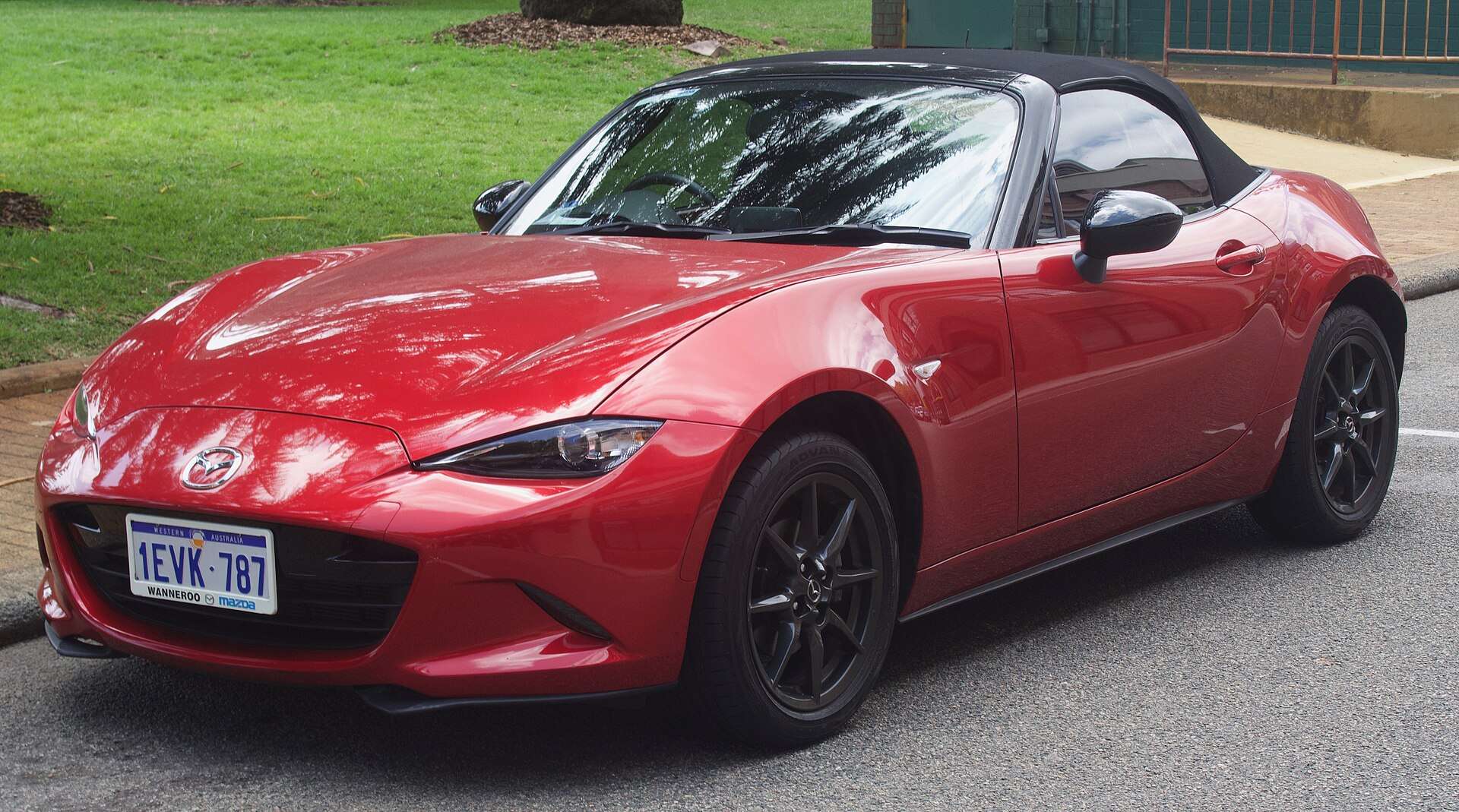
The fourth-generation MX-5 brings compact dimensions, a light roadster body and naturally aspirated engines to a modern ownership package. It is also old enough for neglected servicing, corrosion, crash repairs and modifications to matter. The right purchase depends on choosing the engine, gearbox and roof which suit you, then inspecting the actual car. This guide covers the ND-generation soft-top and RF, including the important distinction between the original 2.0-litre engine and the later 184PS version.
Our buying verdict
Choose the best maintained, structurally sound ND you can inspect, with a dry cabin, an undamaged roof and a gearbox which behaves properly cold and hot. A 1.5 can be an excellent road-car choice; a 2.0 is not automatically better value if its history is weak. Confirm original equipment by build and market, assess modifications honestly, and leave money for tyres, servicing and any diagnosed work.

Versions and specifications
Mazda’s UK 2023 model announcement confirms 1.5-litre 132PS and 2.0-litre 184PS engines in both Roadster and RF bodies for that model year. It also explains that the 184PS 2.0 introduced in September 2018 has substantial internal and breathing changes compared with the launch 160PS 2.0. It is therefore misleading to describe every 2.0 ND as the same engine tune.
| Choice | Why it appeals | What to verify |
|---|---|---|
| 1.5-litre soft-top | A relatively light, responsive road-car package | Exact output and trim for the build; service history and condition |
| Original 160PS 2.0 | More capacity and useful equipment on some versions | Original build, gearbox history and which chassis features were fitted |
| Later 184PS 2.0 | Higher-revving revised engine specification | Actual engine/build identity rather than registration year alone |
| RF retractable fastback | A different roof arrangement and appearance | Complete roof operation, alignment, seals and mechanism condition |
| Automatic RF | A convenient alternative for appropriate buyers | Availability and specification for the particular market/year; transmission service and operation |
The 2023 release describes a limited-slip differential, Bilstein dampers and front strut brace on that year’s manual 2.0 cars, and Brembo front calipers on Homura manuals. Do not extend those statements to every earlier ND, every automatic or every overseas car. Check the original build and physical components before paying a premium for an equipment claim.
Soft-top and RF appeal to different buyers. Try both if roof feel, visibility and open-air experience are important. An RF is not simply a fabric-roof car with a detachable hardtop, and roof parts are not interchangeable. On either body, a clean demonstration of the mechanism is only the beginning: inspect sealing, glass and the surrounding bodywork.
Special editions can be attractive, but authenticity and retained original equipment need documentation. Wheels, badges and seat changes can be added later. For a modified example, decide whether you actually want the suspension, exhaust or power conversion, and price a return to standard if that is your plan.
Prices and market evidence
Directly checked Car & Classic advertisements on 4 November 2026 included a 2016 1.5 manual ND at £13,995 with 13,500 miles and a 2019 2.0 manual ND at £21,995 with 36,619 miles. A separate BBR-turbo 2.0 Sport Nav was advertised at £14,995 with 65,628 miles. The converted car is not a like-for-like valuation reference for a standard example.
These are selected asking prices, not completed sales or a representative national range. The limited sample does not establish a universal premium for RF, a particular gearbox or a later engine. Verify body style and specification on the individual advertisement and car before comparing prices.
Calculate asking price plus immediately due work. A low-mileage car can still have old tyres, overdue fluids, brake corrosion and storage damage. A higher-mileage example with good records may be easier to assess than an unusually cheap car with unexplained gearbox or roof symptoms. Do not equate a high asking price with a completed mechanical inspection.
For expensive editions or modified cars, commission an independent specialist inspection. Check finance, recorded damage, MOT history and the original build before travelling. Treat seller descriptions such as “never tracked” as claims to discuss, not as proof of mechanical health.

Rust, bodywork and roof checks
Match VIN and registration details and compare the service record with MOT mileage progression. Examine the pattern of corrosion, tyre, spring and brake advisories rather than looking only at the latest pass. A history check can identify recorded problems; it cannot rule out unrecorded accident repairs.
Inspect the underside on a lift, including sills, jacking points, floor seams, subframes, mounting areas, brake pipes and fasteners. Establish whether corrosion is superficial, affects replaceable parts or involves the shell. An ND is newer than an NA or NB, but that is not a reason to waive an underside inspection or accept poor previous protection work.
Look for panel mismatch, overspray, disturbed fasteners and repaired seams. Inspect the front and rear crash areas as access permits, plus boot floor and inner panels. A repainted bumper can be ordinary cosmetic history; irregular structural work or a car which will not align correctly is a different concern.
On a fabric roof, inspect the material, stitching, rear glass, latch and folding path. Look for rubbing marks and evidence that the roof has contacted surrounding trim or bodywork. Confirm that it lowers and raises normally without forcing it. Check the cabin and boot for moisture, especially after rain or washing, and ask how the drains have been maintained.
Drainage problems should be diagnosed and cleared by an appropriate method. Do not force a rigid wire through an unfamiliar drain or assume that a dry carpet surface rules out trapped water beneath it. Damp and electrical faults need a joined-up explanation before purchase.
On an RF, operate a full cycle in suitable conditions, observing panels, glass, latch behaviour and warning messages. Check that the system completes consistently and sits correctly closed. A failed sensor, adjustment issue and damaged mechanism have different costs. Obtain an actual diagnosis rather than pricing every fault as a simple reset.
Engine, gearbox and chassis checks
Engine choice and maintenance evidence
Confirm whether the car is a 1.5, original 160PS 2.0 or later revised 184PS 2.0. Mazda describes lighter pistons and connecting rods plus changes to camshafts, exhaust valves, injection and intake for the later 2.0. Those details explain why identification matters; they do not prove that one individual engine is healthier than another.
Request a cold start and observe warning lamps, idle, exhaust and persistent abnormal noise. Repeat fully warm. Check oil level correctly and read invoices for the appropriate specification, date and mileage. Significant oil use, coolant loss, overheating or an unexplained pressure warning warrants diagnosis before any commitment.
The ND engines use timing chains rather than a routine timing-belt package. This does not make a noise or timing fault something to ignore. Ask a specialist to identify the cause rather than ordering a chain kit on the strength of an online description. Do not apply an older MX-5 cambelt schedule to the ND.
Inspect the radiator, hoses, coolant condition, fans and evidence of leakage. Never open a hot pressurised cooling system. Check the charging system, battery and auxiliary drive separately; a flat battery does not by itself establish a failed alternator. Starting trouble also requires diagnosis rather than a speculative parts purchase.
Misfire, modifications and road-test behaviour
A warm road test should show consistent power without repeated misfire, hesitation or warning lamps. Have stored and pending faults read and interpret them alongside the symptoms. Plugs, coils, fuel issues, air leaks and mechanical condition can overlap. A seller’s promise that a warning is “just a sensor” needs evidence.
For intake, exhaust or ECU changes, ask who supplied the calibration and which hardware and fuel it requires. An old power graph does not certify current condition. On turbo or supercharger conversions, establish engine build, cooling, fuelling, transmission suitability, legal road equipment and insurance declaration.
This guide does not claim a universally safe power level or require a particular aftermarket oil cooler for every road car. Maintenance and operating requirements depend on usage and the actual installation. Track use calls for a credible specialist plan, not a list of fashionable parts.
Manual gearbox: inspect cold and hot
Gearbox condition is an important ND viewing check, particularly where there has been hard use, a replacement unit or a performance conversion. Try every gear gently from cold and again fully warm. Persistent crunching, jumping out of gear, abnormal whine or a reluctance to engage should not be dismissed as a generic roadster characteristic.
Ask for the exact history of any repair or replacement: date, mileage, unit identity, supplier, fitted components and warranty. “Updated gearbox” is incomplete without evidence of what was installed. Do not infer that a registration date guarantees a particular revision, nor that a later unit is immune to every failure.
Walter Motorsports offers purpose-built ND six-speed units, demonstrating that a specialist rebuilding route exists. Its site is a US motorsport product source, not a UK fitted-price tariff or an independent reliability study, and its products carry off-road-use wording. A road-car buyer needs an appropriate repair recommendation and warranty for the actual use.
The owner discussion checked during research contains uncertain memories of rebuild companies and speculative price comparisons. We have not turned those into current repair costs or a failure rate. This distinction matters: repeating forum estimates as a guaranteed budget can leave a buyer substantially exposed.
Clutch, automatic and differential
Assess clutch engagement, slip under ordinary load, hydraulics, vibration and noises which change with pedal position. Distinguish a release or mount issue from internal gearbox damage through diagnosis. A high bite point alone does not measure remaining clutch life. Quote the complete job, including any required flywheel, seals, fasteners and fluid.
On an automatic, test reverse, gentle manoeuvring and normal shifts cold and hot. Establish exact gearbox identity and correct servicing. Do not assume that an automatic follows the manual unit’s fluid requirements or that an engine-service stamp covers transmission work.
Inspect differential and gearbox leaks, driveshaft boots, mounts and road-speed noises. Verify limited-slip specification through the original build and specialist inspection, not an aggressive traction demonstration. Matching suitable tyres and proper geometry are essential to making the car behave as intended.
Brakes, suspension and wheel condition
Check dampers, springs, bushes, joints, steering and the inner tyre shoulders. Lowering springs and coilovers need a fitting and alignment record, sensible clearance and a road test over representative surfaces. A harsh or wandering car is not automatically behaving normally because it is small and sporty.
Inspect discs on both faces, pad wear, calipers, hoses, brake fluid and parking-brake operation. Some specifications have different front brakes, so verify the installed system before ordering consumables. A supplier page for ordinary ND discs is not proof of compatibility with a Brembo-equipped or aftermarket installation.
Examine wheels inside and out for cracks, buckles or poor repairs. A well presented outer rim can hide a damaged inner barrel. Price suitable tyres, alignment and any worn suspension together; replacing one item may not resolve the underlying geometry problem.

Interior and electrical equipment
Test both keys, locks, windows, mirrors, lighting, wipers, infotainment and climate control. Check all relevant warning lamps from ignition-on through starting. Investigate disabled lamps and unexplained safety-system changes, particularly where seats or steering parts have been replaced.
Inspect seat bolsters, adjustment, belts, carpets and boot trim. Damp should be traced to its cause, not hidden with a new mat or a deodoriser. Check the quality of aftermarket stereo, camera, alarm or charger wiring and whether any fitted electronics operate consistently.
Try the driving position with the roof up and down. Taller drivers should check clearance and legroom in the actual seats; a different trim or replacement seat can change the experience. Assess visibility, boot access, cabin storage and noise on a realistic journey rather than assuming that every MX-5 suits every owner.
Roof faults and electrical complaints can be connected through water ingress or poor previous repairs. Ask for one coherent diagnosis where several symptoms coexist. Small convenience faults may be inexpensive individually, but repeated diagnostic visits and scarce trim can erode the apparent saving on a cheaper car.
Maintenance costs and useful parts
Affiliate disclosure: The eBay links below use our campaign 5339238906. We may earn a commission on qualifying purchases. They open vehicle-specific searches, not vetted products or guaranteed-fitment recommendations. Check VIN, engine, build date, component numbers, seller terms and the workshop’s requirements before ordering.
MX5parts’ directly checked ND/RF service kit was £111.54 including £18.59 VAT, listing genuine oil and air filters plus five litres of Mazda Skyactiv 0W-20 oil. This is a parts package, not a statement of the engine’s fill quantity or a fitted service. Verify the exact vehicle requirements before using it; related searches are ND service kits on eBay.
MX5 City’s annual-service page describes an all-model service from £225 including VAT but also displays £282 including VAT. Because those figures conflict, obtain a current ND-specific written quote rather than treating either as a guaranteed charge. Its generic oil and older-model plug wording should likewise not override the exact ND schedule or oil approval. Ask what includes inspection versus actual fluid replacement and whether the Mazda service record will be updated.
| Item | What to establish | Compare availability |
|---|---|---|
| Engine service | Confirm correct oil specification, filters and date/mileage record | Engine service on eBay |
| Spark plugs | Use the exact engine application and manufacturer schedule | Spark plugs on eBay |
| Alternator | Test battery, charging, connections and auxiliary belt first | Alternator on eBay |
| Timing-chain components | Only after diagnosis; not an older-model cambelt job | Timing-chain components on eBay |
| Cooling parts | Identify the actual leak or thermostat/fan fault | Cooling parts on eBay |
| Clutch and release system | Quote the complete diagnosed repair and applicable hydraulics | Clutch and release system on eBay |
| Brakes | Match standard, Brembo or aftermarket application | Brakes on eBay |
| Suspension and geometry | Diagnose worn joints, dampers and seized hardware | Suspension and geometry on eBay |
| Roof and drainage parts | Identify soft-top versus RF and diagnose the fault before ordering | Roof and drainage parts on eBay |
Obtain written estimates which separate diagnosis, parts, labour, fluids, tax and delivery. A parts price is not a fitted repair bill. Agree how additional work discovered during dismantling will be authorised, and retain invoices showing date, mileage and the actual specification used.
At purchase, prioritise structure, tyres, brakes, leaks and overdue maintenance before cosmetic or performance upgrades. Where servicing is unproven, budget for a baseline inspection and the work it identifies. Confirm manufacturer requirements for the exact vehicle rather than relying on a timetable borrowed from a related model.

Hidden ownership costs
The asking price is only the beginning. Include these less obvious expenses when deciding which example offers value.
- Roof diagnosis: a seal, drain, sensor and damaged mechanism are different jobs. Obtain a written diagnosis before pricing the fault.
- Gearbox uncertainty: a used unit, standard rebuild and motorsport transmission have different scope, warranty and suitability. Do not mix their advertised prices.
- Wheel and tyre work: inner-barrel damage, unsuitable tyres and alignment can arrive together.
- Corrosion and fasteners: seemingly routine suspension work can expand where hardware is seized or mounting areas are damaged.
- Special equipment: Brembo brakes, edition trim and roof components need exact-fit parts rather than generic ND price assumptions.
- Undoing modifications: exhaust, suspension, seats and forced-induction changes can be expensive to reverse for normal road use.
Get an insurance quote for the actual specification before committing, including modifications. Check current vehicle tax against the exact registration, and allow for inspection, recovery or collection, secure storage and the first year’s due work. Long periods of storage do not stop tyres, fluids, seals or corrosion ageing.
Viewing checklist: from first enquiry to decision
Before travelling, request the registration and VIN, service invoices, MOT chronology, modification list and confirmation that a cold start and independent inspection are welcome.
- Verify VIN, engine output, roof type, transmission and original equipment; confirm recall status with Mazda.
- Inspect cold and hot running, warning lamps, fluids and diagnostic faults, with particular attention to unexplained noise or consumption.
- Use a lift to inspect corrosion, jacking damage, subframes, pipes, suspension pickups and accident repairs.
- Test the full roof operation and inspect drains, seals, rubbing marks, carpets and boot for water.
- Try every gear cold and hot or assess automatic engagement and shifts; obtain the actual history of any replacement transmission.
- Inspect brakes, tyres, wheel barrels, steering and alignment, including the fitment of any non-standard suspension.
- Test keys and cabin equipment, confirm insurance for modifications, and obtain itemised quotes for due work before agreeing a price.
Proceed when identity, condition and records agree. Investigate unexplained noises, warning lamps, leaks and gaps before paying. Walk away from concealed identity, serious unresolved structural concerns or refusal of an appropriate inspection. A discount does not define the upper limit of an unknown repair.
Buying questions answered
Is the 184PS 2.0 just a remapped 160PS engine?
No. Mazda describes internal, valvetrain, injection and intake changes introduced with the September 2018 update. Confirm build and engine identity; registration year alone is insufficient.
Is a 1.5 a sensible purchase?
Yes, if its performance, specification and condition suit your use. A sound, well maintained 1.5 can be a better purchase than a neglected 2.0. Try the actual car rather than deciding from displacement alone.
Are all ND gearboxes certain to fail?
No failure-rate claim is supported by the sources used here. Inspect cold and hot operation and verify any repair or replacement. Abnormal noise, crunching or jumping out of gear needs diagnosis regardless of year.
Does the ND need a timing-belt change?
Its engine timing uses a chain. Do not apply an NA/NB cambelt schedule, but investigate timing faults or abnormal noise rather than assuming chains last indefinitely.
How much is routine maintenance?
A checked oil-and-filter parts package was £111.54 including VAT, but labour and other due work are additional. The service page checked had conflicting prices, so a current vehicle-specific fitted quote is necessary.
Sources and research method
Researched on 4 November 2026 using the manufacturer, workshop, supplier and market pages listed below. Manufacturer material establishes specification; workshop accounts inform inspection priorities; supplier listings show dated costs and availability. Advertised prices are asking prices, not sold values or independent condition reports.
- Mazda UK: 2023 MX-5 model announcement — Primary engine-update and model-year equipment evidence; not extended to every older car.
- MX5parts: ND/RF oil and filter service kit — £111.54 including-VAT package and contents checked 4 November 2026; not an engine fill instruction or fitted price.
- MX5 City: annual service — Scope, record-update statement and conflicting displayed prices; a fresh ND-specific quote is advised.
- Walter Motorsports: ND six-speed transmission — Primary evidence of a specialist rebuild route; US motorsport product, not UK repair pricing or failure-rate data.
- Car & Classic: MX-5 ND advertisements — Selected dated asking examples; modified turbo car separated from standard comparisons.
Also use the GOV.UK used-car checks and MOT history service. Verify current recall completion with the manufacturer against the VIN. These checks cannot certify the condition of an individual vehicle.
This is a research-based buying guide, not a report of a first-hand test of the cars advertised. Prices, parts and availability change; confirm quotes and fitment. An independent inspection should resolve vehicle-specific concerns before purchase.