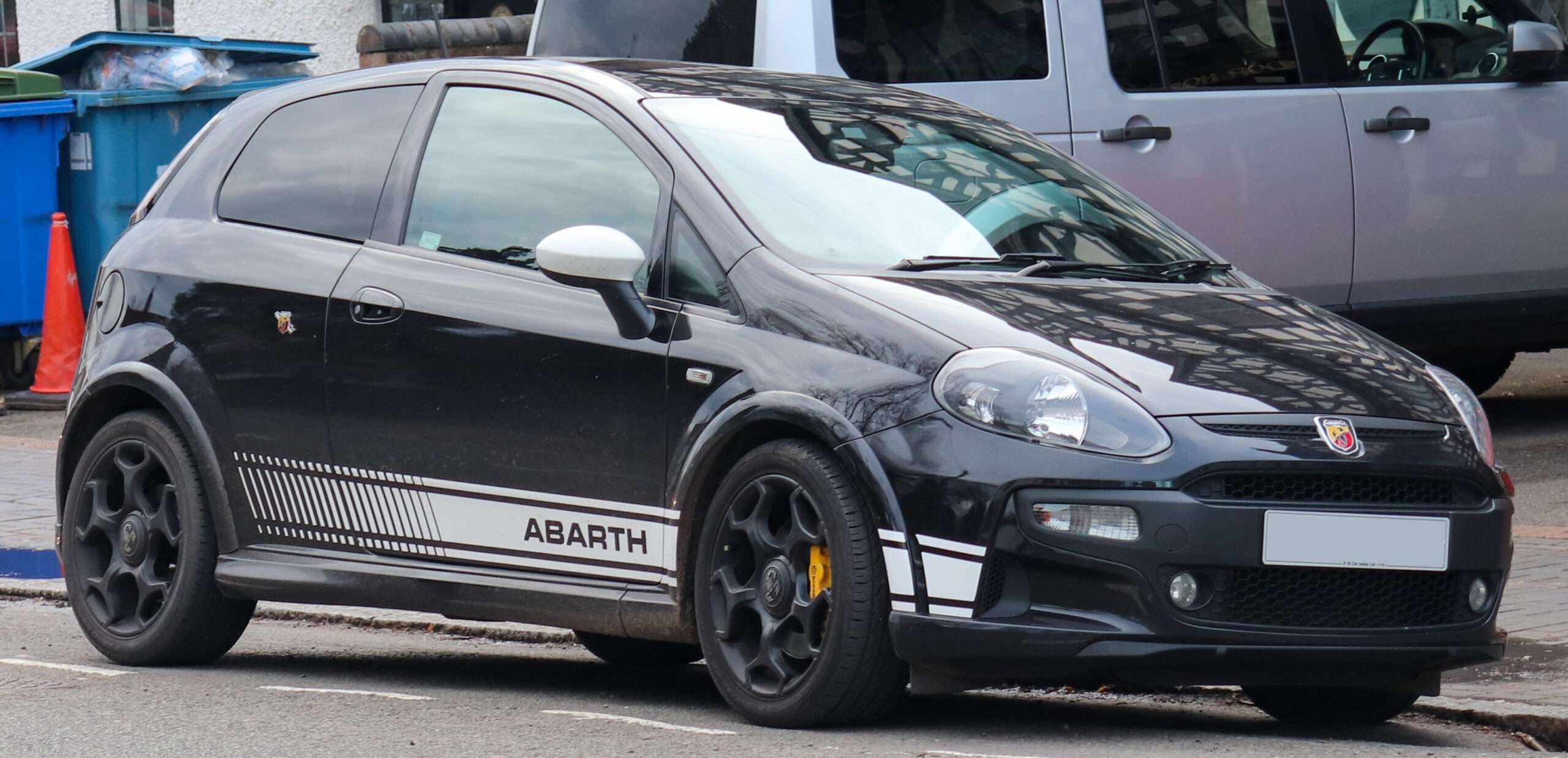
UK buying guide · Abarth Punto Evo, Supersport and Scorpione
The Abarth Punto Evo replaced the Grande Punto Abarth in Britain during 2010, introducing Fiat’s MultiAir technology, revised styling and a more elaborate driving-mode system. It remained the larger, more practical alternative to the Abarth 500, but sales were modest and surviving UK cars are now genuinely uncommon. That rarity makes history, originality and the availability of model-specific parts more important than a headline power figure.
Our buying verdict
The best purchase is a structurally sound manual car with proven belt servicing, consistent MultiAir operation and no unexplained gearbox or steering symptoms. A genuine Esseesse, Supersport or Scorpione can justify a premium when its identity and equipment are supported by documents. Avoid paying collector money for badges, wheels and a remap assembled later.
UK range and specifications
The Punto Evo Abarth arrived with a 1,368cc turbocharged MultiAir engine producing 165 bhp and 250 Nm in Sport mode, driving the front wheels through a six-speed manual gearbox. Abarth’s TTC electronic system and revised suspension aimed to control traction without making the car unusable every day.
The Esseesse upgrade lifted output to approximately 180 bhp and brought additional performance hardware. Later Supersport and limited Scorpione versions developed the theme with distinctive trim, wheels and equipment. Specification changed over the car’s short life, so confirm the exact build rather than applying one brochure to every car.
| Version | Character | What to verify |
|---|---|---|
| Punto Evo Abarth | 165 bhp core UK model | MultiAir health, belt history and standard equipment |
| Esseesse | Dealer-supported performance upgrade | Conversion documents and genuine components |
| Supersport | Later 180 bhp derivative | Build specification, wheels, brakes and interior |
| Scorpione | Scarce limited edition | Identity, numbered details and originality |
Identity, history and modifications
Match the VIN, registration record and MOT mileage before inspecting performance parts. Ask for the original handbook pack, service invoices and any Abarth conversion paperwork. Limited-edition graphics and badges are easily reproduced, while missing original trim can be difficult to replace.
Modified examples are common. Obtain a written list covering software, turbo, intake, exhaust, intercooler, suspension and brakes. Confirm the tuner, required fuel and insurance acceptance. A dyno printout records one test; it does not establish reliability, road legality or the condition of the engine today.
MultiAir engine and turbo checks
Insist on a cold start. The engine should settle cleanly without persistent misfire, smoke or warning lights. MultiAir operation depends heavily on correct oil specification, level and service discipline. Gaps in oil-change history, incorrect lubricant or repeated running faults require specialist assessment rather than a quick parts guess.
During the drive, power should build consistently in both Normal and Sport modes. Hesitation, rough running or reduced boost can arise from ignition, boost plumbing, sensors, fuel delivery, MultiAir control or calibration. Read stored and pending fault codes and examine live data. Do not clear faults before diagnosis.
Inspect the turbo oil and coolant connections, intercooler hoses and intake system for leaks or improvised repairs. A loud exhaust or induction kit can disguise mechanical noises. Confirm that any replacement turbo matches the calibration and supporting hardware.
Timing belt and cooling
The 1.4-litre engine uses a timing belt. Require an itemised invoice stating date, mileage and components replaced. Confirm the applicable schedule from the handbook or a specialist using the VIN. Where proof is absent, include belt, tensioner and water-pump work in the immediate budget.
Check the radiator, expansion tank, hoses and thermostat behaviour from cold. Watch the temperature throughout the road test, confirm steady cabin heat and look again for leaks afterwards. Repeated coolant loss, overheating or contamination needs pressure testing and proper diagnosis.
Gearbox, clutch and driveline
Test all six gears cold and hot. Pay particular attention to bearing noise, difficult selection, a gear that disengages and vibration under load. Scarcity of replacement drivetrain components can turn a minor buying mistake into extended downtime, so obtain a specialist diagnosis before purchase.
Check clutch take-up, slip and hydraulic operation. Clicking on lock, split boots or vibration under acceleration can point to driveshaft or CV-joint trouble. Confirm part numbers and availability before assuming ordinary Punto components are identical.
Steering, suspension and brakes
The electric steering should operate consistently in both modes without warning messages. Check for knocks, uneven assistance and an off-centre wheel. Tyres, alignment, suspension wear and accident damage must be considered together.
Inspect dampers, springs, top mounts, bushes and links. Large wheels are vulnerable to pothole damage; examine inner rims and tyre sidewalls as carefully as the visible faces. Uneven wear may reveal poor alignment or worn components.
Identify the actual brake package fitted. Examine discs on both faces, pad wear, calipers, hoses and fluid history. Performance variants can use expensive model-specific hardware. A painted caliper and drilled disc do not prove original specification.
Bodywork and corrosion
Inspect sills, jacking seams, floor, rear axle and suspension mounts on a lift. Look for crushed lifting points, corrosion concealed by coating and evidence of previous repairs. Check the low front bumper and side skirts for damage and secure mounting.
Compare panel gaps, paint depth and lamp dates. Inspect the boot floor and front structure for repair evidence. A straight-looking exterior does not exclude damage beneath trim, and a clean history check cannot grade repair quality.
Interior and electrics
Test climate control, Blue&Me, steering-wheel controls, windows, mirrors, central locking, lights, parking equipment and every dashboard display. Check battery condition and charging voltage before diagnosing intermittent faults. Aftermarket alarms, stereos and gauges deserve a careful wiring inspection.
Examine seats, bolsters, steering wheel and pedals for wear consistent with the mileage. Confirm that replacement seats and belts are secure and correctly declared. Check carpets and the spare-wheel well for water entry.
Parts and ownership costs
Mechanical components may share origins with other Fiat-group cars, but Punto Evo Abarth trim, body panels, wheels, drivetrain parts and limited-edition details are increasingly scarce. Before buying an incomplete example, establish that every missing part can actually be sourced.
Price an immediate service, tyres, belt work, brakes and suspension separately. Obtain insurance quotations for the exact version and modifications. The cheapest purchase can be the most expensive car once rare parts and specialist labour are included.
Viewing checklist
- Confirm VIN, MOT history, service invoices and exact derivative.
- Verify Esseesse or limited-edition identity through paperwork and hardware.
- Inspect the structure and lifting points on a ramp.
- Start cold and check MultiAir operation, warning lights, smoke and fluids.
- Scan relevant systems before and after the drive.
- Test boost, cooling, clutch and all six gears cold and hot.
- Inspect wheels, tyres, suspension and the precise brake specification.
- Test every electrical function and check for damp.
- Confirm parts availability and price all overdue work.
Frequently asked questions
Is the Punto Evo the same as the Grande Punto Abarth?
No. They share a basic platform and 1.4-litre turbo heritage, but the Evo introduced MultiAir, revised styling, different outputs and updated equipment. Buy parts and service information by VIN.
Is the Supersport a genuine factory model?
Yes, but individual cars still need their original specification verified. Later modification and replacement trim can blur the distinction.
What is the biggest buying risk?
A car with unclear identity, incomplete servicing and unresolved gearbox or MultiAir symptoms. Rarity makes accurate diagnosis and parts sourcing unusually important.
Sources and research method
- Stellantis Media: Abarth Punto Evo UK press pack
- GOV.UK MOT history service
- GOV.UK vehicle recall checker
Manufacturer figures establish period specification, not the condition of a particular car. Verify details against the VIN and arrange an independent specialist inspection.