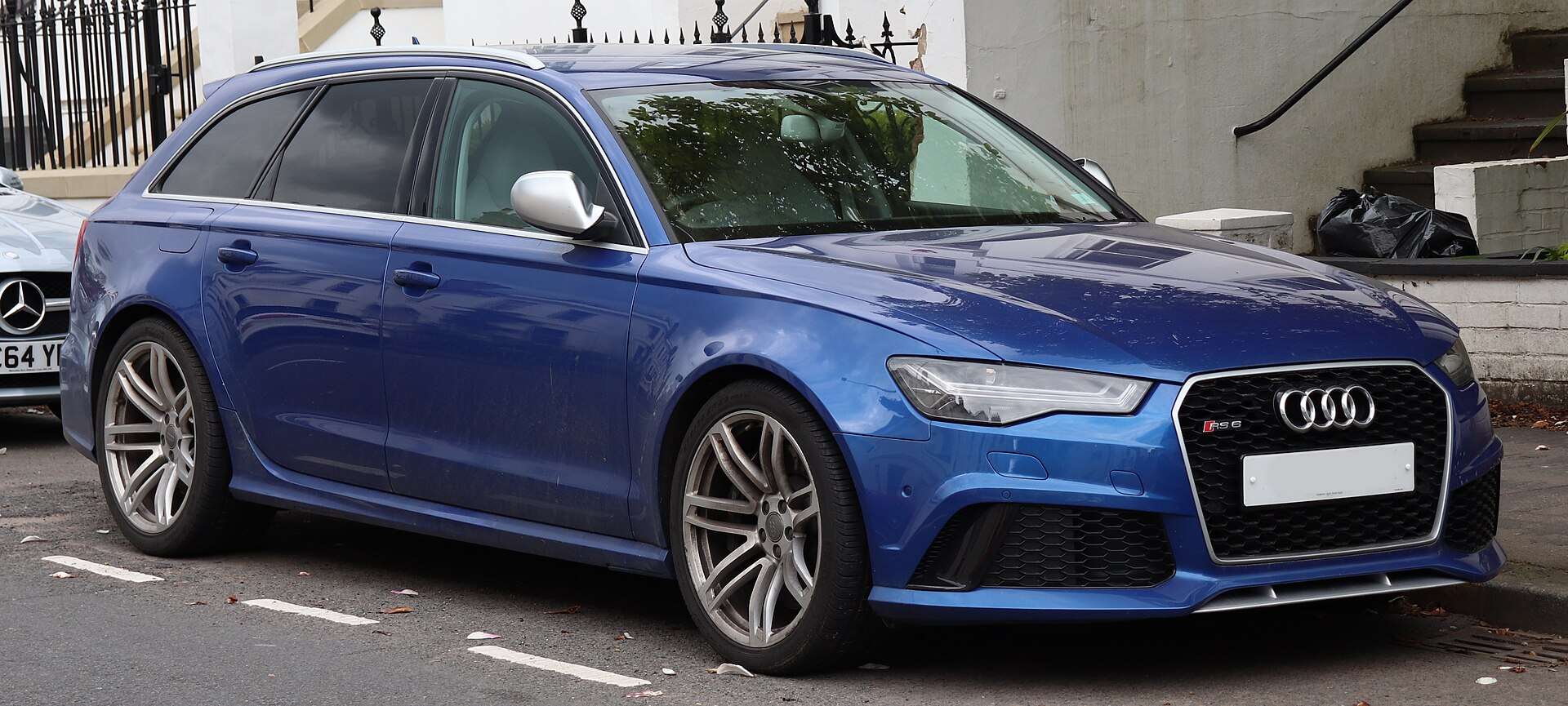
The RS6 C7 is appealing because it makes a super-estate feel ordinary enough to use every day. Its 4.0-litre twin-turbo V8, quattro drivetrain and luggage space can cover several roles in one car. The buying challenge is that an ageing example retains the complexity and component costs of an expensive performance model, even when its asking price has fallen a long way.
Our verdict: start with a well-maintained standard-output car and compare a Performance only when you actively want its factory specification. Put documented servicing, turbo-related history, inspected brakes and suspension ahead of a tune or cosmetic package. Pay for an Audi RS-specialist inspection and keep a reserve after purchase. A recent oil change and a fast demonstration drive are insufficient evidence for this car.
Featured photograph by Vauxford, Wikimedia Commons · CC BY-SA 4.0.
560 PS, facelift or 605 PS Performance?
Establish the VIN, build date, original market and factory specification before comparing adverts. The C7’s standard output is 560 PS, while the factory Performance is 605 PS. A facelift is not automatically a Performance, and a remapped standard car is not the same product as the factory version. Badges and software claims should be supported by build information and invoices.
Audi’s 2015 Performance company press release, archived by Ultimatecarpage, describes the 445 kW/605 PS V8, eight-speed tiptronic, permanent quattro and an optional rear sport differential. It specifies adaptive air suspension with DRC as an alternative, plus optional ceramic brakes. This is period manufacturer material, not proof of the equipment fitted to a particular UK used car.
Standard output: a sensible first comparison
A standard-output C7 deserves consideration if you want the estate’s ability and V8 character without paying for the Performance badge. The useful saving is one that remains available for condition and maintenance. A lower asking price is not a saving if it immediately disappears into brakes, tyres and an unresolved suspension fault.
Compare actual seats, wheel size, steering and other options. Make sure the driving position suits you and that the ride works on your normal roads. The best-equipped example on paper is not necessarily the best car for frequent long journeys or tight parking.
Performance: verify what commands the premium
Buy the Performance because you value its factory package and the individual car’s specification. Verify identity through the build, then assess it with the same scrutiny as a standard car. Power output does not reduce the need for service evidence, brake measurement or a check of earlier repairs.
Do not assume every Performance has ceramics, DRC or a sport differential. Record the actual options and the condition of each. A car with an expensive option approaching a major repair needs to be valued with that bill included, rather than treating the option as an automatic premium.
C7 versus C6 and C8
Keep generations separate in searches, parts baskets and workshop quotes. A C6 V10 service item or a C8-specific electrical component is not established as suitable because the listing includes “RS6”. The C7’s eight-speed Tiptronic is also a different transmission from the dual-clutch S tronic used in some other performance Audis. Ask for a gearbox-specific service quotation.

UK prices and how to compare value
The earlier sample retained in this guide contained 2013–14 standard cars with about 61,000–89,000 miles advertised around £25,500–£30,000, and 2016–17 Performance examples with roughly 46,000–51,000 miles around £30,000–£47,000. These are historical asking examples with a wide spread. They are not current valuations or completed sales, and individual listing details should be checked afresh.
Use current RS6 adverts filtered to the C7 generation, then compare like-for-like output, age, mileage, seller type and specification. Record service evidence, tyre and brake condition, suspension type, modifications and warranty terms. Two similarly priced cars can carry very different first-year bills.
Ask why a car is cheaper. It may have a recorded insurance loss, unresolved mechanical issues, missing history or modifications that narrow its audience. Each requires its own assessment. A suitable vehicle-history report helps with recorded events and finance/title concerns; it cannot prove the quality of repairs or the absence of unrecorded damage.
Negotiate from inspected work and fitted estimates. A seller’s promise that a warning is “only a sensor” should be supported by diagnosis. Add purchase price, immediate repairs and a reserve before comparing the total with a better-maintained example. A large performance car bought at the limit of the purchase budget leaves little room for ordinary wear.
4.0 TFSI engine: what the viewing must establish
Cold start and service chronology
Ask for a genuinely cold engine and arrange enough time for a proper warm road test. Watch the warning-lamp sequence, starting behaviour, idle and exhaust. Persistent rattle, smoke, uneven running or a serious warning needs specialist investigation. Do not accept a phone recording or a brief warmed-up demonstration as a substitute.
Arrange invoices in date and mileage order and establish the oil specification used. Ask about oil consumption over a measured distance, coolant top-ups, previous restricted-performance messages and major repairs. A displayed digital history is useful when it can be reconciled with the details of work actually completed.
The engine’s timing chains and its separate accessory drive should not be confused. An auxiliary-belt invoice does not establish that internal timing work has been done. If chain-related repairs are claimed, read the job description and ask what symptom led to them. A replaced component is useful evidence only when its purpose and outcome are understood.
Turbo oil supply and repair history
Ask specifically whether the turbochargers, oil-supply components or strainer have been inspected or worked on. Request the original diagnosis and itemised invoice. “Strainer done” could conceal important differences in what was fitted and why. A specialist should explain the present configuration, rather than relying on an online recommendation to remove or replace a component indiscriminately.
If turbos were replaced, establish the cause of failure, the units fitted, related supply-system work, cleaning and testing, and any warranty. Replacing a turbo without documenting the underlying cause is a different proposition from a complete diagnosed repair. Ask whether the car was driven with warnings or loss of power before the work.
Have Audi check the VIN for applicable campaigns, outstanding actions and recorded completion, and obtain the relevant job evidence where available. Do not apply an overseas recall notice automatically to a British RS6. A campaign code mentioned on a forum does not establish this car’s eligibility or present condition. The UK recall checker is a useful additional step; discuss broader service actions directly with Audi.
Smoke, unusual turbo noise, inconsistent boost or power loss require diagnosis before purchase. Several faults can produce similar symptoms, so neither “needs turbos” nor “just a hose” should be accepted without evidence. The inspection should decide what further testing is needed, and the offer should reflect a known repair scope.
Cooling, leaks and previous overheating
Check cold coolant levels safely and ask which components have been replaced. Look for staining around accessible joints and evidence beneath covers and undertrays during the workshop inspection. A lack of a puddle cannot prove the system is sealed. Repeated top-ups require an explanation and a confirming test after repairs.
Inspect oil leaks and ask the specialist to establish their source, access requirements and any affected components. Fresh cleaning can make a leak harder to identify, so recheck after the road test if appropriate. Do not open a hot cooling system or continue a drive with a serious temperature or oil-pressure warning.
If there is overheating history, obtain the original report and supporting repair evidence. A new pump or thermostat does not by itself establish that every consequence was addressed. Pay for further assessment before committing where the potential repair would exceed your reserve.
Tuning, exhausts and returned-to-standard cars
Ask about engine software, gearbox software, intake, turbo and exhaust changes. Request the installer, calibration, fuel requirements and invoices. A dyno sheet records a test under particular conditions, not a guarantee of mechanical health. The strength of the documentation matters more than a claimed power figure.
A returned-to-standard car still has a use history. Establish what was changed back and whether the emissions hardware matches the build. Tell the insurer about relevant modifications and obtain a quote before a deposit. If you want a straightforward standard car, convincing provenance is more useful than the promise that a remap can easily be removed.
Inspect suspension, wheel and brake changes with the same care. Ask whether original parts are included and price a return to your preferred specification if required. A box of components needs checking for completeness and condition. Their existence does not establish that they were fitted or maintained correctly.
Have the specialist scan the relevant modules and interpret faults alongside the road test. Recently cleared codes, repeated warning histories or mismatched configurations warrant questions. A clean scan supports an inspection, but cannot certify every mechanical component or rule out an intermittent fault.
Tiptronic, quattro and rear differential
Check automatic engagement of drive and reverse, gentle pull-away, ordinary upshifts and downshifts, then repeat when hot. Note flare, harsh engagement, vibration or hesitation and record the conditions. A hard acceleration run tells you little about a delay selecting reverse after a warm parking manoeuvre.
Read gearbox-service invoices for identification, fluid, sump/filter scope and the procedure used. Do not apply a generic DSG interval or kit to the C7 Tiptronic. Ask a specialist to establish a suitable service plan for this transmission and its history. An oil change cannot be promised to cure an already faulty gearbox.
Inspect shafts, joints, mounts and seals and ask about differential work. A road-speed whine or vibration may have several sources, including tyres and bearings. If a sport differential is fitted, include its operation, warnings and maintenance requirements in the inspection. An advert mentioning quattro does not establish every optional driveline component.
Check that tyre sizes, appropriate specification and condition suit the actual wheels and drivetrain. Look at all four inner shoulders and investigate significant wear differences. Matching-looking tread is not a substitute for checking the tyres and geometry. New tyres can temporarily remove evidence left by an unresolved chassis problem.
Air suspension or DRC: two different inspections
Adaptive air suspension
Observe the car’s stance before starting and ask how it sits after standing. Operate permitted settings using the handbook conditions and check for uneven response, warnings or repeated compressor activity. A low corner needs assessment of the system, not an automatic order for the most expensive component.
Ask whether previous work addressed leaks, valves, sensors or the compressor, and request invoices and test results. A new compressor cannot establish that every air component is sound. Have the vehicle inspected safely on workshop equipment; never rely on air suspension alone while somebody works beneath it.
Dynamic Ride Control
Confirm DRC from the build and fitted hardware. Inspect for damper or line leaks and listen for knocking, then ask a suitably equipped specialist to assess the system and the scope of any previous repairs. A generic damper quote may omit system-specific work needed to complete a repair correctly.
If DRC has been replaced with another setup, establish what was fitted, who installed it and how the change affects warnings, geometry, insurance and your intended use. A conversion can suit a particular owner without automatically being the right purchase for you. Drive the car on representative roads before assigning value to the change.

Steel or ceramic brakes: inspect before valuing the option
Identify the actual brake system by build information and physical inspection. For steel brakes, check both disc faces, wear limits, pads, calipers, hoses and sensors. Order by the correct dimensions and PR codes. A price for one disc or a pad set is not the fitted cost of an axle’s complete brake work.
For ceramics, obtain a specialist condition assessment using the appropriate manufacturer procedure and a replacement quotation for that hardware. Do not judge them only by a photograph, mileage or a seller’s statement that they last indefinitely. Damage, wear assessment and handling requirements differ from ordinary steel discs.
Brake vibration, pulling or a poor pedal needs diagnosis rather than an assumption that new pads will cure it. Ask what any brake conversion included and whether the parts and installation suit the car. An expensive-looking option can become a liability if the purchase budget cannot accommodate its inspected condition.
Wheels, suspension wear and body repairs
Check wheel barrels, cracks, buckles and repair evidence, especially if the car vibrates or loses tyre pressure. Assess inner-shoulder wear, suspension bushes, joints and alignment. Large wheels can make tyres and repairs a significant first-year expense. Ask for the geometry printout following suspension work where available.
Inspect clean, dry bodywork in daylight, comparing gaps, paint texture and fasteners. Check sills, jacking points, undertrays and low bodywork for impact damage. Significant repairs deserve invoices, photographs and independent assessment. A polished finish cannot establish that mounting areas or hidden components were repaired correctly.
Look underneath for oil and coolant leaks, damaged protection, loose heat shields and corrosion on exposed hardware. Agree undertray access with the inspecting workshop before booking. A quick external walkaround is particularly limited on a car whose components and potential leaks can be concealed.
Cabin, MMI and family-estate checks
Operate the seats, heating, climate control, lights, mirrors, windows, locking and both keys. Test MMI functions, audio, cameras and parking aids actually fitted to the car. Options should be demonstrated rather than inferred from a sales description. An intermittent fault can involve wiring, modules or calibration beyond the visible switch or sensor.
Inspect the load area, tailgate, seals and accessible storage spaces for damp and damage. Ask about roof or drainage repairs if relevant equipment is fitted. A wet carpet that has been dried without tracing the leak remains a buying concern, particularly if electrical repairs followed water entry.
Take your normal luggage, child seats or other equipment to the viewing. Check access, seating comfort, visibility and parking-space fit. The RS6 earns its appeal through usefulness as well as performance, so establish that it can do the family-car job you expect. Test it in ordinary low-speed use as well as on an open road.

Maintenance and sourced UK workshop costs
Ask Audi or an RS specialist for the VIN-specific schedule and compare due work with the actual records. Engine oil, plugs, brake fluid, gearbox servicing and differential work are separate questions. A “full service” description needs an itemised scope, particularly when a workshop menu groups several RS6 generations together.
Langs Automotive’s RS menu groups C6, C7 and C8 RS6 models and RS7s. Its advertised prices are subject to VAT and exact specification. The following conversions apply 20% VAT for transparent budgeting; obtain a current C7-specific total before booking.
| Published service entry | Starting price before VAT | At 20% VAT |
|---|---|---|
| RS6/RS7 oil service | From £299 | From £358.80 |
| RS6/RS7 full service | From £599 | From £718.80 |
| Brake fluid | From £60 | From £72 |
These are workshop service examples, not parts-only prices. Confirm the oil approval and quantity, filter contents, plugs if due, inspection and record update. Do not assume a grouped full-service description includes every C7 item. The menu does not supply a reliable C7 labour-only split for each job, so no such split is invented here.
Useful parts and fitment checks
The earlier parts samples below are retained as historical context. They are not fresh eBay seller quotations and should not be treated as a present fitted bill. Search results may include incomplete kits, another RS6 generation or unsuitable specifications. Confirm OE numbers, VIN, engine, gearbox and brake/suspension equipment with the fitter.
Affiliate disclosure: We may earn a commission if you buy through the eBay links below. Any retained sampled prices are historical parts-only examples, not fresh quotations. Confirm the engine code, OE reference, VIN and brake or suspension option before ordering.
| Item | What to verify and budget |
|---|---|
| Oil and filter | Sampled filters and plug kits were about £20–£31. Kits with oil ranged from about £164 to £267 and used different specifications. Check Audi approval and capacity for the VIN. Compare C7 RS6 oil service parts. |
| Plugs and filters | A sampled kit with plugs and air, oil and cabin filters was about £224. Check part numbers and which service items are due. Compare C7 plugs and filters. |
| Steel brake discs and pads | Match the axle, exact dimensions and PR codes. Include sensors, hardware and labour in the fitted quote. Compare C7 steel front brakes. |
| Cooling and charging | Diagnose leaks or charging faults before replacing components. Check the pump, housing or alternator by part number. Compare RS6 cooling parts · Compare C7 RS6 alternators. |
| Suspension | Find out which setup is fitted. Budget for diagnosis and any system-specific tools or labour, then price the exact component. Compare C7 air suspension parts · Compare C7 DRC damper listings. |
Ask the workshop whether customer-supplied parts are accepted before ordering. For alternators, check output, connectors, mounting and any exchange surcharge. Cooling components need diagnosis, seals, coolant and bleeding included in a repair scope. A DRC damper listing or air strut price may exclude system-specific fitting and testing.
Hidden ownership costs and a first-year budget
Keep routine servicing, catch-up work and normal running costs in separate columns. The car may need tyres, geometry, brakes, a second key or a cooling repair before it becomes the dependable family estate you intended to buy. A recently fitted exhaust or expensive cosmetic trim does not fund those jobs.
A limited example from the same Langs menu is the full-service starting price of £599 plus the brake-fluid starting price of £60: £659 before VAT, or £790.80 with 20% VAT. Confirm that the proposed full service does not already include the fluid job and that both entries apply to the car. This is a scope-dependent example, not a complete annual budget.
That total excludes tyres, brakes, gearbox work, suspension repairs and any turbo-related diagnosis. Obtain written quotes for high-cost options before deciding whether they add value. A ceramic-equipped or DRC car with deferred work may be less affordable than a simpler specification with strong maintenance evidence.
Price insurance for the exact registration, specification and declared modifications, then add tax, MOT, fuel at your actual mileage and a repair reserve. Check warranty limits for labour rates, diagnostics, wear, pre-existing faults and consequential damage. Read the claim procedure before relying on it to cover an identified concern.
Choosing a specification for everyday ownership
Test the driving position for long enough to assess the seat and steering adjustment, then check rear-passenger room with the front seat set for you. If a child seat, dog crate or regular load is important, bring it to the viewing. Confirm that luggage restraints, load cover and rear-seat releases are present and operate correctly.
Try the fitted suspension modes on representative roads at sensible speeds. A mode change cannot establish the condition of every damper, but it can help you decide whether the car suits your journey. Wheel size, tyre specification and previous suspension changes can affect comfort and running costs. A specification you enjoy driving is more useful than one chosen solely for a resale checklist.
Check parking access, visibility and camera or sensor performance in the sort of space you normally use. If a warning is dismissed as a simple sensor fault, ask for the diagnosis and fitted quote. Do not assume an intermittent assistance fault will cost the same as an easily replaced exterior switch.
For a car that has been stored or used infrequently, include battery and charging assessment, tyre age and brake condition. A low mileage figure does not replace these checks. Ask how it was maintained during periods off the road and whether recent servicing addressed age-related items as well as the dashboard reminder.
Reading the file and assessing major repairs
Compare dated invoices, digital entries, MOT mileage and the owner’s account. Look for coherent maintenance rather than simply a large folder. A service-display reset cannot establish which parts and fluids were used. Clarify vague entries such as “gearbox done” or “turbos checked” before treating them as completed major work.
For a replacement engine or turbo assembly, establish whether it was new, rebuilt or used, why it was required and what supporting faults were corrected. Ask for warranty details and any post-repair test evidence. A significant documented repair can be acceptable, but it should answer the original problem rather than create more uncertainty.
Repeated diagnostic visits without a clear conclusion warrant discussion with the inspecting specialist. A warning erased just before sale is not equivalent to a diagnosed repair. Where necessary, agree further tests and obtain the result before paying a non-refundable deposit.
RS6 C7 viewing checklist and decision
- Before travelling: confirm VIN, output, generation, brake and suspension options and modifications. Obtain major invoices, arrange a cold start and specialist inspection, and ask Audi about VIN-specific campaigns.
- At the car: inspect bodywork, stance, tyres, cold fluids safely, cabin and load area. Test fitted equipment and both keys.
- On the drive: assess normal cold/hot gearbox behaviour, engine response, braking, steering and noises. Record any repeatable symptom and avoid abusive performance tests.
- In the workshop: check concealed leaks, turbo-related history, underbody, brakes, suspension and driveline; interpret diagnostics alongside the physical findings.
- Before paying: get itemised fitted estimates, insurance and warranty details. Compare total cost with a better-maintained equivalent and keep a reserve.
Buy when build, history and inspection agree and the work due fits your budget. Investigate first where turbo history, coolant loss, suspension warnings, gearbox symptoms or brake condition remains unclear. Walk away from questionable identification, serious unresolved damage or a seller who refuses reasonable checks. A desirable badge should sharpen the inspection, not soften it.
Love cars you don’t see every day?
Get forgotten cars, surprising motoring stories and the most interesting finds from Unusual Cars by email.
Free to join. No spam. Unsubscribe whenever you like. See our privacy policy.
Audi RS6 C7 buying questions
Is the Performance worth more?
Compare genuine factory Performance cars separately, then value condition and equipment. A standard car with recent correct maintenance may be better value for your use than a Performance with major work due.
Is its automatic a DSG?
The C7 RS6 uses an eight-speed Tiptronic automatic. Confirm its identification and correct service scope rather than applying a generic S tronic or DSG kit and interval.
How can I tell if it has DRC?
Use build information and a physical inspection. Check previous repairs and price the actual system. Badges, drive-mode menus and registration year alone are insufficient evidence.
Does a recall code online establish that my car is covered?
No. Ask Audi to check the VIN, market and campaign record. Overseas notices and forum discussions are context, not proof of UK eligibility or completed work.
Are ceramic brakes a free upgrade on a used car?
No option is free of condition questions. Have them assessed correctly and obtain a replacement quote before valuing the car. Do not use ordinary steel-disc assumptions for their inspection or budget.
Can an oil service fix a noisy turbo or harsh gearbox?
Maintenance is not a promised repair. Establish the cause of the symptom and the required scope with a specialist before deciding whether the car is affordable.
Sources and related guides
The archived Audi company release supplies period Performance specification context. Langs’ own menu supports the named service prices, subject to C7-specific confirmation. Historical market and parts samples are labelled accordingly; individual inspection and written estimates remain central to the buying decision.
Compare our RS4 B8 buying guide, check MOT history and UK recall status, or browse the Buying Guides library.
Audi RS6 Avant C7 for sale on eBay UK

See more Audi RS6 Avant C7 cars on eBay UK
Love cars you don’t see every day?
Get forgotten cars, surprising motoring stories and the most interesting finds from Unusual Cars by email.
Free to join. No spam. Unsubscribe whenever you like. See our privacy policy.