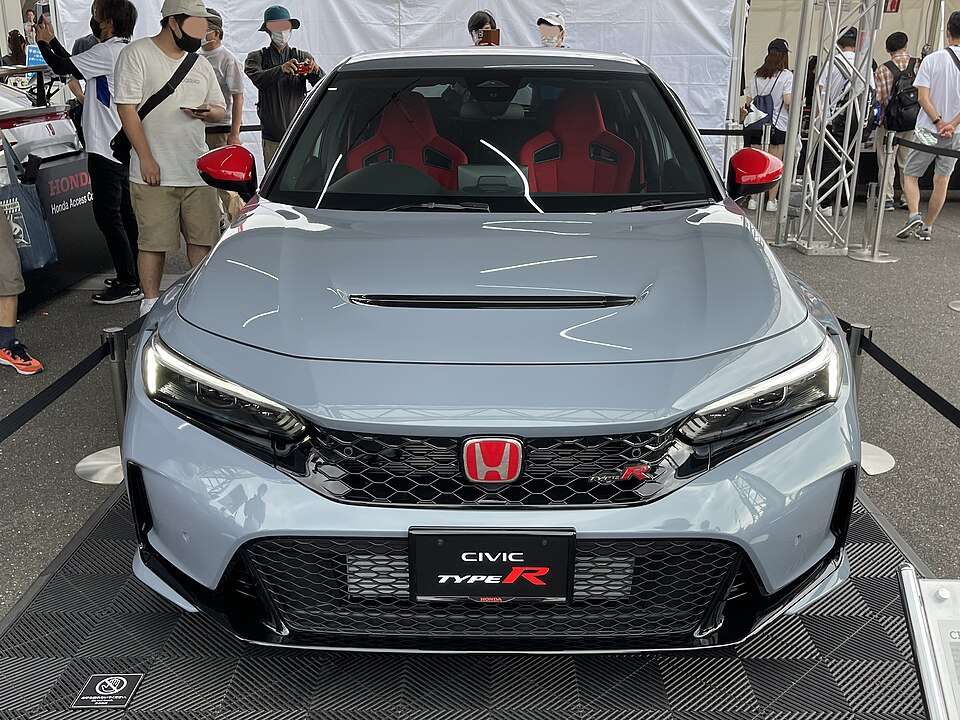
The FL5 Civic Type R suits a buyer who wants a manual hot hatch with room for passengers and luggage, and is willing to pay more than for an FK8. For road use, start with an unmodified car with a clear Honda service record, healthy tyres and a clean underbody. If you plan to use it on track, price consumables and get a specialist to look at any car that has already had regular circuit use.
Featured photograph by Tokumeigakarinoaoshima, Wikimedia Commons · CC BY-SA 4.0.
Jump to FL5 vs FK8 · UK prices · Inspection · Maintenance and parts · Hidden costs
Honda Civic Type R FL5 vs FK8
| What changes | What it means when buying |
|---|---|
| UK FL5 powertrain | The 2.0-litre turbo engine is rated at 329 PS in UK specification. It drives the front wheels through a six-speed manual. Check the market and specification of imports. |
| FL5 controls and cabin | Try the driving position and seating, drive modes and infotainment. A similar driving position matters more than brochure equipment if the car is your daily driver. |
| FK8 as a value comparison | The earlier generation offers a similar basic proposition at a different entry price. Drive a healthy standard FK8 and budget for the condition and age of each car. |
| Standard versus modified | A standard FL5 is easier to compare and insure. For modifications, ask for the full parts list, tuning invoices and evidence of correct installation and maintenance. |

| What you want | Start here | What must check out |
|---|---|---|
| A fast daily | Standard FL5 with a readable Honda service trail | Cold and hot shifts, sensible alignment, tyres with even wear, and the age of the brakes. |
| A weekend car on a tighter budget | Drive a sound FK8 and FL5 on the same route | Compare like-for-like condition and the amount left for maintenance after purchase. |
| A documented track car | Standard or properly documented modified FL5 | Inspect brakes, tyre shoulders, wheel barrels, cooling and body underneath. Ask for event and fluid history. |
| An imported FL5 | Only compare with an equivalent market specification | Check build and registration documents, insurance, warranty support and parts fitment by VIN. |
Where the FL5 is worth the premium
Drive a good FK8 and a good FL5 before deciding. Use the same route at the same speeds if possible. Try both on broken tarmac and through a few ordinary bends, then compare the driving position, visibility, controls and pedal feel. The newer car can be easier to justify if you value its cabin and the way it drives on roads you use. If the price difference would use the entire first-year reserve, a carefully inspected FK8 deserves a place on the shortlist.
Check the actual build and the selling dealer’s warranty terms. Make sure the quoted price is for a UK FL5 or clearly identified import, with any options and alterations listed. An import needs a paperwork check, an insurance quote and confirmation of which maintenance and warranty arrangements apply. Check whether any extra equipment was factory fitted or installed later. Save a copy of the advert so you can compare what was promised with the invoices and equipment at the viewing.
Start with a standard car if you have no use for a tune or track setup. Ask for dates, mileage, parts and receipts if the seller describes a calibration, intake, exhaust, wheel or suspension change. If it has been returned to standard, ask who did the work and whether the original software and hardware are both back in place. A modification has value only if it suits your use and your insurer will cover the car as presented.
UK FL5 asking prices
Honda approved-used examples with first registrations from 2023 to 2025 included adverts around £41,500–£43,600. PistonHeads examples for 2025 cars included an advert just under £44,000 and a lower-mileage advertised example around £49,500. These are examples from a mixed-generation market, so filter out FK8s, check import status and compare mileage, warranty and condition. Check the actual dealer’s cash price if a finance example appears alongside it. Honda approved-used Civic Type R listings · PistonHeads Civic Type R listings.
Use UK asking prices and auction evidence separately
The dealer asking figures below are dated examples. Compare the same registration period, mileage, seller type, UK or import status and condition. Keep prepared dealer cars in a separate group from modified private cars and auction lots. Compare the documented work still due, then ask what the dealer warranty covers if the car has previously been modified or used on track.
A 2023 FL5 sold through Collecting Cars was shown with 27,900 miles. The catalogue recorded two Honda services and a brake and tyre replacement at 23,337 miles. The public page hides the final price. It is useful as a condition and history comparison because the lot describes work and mileage, but it does not supply a sold-price benchmark. Ask for evidence of what was fitted and measure the wear at the viewing.
Before travelling, get the VIN, mileage, key count, last service invoice and photos of all four tyres. Check GOV.UK MOT history and the UK vehicle recall checker as appropriate. A first MOT may not yet be due on a newer example, so dated invoices, dealer records and the inspection carry more weight. Confirm whether the seller will leave the engine cold and allow a proper drive and inspection if you proceed.
What to check when buying an FL5
Engine, gearbox and cooling
Ask for a cold start and check for rough running, persistent smoke, leaks or warnings. Test the shift when cold and warm, including first to second at normal road speeds. A repeatable crunch, reluctance to select a gear or clutch slip needs diagnosis. Once warm, check the engine builds boost smoothly. Ask about ECU work, intake or exhaust changes and any reason for an apparent return to standard.
Check the front cooling area and undertray for damage, and ask about temperature warnings or track use. A track car can be a good purchase if it has been looked after, but its history should explain how often fluids and consumables were changed and whether it has had repeated heat or braking issues.
Brakes, tyres and alignment
Check the full width of each tyre, especially the inner shoulders and any cuts or heat damage. Look for cracks, heavy lips and uneven marks on the discs, and test for vibration under braking. Check wheel barrels and jacking points. Ask whether it has been aligned and why. A car that pulls or wears tyres unevenly needs more investigation before you budget only for replacements.
Cabin, electronics and bodywork
Test the seat adjustment, cameras, climate control, parking aids and steering controls. Inspect seat bolsters and harness mounting areas for modifications. Check paint and gaps around the front bumper and sills, and ask about windscreen or bumper replacement and any required driver-assistance calibration. Ask a Honda dealer to verify outstanding recalls or campaigns by VIN.

Love cars you don’t see every day?
Get forgotten cars, surprising motoring stories and the most interesting finds from Unusual Cars by email.
Free to join. No spam. Unsubscribe whenever you like. See our privacy policy.
Cold and warm road test for the FL5 manual
Confirm the engine is cold on arrival. Check for warning lights, smoke, an uneven idle and evidence of coolant or oil loss. Look at the accessible cooling stack and under the nose for impact damage or loose trim. Ask which oil specification and fluid the last service used, and whether the car had extra fluid changes for track days. Follow the Honda owner’s manual for the procedures applicable to the vehicle.
Drive gently until the car is warm. At ordinary speeds try the first-to-second shift and other gates, and note any baulk, crunch or tendency to leave a gear. Repeat with the transmission warm. If a symptom is repeatable, record the gear, temperature, engine speed and whether the clutch was fully disengaged. A shift that feels different in one mode is worth checking again with the applicable rev-match setting understood. Ask a specialist to distinguish clutch release, fluid or linkage issues from internal gearbox work before agreeing an offer.
Check the clutch take-up when warm and see whether engine speed rises without road speed under moderate load. A heavy pedal, noise at idle that changes with the pedal, or inconsistent engagement can point to different jobs. Record them separately. For any repeatable hesitation or boost fault, obtain a diagnostic scan before anyone clears the codes and ask the specialist to reproduce it safely. A short road test on cold tyres will not tell you whether an engine or cooling package is suitable for sustained use.

How to assess track use from evidence
Ask how often and where the car was used, and what was checked before and after events. Look for invoices for brake fluid, pads, discs, tyres and alignment, then compare dates and mileage with the description. A documented track car can be easier to assess than one where the use and servicing are unknown. Ask for the original parts and verify that any changes are declared to the insurer. Inspect for stone strikes and impact damage under the front bumper, at jacking points and on wheel barrels.
Check both edges of each tyre and record sidewall sizes, date markings, condition and wear across the tread. A wide tread patch with worn inner shoulders can hide an alignment or suspension issue. Ask for the most recent geometry printout and what changed afterwards. If the car pulls or the steering wheel is off-centre, inspect arms, tyres and wheel damage before budgeting alignment alone. Check that the damper modes operate and that no chassis or driver-assistance faults are stored after repairs.
Inspect both faces of the front discs and have their thickness measured. Note cracks, heavy lips, inconsistent wear or vibration. Ask which pads and fluid are fitted and whether they suit the way you drive. If there is an aftermarket disc or caliper, obtain part numbers and a price for replacement consumables before valuing it. Try a safe brake application on a flat road and note when any vibration appears. A good pedal feel does not replace a measurement of the remaining material.
Cabin, electronics and body inspection
Check both keys, the rear camera, infotainment, climate and the parking and driver-assistance equipment. Look for damaged front sensors or poor panel fit after bumper work. Check the undertrays and sill lift points on a ramp, and look for signs of water ingress around the luggage area. Compare the finish and gaps on both sides and ask for repair photographs if panels have been replaced. Report a warning or diagnostic issue separately from routine cosmetic work.
Take a second look after the warm road test. Confirm that the controls operate, brakes are consistent and any warning that appeared can be reproduced. Check that the owner’s description matches the data rather than assuming a fresh service resets the condition of the car. Get written scopes for work that affects the offer and a second quote if a shop recommends a major component without identifying the fault.
FL5 maintenance and parts
Affiliate disclosure: We may earn a commission if you buy through the eBay links below. Prices quoted are for parts. Confirm VIN, OE references, fluid specification and whether the part suits road use before ordering.
| Item | What to check and budget |
|---|---|
| Oil and filter | Check the Honda schedule and oil specification for the car. If it has done track days, ask how its oil history differs from ordinary road servicing. Compare FL5 oil service parts. |
| Front brake pads and discs | Sampled EBC front pads were around £150–£154, while sampled track compounds and other brands varied widely. Check the exact caliper, pad and disc reference, and choose a road-suitable compound for road use. Compare FL5 front brake pads · Compare FL5 front brake discs. |
| Transmission service | Ask whether gearbox fluid is due and confirm Honda’s fluid specification in the manual or with a dealer. Compare FL5 manual transmission fluid. |
| Air and cabin filters | Check whether the airbox is still standard and match the filter by part number. Compare FL5 filter listings. |
| Charging system | If it has a battery or charging warning, diagnose it first. Match an alternator by OE number, engine and market. Compare FL5 alternators. |
UK front brake prices and fitted-cost example
Cox Motor Parts lists a genuine front disc pair, part 45251TGHA01, at £520.01 and the FL5 front pad option, 45022T60A01, at £257.71. That totals £777.72 for the displayed parts. At Village Classic Cars’ published £90 hourly rate including VAT and an illustrative 1.5–2.5 hours, the fitted calculation is £912.72–£1,002.72 before additional hardware, delivery, caliper work or diagnosis. Ask for a quote against the VIN and fitted brakes. The disc listing also offers FK8 pad choices, so verify the pad selection.
For routine ownership, ask a Honda dealer and a Type R specialist for the same VIN-specific service scope. Check whether the quote includes the oil and filter, brake fluid, gearbox fluid and the relevant inspection or whether those are separate lines. An advertised basic oil service does not price all the work that might be due after track use. Compare invoices and replace only what is due or what inspection shows needs attention. A recurring gear or overheating fault needs diagnosis before it can go into a service budget.
Hidden ownership costs
- Track consumables. Budget separately for tyres, pads, brake fluid and any additional inspection or servicing.
- Tyres and wheels. Quote on the actual size and check the wheels are straight. A spare set or aftermarket setup can change insurance and fitment.
- Warranty and modifications. Check warranty terms and exact ownership dates and get written insurance quotes for modified cars.
- Tax and first-year work. Check tax from the registration and add any due maintenance, pads and tyres before comparing offers.
Worked offer for an FL5 with worn brakes
Suppose an FL5 has a good service history and clean road test, but the front discs and pads are measured as due. Use the fitted example as a starting point, ask for a current quote, and check whether the tyres need replacing and why. A documented consumables bill can be priced into the offer. If the car also crunches consistently from first to second when warm, keep the gearbox investigation separate and require a report before deciding. Compare the full cost with an equivalent FL5 already prepared for road use.
When you leave the viewing, write down the oil and gearbox fluid used, measured brake and tyre wear, geometry evidence, and each unresolved symptom. Keep the photographs and workshop report if you buy. The next service can use this baseline to identify a new fault or a change in wear, and the same evidence makes the car easier to value later.
Build a routine-service baseline
For a routine oil change, Cox Motor Parts’ FL5 catalogue lists the genuine filter and sump washer at £15.38. That is a parts reference. Ask the shop to identify the oil approval and quantity, labour, inspection and any disposal charge. Keep the gearbox fluid and brake fluid lines separate and check them against Honda’s schedule and the way the car has been used. If the owner has done extra oil or fluid work for events, record dates, products and mileage rather than counting it as a substitute for other due checks.
| Finding at the viewing | Evidence to ask for | What changes in your offer |
|---|---|---|
| Repeated first-to-second resistance when warm | Repeat under the same conditions and get a clutch-release and shift diagnosis. | Make an offer conditional on the cause and fitted repair price. |
| Edge wear with a recent tyre invoice | Get a geometry report and inspect arms, wheels and joints. | Price the cause and a suitable tyre set. |
| Brake work documented but vibration remains | Confirm part numbers and ask the shop to measure wear and investigate runout or caliper issues. | Allow for diagnosis before assuming the discs must all be replaced. |
FL5 viewing checklist
- Verify VIN, UK-market or import status, MOT where applicable, and service history.
- Ask for a cold start, both keys, warranty details and any record of track use or tuning.
- Check lower body, tyres and brakes on a lift if possible.
- Test gears cold and warm and look for warnings or poor power delivery.
- Confirm which fluids and consumables are due and get a specialist inspection if the history is unclear.
Buy, investigate or walk away
Buy if the VIN, servicing and condition agree, shifts are clean cold and warm, and the major consumables are measured and priced.
Investigate if the car has known brake wear, a documented track history or an alignment concern that a specialist can assess.
Walk away if the seller refuses a necessary gearbox or structural inspection, or repeated warning lights, overheating or shift faults remain unexplained.
FL5 buying FAQ
Should I pay more for an FL5 than an FK8?
Only if the newer car’s driving position, presentation and performance matter enough on a back-to-back drive. A well-documented FK8 may leave more room for tyres, servicing and insurance.
Does track use rule a car out?
Ask how it was used and maintained. If there are no credible invoices or visible heat or wear concerns, make a specialist inspection part of the purchase decision.
Sources and related guides
- Honda UK Civic Type R owner’s manual
- PistonHeads FL5 used buying guide
- Honda approved-used Civic Type R · PistonHeads UK Type R classifieds
- GOV.UK recall checker · Read the Honda Civic Type R FK8 buying guide · Browse all buying guides
Honda Civic Type R FL5 for sale on eBay UK

See more Honda Civic Type R FL5 cars on eBay UK
Love cars you don’t see every day?
Get forgotten cars, surprising motoring stories and the most interesting finds from Unusual Cars by email.
Free to join. No spam. Unsubscribe whenever you like. See our privacy policy.