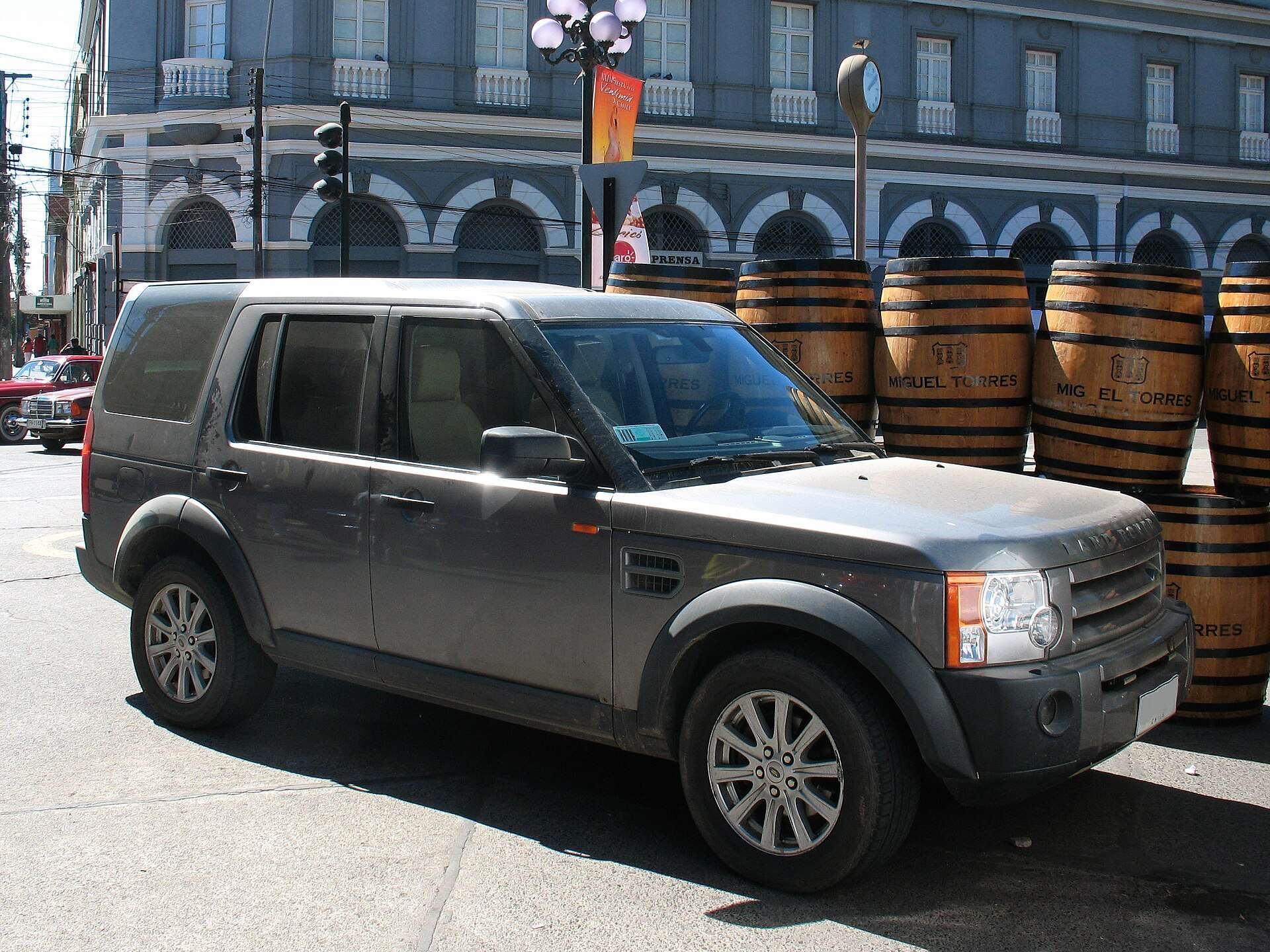
The Discovery 3 can carry a family, tow appropriate loads and cover rough ground with an ease that explains its enduring appeal. It is also a complex, ageing vehicle whose repair bills have not fallen in proportion to its asking price. A cheap 2.7 TDV6 is attractive only when its structure, maintenance and outstanding work add up to an affordable whole.
Our verdict: choose evidence of care over a high trim level. Look for itemised front and rear belt records, a sound underside, a dry cabin and correctly functioning suspension, parking brake and driveline. Pay for an independent Land Rover-specialist inspection with lift access and suitable diagnostics. Keep a reserve after paying for the car: a clean dashboard and a long MOT cannot establish the condition of every expensive component.
Featured photo by order_242 from Chile · CC BY-SA 2.0.
Which Discovery 3 TDV6 should you buy?
This guide concerns the L319 Discovery 3 with the 2.7 TDV6 diesel. Do not transfer every 3.0-litre Discovery 4 repair or service figure to it. Establish the VIN, engine, gearbox, original market, seat layout and fitted suspension. Cars may have been altered during their lives, so check the equipment on the actual vehicle as well as its original build.
Choose the transmission and seating that suit your work before looking at trim. A well-maintained lower-specification car can be a more useful purchase than an HSE with a long list of electrical complaints. Conversely, if you need seven seats, check that all seven are present, complete and usable with your passengers. Do not assume every Discovery advert describes the same interior.
Automatic: useful, with its own inspection needs
The automatic makes sense for many family and towing users, but assess its condition through ordinary driving. Ask for the exact gearbox identification and any oil, sump/filter or repair invoices. Check engagement, low-speed behaviour and shifts cold and fully warm. A short drive at steady speed cannot reveal every complaint.
If there is judder, slipping, flare or an excessive delay, obtain a diagnosis before agreeing a price. Do not treat a fluid change as a guaranteed cure. A repair estimate needs to distinguish a routine service, an external leak and an internal transmission problem. The cheapest interpretation in an advert may not survive inspection.
Manual: assess clutch and flywheel together
A manual suits buyers who prefer it, but it does not make the drivetrain inexpensive to repair. Try normal selection cold and hot, assess clutch take-up and listen for noises that change with clutch operation. Ask whether a previous clutch replacement included the flywheel and release hardware. A parts-only clutch price is not a fitted-job budget.
Consider your actual driving. Repeated manoeuvring with a trailer and congested commuting may make you prefer the automatic even if a manual is cheaper to buy. Do not choose by rarity or a general claim of simplicity before testing the individual car and costing its wear.
Air suspension, coils and modifications
Establish the original and current suspension arrangement. Do not assume an internet description applies to every trim, market or converted car. An air-equipped Discovery needs a system inspection; a converted vehicle needs evidence of a suitable installation and its effect on the intended use, insurance and other systems. A conversion should not merely conceal an unresolved warning.
Inspect off-road additions, tyre changes, recovery equipment and towing installations as modifications. Ask who fitted them, whether the work is documented and whether your insurer accepts it. Accessories can be useful without adding their original cost to the vehicle’s value. They can also provide clues to the sort of use that deserves closer underbody inspection.

UK prices: value the condition beneath the advert
The earlier UK listing sample retained in this guide included cars advertised below £2,000, a cluster around £2,000–£2,500 and examples around £4,000–£7,000. Its individual listing details were not retained, so these figures should be treated only as historical context, not a current valuation or completed-sale evidence. Compare current 2.7-litre adverts with the exact car you want.
Record transmission, seats, trim, mileage, keeper history, tyres, chassis condition and recent major jobs. Separate dealer and private-sale terms and read any warranty exclusions. A price premium supported by properly documented belts, repaired suspension and sound structure may be more meaningful than one supported by shiny wheels and a fresh valet.
Calculate asking price plus immediate fitted work and a reserve. If a £2,000 car needs several major jobs, it is not automatically the budget option. Obtain written estimates after inspection, including VAT, diagnostics, alignment and additional work likely to arise from corrosion. The point of a viewing is to establish your total exposure, not simply confirm that the vehicle starts.
Structure and corrosion come before accessories
Have the Discovery inspected on a suitable lift. Include chassis rails, crossmembers, body and suspension mounting areas, fuel-tank support, brake and fuel pipes, exhaust supports and towbar attachments. Check difficult-to-see sections rather than relying on a glance around the wheel arches. Ask the inspector to distinguish superficial corrosion from work affecting strength or safety.
Fresh underseal should be supported by an explanation of the preparation and preferably photographs. Coating can be appropriate protection, but it does not prove the underlying metal was sound. Mud trapped around components, damaged protection and missing fixings warrant attention. A vehicle used on salted roads, farms or rough ground needs its actual condition assessed rather than judged by the previous owner’s postcode.
Look for impact damage, distorted protection, scraped housings and evidence of repairs around mounting points. Ask for documents and photographs for significant work. A vehicle-history check helps with recorded events and title/finance concerns through a suitable provider; it cannot show every unrecorded repair or establish workmanship.
Ask what structural repairs would involve before accepting a seller’s promise of a cheap weld. Access, removal of components and the extent of deterioration can change the bill. If the inspection finds serious corrosion, a written repair assessment is more useful than optimistic bargaining over the asking price.
2.7 TDV6 belts, oil history and engine assessment
Front and rear belt evidence
The front timing belt and the rear high-pressure fuel-pump drive belt are separate items. Read the invoice for each, including date, mileage, parts and related work. “Cambelt changed” without details leaves an important question unanswered. Ask the workshop to establish the applicable schedule from the car’s identification and use.
K Motors’ Discovery 3 service discussion gives seven years or 105,000 miles for the belt work, whichever comes first. Confirm the requirement for your VIN and the actual invoices; an old replacement may now be due again by age. Do not apply the 3.0-litre interval from a shared Discovery 3/4 page to the 2.7 automatically.
Ask whether tensioners, idlers and any relevant oil-pump work were included. A job involving an oil pump is not automatically a job involving the rear belt. The current condition and specification matter, and the inspecting specialist should explain any recommended additional work. A belt replacement does not certify every internal engine component healthy or eliminate every risk of a major engine bill.
Cold start and oil-pressure concerns
Arrange to see a cold engine and ask the owner not to warm it first. Watch the warning sequence, starting behaviour, idle and exhaust. Persistent mechanical noise, an oil-pressure warning or rough running needs professional diagnosis. Do not let a seller’s explanation that a noise is normal substitute for an assessment by someone familiar with this engine.
Read oil-service invoices for the correct specification and chronology. Ask about oil consumption, leaks, previous warnings and any engine replacement or rebuild. If replacement work occurred, establish what failed, what unit was fitted and what supporting systems were repaired. A used engine, a reconditioned original and a new unit are different descriptions.
A short road test cannot guarantee the future of the crankshaft, bearings or other internal parts. Avoid buying on either blanket reassurance or internet claims that every engine fails. Assess the available maintenance and inspection evidence, then decide whether the remaining risk fits your repair reserve and intended ownership.
Cooling, boost and restricted performance
Check coolant safely from cold, inspect accessible joints and the underside for residue and ask about top-ups or overheating. Do not open a hot expansion tank. Repeated loss has a cause that should be established before purchase. A recently replaced bottle or hose is useful evidence only when it explains and resolves the original complaint.
Loss of power, smoke or a restricted-performance message can have several causes. Ask a specialist to assess relevant fault information, hoses, boost control and emissions equipment rather than assuming the turbo needs replacement. Equally, do not accept “just a hose” without diagnosis. The condition under which the warning occurs is important.
Establish the actual emissions specification and whether a DPF is fitted rather than using registration year alone. Check for inappropriate emissions alterations and ask how the car is used. Repeated short trips and recurring warnings need discussion with the inspecting workshop. A forced regeneration is not a substitute for establishing why a system has a fault.
Love cars you don’t see every day?
Get forgotten cars, surprising motoring stories and the most interesting finds from Unusual Cars by email.
Free to join. No spam. Unsubscribe whenever you like. See our privacy policy.
Air suspension: test the system, not just the compressor
On an air-equipped car, observe its stance before the first start and ask how it sits after standing overnight. Cycle the permitted height settings using the correct procedure and watch whether it rises evenly and without a persistent warning. Repeated compressor activity, a slow rise or one low corner needs diagnosis.
Air leaks, sensors, valves, electrical supply and compressor condition can produce overlapping symptoms. Replacing the compressor without finding a leak can leave the cause in place. Ask the specialist to establish what is fitted, including any previous compressor replacement or upgrade, and what associated hardware or configuration the repair requires.
Do not crawl beneath a vehicle supported only by its air suspension or an improvised jack arrangement. Have the underside examined safely in a workshop. A seller demonstrating height changes on the driveway is useful, but it does not replace inspection for leaking components, damaged lines and stored faults.
Ask for invoices after previous suspension work and check the outcome. A recent compressor is not proof that all air springs, valves and sensors are healthy. Conversely, a properly diagnosed and documented repair may be a positive feature when the rest of the system is assessed and the car behaves correctly.

Electronic parking brake, brakes and electrical warnings
Operate the electronic parking brake normally and check release and warning behaviour. Screeching, failure to release or an unreliable hold needs assessment of shoes, adjustment, cables, actuator and related rear-brake components. Do not assume the entire module is faulty, or that adjustment alone will resolve every complaint.
A car with a binding or stuck parking brake needs a workshop repair plan, not a demonstration of an emergency-release trick during a viewing. Ask what a previous repair included and whether the system was adjusted and tested correctly. Rear discs, internal parking-brake surfaces and pads should be assessed as part of the scope.
Inspect brake pipes closely on the lift, including less accessible sections and clips. Check both faces of the discs and the condition of pads, hoses and calipers. A fresh MOT or new front pads cannot establish the condition of the rear parking-brake mechanism or hidden pipework.
Where multiple warnings appear, include battery, charging and wiring checks alongside the full system scan. Do not buy an alternator solely because several messages occur together. A competent diagnosis separates an electrical-supply problem from faults genuinely present in the suspension or drivetrain.
Gearbox, transfer case and differentials
Test the automatic cold and hot, including drive and reverse selection, gentle shifts, steady cruising and moderate acceleration. Note judder, flare, clunks or a delay and have repeat symptoms diagnosed. Read the fluid-service invoice for the correct gearbox and actual scope. A routine service and a transmission rebuild are not interchangeable entries.
On a manual, inspect clutch, flywheel and hydraulic operation and try the gears normally. Avoid abusive stall tests. A clutch quote should identify associated components and labour, particularly if the vehicle has towed. Price the diagnosed problem rather than assuming an inexpensive kit is the whole repair.
Ask for transfer-case and differential maintenance records separately from gearbox work. Listen for speed-related whines or drones and have joints, mounts, shafts, boots and seals inspected. Wheel bearings and tyres can also generate road-speed noise; a workshop should locate the source before pricing an axle replacement.
Have low range and relevant terrain controls demonstrated in accordance with the handbook on suitable ground. Do not use inappropriate surfaces or forcing manoeuvres to prove that a mode works. Check warnings and operating conditions, and establish that the equipment you need for towing or off-road use is actually functional.

Suspension wear, wheels and towing evidence
Listen for knocks on normal uneven roads and inspect arms, bushes, joints, hubs and steering components. Uneven inner-shoulder wear or an insecure feel deserves a geometry and suspension assessment. New tyres do not cure worn bushes, and replacement arms may need alignment afterwards.
Corroded or seized fixings can increase access time. Ask the garage what its estimate includes and how additional work is authorised. Compare a complete fitted arm job and alignment with a parts-only bush listing carefully. The cheapest component may not produce the lowest total repair cost.
Inspect tyre sizes, condition, age and compatibility with the car’s specification and use. Check the spare-wheel arrangement and tools, including any locking-wheel key, without attempting unsafe access. Replacement tyres, a damaged wheel and geometry can be a meaningful first-month expense on a large, heavy vehicle.
For a tow car, inspect the towbar, attachment points, electrical socket and installation. Ask what was towed and how often, then check limits for the exact vehicle, towbar and trailer and your licence. A towbar adds utility only if its condition and specification meet your needs; it is not evidence that the drivetrain was serviced properly.
Water ingress, seats and cabin equipment
Check the footwells, roof lining, boot and accessible trim areas for damp, stains and musty smells. If a sunroof is fitted, inspect and operate it normally and ask about drainage or leak repairs. A seller saying the interior has just been shampooed should not stop you investigating wet areas.
Operate every seat mechanism and check belts, restraints and the condition of folding hardware. Try the third row if fitted, including access and the luggage space left with it raised. Bring child seats or equipment you use regularly. The Discovery’s capacity is central to its appeal, so confirm it works for your actual passengers.
Test climate control, windows, locks, lights, mirrors, infotainment, parking aids and both keys. Check tailgate operation and the load-floor fittings. A long option list can create a long repair list; record faults and obtain realistic fitted estimates instead of assuming small electrical items are cheap.
Maintenance: sourced UK fitted examples
Keep engine service, belts, gearbox, transfer case, differentials, brakes and suspension care as separate records. Confirm due work from the correct schedule and history. The published estimates below illustrate the importance of scope; they are not a binding quote for your vehicle and should be reconfirmed before booking.
| Job | Published fitted estimate | Important scope |
|---|---|---|
| Front belt, tensioner, idlers and rear belt | £675 including VAT | K Motors 2.7 TDV6 menu; oil pump is not listed in this entry. |
| Front belt, tensioner, idlers and Land Rover oil pump | £799 including VAT | Separate K Motors entry; rear belt is not listed. Obtain combined scope. |
| Clutch cover, plate and slave cylinder | £950 including VAT | Manual; menu’s flywheel-inclusive version is £1,250. |
| OEM alternator replacement | £279 including VAT | Diagnose charging first; confirm current part/application. |
| OEM air compressor / genuine upgrade kit | £560 / £950 including VAT | Alternative repair scopes, subject to diagnosis and hardware. |
| Parking-brake shoe replacement, both sides | £255 including VAT | Not equivalent to an actuator/cable and rear-brake overhaul. |
| Front lower arm | £310 including VAT | Menu includes four-wheel alignment; confirm side and extra-work terms. |
Sources: K Motors’ 2.7 TDV6 estimates and Discovery 3/4 repair menu. Both identify parts, fitting and VAT in their totals. Parts availability and complications can change the bill. They do not provide a labour-only breakdown for every entry, so no artificial split is presented here.
Parts to compare with the fitter
These links retain the existing model-specific eBay searches. They are not fixed-price offers or proof of fitment. Confirm OE numbers, kit contents and workshop acceptance of customer-supplied parts. Budget for diagnosis, labour, fluids, setup and any additional hardware separately.
Affiliate disclosure. We may earn a commission if you buy through the eBay links below. Confirm VIN, model year and OE part numbers. Marketplace fitment labels can mix versions. Budget for labour separately.
| Maintenance item | What to check and budget |
|---|---|
| Front timing belt kit | Confirm the 2.7 276DT engine and kit contents. Get a fitted quote and check what else the job includes. Compare front timing belt kit on eBay UK. |
| Rear fuel-pump belt kit | Ask for a separate invoice line for the rear drive belt. Match parts by VIN. Compare rear fuel-pump belt kit on eBay UK. |
| Oil and fuel filters | Check engine specification and approval. Separate regular servicing from fault diagnosis. Compare oil and fuel filters on eBay UK. |
| Air suspension compressor | Identify the type fitted and diagnose leaks or electrical faults first. Compare air suspension compressor on eBay UK. |
| Electronic parking brake | Check whether the problem involves shoe adjustment, cables or the module. Compare electronic parking brake on eBay UK. |
| Alternator | Match output and OE number after charging diagnosis. Compare alternator on eBay UK. |
When comparing belt kits, check which belt and tensioning components are present. For a compressor, identify the fitted type and required installation scope. For an alternator, check output, connection, mounting and exchange terms. For parking-brake parts, establish whether the issue is at the shoes, cables, actuator or another component before ordering.
Hidden ownership costs and first-year arithmetic
Use a repair reserve proportionate to the complexity of the car, not a percentage of a bargain asking price. Corrosion work, tyres, alignment, electrical diagnosis and water-ingress repairs can stack up. A vehicle bought for occasional towing still needs age-related servicing and may be inconvenient if it spends its first month waiting for parts.
A limited example using the quoted K Motors menu is £675 for the listed front-and-rear belt job plus £560 for the listed compressor replacement: £1,235 including VAT. Those jobs alone would exceed half of a £2,000 purchase price. They do not include an oil-pump addition, engine service, tyres, corrosion repairs or other faults. Confirm whether these are the correct jobs for the inspected car.
Do not add the £675 and £799 belt entries together: they overlap and describe different scopes. Ask for a single quote covering the exact belt and pump work required. The same principle applies to rear-brake and parking-brake packages, where shared components and labour should be clarified rather than counted twice.
Add registration-specific insurance, tax, fuel at your actual mileage, MOT, breakdown arrangements and any clean-air-zone implications for your routes. Check access status with the registration. A cheap purchase does not make a large diesel inexpensive to run, and a warranty may exclude wear, pre-existing faults or diagnostic charges.
Check it against the job you need it to do
Measure your parking space and check the route into it. Test visibility, parking aids and door access with your usual passengers. If you need seven seats and luggage capacity together, try that arrangement rather than judging the car with all rear seats folded. Check any load cover, restraints and removable accessories supplied in the sale.
For towing, verify the permitted weights from the actual vehicle and equipment rather than using a headline figure for the model. Include nose-weight restrictions, trailer condition and the limits of the towbar installation in your planning. Ask an appropriate specialist to check a detachable assembly if its history or security is uncertain.
If the car will spend periods unused, assess battery health, tyre condition and the maintenance needed before trips. A vehicle that starts after a jump is not ready for a long towing holiday simply because the engine runs. Establish charging performance and check brake operation after standing.
For rural or rough-ground use, inspect protection, recovery attachments and underbody damage with someone who understands the equipment. Modifications should have a clear purpose and suitable workmanship. Avoid paying a premium for an expedition appearance if the additional weight, tyres or changes make the car less suitable for your roads, insurance or servicing arrangements.
Reading the file and deciding what to buy
Arrange invoices by date and mileage, compare them with MOT history and look for repair evidence after repeated advisories. A stamped book is less informative than itemised records for the work this vehicle needs. Ask permission to clarify major invoices with the repairing workshop where appropriate.
Look for the result after diagnosis. A warning followed by an identified repair and successful retest is different from repeated fault clearing. For suspension, engine or transmission replacement, establish what was fitted, why and what related causes were addressed. Keep these records when you take ownership.
Buy when the identity, history and inspection agree and the total cost fits your budget. Investigate first where belt scope, coolant loss, warnings, suspension sag or drivetrain noise remains unclear. Walk away from serious unresolved structural concerns, questionable identification or a seller who refuses a reasonable specialist inspection.
Discovery 3 viewing checklist
- Before travel: confirm VIN, seats, suspension, engine and gearbox. Obtain belt and major-repair invoices and arrange a cold start, lift inspection and diagnostic assessment.
- At the car: inspect stance, body, cold fluids safely, tyres, water ingress and equipment. Check both keys and every seat you plan to use.
- On the drive: assess engine response, cold/hot transmission, steering, braking and noises. Check the parking brake and relevant modes through correct safe procedures.
- In the workshop: inspect structure, pipes, leaks, suspension and drivetrain, then interpret fault history alongside physical findings.
- Before paying: obtain itemised fitted estimates, confirm insurance and record promised repairs. Compare the total with a better-maintained example.
Discovery 3 TDV6 buying questions
Does it need two belt records?
Yes: establish the front timing-belt and rear fuel-pump drive-belt work separately. Confirm date, mileage and kit contents. Do not assume an oil-pump-inclusive job automatically covered the rear belt.
Is a suspension warning always the compressor?
No. Leaks, valves, sensors and electrical issues need assessment as well. Identify the fitted system and diagnose the cause before choosing a replacement or upgrade.
Is a screeching parking brake a small adjustment?
It needs diagnosis. Shoes, cables, actuator and rear-brake condition can affect the scope. Have a safe repair plan before driving a vehicle with a binding or unreliable brake.
Can a full history guarantee the engine?
No inspection or service file eliminates every internal failure risk. Good evidence improves the buying decision, while unexplained warnings or noise require further assessment. Keep a reserve appropriate to the car.
Should I buy a £2,000 example?
Judge it by the inspected total cost. Belts, corrosion and suspension work can exceed the apparent saving quickly. A higher purchase price supported by the right maintenance may suit your budget better.
Sources and related guides
The linked UK specialist pages support the specific workshop examples and maintenance context, with prices subject to confirmation. For comparisons, see our Discovery 4 buying guide. Check MOT history and recall status for the actual car, and return to the Buying Guides library for alternatives.
Land Rover Discovery 3 TDV6 for sale on eBay UK

See more Land Rover Discovery 3 TDV6 cars on eBay UK
Love cars you don’t see every day?
Get forgotten cars, surprising motoring stories and the most interesting finds from Unusual Cars by email.
Free to join. No spam. Unsubscribe whenever you like. See our privacy policy.