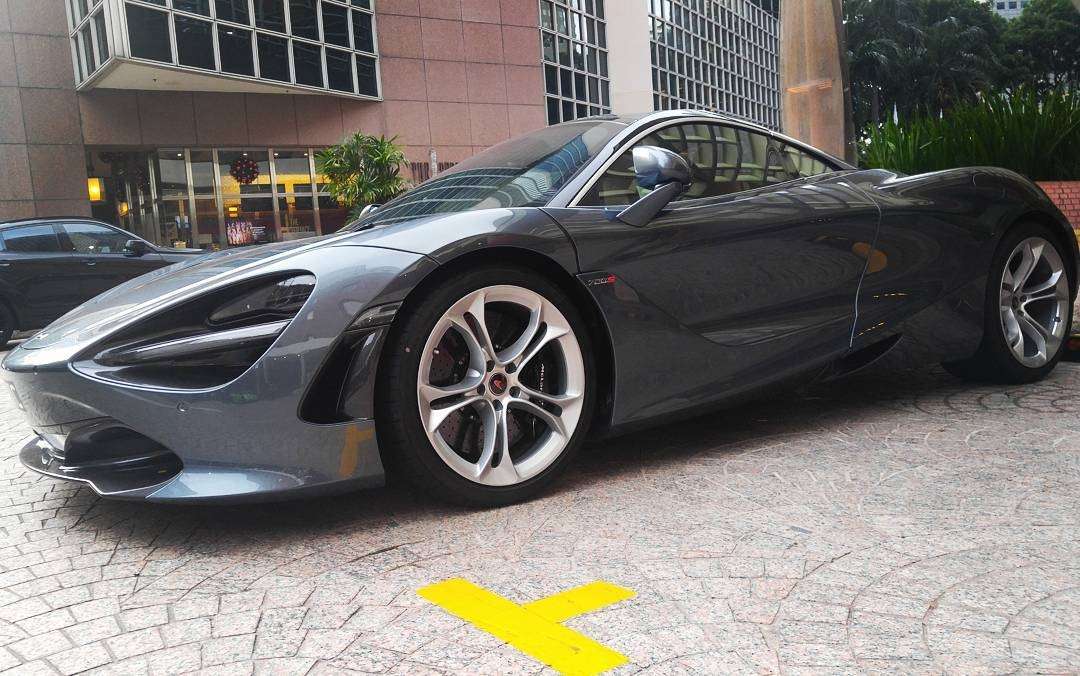
When the McLaren 720S appeared in 2017, its numbers were startling even by supercar standards. Yet the car’s real achievement was the way it combined that performance with visibility, ride comfort and a sense of precision. It replaced the 650S and became the second generation of McLaren’s Super Series.
A clean-sheet Super Series
The 720S used a new carbon-fibre structure called MonoCage II, incorporating more of the roof than the earlier MonoCell. The design allowed slimmer pillars, a teardrop cabin and extraordinary outward visibility. Double-skinned doors channelled air towards the side-mounted radiators, avoiding the need for conventional body-side intakes.
Its eye-socket headlamp openings were equally functional, hiding air channels and cooling inlets. The result divided opinion at first, but it demonstrated McLaren’s determination to make airflow shape the car rather than decorate it.
McLaren 720S specifications
A larger 4.0-litre twin-turbocharged V8 produced 720PS, or about 710bhp. Drive went to the rear wheels through a seven-speed dual-clutch gearbox. McLaren quoted 0–62mph in 2.9 seconds, 0–124mph in 7.8 seconds and a top speed of 212mph for the Coupe.
- Engine: 4.0-litre twin-turbo V8
- Power: 720PS / approximately 710bhp
- Transmission: seven-speed dual-clutch
- Drive: rear-wheel drive
- Structure: carbon-fibre MonoCage II
- Body styles: Coupe and Spider
Why it felt like a leap forward
McLaren’s Proactive Chassis Control II linked the dampers hydraulically and used sensors to predict what the car needed. In its gentler settings the 720S could ride poor roads with remarkable composure. In Track mode the same system controlled the body with exceptional discipline.
The performance was fierce but manageable. Strong visibility, progressive controls and a driving position close to the front axle helped the driver place the car accurately. The folding driver display could present full information on the road or retract to a slim strip for circuit use.
720S Coupe versus Spider
The Spider used a retractable hard-top and retained impressive rigidity thanks to the carbon structure. It added little weight by convertible standards and offered nearly the same performance. The Coupe delivers the cleanest roofline and maximum focus; the Spider brings more sound and a greater sense of speed without sacrificing the car’s fundamental ability.
How the 720S changed expectations
Contemporary tests repeatedly found that the 720S performed like a hypercar while remaining easier to use than many slower rivals. Its acceleration, braking and cornering moved the benchmark, but its everyday manners prevented it from becoming a one-dimensional numbers exercise.
The model later inspired the more extreme 765LT and was succeeded by the 750S. Even after those developments, the 720S remains the moment when McLaren’s road-car programme appeared fully mature: fast, distinctive and technically coherent.
Ownership snapshot
Specialist history is essential. Buyers should verify software updates and campaigns, examine paint and lightweight body panels, test every electrical function and assess suspension, brakes and tyres carefully. Early cars deserve particular scrutiny. Our separate 720S buying guide will cover those checks, options and running costs in depth.
Sources and image credit
Specifications: McLaren Automotive 720S archive. Featured image: Iorisrandombses5001, Wikimedia Commons, CC0.
Love cars you don’t see every day?
Get forgotten cars, surprising motoring stories and the most interesting finds from Unusual Cars by email.
Free to join. No spam. Unsubscribe whenever you like. See our privacy policy.
Aerodynamics you can see and feel
The 720S generated much of its downforce through carefully managed underbody and upper-body airflow rather than large fixed wings. Air passed through the headlamp sockets, around the teardrop cockpit and into high-mounted radiators. The active rear wing acted as an airbrake, changed angle for cornering stability and reduced drag when appropriate.
Its double-hinged dihedral doors included part of the roof, creating a wide opening despite the car’s low stance. That visual drama also made access easier and reinforced how closely form followed function throughout the design.
McLaren 720S FAQs
How fast is a McLaren 720S?
McLaren quoted 0–62mph in 2.9 seconds, 0–124mph in 7.8 seconds and a 212mph top speed for the Coupe.
What does 720S mean?
The number refers to the engine’s 720PS metric output. The S identifies it as a Super Series model.
What replaced the 720S?
The 750S succeeded it, retaining the same core architecture while adding more power, reduced weight and lessons from the 765LT.
Is a 720S a hypercar?
McLaren positioned it as a series-production supercar, but its performance approached contemporary hypercars. That combination of pace and everyday usability is central to its reputation.
Continue the McLaren story
Browse the Rare & Performance McLaren hub for more model histories, engineering stories and connected guides.