If a Jazz judders, loses drive or displays a gearbox warning, find out whether your scanner reached the CVT before relying on a no-codes result. A generic engine scan can provide useful emissions information. The gearbox session is a separate capability that needs confirming for the exact Jazz generation.
Which cars does this guide cover?
This guide covers the UK first-generation GD 1.4 i-DSI CVT and the third-generation GK 1.3 i-VTEC CVT. The GE i-SHIFT uses an automated manual, and the Mk4 e:HEV has a different hybrid drivetrain. Identify the fitted gearbox before applying any of the checks below.
What can the scanner read?
| Symptom | Scanner route | What to check |
|---|---|---|
| Engine warning on either car | Read generic engine faults. | Keep the raw code, status and any freeze frame. |
| GD judder or loss of drive | Confirm GD CVT communication. | Ask which faults and data can be saved from the original gearbox. |
| GK hesitation or gearbox warning | Confirm GK CVT communication. | Ask about fault retrieval and the specific speed or temperature readings needed. |
First-generation Jazz GD 1.4 i-DSI CVT
Start with supported generic engine faults if there is an engine warning. For judder, loss of drive or a transmission warning, ask whether the tool can open a separate GD CVT session and save its codes. A ClubJazz contributor with a first-generation CVT-7 reported slipping in reverse and no codes. The report does not establish a repair, but it shows why the direction of travel and whether the CVT actually responded matter.

Third-generation Jazz GK 1.3 i-VTEC CVT
Honda offered the 102 PS 1.3 i-VTEC with an optional CVT at the 2015 launch. Ask for GK 1.3 CVT code and live-data coverage specifically. If the repairer wants a speed or temperature reading, verify that exact parameter. A ClubJazz discussion about avoiding judder drew on older models, illustrating why advice about the GD cannot be applied directly to a GK.
What to confirm before buying
iCarsoft’s grouped Jazz listing includes automatic-transmission fault-code reading and live data. Ask the supplier to confirm the GD or GK CVT, the UK engine and the specific readings you need before buying.
Honda Europe’s diagnostic equipment information explains its workshop route. If the tool supplier cannot confirm the required functions, ask a specialist for a written scan showing which controllers responded.
Love cool cars? Join Unusual Cars Club FREE!
Get forgotten motoring finds, stories, helpful car content and more.
Free to join. No spam. Unsubscribe whenever you like. See our privacy policy.
What to keep from the scan
Record whether the car was cold, whether the symptom occurs during pull-away, steady driving or reverse, and whether the reader reached the transmission. Keep the full code, reporting controller and service history. If a symptom persists without a stored fault, a transmission specialist can assess it separately.
Affiliate link. As an Amazon Associate I earn from qualifying purchases.

iCarsoft’s grouped Jazz listing includes automatic-transmission fault-code reading and live data. Ask the supplier to confirm the GD or GK CVT, the UK engine and the specific readings you need before buying. Check iCarsoft’s coverage listing.
Sources and research method
Honda’s original Jazz CVT documentation. Honda’s 2015 Jazz launch material. GD CVT owner report. Jazz CVT generation discussion. iCarsoft vehicle and function checker.
This guide draws on Honda documentation and reported cases. Coverage varies with build, market, controller, interface and software version.
Browse the Honda diagnostic scanner guides. Honda Jazz GE 1.4 i-SHIFT scanner guide. Honda Jazz Mk4 e:HEV scanner guide.
Photo credits
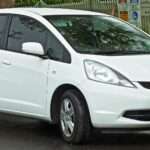
First-generation Jazz photographed in Malaysia. UK specification and CVT equipment are unconfirmed on the pictured car. Photo by Two hundred percent, Wikimedia Commons, CC BY-SA 3.0. Locally hosted. WordPress may resize or compress the image.
2016 Honda Jazz SE 1.3 i-VTEC. The photographed car’s transmission is unconfirmed. Photo by Harvey Bold, Wikimedia Commons, CC BY 4.0. Locally hosted and resized for display.