A good third-generation Panda 4×4 should be a small car you can trust in poor conditions, not an ordinary Panda carrying the repair bill for a disabled rear driveline. This guide covers the 2012-on type 319: TwinAir petrol, MultiJet diesel and the genuine four-wheel-drive Cross. It explains how to identify the right car, inspect its underside and running gear, interpret service history and build a realistic UK ownership budget.
The buying verdict
For mixed short journeys: start with a properly serviced TwinAir whose cold running and four-wheel drive have been checked. For regular longer journeys: consider a MultiJet with convincing engine and emissions-system history. For a Cross: pay for verified equipment and condition, rather than the appearance alone.
Our preferred purchase is an unmodified, complete car with matching suitable tyres, a dry interior, sound mounting areas and a successful specialist inspection. Keep a reserve for more than an engine service. A low asking price is less attractive if the propshaft, coupling, rear brakes and corrosion all need attention together.
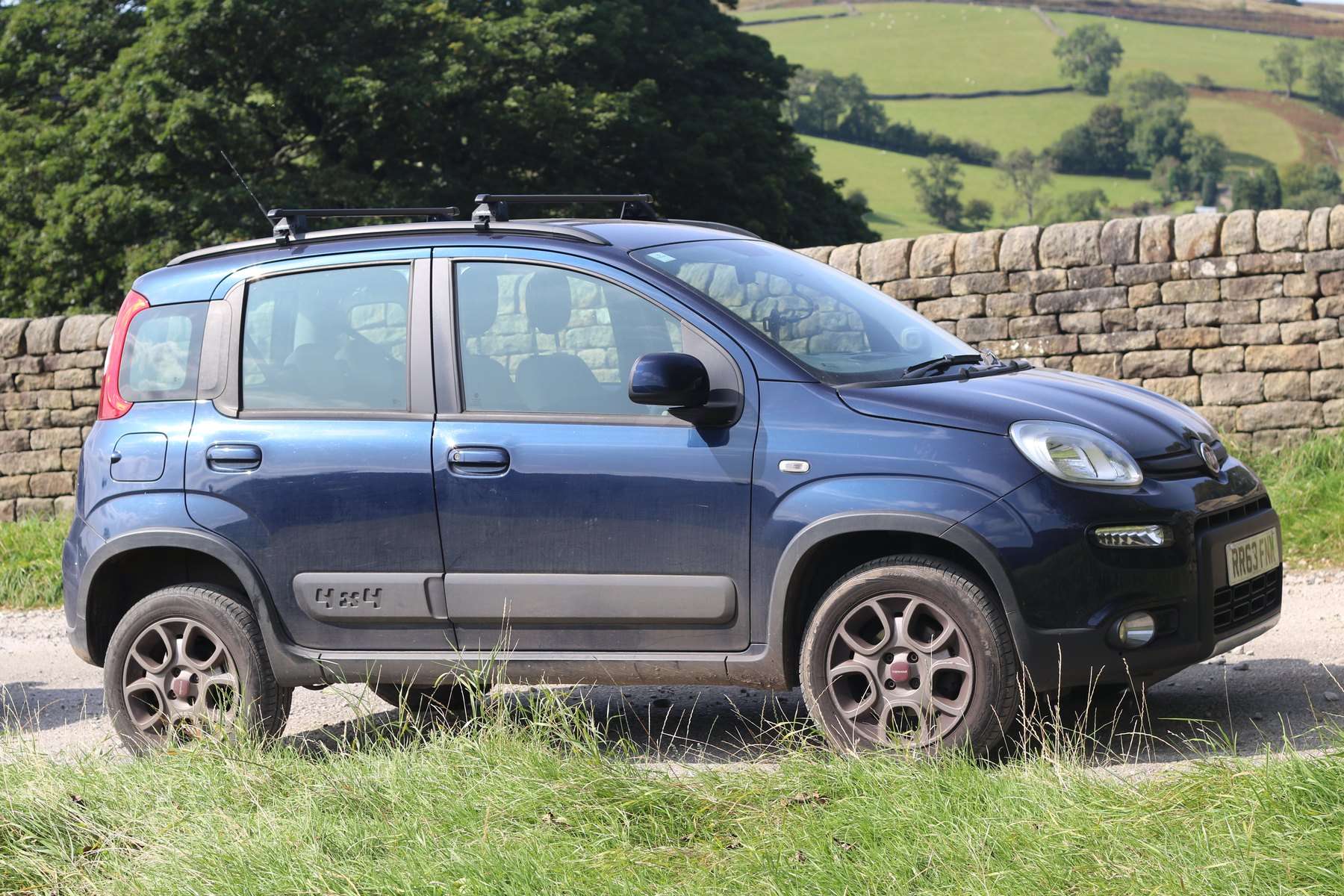
Featured photograph: Charles01, CC BY-SA 4.0; resized for web display.
Which Panda is this? Establish the generation and drivetrain
The boxy original 141 and the 2004-era 169 are separate buying subjects. This guide concerns the later, rounded 319 body, introduced to the UK 4×4 range in early 2013. Registration dates can straddle model changes, so check the VIN, engine and build rather than buying from the year alone. Some parts catalogues use different generation numbering. When a catalogue calls a 2012-on car “Panda IV”, confirm the actual chassis application instead of assuming that its numbering matches yours.
Fiat’s UK launch pack distinguishes the electronically controlled rear coupling of this 4×4 from the front-wheel-drive Trekking with Traction+. The 4×4’s ELD uses brake intervention to help traction; it is not a conventional manually locked axle differential. Raised suspension, roof bars and protective-looking trim do not prove that rear drive is present. Have the workshop identify the propshaft, coupling and rear-drive hardware, and confirm the original build as well as the equipment fitted now.
| Version | Reason to consider it | Buying priority |
|---|---|---|
| 319 4×4 TwinAir | Compact petrol daily with character | Oil specification, cold running, clutch, complete rear driveline |
| 319 4×4 MultiJet | Longer-distance use where diesel suits the journey pattern | Exact Euro specification, emissions history, oil and cooling condition |
| 319 Cross 4×4 | Additional off-road equipment and distinctive trim | Factory identity, selector functions, protection, tyres and damage |
| Trekking / City Cross / other lookalikes | May suit a buyer who does not require rear drive | Verify the drivetrain: the name or styling alone is insufficient |
Fiat’s 2014 Cross release adds a three-mode Terrain Control selector, including hill-descent assistance, and lists different tyres from the ordinary launch 4×4. Early Cross output was quoted at 90hp TwinAir or 80hp diesel; later specifications need their own build check. Do not order wheels, tyres or service parts solely from “Panda Cross” in an advert. Ask the seller to show the controls, handbook and invoice trail for the exact vehicle.

TwinAir or diesel: buy for your actual journeys
A petrol TwinAir is worth considering if your week involves modest mileage, short trips and occasional longer drives. Assess its character in person: two-cylinder sound and feel are part of the experience, but a misfire, persistent mechanical noise or a warning light still needs investigation. Drive it from cold to fully warm and try the route you expect to use. If you dislike the engine’s delivery, buying the cheapest example will not solve that mismatch.
A MultiJet can make sense for a driver covering regular sustained journeys, but potential fuel savings should be compared with purchase condition, emissions-system maintenance and any applicable local charges. Ask how the previous owner used it. A well-presented diesel that repeatedly ran short, interrupted trips needs more investigation than a fuel-economy claim. Check the exact registration with relevant official clean-air-zone services before assuming that a later plate or a Euro description in the advert guarantees access.
Neither engine choice excuses neglect of the 4×4 hardware. Compare two cars using the same inspection brief, including rear drive, tyres, brakes, chassis and service work. If the diesel needs investigation and the petrol needs a known service, those are different budget risks. A written diagnosis helps you make that comparison; a generic “common fault” explanation from the seller does not establish what is wrong with this car.
UK asking prices and how to make an offer
When checked for this guide, Auto Trader’s Panda 4×4 listings included TwinAir examples advertised at £2,490, £4,295 and £4,800, and MultiJet examples at £2,649, £6,495 and £9,500. These are individual asking prices across differing years, mileages and conditions, not completed sales or a valuation range for one specification. The search also includes older-generation cars. Separate those before drawing conclusions.
Build a comparison sheet for the exact version: original market, year, engine, Euro standard, mileage, service evidence, tyre condition, corrosion, driveline operation and seller terms. Keep a Cross comparison separate from an ordinary 4×4 unless you have identified the equipment difference and its value to you. A registration search or badge cannot tell you whether every advertised feature remains fitted and working.
Add purchase price, inspection, travel or delivery, immediate service, tyres and diagnosed repairs. For example, a car needing both front and rear brakes may consume much of an apparent price saving before a noisy propshaft has even been investigated. Ask for a fitted quote for each known job and retain a separate reserve for unresolved work. Do not turn a supplier’s parts price into a fitted estimate by adding a guessed hour of labour.
If a seller agrees to carry out work before collection, record what will be done, which parts will be used and what evidence you will receive. “Serviced before sale” can mean little more than oil and a filter. Specify whether the agreed preparation includes drivetrain checks, a fault diagnosis or only the scheduled engine service. Get any deposit conditions and inspection arrangements in writing before paying.
History: the evidence to request before travelling
Ask for the registration, VIN confirmation, service invoices and clear photographs of the tyres, dashboard controls and underside. Read the official MOT history, looking for repeated corrosion, tyre, brake, steering and suspension advisories. Ask what rectified each recurring item. A new MOT is useful evidence of a test on a particular day, not proof of a functioning rear coupling or a comprehensive engine-health assessment.
Use an appropriate provenance and finance check and establish the seller’s right to sell. The V5C identifies the registered keeper; it is not proof of clear ownership. Imports require a coherent trail of original identity, registration and mileage units. Ask about insurance repairs, off-road use, towing, flooding, underbody treatment and modifications. Confirm outstanding recalls or campaigns with Fiat using the VIN, rather than assuming that absence from a general online list settles every action.
A useful service file identifies dates, mileage, oil specification and the work actually completed. Ask for the manufacturer approval as well as viscosity. A receipt saying “5W-30” does not establish suitability for every TwinAir or diesel build. Look for long gaps, unexplained top-ups and work repeated shortly after repair. If the car has been stored, ask how it was recommissioned and assess tyre age, battery, brakes and fluids even if mileage barely changed.
Body, corrosion and the underside
Inspect in daylight with dry bodywork. Compare panel gaps, colour and paint texture around the bonnet, front wings, door edges and tailgate. Look at lower seams, wheel arches, sills, jacking points and accessible floor areas. Plastic trim can hide the edges you need to see, so ask the inspector what access is reasonable. Cosmetic bumper repairs and damage around a suspension mounting point have very different consequences.
Have a workshop raise the car safely and inspect the structure around front and rear suspension and drivetrain mounts, brake lines, exhaust supports, guards and the rear floor. Look for corrosion, accumulated mud, impact damage and poor repairs. The rear-drive equipment adds inspection areas that a two-wheel-drive Panda service may not address. Never crawl beneath a car supported only by a jack; a proper lift inspection is part of buying this model responsibly.
Fresh coating deserves questions. A documented clean, dry preparation and treatment can be useful, while thick new coating without photographs may conceal the condition being assessed. Ask for images before application, the product used and any repairs underneath. The quote for corrosion work should distinguish inspection or stripping, metal repair, component removal and protection. Covering an unknown area does not make it sound.
Look for signs of working use rather than assuming a city-car shape means an easy life. Farm tracks, winter salt, muddy lanes and outdoor storage can leave different evidence. Check guards and mounting points for dents, hoses and wiring for chafing, and accessible openings for trapped dirt. Ask whether damage was followed by a geometry or driveline check. A scraped shield is an inspection lead; it does not establish the condition of what lies above it.

Love cars you don’t see every day?
Get forgotten cars, surprising motoring stories and the most interesting finds from Unusual Cars by email.
Free to join. No spam. Unsubscribe whenever you like. See our privacy policy.
Prove that the four-wheel drive works
Start by confirming that the complete system is present. A removed propshaft is not an acceptable basis for paying full 4×4 value unless you deliberately want a repair project and have a complete diagnosis and restoration quote. Ask why it was removed, who investigated the complaint and which original parts come with the car. A claim that it was done “to save fuel” leaves the underlying condition unresolved.
Request an appropriate diagnostic scan of relevant systems and a safe operational demonstration by someone familiar with the vehicle. A dashboard indication alone is not proof that rear drive is being transmitted correctly. Demonstrate traction equipment only on a suitable surface, with permission and according to the exact handbook. Do not improvise wheel-spinning tests or force the car through manoeuvres to provoke a fault.
Have the propshaft joints and support, rear coupling area, differential, shafts, boots, seals and mountings inspected. Note any noise by road speed, load, temperature and whether accelerating or coasting. A vibration may come from tyres, wheels, a mount or a shaft; a rear noise is not automatically a failed differential. A written diagnosis should identify the suspected component and what further investigation is required before a replacement is ordered.
On a Cross, check the Terrain Control selector and associated indications against its handbook. Make sure each function being sold as part of the specification can be assessed properly. An unresolved ABS, stability or traction warning should be diagnosed before you value the off-road features. The fact that the engine runs and the car moves normally on tarmac cannot establish the health of all the systems you are buying it for.
Tyres, wheels and matching the specification
Record all four tyre sizes, models, age codes, tread depths and wear patterns. Check the handbook and placard for the correct specification and pressures. Unequal wear or unsuitable mixtures deserve attention before interpreting driveline behaviour. Price a suitable set rather than assuming two cheap replacements are enough. A spare, repair kit or compressor also needs checking against the equipment supplied and your intended journeys.
Fiat’s launch references list 175/65 R15 for the ordinary 4×4 and 185/65 R15 for the early Cross. Those are useful identification references, not permission to fit either size to every later build. Verify the exact car and wheel application. Inspect inner rims, sidewalls, previous repairs and rubbing. A taller tyre or altered wheel can affect clearance and how the vehicle behaves; establish compatibility with a competent specialist before buying a modified example.
TwinAir: oil history, cold running and cooling
Fiat identifies the TwinAir’s electro-hydraulic valve-control technology in its technical material. That makes correct oil history a more useful buying criterion than a vague claim that the engine was “regularly serviced”. Ask which oil approval was used and whether the car has needed repeated topping up. Investigate abnormal running before replacing an expensive control component on the strength of an online suggestion.
Check oil and coolant levels safely before starting, using the correct handbook procedure. Never open a hot coolant cap. Inspect hose joints and visible cooling components for leakage, residue or recent disturbance. From cold, note starting, idle, smoke, warnings and persistent abnormal noise. Once warm, check normal response, temperature behaviour and hot restarting. An engine that was already warm when you arrived may need a second visit to complete the assessment.
A two-cylinder engine has a recognisable sound and feel, but a repeatable misfire or harsh vibration still deserves diagnosis. Ask the technician to distinguish ignition, fuelling, air leaks, oil-related operation and mount condition as appropriate. Do not accept “they all do that” as a substitute for a clear explanation. For suspected timing-area noise, identify the installed engine and parts before discussing a repair; the accessory drive is a separate system.
MultiJet: emissions equipment and diesel condition
Identify whether the car is the relevant Euro 5 or Euro 6 version and obtain its own maintenance requirements. Ask about DPF, EGR and other emissions-related repairs, warnings and the pattern of use before the sale. Where a fault has been reset, request evidence of diagnosis and the repair. A dashboard without a warning at one moment does not prove that the cause was resolved.
Have a specialist assess cold starting, idle, smoke, boost delivery and any abnormal noise, together with relevant stored faults and operating data. Explain the car’s journey pattern to the workshop. Do not attempt to cure an unknown warning by driving the seller’s car hard or assuming a long run will fix it. The underlying issue may need repair, and any emissions-equipment alteration should be understood before you consider roadworthiness and insurance.
Look for consistent oil and filter maintenance, cooling-system health and evidence around previous turbo or injector work. Ask what caused an earlier failure and what related checks were completed. A new turbo invoice can be reassuring only when the cause and supporting work are understood. If there is a recurring symptom, get a diagnosis tied to this car rather than using a parts catalogue to choose the most convenient explanation.
Clutch, manual gearboxes and road test
Fiat’s early specifications distinguish the TwinAir six-speed with a low first ratio from the diesel five-speed. That low ratio is not a separate low-range transfer box. Verify the actual gearbox for the build and drive it in the conditions you expect. A brief test in town is not enough if most of your ownership will involve motorway journeys, hills or a regular rural route.
Check clutch take-up, pedal action, reverse and every forward gear cold and warm without forcing selection. Observe slip under normal progressive acceleration, unusual vibration and noises that change with pedal position. Avoid abusive stall or launch tests. A clutch quote must identify the correct engine and gearbox and state release components, any flywheel or associated work, fluids, labour and VAT. A kit is not the complete fitted job.
Try town manoeuvres, a level straight road, normal hill starts and a faster section where legal and safe. Note pulling, steering vibration, knocks and braking behaviour. Compare symptoms at the same road speed in different gears rather than assuming everything is engine-related. Return to the seller and look again for fresh leaks or smells. A useful inspection records what happened and when; it does not merely label the car as “drives well”.
Suspension, brakes, cabin and electrics
Inspect springs, dampers, bushes, bearings and mounting areas, allowing for the actual fitted specification. Uneven tyre wear or a crooked steering wheel should prompt investigation of alignment, worn parts and previous impacts. Check the rear brake hardware as a 4×4 application; do not use an ordinary Panda quotation without confirming fitment. Have discs and pads assessed on both faces and ask whether caliper operation or corrosion changes the repair scope.
Check carpets and load-area trim for damp, and investigate the source if moisture is present. Test all windows, locks, keys, heater, air conditioning, instruments and lighting. Try the City steering function and have warnings or inconsistent assistance assessed. Check battery condition and charging before assuming that a non-working stop/start feature or weak start requires an alternator. Additional electrical accessories need proper installation evidence.
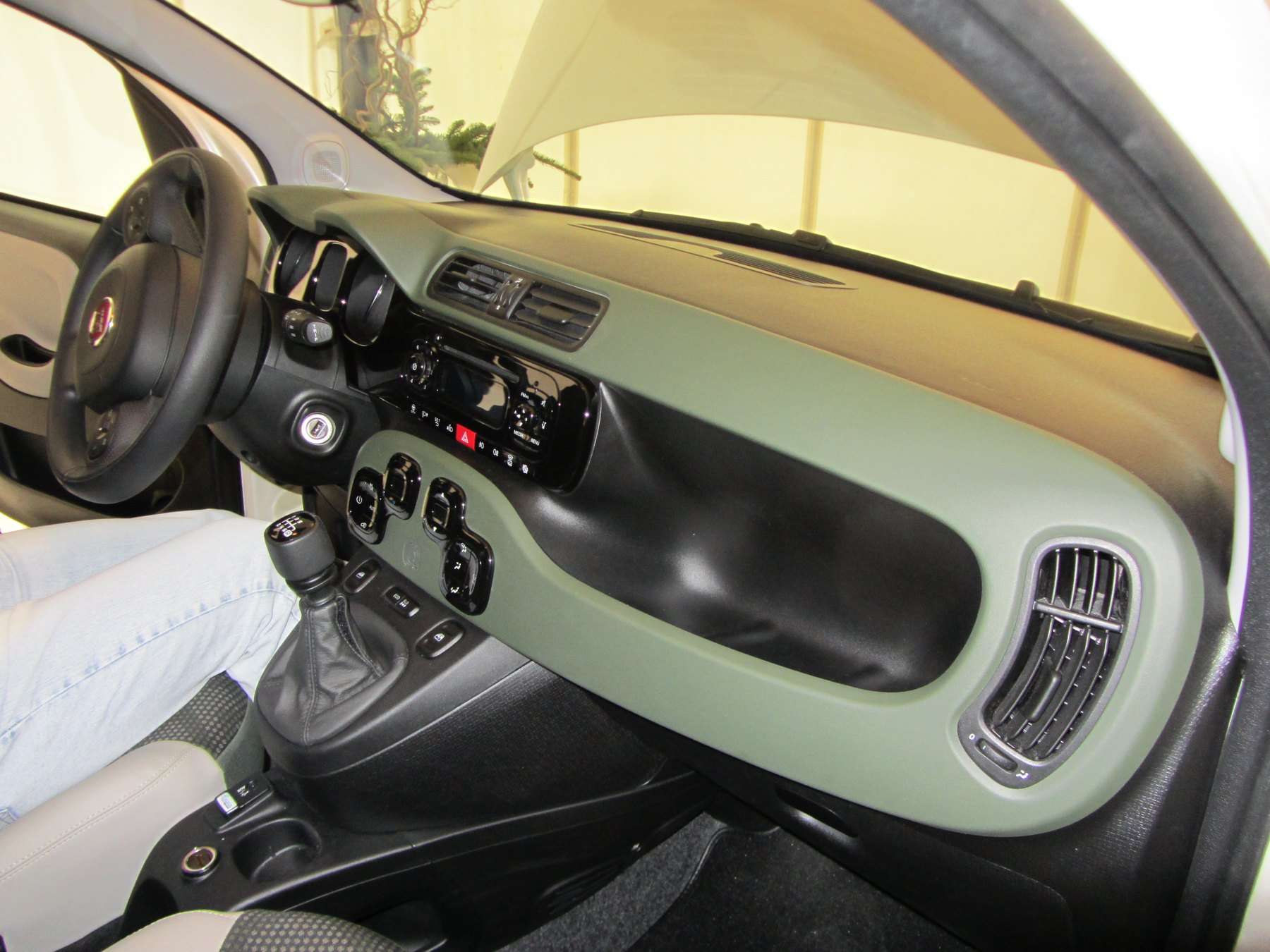
Check seating and belts against the documented configuration, not simply the number of cushions you can see. Try your own child seats or luggage where relevant, following their instructions. Inspect seat runners and folding mechanisms and test the infotainment with your phone. Older connectivity and navigation accessories may be less useful than an advert implies. The cabin’s condition matters, but it should not divert attention from the costly drivetrain and underside checks.
Maintenance and sourced UK fitted costs
Fiat Workshop’s Panda menu states that prices include VAT and use genuine or OE parts with Selenia oil. Its displayed mileage services and brake jobs provide a more useful reference than a generic small-car estimate. Confirm the current price, exact 4×4 engine application, age-related work and job contents before booking. The menu does not publish separate labour hours, so no invented labour split is added here.
| Published job reference | TwinAir | 1.3 Euro 5 / Euro 6 | Scope |
|---|---|---|---|
| 9,000-mile menu service | £197.30 | £142.74 / £179.09 | Fitted menu price including VAT; confirm applicable schedule |
| 18,000-mile menu service | £295.08 | £225.84 / £264.51 | Fitted menu price including VAT; confirm contents |
| Front discs and pads, 0.9 TB / 1.3 columns | £254.40 | £254.40 | Confirm fitted 4×4 hardware |
| 4×4 rear pads / rear discs and pads | £160.80 / £213.60 | Published fitted 4×4 rear-brake menu | |
Shop4parts separately displayed a TwinAir timing-chain kit at £209.49 excluding VAT, or £251.39 including 20% VAT, under reference S4P23733. This is a parts-only catalogue example, not a fitted timing repair or a diagnosis. Confirm engine application, kit contents and supporting work. Do not transfer the workshop’s 1.2 FIRE cambelt price to the TwinAir or MultiJet.
A useful first-year quote separates the scheduled service, any diagnosed repair and the 4×4-specific inspections. Ask whether driveline fluids, brake fluid, spark plugs where applicable, filters and age-related requirements are included or separate. Follow the VIN-specific schedule and account for demanding operating conditions. A row headed by a mileage is not a reason to ignore time, and a service stamp is not evidence that every fluid in the car was replaced.
Useful maintenance parts and eBay searches
Affiliate disclosure: Unusual Cars may earn a commission from qualifying purchases through these eBay links. Searches help compare availability; they do not guarantee fitment or endorse individual sellers. Match VIN, engine, gearbox and OE number, and check delivery, VAT, exchange surcharges, warranty and returns. Some search results include ordinary two-wheel-drive Pandas or the older 169, even when a 4×4 term is used.
| Item | Model-specific search | Check before ordering |
|---|---|---|
| TwinAir service parts | Oil and filter kits | Required oil approval and engine application |
| MultiJet service parts | Diesel service filters | Euro specification and kit contents |
| Ignition | TwinAir plugs and coils | Diagnose a misfire; match exact references |
| Charging | Alternators | Engine, output, connector and exchange terms |
| Accessory drive | Belts and tensioners | Accessory layout and associated components |
| Brakes | 4×4 rear discs and pads | Hardware, axle pair and fitting parts |
| Clutch | TwinAir 4×4 clutch kits | Gearbox, release components and fitted scope |
| Rear driveline | Propshaft and support parts | Diagnose first; confirm repairability and exact generation |
Keep the distinction between a repairable component and a complete assembly. Ask the workshop whether a listed support, joint or bearing is suitable for the diagnosed fault and whether fitting it is economical. Used parts need evidence of identity and condition. When a specialist supplies the parts, establish how that affects the warranty on labour before buying your own alternatives.
Hidden ownership costs and the first year
Insurance, applicable vehicle tax, fuel, recovery, tyres, rust prevention and specialist travel should sit alongside servicing in the budget. Declare modifications accurately and obtain a quotation for an import or unusual configuration before committing. Check local charging-zone eligibility using the actual registration. Do not assume that all diesel Pandas are treated alike or that a Cross badge changes an emissions classification.
Winter and rural use can bring cleaning and inspection work that a low annual mileage conceals. Budget for clearing trapped dirt and inspecting after heavy use, then protecting sound metal appropriately. A set of suitable tyres may matter more to your use than cosmetic accessories. Four-wheel drive helps traction; it does not remove the need for suitable tyres, cautious braking and a realistic assessment of conditions.
Leave a reserve for diagnosis. A noisy rear driveline, intermittent traction warning or unexplained coolant loss cannot honestly be budgeted as one inexpensive part until investigated. If that uncertainty would exhaust your funds, choose a better-understood car. After purchase, establish a documented baseline and deal with safety, leaks and overdue maintenance before spending on wheels or a suspension lift.
Panda 4×4 viewing checklist
- Identity: type 319, engine, market, Euro standard, genuine 4×4 or Cross and seating.
- Documents: ownership/provenance, MOTs, invoices, oil approval, campaigns and modification history.
- Cold start: safe fluid checks, starting, idle, smoke, warnings and abnormal noise.
- Underside: structure, mounts, corrosion, repairs, mud, guards, lines and complete rear drive.
- Tyres: four compatible correctly specified tyres, wear, age, pressures and wheel damage.
- Drive: cold-to-warm engine and gearbox, clutch, steering, braking and fresh leaks afterwards.
- 4×4 test: relevant diagnostic scan and suitable-surface demonstration by a competent person.
- Budget: itemised fitted quotes, tax/VAT scope, insurance and a separate reserve.
- Handover: keys, handbook, agreed preparation, included parts and written payment terms.
Walk away or make further inspection a condition where identity is unclear, structural areas cannot be assessed, rear-drive equipment is missing without a diagnosis, or serious running symptoms remain unresolved. Known wear with a reliable quotation can be negotiated. Unknown faults should not be priced as though the cheapest possible repair has already been established.
Fiat Panda 4×4 Mk3 buying questions
Is every Panda Cross or Trekking four-wheel drive?
No. Fiat’s 319 launch material describes Trekking as front-wheel drive with traction assistance, and later similarly styled names also need checking. Confirm the original build and physical rear-drive equipment before paying for a 4×4.
Does a TwinAir’s low first gear mean it has low range?
No. The launch specification describes a six-speed gearbox with a low first ratio. It is not a separate selectable low-range transfer box. Use the correct handbook to understand the fitted traction controls.
Should I choose petrol or MultiJet?
Choose around your journeys, local charges and the condition of the individual car. A petrol can suit frequent short trips; a diesel needs a use pattern and maintenance history that make its emissions equipment and running costs sensible.
Is a removed propshaft a harmless economy modification?
Treat it as an unresolved repair issue until a specialist establishes why it was removed, what condition the remaining system is in and what reinstatement costs. Do not pay normal functioning-4×4 value on a reassuring explanation alone.
What should the inspection prioritise?
The underside and mounting areas, complete functioning four-wheel drive, tyres, cold-to-hot engine behaviour and evidence of correct maintenance. Cosmetic condition and a recent MOT cannot replace those checks.
Sources and related reading
- Fiat UK: 319 4×4 and Trekking launch specification.
- Fiat UK: 2014 Cross equipment and drivetrain reference.
- Fiat Workshop: VAT-inclusive Panda service and brake menus.
- Shop4parts: 2012-on TwinAir chain-kit price and application.
- Auto Trader: asking-price examples. Prices and availability change; confirm current quotations. Inspection advice identifies what to check, not a claim that every car suffers each fault.
Fiat Panda 4×4 Mk3 for sale on eBay UK

See more Fiat Panda 4×4 Mk3 cars on eBay UK
Love cars you don’t see every day?
Get forgotten cars, surprising motoring stories and the most interesting finds from Unusual Cars by email.
Free to join. No spam. Unsubscribe whenever you like. See our privacy policy.