The original Škoda Fabia vRS makes most sense when you stop treating it as a cheap way to win a traffic-light contest. Its appeal is the combination: a compact five-door body, useful diesel torque, a six-speed manual gearbox and the ability to cover everyday miles without the fuel appetite of many contemporary petrol hot hatches. A healthy example still feels purposeful. A neglected, heavily remapped one can turn that same torque into an expensive clutch, flywheel and diagnostic exercise.
This guide covers the first-generation Fabia vRS 1.9 TDI PD, including the late SE. It does not cover the later 1.4 TSI petrol vRS with DSG. Their engines, gearboxes and buying risks are different. Identify the car before comparing prices, ordering parts or accepting advice lifted from another generation.
The buying verdict
Buy the best documented, least compromised Mk1 you can inspect properly. A standard-looking car with evidence of appropriate oil, a complete timing-belt job, dry carpets, a clean diagnostic assessment and a sound underside is a better starting point than a cheaper car advertised mainly by its remap figure. Mileage is one part of the assessment; recent work, workmanship and how the car behaves cold and fully warm matter more than a low number in isolation.
It suits regular longer journeys and buyers who enjoy its diesel character. For repeated short urban trips, do the sums against a petrol alternative and check the emissions restrictions where you actually drive. Do not assume an old diesel can enter every clean-air zone simply because it passes its MOT.
Know which Fabia vRS you are buying
Škoda’s own RS retrospective identifies the 2003 first Fabia RS with a 1.9-litre TDI producing 96kW/130PS. Its quoted 0–100km/h time was 9.6 seconds. Those figures describe a factory car, not the output of every survivor. The manufacturer also distinguishes the second-generation model introduced in 2010: a 1.4-litre petrol engine and seven-speed DSG. A search result labelled simply “Fabia vRS” can therefore contain two very different propositions.
For the Mk1, check the registration, VIN, engine identity and documents together. Look for a consistent history rather than assuming bumpers, badges, seats or a six-speed gear knob prove authenticity. Cars can acquire replacement panels and interiors over two decades. Establish whether a replacement engine is recorded, why it was fitted and whether its ancillaries and management match the car.
| What you find | What to establish |
|---|---|
| Ordinary Mk1 1.9 TDI vRS | Genuine identity, factory specification and documented maintenance. Do not compare it directly with lower-powered ordinary Fabia diesels. |
| Late vRS SE | Verify the special-edition identity from records. Paint, trim or wheels alone are insufficient evidence for a premium. |
| Modified or remapped car | Who did the work, what software and hardware are fitted, whether it was declared to the insurer and how the clutch, brakes and tyres were maintained. |
| Later 1.4 TSI DSG vRS | A separate model requiring its own buying checks; it is outside this guide. |
Prefer an intact folder of dated invoices over a description that says “full history” without showing what was done. Read the job details: an oil change, a timing-belt change and a complete belt, tensioner and water-pump job are three different things. Ask for the supplying workshop’s name and, with the seller’s agreement, clarify ambiguous major invoices before travelling.
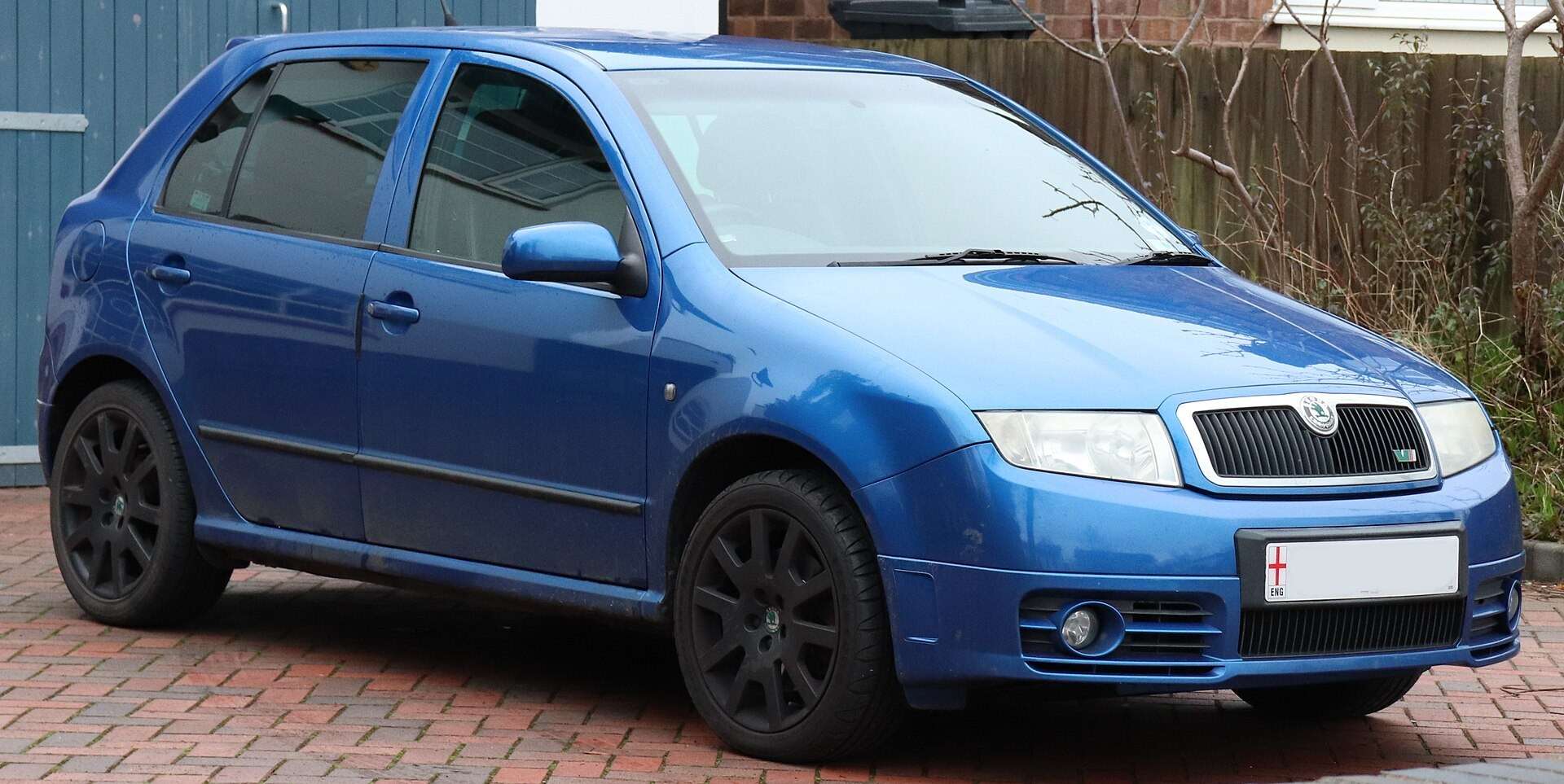
UK prices: distinguish cheap transport from a good enthusiast car
The Auto Trader vRS search checked for this guide contained both generations. Clearly identified 1.9 TDI examples included asking prices of £1,600, £5,750, £6,000, £6,990 and £6,995. These are individual advertised prices, not completed sales or a reliable valuation band. The wide spread is a reason to investigate condition and provenance, rather than conclude that every Mk1 has suddenly become a £7,000 car.
Build a shortlist using cars genuinely comparable with yours: Mk1 diesel, similar originality, mileage, condition and recent maintenance. Note private versus dealer sale, warranty wording, structural repairs, modifications and whether major work is actually invoiced. A clean paint finish and an enthusiastic description cannot substitute for a lift inspection.
At the cheap end, assume nothing about the maintenance position until the paperwork proves it. Price the overdue work before negotiating. At the expensive end, expect unusually convincing evidence: a good shell, tidy correct trim, sympathetic ownership and documented mechanical condition. An SE badge or low mileage adds little comfort if the underside is poor or the engine cannot be started from cold.
Use a simple purchase calculation: asking price plus immediate safety work, overdue servicing, known repairs and a reserve. Set the maximum total before viewing. If buying the car empties the entire budget, a lower-priced but more needy example is unlikely to be a bargain. Spending more on a genuinely sorted car can be cheaper, but only if the inspection supports that description.
The 1.9 TDI: evidence first, reputation second
Start with an honestly cold engine
Ask the seller not to start it before you arrive. Check that this is plausible, then watch the warning lamps before starting. A reluctant start, uneven idle, abnormal mechanical noise, persistent smoke or fluid loss needs diagnosis. Do not let “they all do that” end the conversation. Equally, a brief observation alone is not enough to name an injector, turbocharger or cylinder-head fault.
Look at oil and coolant levels, staining, disturbed hoses, wiring repairs and recent cleaning. A spotless engine bay is not proof of a leak-free engine. Look again after the drive, without removing a hot coolant cap. Ask why coolant has needed topping up, why the oil level has changed or why a warning lamp was recently cleared. Establish a repair plan before purchase if the answer is uncertain.
Correct oil matters more than a brand name
Request invoices identifying the oil specification and service dates. “Fully synthetic” or a viscosity alone does not establish that the lubricant met the requirements of this PD engine and its service regime. Use the handbook and engine identity, then have a VAG specialist confirm the required approval before ordering. A modern oil chosen for a different diesel should not be assumed suitable simply because it is expensive.
Where the history is weak or the engine has unusual noise or running concerns, ask the inspecting specialist whether examination of the camshaft and valve gear is justified. Do not claim that every high-mileage engine needs replacement internals, or that a smooth idle proves there is no wear. Pay for an appropriate assessment rather than replacing parts on internet diagnosis.
Timing belt and water pump: ask what the invoice includes
Find the last dated belt invoice and its mileage. Check whether it includes the belt, tensioner, idlers and water pump, and whether the workshop identified the correct engine. A sticker under the bonnet is useful supporting information, but it is weaker evidence than an itemised receipt. If the invoice is missing, budget on obtaining a fresh specialist quote rather than accepting a seller’s remembered interval.
Confirm the interval for the actual engine, service history and current manufacturer guidance. This guide deliberately does not give one universal mileage or age limit for every car advertised as a Fabia diesel. A belt that looks tidy where visible is not a substitute for knowing the age and condition of the full installation. Check coolant compatibility and the condition of ancillary belts at the same visit.
For shopping, start with Mk1 vRS timing-belt and water-pump kits. Match engine code, build details, kit contents and supplier information; a search result title is not a fitment guarantee. Cheap kits missing the relevant components are not directly comparable with a complete fitted job.
Boost, smoke and running problems
Once warm, the car should pull consistently under sensible load. Hesitation, surging, reduced power, a sudden limp-mode episode or persistent heavy smoke warrants a diagnostic check. Look at boost hoses and joints, vacuum plumbing and electrical connections, but do not assume the most expensive component is responsible. Ask a specialist to compare requested and actual operating data where appropriate.
A seller who says it “just needs a sensor” should be able to explain why the repair has not been completed. Budget for diagnosis before parts. An injector wiring issue, air leak or control problem can feel dramatic, while replacing a turbocharger without identifying the cause can leave the fault unresolved. Never use an unsafe public-road acceleration test to prove a car’s claimed output.
Modification makes interpretation harder. Obtain the tuner’s invoice, software details and the car’s intended hardware specification. Ask whether the car was mapped around faults or whether emissions equipment has been altered. A rolling-road printout is one data point, not a health certificate. If originality and predictable ownership matter to you, an unmodified car is usually easier to assess.
Love cars you don’t see every day?
Get forgotten cars, surprising motoring stories and the most interesting finds from Unusual Cars by email.
Free to join. No spam. Unsubscribe whenever you like. See our privacy policy.
Clutch, flywheel, six-speed gearbox and road test
Test the clutch from cold and again after the car is fully warm. Check engagement, take-up, pedal feel and whether revs rise without a matching increase in road speed under normal, appropriate load. Slipping under torque needs a quote, especially on a remapped car. Do not repeatedly provoke slip or lug the engine at very low speed in a high gear.
Listen during idle, starting, stopping and clutch operation. Rattles or vibration need a diagnosis that distinguishes the clutch, dual-mass flywheel, mounts and other drivetrain components. A basic clutch price may not include the flywheel, release components, seals, fluids or additional labour. Ask exactly what is included before using it in a negotiation.
Select all gears, including reverse, and notice resistance, crunching, jumping out of gear or abnormal whine. Check for oil leakage and damaged driveshaft boots on a lift. A six-speed gearbox that functions on a short loop can still have issues once hot. Let the inspecting specialist assess anything suspicious; a different gear knob is not evidence of an upgraded transmission.
On the road, seek a straight, controlled car rather than one that merely feels firm. Pulling, tramlining, vibration and knocks can come from tyres, alignment, suspension wear or accident repair. Check tyre age and condition as well as tread depth. Four tyres of a reputable, compatible specification are a stronger sign of care than shiny large wheels with mismatched budget rubber.
Confirm braking response and warning-lamp operation. Check disc condition, corrosion and evidence of sticking components. A fresh MOT does not mean the brakes, suspension and tyres are ready for several trouble-free years. Read repeated advisories alongside invoices to see whether work was completed or simply deferred until the next test.
Body, underside, water ingress and cabin
Inspect in daylight with the car dry enough to reveal paint and panel condition. Compare gaps and finish around the front end, doors, tailgate and rear quarters. Look for overspray, abrupt paint edges, disturbed fasteners and inconsistent sealant. Repaired accident damage is not automatically disqualifying, but its extent and quality must be understood and reflected in the price.
Have the underside examined on a lift. Concentrate on sill strength, jacking points, floor areas, suspension mounting regions, subframes and brake and fuel lines. Surface corrosion and structural deterioration are not the same; ask for photographs and a written description if repairs are needed. Avoid a purchase that depends on an unseen welding estimate being cheap.
Check every footwell, under mats and around the spare-wheel well. Feel for damp, look for staining and smell for stale moisture. Water can move away from its entry point, so a wet carpet is the start of a diagnosis, not proof of one particular seal. Ask whether door membranes, seals or drains have been repaired and whether the interior was properly dried afterwards.
Operate each door, lock and window several times. Check mirrors, rear wiper, washer systems, demisting and the heater at different settings. Test the air conditioning long enough to judge it. “Needs a regas” is not a diagnosis: leakage, electrical faults and failed components can turn a small allowance into a larger bill.
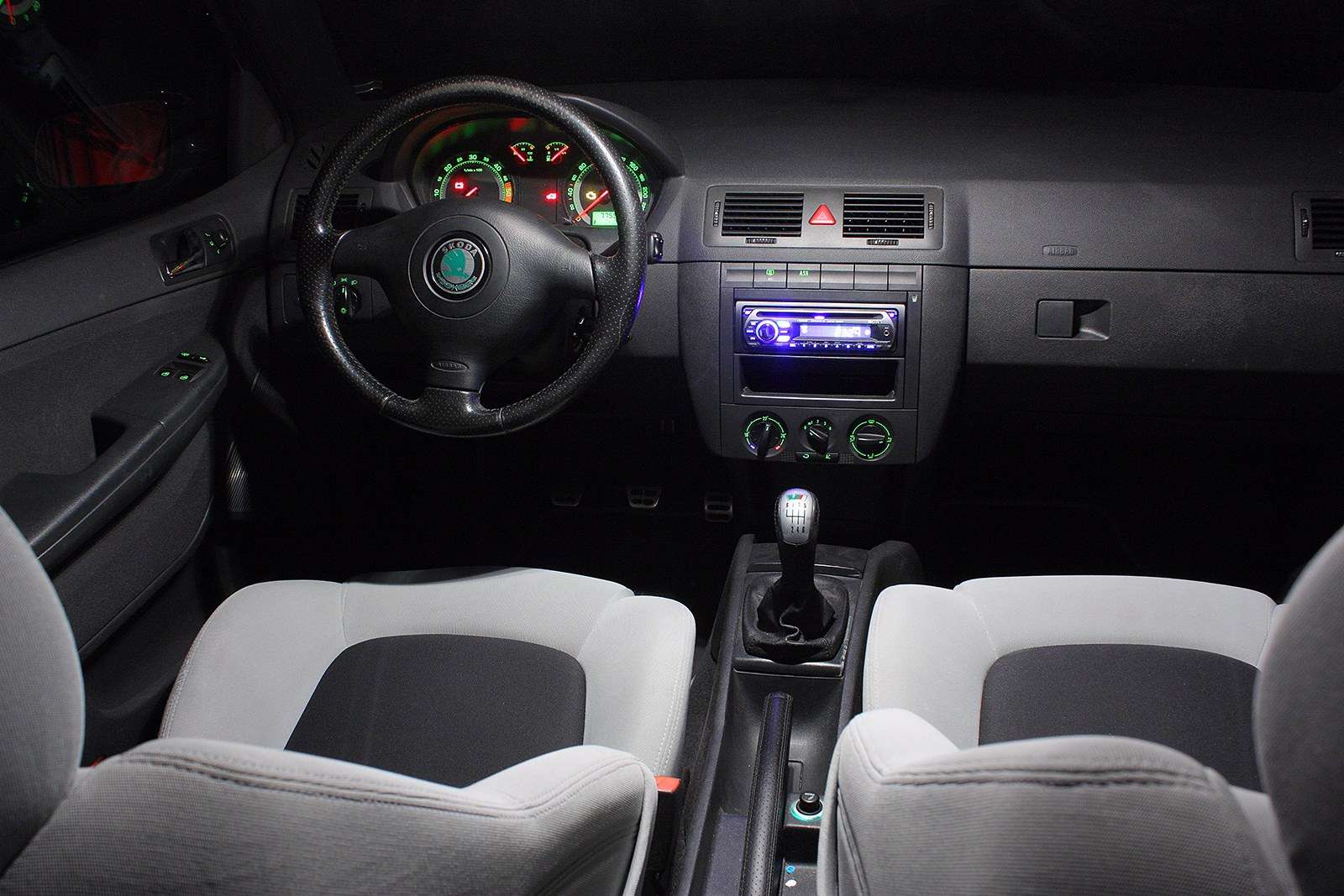
Inspect seat bolsters and cloth closely, and check the steering wheel, pedals, switchgear and luggage area against the claimed use. Wear is not an odometer test by itself, but inconsistencies deserve questions. Correct replacement seat fabric, trim and small original items can take more effort to find than ordinary service parts.
Pay particular attention to steering assistance. Test low-speed manoeuvres and the return from lock without holding the steering against its stops. Heavy, intermittent or inconsistent assistance needs proper investigation of the system, electrical supply and related faults. Do not buy an expensive steering component solely because someone has guessed it is the cause.
Maintenance and UK repair costs: compare the same job
The most useful budget is an itemised quote for the car’s registration and engine identity. Public price tools often combine ordinary 1.9 diesels, other Fabia engines and different years. The references below show the limits of the available data as well as the numbers. They are planning evidence, not promises that a workshop will repair a vRS for the headline amount.
| Job / evidence | Parts, labour and fitted scope | How to use it |
|---|---|---|
| Timing-belt replacement: Fixter’s model-specific labour table | Fabia 1.9 vRS: 3 hours 43 minutes–4 hours 21 minutes. Its price rows do not identify the vRS. | Useful labour-time context. Ask for a vRS-specific fitted quote including the pump, tensioners, coolant and VAT; do not apply another engine’s price. |
| Timing belt and water pump: ClickMechanic, 2005 Fabia 1.9 reference | Parts £152–£264; listed labour 2–3 hours; independent fitted estimate £272–£340, franchise £409–£491. | This is a generic 1.9 row, not confirmed as PD130/vRS. It must not override a specialist’s model-specific assessment. Confirm VAT and exact contents with the provider. |
| Clutch: ClickMechanic, 2005 Fabia 1.9 reference | Parts £240–£548; listed labour 2–3 hours; independent fitted estimate £393–£609, franchise £576–£836. | Again not confirmed vRS fitment. Do not treat it as a complete dual-mass flywheel replacement quote. |
| Routine oil and filter service | Obtain parts and fitted prices for the correct PD oil approval and filter. Published engine-generic menus are not a substitute. | Ask whether inspection, disposal, VAT and any additional filters are included. |
| Alternator or starter fault | Diagnosis, component and installation should be quoted separately; check new versus remanufactured and any exchange surcharge. | Check the battery, connections and charging system before ordering a replacement alternator. |
The disagreement between generic belt labour times and the vRS-specific labour row is precisely why a single internet price is not a firm budget. Send a workshop the registration, engine details, last belt invoice and a description of the work you want. Request the total payable and ask how extra work will be authorised. Do not invent a labour charge by subtracting one supplier’s retail kit from another company’s fitted estimate.
Useful parts searches include oil and filter service kits, alternators, clutch and dual-mass flywheel kits, front brake discs and pads and thermostat and coolant-flange parts. Verify the actual part number, electrical connections, dimensions and kit contents. A complete assembly, a repair component and a used part may appear in the same results.
Hidden ownership costs
Deferred maintenance accumulates. A belt job, worn clutch, four tyres and an air-conditioning repair can arrive together even if none is individually a surprise. The first year’s bills therefore depend heavily on the car you buy. Keep a separate reserve after the purchase rather than treating the advertised price as the full cost of entry.
Cheap remapping can move costs elsewhere. Extra torque may expose existing clutch or mount wear. Budget for an insurance quote that accurately describes the car, and obtain written details of modifications. Returning a car to standard can require more than a software change if intake, exhaust, turbo or other hardware was changed.
Rare trim is a different market from service parts. A diesel filter is easy to compare; correct seats, special-edition details and original wheels can be slower to source. Look at original vRS interior and trim listings before assuming an untidy cabin can be restored cheaply. Allow for cleaning and repair as well as parts and postage.
Old-diesel access and tax must be checked individually. Use the registration in the relevant official clean-air-zone and tax services. A seller’s statement about emissions compliance may be wrong for your destination. Also check insurance, parking and the cost of regular journeys; strong economy does not automatically make the car the cheapest choice for every owner.
Small electrical faults consume diagnostic time. Windows, locks, steering assistance, sensors and charging issues should be evaluated together with battery and wiring condition. A box of replacement parts is not evidence that the underlying problem was solved. Retain a reserve for diagnosis and ask for a written explanation of the repair.
A practical viewing and purchase plan
- Before travel: obtain registration and VIN confirmation, photographs of the underside and interior, MOT history, belt invoice, oil details and a full modification list. Agree a cold start and a sufficiently long road test.
- With the paperwork: compare mileage progression, identities and dates. Clarify ownership, finance or damage concerns using appropriate checks. Check whether the seller can support the “standard”, “SE” or “fully serviced” description.
- At the car: inspect body repairs, damp carpets, tyre condition and warning lamps before starting. Test all electrical equipment, locks and steering assistance.
- During the drive: assess starting, idle, consistent warm power delivery, clutch behaviour, every gear, brakes and suspension. Record symptoms rather than accepting a guessed diagnosis.
- On a lift: have a VAG specialist examine corrosion, leaks, mountings, brake lines, driveshaft boots and evidence of poor repairs. Scan for faults and interpret them with the mechanical findings.
- Before agreeing a price: obtain written quotes for immediate work, confirm insurance and emissions-zone suitability, and decide whether the remaining reserve is adequate.
Walk away from a seller who blocks a reasonable inspection, cannot explain significant identity discrepancies, insists that persistent warnings are harmless or asks you to accept unknown structural repairs on trust. A low price cannot make an unsuitable car easy to own. Conversely, a well-used, honestly described example can be a good buy when its condition and repair budget are understood.

Turn the inspection into a first-year maintenance plan
Ask the inspector to divide findings into work needed before use, work due soon and matters to monitor. This makes a report useful for ownership rather than simply a list of age-related defects. A brake-fluid leak or damaged tyre has a different urgency from worn seat cloth. If several jobs are close to due, ask whether combining them reduces duplicated dismantling without replacing serviceable components unnecessarily.
For a car with incomplete records, establish a baseline after purchase: the correct oil and filter, a record of all fluid levels, an inspection of cooling and charging systems, tyre pressures, a diagnostic report and a written decision on timing-belt status. Have the workshop record the parts and specifications used. You are creating evidence for yourself and the next owner, not merely collecting another stamp.
A fault-code scan should include an explanation, not just a printed list. Ask which faults are current, which might be historic, whether readiness or warning-lamp behaviour suggests recent clearing, and what test would confirm the diagnosis. A recently disconnected battery can have an innocent explanation; it should still prompt a proper assessment rather than being used to dismiss every anomaly.
For charging complaints, distinguish a tired battery, poor connection, unsuitable replacement battery and a genuine alternator problem. Ask for the measured findings and the proposed repair. Likewise, a cooling complaint should lead to a methodical inspection and, if indicated, a pressure test, rather than an assumption that one inexpensive sensor will solve repeated coolant loss.
Do not chase the original driving feel through suspension parts alone. The inspection should include tyre condition, wheel damage, alignment and the quality of any previous lowering installation. If the car has adjustable suspension, establish its make, specification and documentation. Check that brake hoses, wiring and driveshaft boots are not being damaged by the setup.
For a daily driver, write down what must work from day one: dependable starting, dry windows and carpets, working demisting, secure locks and predictable steering and braking. A car bought for occasional events may tolerate cosmetic compromises, but it still needs the same mechanical safety. Be honest about your own tolerance for downtime, storage and arranging repairs.
Finally, keep the original advert, inspection report, invoices and photographs together. If the car is an SE or unusually original, record the details before changing anything. Reversible improvements can be worthwhile, but do not discard hard-to-find original components casually. Resale confidence comes from an intelligible history of the actual car, not a collection of fashionable modifications.
Fabia vRS Mk1 buying questions
Is a high-mileage Fabia vRS worth buying?
Potentially, if its condition, maintenance record and inspection support the price. Low mileage does not cancel corrosion, age-related deterioration or poor oil history. Compare the whole car and its immediate repair requirements rather than using a single mileage cut-off.
Should I buy a remapped example?
Only if you understand the modifications, can insure them and have the car inspected accordingly. A known tuner and documented supporting work are more useful than a claimed power figure. If you want straightforward ownership and originality, prioritise a sound standard car.
Does a timing-belt quote include everything?
Not necessarily. Ask about the pump, tensioners, idlers, coolant, ancillary work, VAT and any warranty. The public estimates in this guide have different scopes and some do not identify the vRS specifically.
Is the later petrol vRS a better alternative?
It is a different buying decision with a different engine and gearbox. Compare dedicated information for the 1.4 TSI DSG model rather than carrying this diesel guide’s assumptions across generations.
What is the best example to seek?
A genuine car with a sound shell, dry interior, appropriate servicing, documented belt work, consistent road manners and few unexplained modifications. Pay extra for evidence you can verify, not simply a polished presentation.
Sources and further checks
Factory identification and performance: Škoda’s RS history. Market examples: Auto Trader Fabia vRS listings. Cost references: Fixter timing-belt labour table, ClickMechanic belt and pump estimates and clutch estimates. Confirm maintenance requirements with the car’s handbook and a specialist using its VIN. Featured photo: Vauxford / Wikimedia Commons, CC BY-SA 4.0; the source filename is not an engine specification.
Some parts links are eBay affiliate links. We may earn a commission from qualifying purchases. Search results are for comparison, not an endorsement or a guarantee of fitment. Prices and availability change.
Service parts and maintenance shopping checklist
Use these Škoda Fabia vRS Mk1 searches to compare parts availability. A search result is not a fitment guarantee: confirm the exact vehicle specification and original part numbers before ordering.
| Maintenance item | What to check before buying | eBay parts search |
|---|---|---|
| Mk1 vRS timing-belt and water-pump kits | Confirm engine code and the diagnosed scope with a specialist. Check tensioners, guides, seals and associated parts; this is not a universal replacement interval. | Compare mk1 vrs timing-belt and water-pump kits on eBay |
| oil and filter service kits | Match engine code and production date; compare kit contents and the manufacturer approvals for any included fluids. | Compare oil and filter service kits on eBay |
| alternators | Match the original part number, output rating, electrical connector and pulley; check exchange surcharges. | Compare alternators on eBay |
| clutch and dual-mass flywheel kits | Match engine and transmission codes and flywheel type; confirm release hardware, seals and installation requirements. | Compare clutch and dual-mass flywheel kits on eBay |
| front brake discs and pads | Match axle, fitted brake assembly, dimensions and wear sensors; compare a complete axle set and confirm whether hardware is included. | Compare front brake discs and pads on eBay |
| thermostat and coolant-flange parts | Identify the failed component first; match engine and housing references, seals and the correct coolant specification. | Compare thermostat and coolant-flange parts on eBay |
Affiliate disclosure: we may earn a commission from qualifying eBay purchases, at no additional cost to you. Listing prices are for the advertised contents only; fitting, diagnosis, fluids and associated work may cost extra. Check availability, seller reputation and returns terms.
Škoda Fabia vRS Mk1 for sale on eBay UK

See more Škoda Fabia vRS Mk1 cars on eBay UK
Love cars you don’t see every day?
Get forgotten cars, surprising motoring stories and the most interesting finds from Unusual Cars by email.
Free to join. No spam. Unsubscribe whenever you like. See our privacy policy.