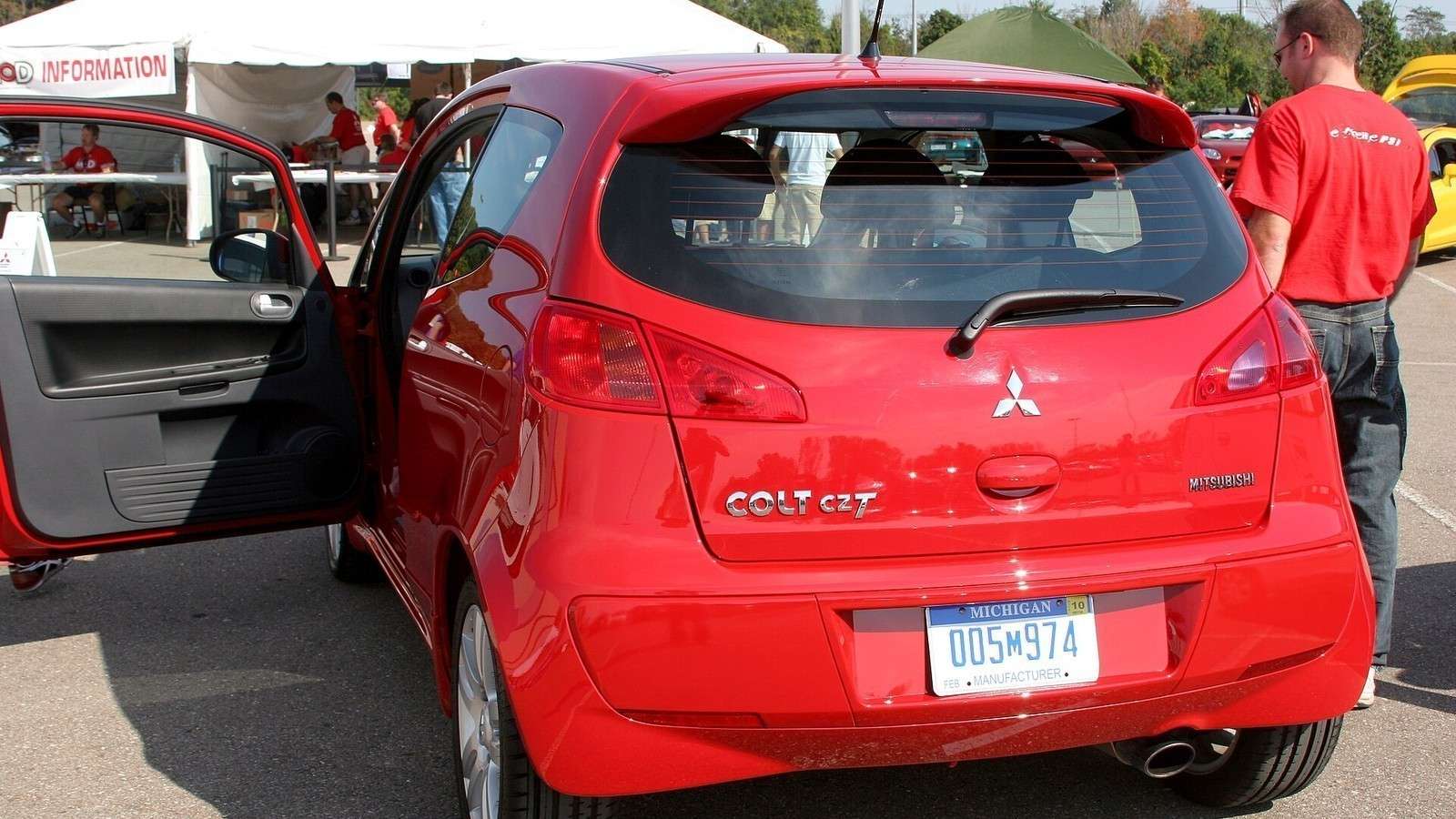
The Mitsubishi Colt CZT squeezed a turbocharged 1.5-litre engine into one of the lightest European superminis of its era. Japan then took the idea further with the Ralliart Version-R, creating a family of overlooked pocket rockets with far stronger performance than their friendly shape suggests.
Here are ten things you probably didn’t know about the Mitsubishi Colt CZT and Ralliart Version-R.
1. European Colts were built alongside the Smart Forfour
The Z30-generation Colt and first Smart Forfour shared their basic platform and were assembled by NedCar in the Netherlands. The partnership explains similarities in their tall proportions and underpinnings, but Mitsubishi developed its own engines, styling and performance identity for the CZT.
2. The CZT used a turbocharged 1.5-litre MIVEC engine
Its 1,468cc 4G15T four-cylinder combined turbocharging, intercooling and Mitsubishi’s MIVEC variable valve timing. European output was 150PS with 210Nm, sent through a five-speed manual gearbox. In a small three-door hatch, that provided considerably more mid-range force than most contemporary warm hatches.
3. It could reach about 131mph
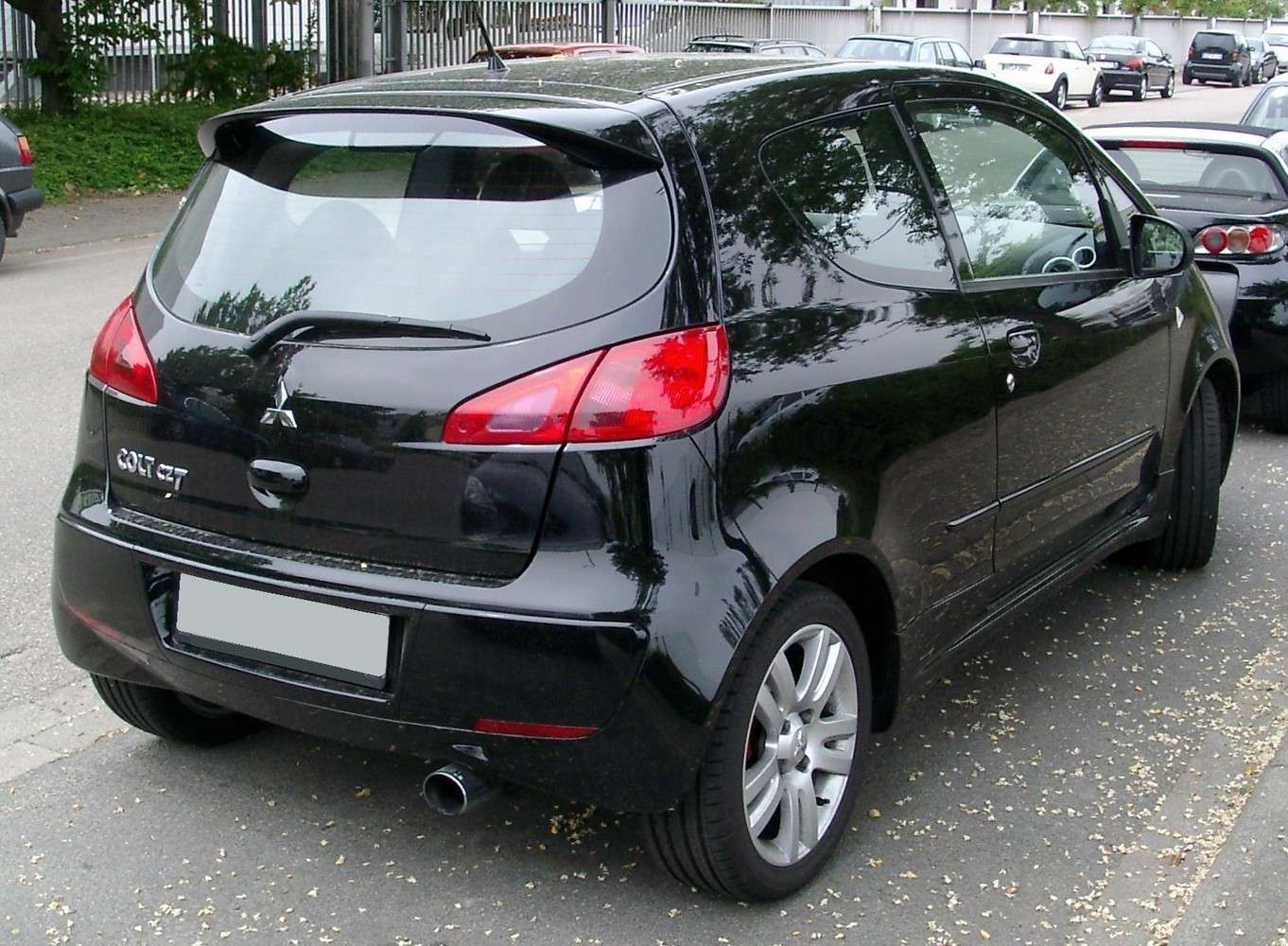
Published specifications put 0–62mph around eight seconds and maximum speed close to 131mph. The figures were quick rather than supercar dramatic, but the Colt’s upright driving position and short wheelbase made acceleration feel vivid. Tuners soon discovered that the engine responded strongly to boost, intake, exhaust and intercooler changes.
4. CZT was a European three-door formula
The CZT combined the compact three-door Colt body with firmer suspension, larger wheels, deeper bumpers and sports seats. It was sold as a usable hot hatch, not a homologation special. Its visual treatment remained relatively subtle, which helped the car become a convincing small sleeper.
Join the Unusual Cars Club free
Get forgotten cars, surprising motoring stories and the most interesting finds from Unusual Cars by email.
Free to join. No spam. Unsubscribe whenever you like. See our Privacy Policy.
5. Japan received the Ralliart Version-R
The Japanese-market Version-R used the practical five-door body with rear handles concealed high in the window frame. Output was commonly quoted at 154PS for the manual, and buyers could also choose a CVT. Mitsubishi added more than a badge: the car received specific body reinforcement, tuning and Ralliart detailing.
6. The Version-R shell was strengthened
Additional seam welding and structural work increased rigidity, giving the Japanese flagship a more serious foundation than an ordinary Colt. That difference matters when comparing imports with European cars carrying aftermarket Ralliart badges; appearance alone does not prove Version-R specification.
7. There was also a European Ralliart-badged successor
After the Colt facelift, Mitsubishi used Ralliart branding in Europe as the performance model evolved. These cars should not automatically be treated as identical to the Japanese Version-R. Power, body style, equipment and market specification vary, so the VIN and original documentation are more reliable than a collection of badges.

8. The engine also appeared in the Colt CZC Turbo
Mitsubishi fitted a version of the 1.5 turbo drivetrain to the folding-hardtop Colt CZC. That created one of the strangest relatives in the range: a small coupé-convertible with genuine turbo performance. Mechanical parts sharing can help owners, although body and trim components remain model-specific.
9. Modification became part of the car’s identity
The 4G15T can produce substantially more than standard output, so many cars have remaps, exhausts, intercoolers and revised boost control. Power is easy to advertise; evidence of correct fuelling, cooling, clutch capacity and maintenance is harder to provide. A standard, well-documented CZT is now less common than a modified example.
10. Its obscurity is partly a timing problem
The CZT arrived when the Lancer Evolution dominated Mitsubishi’s performance image and European supermini buyers had numerous fashionable rivals. It never became a poster car, yet its Dutch-built practicality, Japanese turbo engine and Ralliart relatives now make it one of the era’s most interesting forgotten hot hatches.
Why it matters
The Colt CZT and Version-R matter because they applied Mitsubishi’s turbo expertise to an affordable, lightweight supermini. Their complicated European and Japanese identities only make the story richer.
Enjoyed this one?
Join the Unusual Cars Club free for more forgotten performance cars, surprising motoring stories and new 10 Things articles.
Free to join. No spam. Unsubscribe whenever you like. See our Privacy Policy.